By two o'clock on Saturday the sky over Mobile Bay had gone the color of a galvanized bucket, and the wind had backed into the east and started to push the water up Dog River the way a hand pushes a rug against a wall. Claudine Pettaway could see it in the pilings. At high tide on an ordinary October afternoon, the water at the foot of C dock came to the third barnacle ring on the old greenheart post her grandfather had driven in 1961. Today it was already at the fifth ring, an hour before the tide was supposed to turn, and it was not turning.
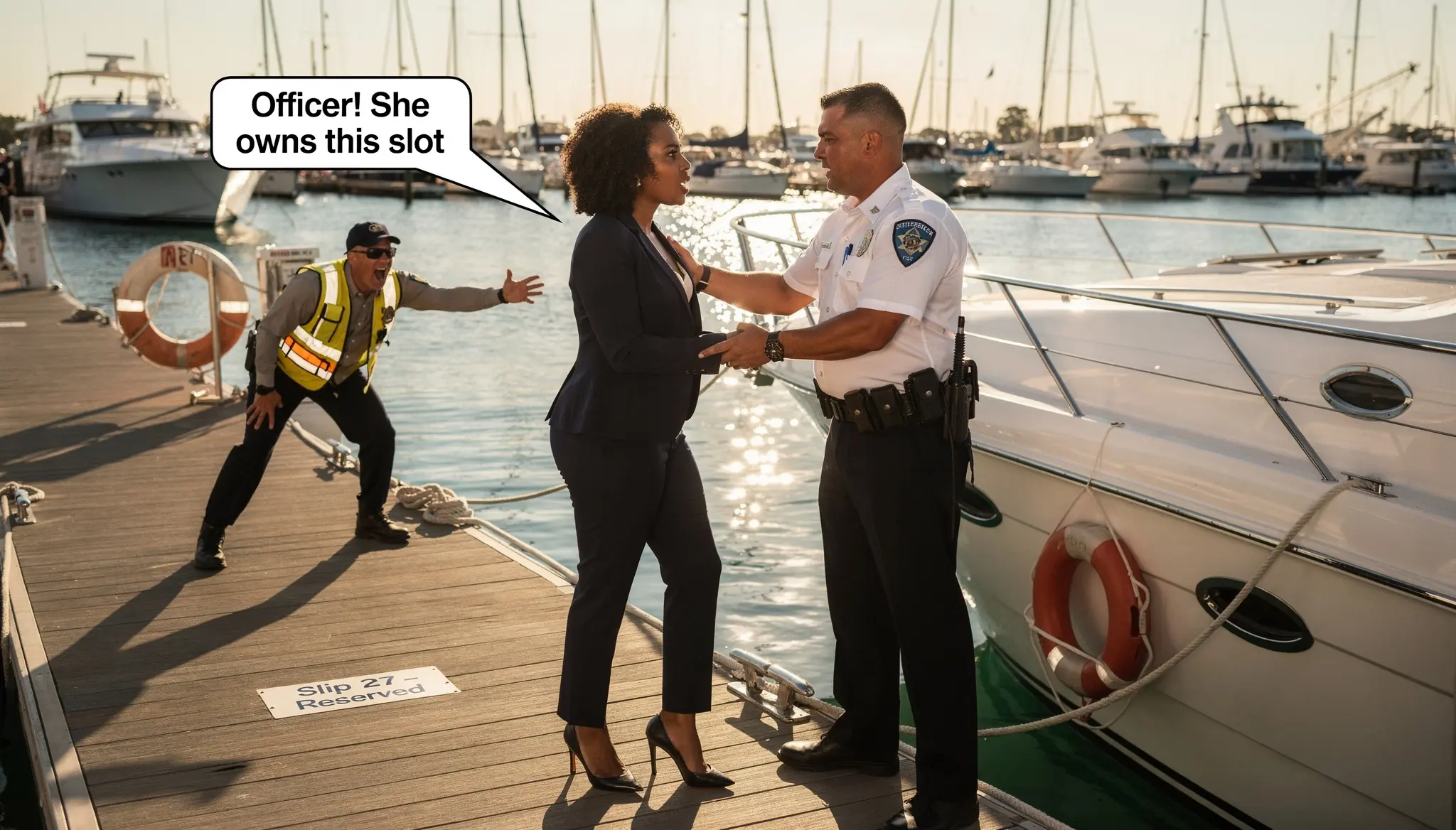
She was on her knees on the flybridge of a boat that was not hers, cutting the stitching out of a bimini top with a seam ripper because the zippers had corroded shut sometime during the second Bush administration.
"You're going to have that whole thing in the river," Ozro Tillery said from below. His voice came up through the open hatch over the lower helm, gravelly and patient, the voice of a man who had spent forty-one years telling deckhands what was about to happen to them. "Fold it as you go. Fold it like a flag."
"I know how to fold canvas, Captain."
"Then I'm just talking to hear myself."
"You're always just talking to hear yourself."
He laughed, which turned into a cough, which went on long enough that she stopped working and listened to it the way she listened to coughs at work, counting, judging the wetness, waiting for the pull of air at the end. It came. It was a little short. She went back to the stitching.
The boat was a 1981 Hatteras 53 Motor Yacht named Clementine, after a woman Claudine had met exactly once, when she was nine, at a crab boil on the riverbank where the marina parking lot was now. Clementine Tillery had worn a straw hat with a yellow ribbon and given her a cold Coca-Cola in a glass bottle. Claudine had drunk it and watched her grandfather and Ozro Tillery stand at the end of the old fish house dock arguing about outboard motors, two men, one Black and one white, both of them in white rubber boots, both of them pointing at the water as if the water had taken a side.
The boat had outlived the woman by eleven years. It had a cream fiberglass hull gone chalky at the waterline, a teak cap rail that Ozro still oiled himself every spring, a salon with green carpet and brass lamps, and twin Detroit Diesel 8V-71s in the engine room that leaked oil the way some dogs mark territory. It was fifty-three feet long and nineteen feet across the beam, and it sat in a slip that had been built for a forty-foot shrimp trawler named Ozella P., which meant that its swim platform hung over the dock by eighteen inches and Claudine had cracked her shin on it more times in the last three weeks than she could count.
The slip was hers.
Not the boat. The slip. She owned it the way people owned land, with a deed recorded at the Mobile County Probate Court, Book 3417, Page 228, a Declaration of Condominium for the Halyard Point Marina and Yacht Basin, and a property tax bill that came every October and that she paid every October from the same checking account she used for groceries. On the outermost piling, at the height of a man's chest, there was a brass plate the size of a playing card, green at the edges, screwed on with four bronze screws by her grandfather the week the marina went condominium in 1987. She had polished it with Brasso on Thursday because she'd had a feeling, and she could read it from the flybridge.