The rigs had been coming in off the leases since July, and by October of 1982 there were so many of them stacked in the yards along Highway 6 that Neva Haskett had stopped counting them on her way to work. In August she had counted. She had counted the derricks laid over on their sides in the Rimrock Drilling yard like dead giraffes, eleven, then fourteen, then nineteen, and on the morning her husband's rig came in she had pulled the Pontiac onto the shoulder and watched them unload it until she was eight minutes late and Ancel Brumley had to pour his own coffee. After that she quit counting. It didn't change the number to know it.
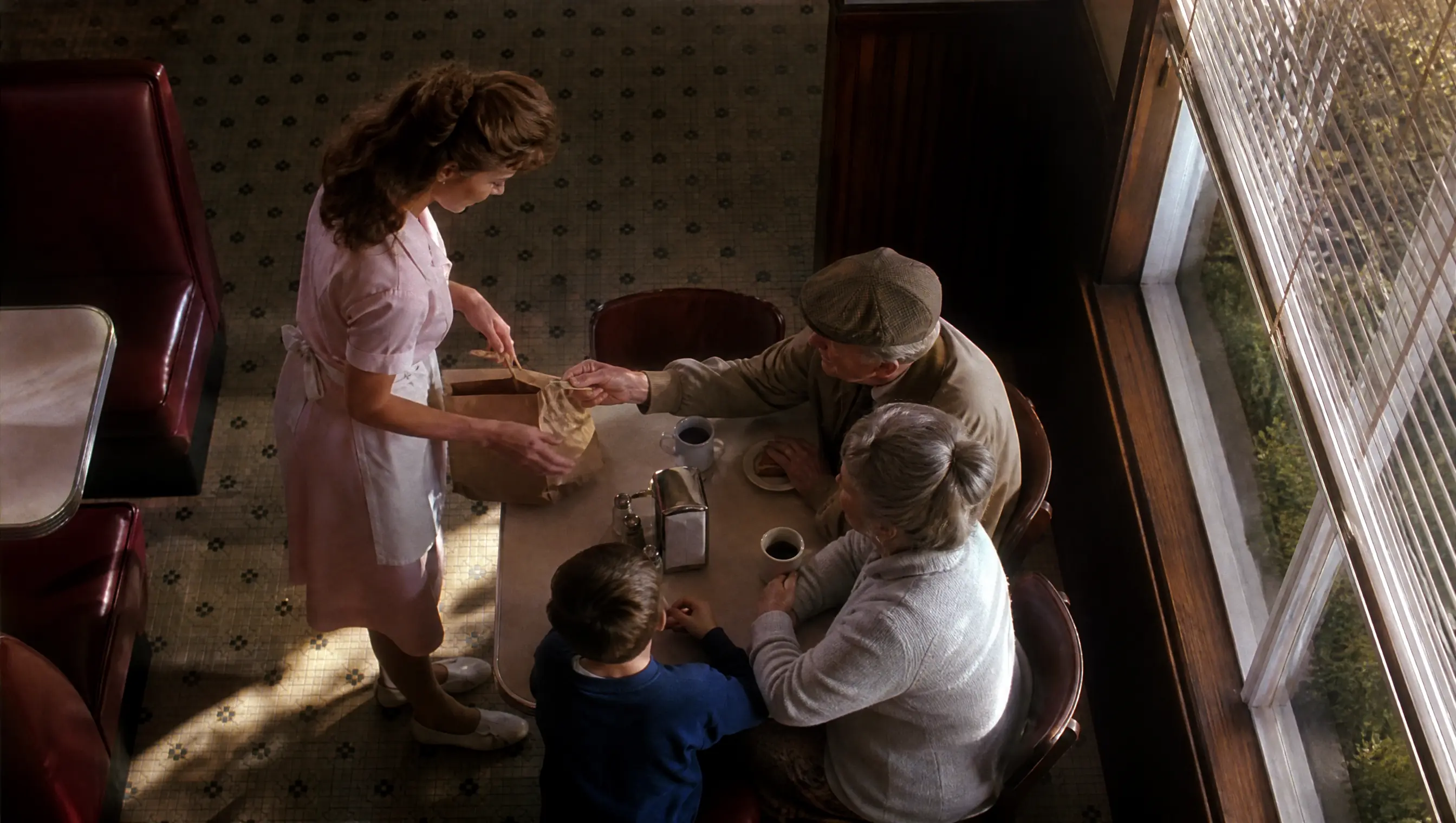
The Derrick Cafe sat on Third Street, which was also old Route 66, which was also, since the interstate went around the south side of town, the street nobody had to drive down anymore unless they wanted to. Ancel had opened it in 1958 in a cinderblock building that had been a Phillips 66 station, and you could still see where the bays had been, two long rectangles in the front wall bricked in with brick that didn't match. There were twelve stools at the counter and eight booths and, in the back, through an archway Ancel had knocked out of the wall in the spring of 1981, a whole second room he called the Doghouse, with six long tables and a second coffee urn and a jukebox, built for the rig crews when the boom was at its biggest and the men were coming off tour at three in the morning with eighteen hundred dollars a week in their pockets and nothing in Elk City to spend it on but chicken-fried steak. Ancel had borrowed thirty-one thousand dollars from the First National to build it. Neva knew the number because he said it sometimes at night, rolling silverware, the way another man might say the name of a woman who had left him.
The Doghouse had been closed since the middle of August. Ancel had put a sawhorse across the archway with a hand-lettered sign on it that said BACK ROOM CLOSED — SEE YOU NEXT BOOM, and somebody had added underneath it, in ballpoint, the words AMEN BROTHER. Neva dusted the sawhorse every Friday. She did not know why. It seemed like the kind of thing you ought to keep clean if you were going to have it at all.
The bank in Oklahoma City had gone under on the fifth of July. Penn Square, it was called, a bank in a shopping center, of all the places to keep a bank. It had lent money to everybody who drilled in the Anadarko Basin on the idea that natural gas would go to ten dollars and stay there, and when it didn't, every operator from Clinton to the Texas line woke up the same week to find out that the money behind the money had never been there. That was how Boyce explained it to her, sitting on the edge of the bed with his boots still on. What she understood was that by Labor Day the word Penn Square had become a thing people said in Elk City the way they said tornado, or cancer, or Vietnam: not to explain anything, but to stop explaining.
On Monday the eleventh of October she unlocked the front door at six, turned on the radio above the pie case, and got the first two pots going. The man on the station out of Clinton was talking about the Tylenol again, the people dead in Chicago, and then the jobs number from Friday, ten point one percent, the highest since 1940, and then the Sooners and the freshman from Mississippi, Dupree. Neva turned it down until the voices were just a hum under the hiss of the grill. Coy Kinch came in the back at five after with his thermos and his transistor and his bad knee and said, "Morning, Neva," and she said, "Morning, Coy," and that was the whole of their conversation until about ten, which was how they both liked it.
By seven there were nine men at the counter, which in October of 1982 was a good morning. Tooter Sikes, who had been a motorman on a Rimrock rig and still wore the company cap like it was going to start paying him again. Gaylon Crenshaw, who had sold mud for Baroid and had driven a Lincoln to the cafe every morning for two years and now drove his wife's Datsun. Old Mr. Kinsolving, who had farmed wheat south of town since before the Dust Bowl and had watched the boom come and go the way he had watched grasshoppers. Three men from the Rimrock yard, still employed, eating fast and not talking. And at the far end, nearest the register, on the three stools they had sat on every school-day morning since the end of August, the Gilstraps.
Neva knew a few things about the Gilstraps, the way you know things about people you pour coffee for. She knew that Hiram Gilstrap was seventy-seven years old and had farmed a half section of cotton and wheat up toward Carpenter until 1974, when he sold it to a man from Amarillo who'd put a gas well on it the next year, and that he had never once been heard to complain about that, though other men had complained about it on his behalf. She knew that he came in at ten after seven, every school morning, and drank one cup of coffee, black, in exactly twenty minutes, and left forty cents on the counter in a little stack, a quarter, a dime, a nickel, always stacked the same way, big to small. She knew that he wore a pressed white shirt buttoned to the throat and a gray felt hat that he took off and set crown-down on the counter beside his saucer, and that his hands were big and spotted and so steady you could have set a level on them.
She knew that his wife, Velma, was seventy-four, and that in the last year her thick glasses had stopped helping, so that now she carried a magnifying glass on a ribbon around her neck, the kind with a light in the handle, and held the menu two inches from her face and put it down without having read anything on it. She ordered one pancake every morning, which Coy made without being told, and Hiram cut it, and pushed his half back across to her and said he wasn't hungry.