The chestnut horse had barely taken three steps into the riding arena when he stopped so suddenly that the dust drifted around his legs like smoke. His ears flattened, his neck tightened, and a tremor ran through his broad shoulders.
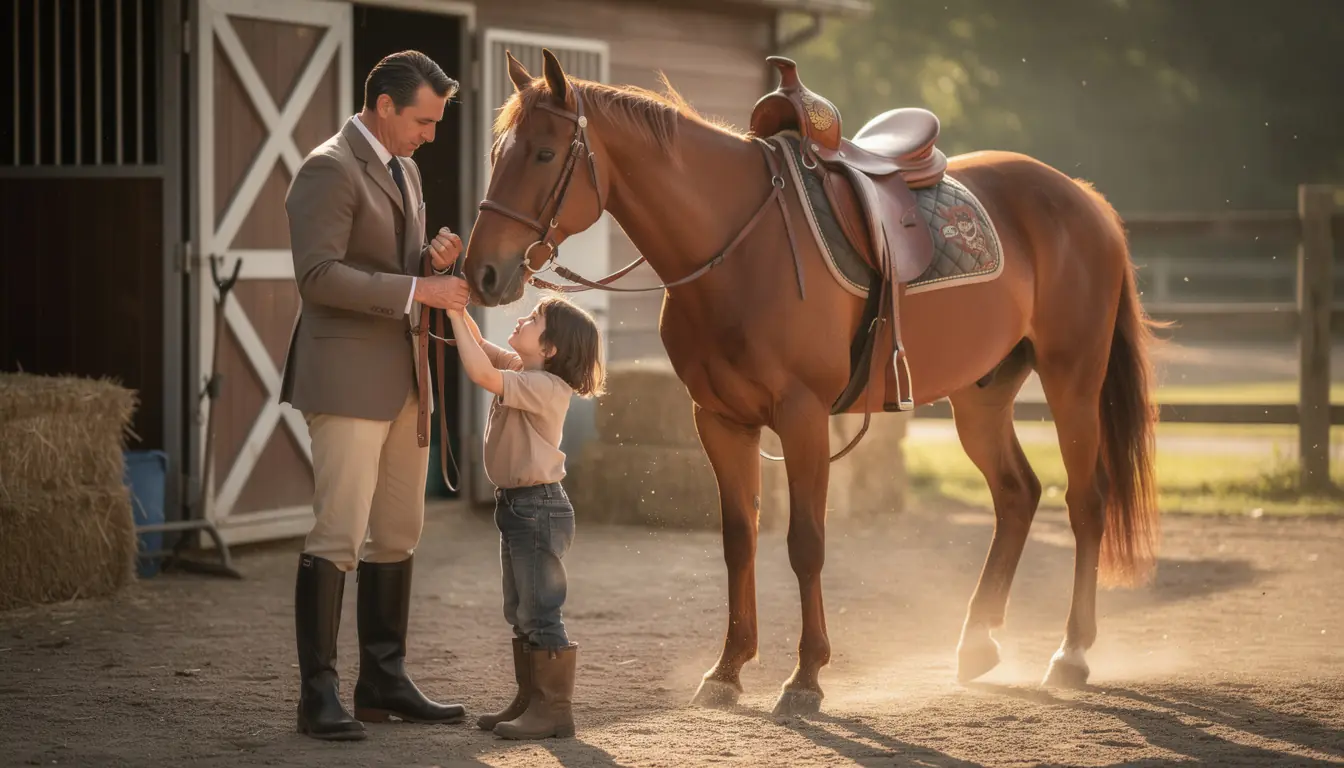
Standing just beyond the fence, twelve-year-old Leah Brooks knew what would happen next. She had watched it happen six mornings in a row, and on every one of those mornings somebody had blamed the horse.
Today, however, the man who owned the entire equestrian center was there to watch, and Leah knew that one more mistake might cost Copper his home.
“Get him forward,” Graham Voss snapped from the center of the arena. The head trainer wore polished boots and a spotless jacket, but there was nothing polished about the way he spoke to the animal. At his command, the handler tightened the lead, and Copper tossed his head so violently that the leather straps rattled against his cheek. The horse shifted sideways, nearly knocking into a mounting block, before freezing again. Graham turned toward the tall man beside the fence. “You see, Mr. Whitmore? I've given this animal every opportunity. He's become unpredictable. He's a danger to your riders and your business.”
Charles Whitmore looked as though he belonged in a boardroom rather than a barn. His dark jacket had not yet collected a speck of dust, and his expression was the weary expression of someone who expected problems to arrive with price tags attached. He had driven from Charlotte that morning to decide whether the center should sell Copper to a private buyer. Three years earlier, his late sister had persuaded him to save the stable from bankruptcy. After her death, Charles had kept the property operating, but he understood balance sheets better than horses. As Graham spoke, Charles watched Copper stamp his front hoof and concluded that this was another expensive failure.
“Then arrange the sale,” Charles said. “I won't have a child hurt because we were sentimental about an animal.” Graham gave a brief, satisfied nod. The handler started turning Copper toward the barn, and the horse flinched when the saddle shifted over his back. Leah felt a rush of fear so sharp that it made her fingers go numb. She had rehearsed a hundred ways to speak to Charles Whitmore, none of them aloud, and not one of them seemed possible now. Nevertheless, she stepped through the gate. “Sir,” she called, her voice shaking, “he isn't trying to hurt anybody. Something under that saddle is hurting him.”
The arena went quiet except for the sound of the horse breathing. Graham stared at Leah as though a broom had suddenly begun offering legal advice. “Out,” he ordered. “Your mother works here, young lady. That doesn't give you the right to interrupt an assessment.” Leah stopped a respectful