They would not let him inside the fence.
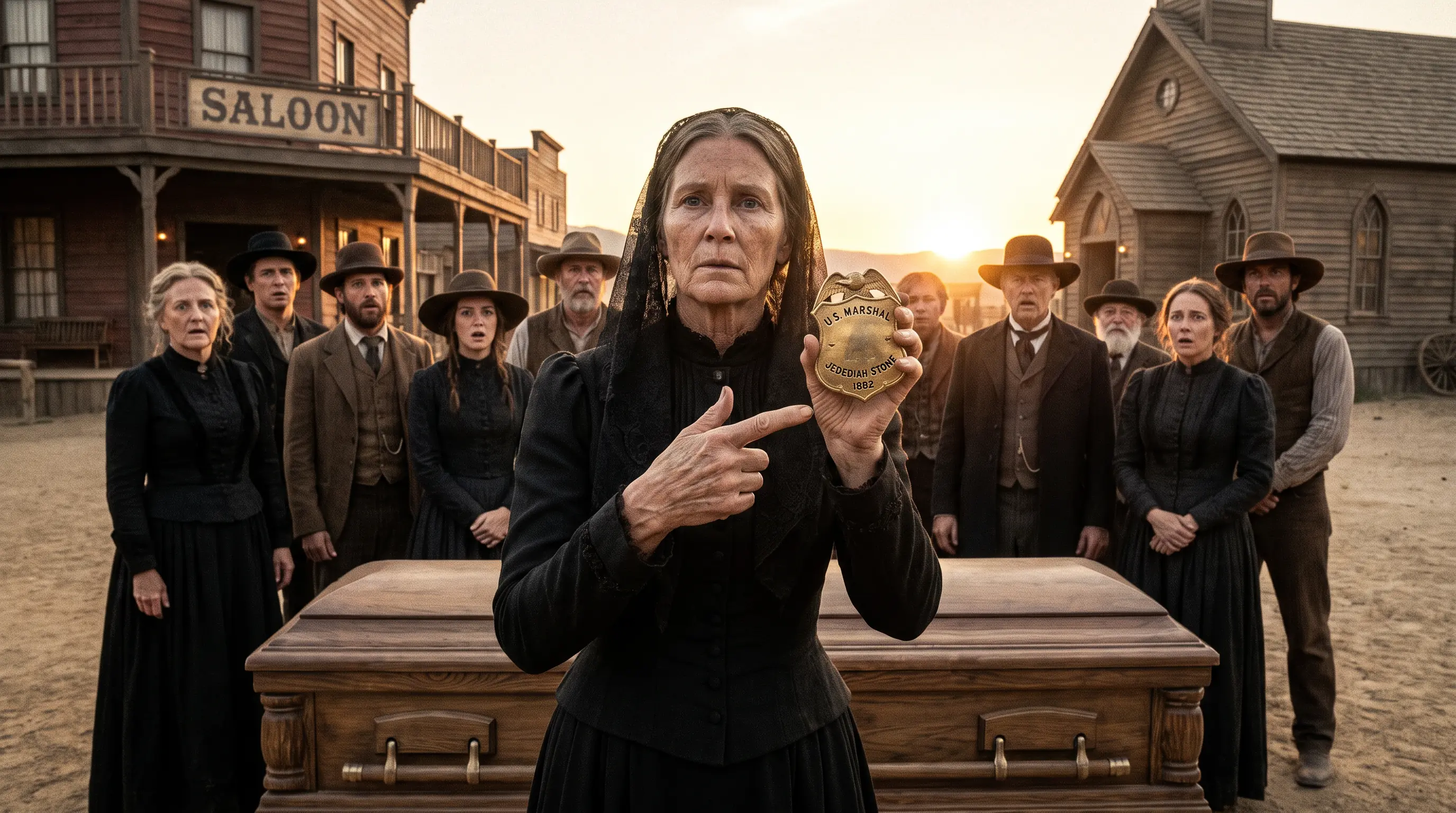
Nora Tolliver had known they wouldn't, and still some foolish part of her had walked up the hill behind the wagon expecting the gate to stand open. The cemetery at Cuervo Springs sat on a shelf of red ground above the town, ringed by a fence of peeled cedar posts and three strands of wire, and inside it the graves of the respectable dead lay in rows under painted boards and two marble stones freighted in from Las Vegas at a cost everybody in the territory had heard about.
The gate was a frame of planks on leather hinges. Someone had looped a chain through it and snapped a padlock shut, and the padlock was new. It still had the shine of the store on it.
"Señora," said Tomás Baca, very gently, "I think we go around."
He had the mule's lead in one fist and his hat in the other. He was past seventy, small and bowlegged and brown as a saddle, and he had dug most of the graves on that hill for thirty years, before the Americans came with their mine and their bank and their brass band, and after. He did not ask anybody's permission to dig. He had simply come to her door that morning with a shovel on his shoulder and said, "For your husband," and she had not trusted her voice to answer him.
They went around. The wagon wheels jolted over the rocks and the box in the back shifted and knocked, and Nora put her hand on the lid to steady it as though that would make any difference to Eli now. On the north side of the fence the ground fell away toward an arroyo choked with chamisa, and the cholla grew there, and somebody had thrown out a broken washstand and a dead dog's bones. Tomás stopped the mule twenty feet from the wire and looked at her, and she nodded, and he began to dig.
It was the eleventh of October, 1881, and the wind came down off the Sangre de Cristos with the first real teeth of the season in it. The cottonwoods along the creek had gone yellow all at once, as if somebody had lit them. Below lay the whole of Cuervo Springs: the adobe plaza with its well, the false fronts of Ostrander's Mercantile and the Gold Cross Saloon, the new brick of the Cuervo Springs Bank and Trust with its iron shutters, the white church with the bell Ambrose Whitcomb had shipped from St. Louis in a crate the size of a henhouse. Up the canyon the stamp mill of the Cerro Blanco mine thumped day and night, so steadily that people only heard it when it stopped.
People had come up the hill. She had known they would do that, too.
They stood along the inside of the fence in their Sunday clothes though it was a Tuesday. Fifteen, perhaps twenty. Enough. Hiram Ostrander from the mercantile, and his wife Pearl with her mouth set like a stitched seam. Amos Kettering, the undertaker, who had sold her the box at twice its price and then, with something almost like decency, thrown in the nails. Two of the posse men who had brought Eli in across a saddle. The sheriff, Cal Bedell, heavy and gray-mustached, standing a little apart with his hat on, which was its own kind of statement. And at the center of them, as he was at the center of most things in Cuervo Springs, Ambrose Whitcomb, in a black broadcloth coat with a velvet collar and a hat brushed so clean it looked wet.
The Reverend Josiah Lyle stood with them. Nora had gone to his door two days before, while Eli's body still lay on a board in front of Kettering's with a sign hung around his neck that said OUTLAW in somebody's careful capitals and the children of the town were brought by their fathers to look at it. She had asked the reverend whether he would say the words. He had held his door half-open against her like a man holding a gate against weather.
"I can pray for his soul, Mrs. Tolliver," he had said. "That is between him and God. But I cannot read the service of burial over a man who died with his hand raised against his neighbors. I cannot put him among Christian people. You must understand how it would look."