The first thing Clara Ellison noticed was that someone had placed her father's chessboard beneath the largest chandelier in the room.
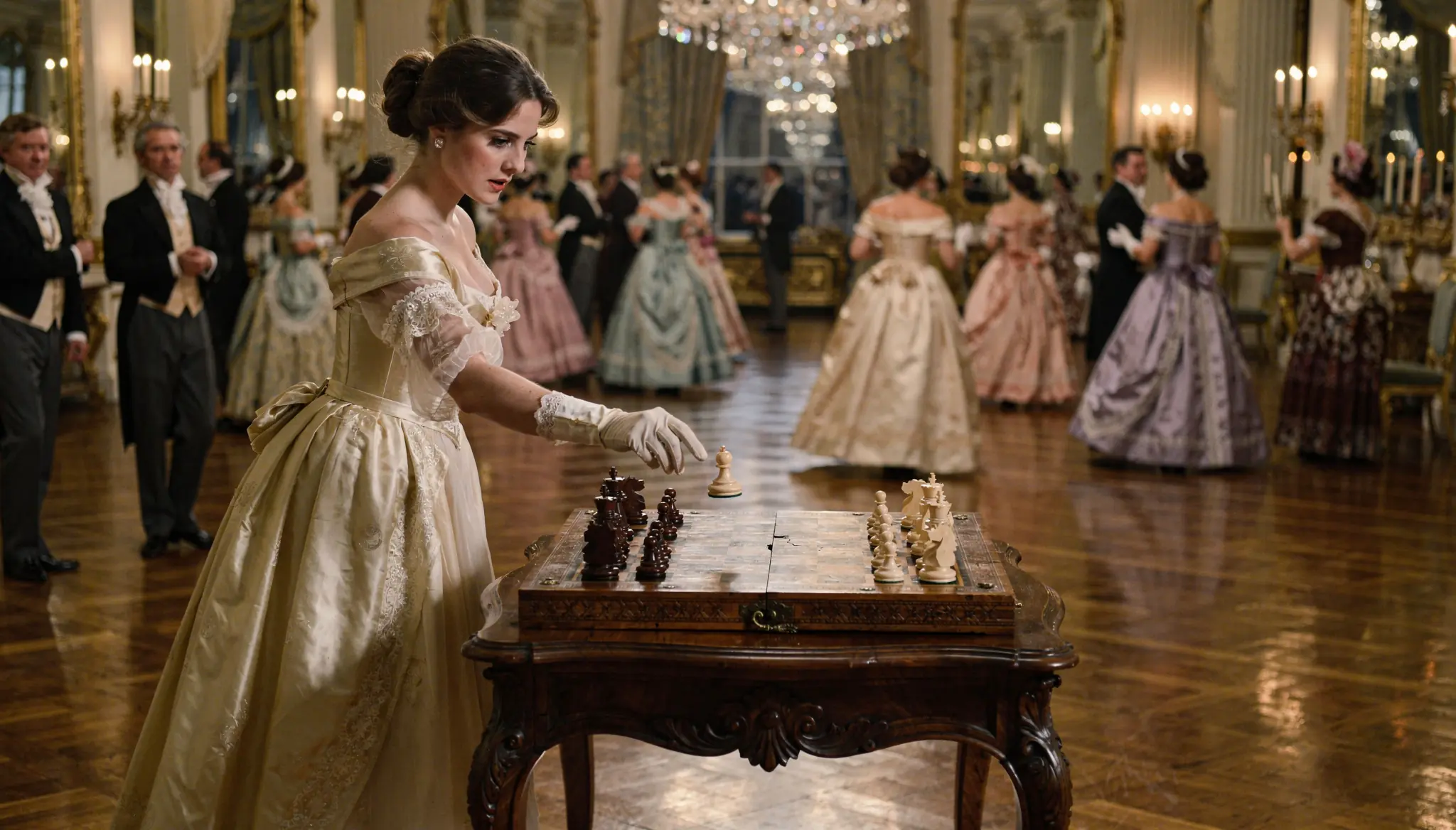
The second was that every person who had pretended not to see her enter was now watching her walk toward it.
The ivory pieces gleamed against polished walnut, arranged so neatly that anyone unfamiliar with the game might have mistaken them for ornaments.
To Clara, they looked like witnesses lined up to testify against her.
"There she is," somebody whispered. "The daughter of the man who robbed the widows." Clara had heard worse during the previous six weeks, yet the words still found their way beneath the stiff red silk of her gown. She kept her head level, her white gloves smooth, and her steps unhurried across the crowded ballroom. Her mother had taught her that a person did not surrender dignity merely because other people refused to recognize it.
Across the board stood Julian Wren, dark-haired and handsome in a black evening coat, his cream cravat immaculate above a gold waistcoat. He had once been the boy who lost to Clara over the kitchen table and demanded another game before she could clear the pieces away. Tonight his expression was courteous enough to be offered to a stranger, which hurt more than an insult would have. Behind him, Mr. Silas Harrow waited with the patient smile of a man who believed he had already won.
"A friendly match," Harrow announced, loud enough for the gathered guests. "A chance for Miss Ellison to remind us that her family possesses at least one respectable talent." A few men laughed because Harrow owned their debts, their cargo contracts, or their ambitions. Clara looked at Julian, then at the white bishop standing near her right hand. She remembered what her father had told her when she was eight: The most dangerous piece is often the one nobody considers important.
Six weeks earlier, before the rumors and the creditors, the Ellison house had still smelled of beeswax, oranges, and the ink that Jonathan Ellison carried on his cuffs. It was a narrow brick house near Philadelphia's waterfront, too small for fashionable entertaining and too full of books for a man reputed to care only about business. Jonathan managed a shipping warehouse and, with other merchants, had established the Harbor Widows' Fund after a terrible dock fire left twenty-three families without a principal wage earner. He considered the fund the one accomplishment of his life that mattered more than profit.