The whip cracked across Margaret Lawson's back a second time, and she did not scream. She would not give Caleb Mercer the satisfaction.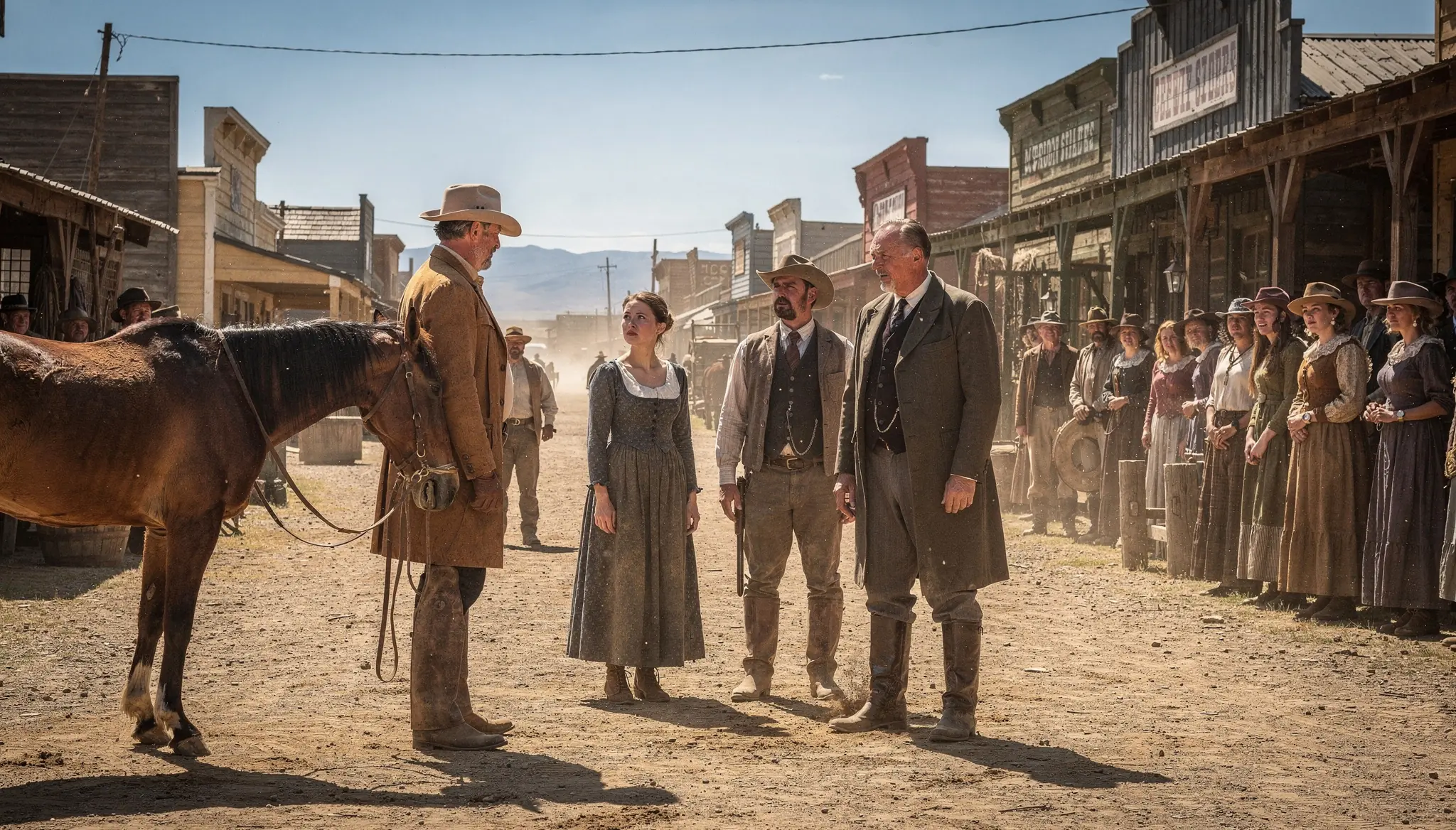
She pressed her lips together, kept her chin up, and stared straight ahead at the wall of faces watching her from the boardwalk—men she had cooked for at Harvest Suppers, women who had sat beside her in the pew every Sunday morning, neighbors who had held her hand at Henry's funeral just eight months ago. Not one of them moved. Not one of them breathed a word.
She had promised herself that much, standing in the dirt of Main Street with her wrists bound behind her to the hitching post outside Mercer's general store, the morning sun already hammering down on Red Hollow like it had a personal grudge against the place. She had promised herself that Caleb Mercer would not hear her cry. Not today. Not ever again.
The leather caught her shoulder blade and she lurched forward, teeth grinding, fingers curling into fists she couldn't use. Her dress, her good dress, the blue wool one she wore to church that morning, thinking she was coming into town to talk sense into a reasonable man, stuck to the welt rising beneath it. She stared at the wall of faces across the street: thirty, maybe forty people. Men from the mill, women from the quilting circle. Reverend Hollis standing with his hands folded in front of him like he was already composing the prayer he'd say later. Tom Briggs from the feed store, who had been Henry's friend for fifteen years, who had carried the casket. He was looking at his boots. Nobody moved.
"This is what happens," Caleb Mercer said, loud enough that his voice carried clear to the end of the block. "When a woman thinks she can ignore a legal debt. This is what happens when a widow gets too proud to honor what her husband owed."
He walked around to face her. He was a big man, Caleb Mercer, broad through the shoulders with a silver watch chain across his vest and soft hands that had never done a day's honest labor. He had the kind of face that smiled easily and meant nothing by it.
"Margaret," he said her name like it tasted pleasant in his mouth. "I gave you three months. Three months to come to some arrangement. And what did you bring me this morning?"
She lifted her eyes to his. "I brought you the truth. Henry didn't sign those papers. I've been through every ledger in that house, every letter, every scrap he ever wrote, and his name is not on your loan agreement. You know it isn't."
Mercer tilted his head, almost amused. "Widow Lawson, a man's debts pass to his estate. That's the law."
"Then show me a judge who says so. Show me the signature. Show me something real." Her voice cracked on the last word, not from fear, but from fury, and she hated herself for it. "Because I will not hand over my father's land based on a piece of paper you drew up yourself six weeks after my husband was in the ground."
Something shifted in Mercer's eyes, then. Not anger; something colder than anger. He stepped back. He lifted the whip again.
"Then we'll keep talking," he said pleasantly, "until you find a more cooperative frame of mind."