Hiram Bell had a way of making humiliation feel like public service. He was standing outside Walton's Mercantile the morning Evelyn Mercer signed the freight receipt for 300 clay pots and he laughed loud enough that men at the livery stable turned around just to see what the fuss was about. "She's planting crockery." He said it like a verdict.
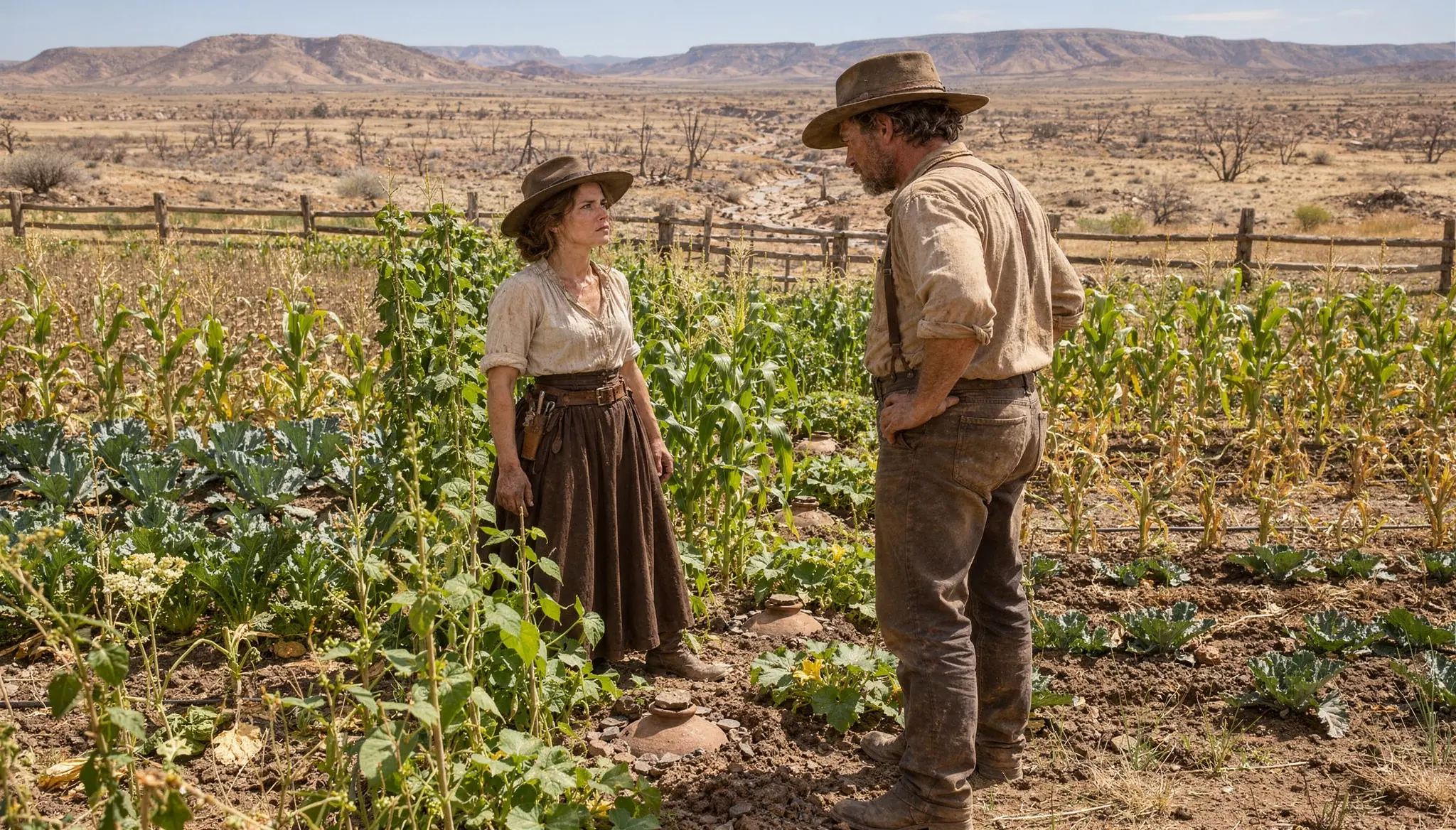
"Four acres of high desert, and she's going to water it with pottery. Boys, you ever seen a woman this far gone?" Nobody contradicted him. The laughter carried its own weight. Evie kept her eyes on the paper, signed her name, folded the receipt into her coat pocket without looking up.
She had learned a long time ago that the people most eager to predict your failure were rarely present when they turned out to be wrong. $46. Every coin she owned. She walked back to her wagon through their noise. It started with a well that was lying to her. Not lying exactly.
The water was right there when she dropped the measuring rope, cold and dark and real 31 feet down. The problem was that last April it had also been 31 feet. The April before that, 29 feet. Three autumns ago, when she first worked this claim and dug the well alongside a hired hand named Cousins, who had enormous hands and a bad knee, the water had sat at 27 feet. Evie Mercer had been keeping track.
She wrote the numbers in pencil on the inside cover of the ledger she carried everywhere. The same brown ledger she used for bookkeeping work at the freight station which also held her hay purchase records, her seed costs and two years of rainfall tallies she'd started keeping after noticing nobody else in Dry Willow Valley was bothering to. The numbers had a direction to them. The direction was down. Four feet in three years.
Not fast enough to alarm a rancher with options. Fast enough to matter to a woman who needed those 4 acres to prove her homestead claim before the county inspector showed up to check her improvements. She stood at the well mouth in the early morning cold of April and held the rope and thought about what the number meant. Not in terms of fear. Fear was something she moved through on the way to the next decision, but in terms of arithmetic.
If the table dropped another foot this season, which her pencil said it would, her draw capacity in the driest weeks would not cover four acres of corn and climbing beans and squash using the surface irrigation she'd used the past two seasons. It barely had covered it last year. A drought year would end it entirely. She needed something different.
The arroyo had already told her something was wrong before the well did. That wash usually ran muddy through June, fed by snowmelt from the Sangre Ridge to the northwest. Evie had walked to the crossing three times since March. Each time she saw more exposed stone. Not a little more, a lot more.