Laughter echoed through the drawing room when Carolina's inheritance was announced.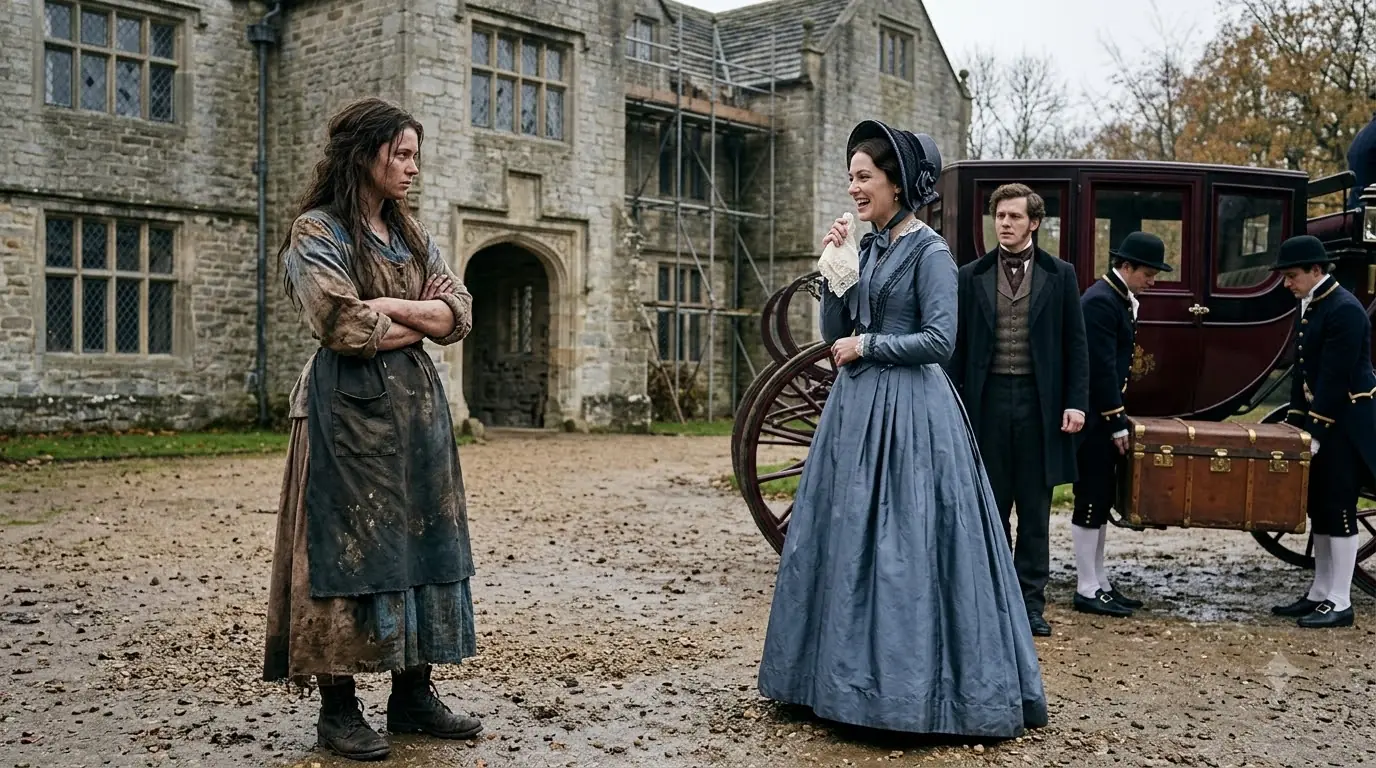
Harrogate Manor wasn't an estate. It was a crumbling monument to rot. The ton sneered, placing bets on whether the impoverished widow would freeze or starve first in its drafts.
They didn't know Carolina. She traded silk for wool, polite society for calloused hands, and tears for mortar.
12 months later, those same sneering lords and ladies found their carriages lined up at her wrought iron gates, begging for an invitation.
Carolina sat stiffly in the solicitor's leather-bound chair, her black mourning gown heavy and stifling in the poorly ventilated office.
Mr. Penhaligan's voice droned on, dry and mechanical, listing debts like a coroner cataloging wounds.
Her late husband, George, had been a man of immense charm and zero restraint. In three years of marriage, he had gambled away the London townhome, the modest country estate in Kent, and the entirety of Carolina's dowry.
He had died just as carelessly, breaking his neck in a drunken steeplechase.
All that remained of her marriage was a stack of unpaid bills and a peculiar addendum from George's estranged spinster aunt.
"Harrogate Manor," Penhaligan said, pushing a heavy rusted iron key across the mahogany desk. It scraped against the polished wood, leaving a faint scratch. "In Yorkshire. I must warn you, Mrs. Farrow, the property has been vacant for three decades. The roof is severely compromised. The grounds are feral. It is not fit for a gentlewoman."
Carolina stared at the key. She didn't reach for it immediately. Her hands, resting in her lap, were folded so tightly her knuckles were white.
She had exactly £14, two shillings, and sixpence to her name.
"Are there walls, Mr. Penhaligan?"
The solicitor blinked, adjusting his spectacles. "Well, yes, mostly stone, but the interior—"
"Does it have a hearth?"
"Several, I imagine, though the chimneys likely need sweeping."
Carolina finally reached out and closed her fingers around the iron. It was heavy, cold, and bit into her palm.
"Then it is a home. I will leave on Tuesday."
Penhaligan sighed, a sound of profound pity that made Carolina's jaw tighten. "Mrs. Farrow, forgive my bluntness. You are 24. You are beautiful. You could return to your family, or perhaps find another arrangement."
"My family made it abundantly clear that my marriage to George severed our ties," Carolina said, standing up. The silk of her dress rustled in the quiet room. "And I have no interest in becoming a burden to distant cousins, nor a decorative fixture in another man's house. Good day, Mr. Penhaligan."
The news of her destination reached the drawing rooms of Mayfair before Carolina had even finished packing her single modest trunk.
Belinda Cooper, a woman whose immaculate beauty was matched only by her bottomless malice, hosted a tea specifically to mock the departure.
"I give her 3 weeks," Belinda declared, stirring a sugar cube into her porcelain cup with a silver spoon. "She will be back in London begging for a post as a governess or a companion to some half-blind dowager. Harrogate is a stone corpse. My brother rode past it once. He said it looked like a place where peasants go to die."
A chorus of polite, cruel titters rippled through the room.
Lord Abraham Kelly stood by the window, a cup of untouched tea in his hand. He didn't laugh.
Abraham possessed a sharp mind, a substantial fortune, and a profound exhaustion with the people around him. He found Belinda tedious, and the rest of the ton insufferable. They were all painted wooden dolls, repeating the same lines.
"Perhaps," Abraham murmured, his voice dry, cutting through the laughter, "she prefers the company of a stone corpse to the company in this room."
Belinda's smile tightened, her eyes flashing. "Always the contrarian, Abraham. Care to make a wager, then? 100 guineas says she freezes before Christmas."
Abraham looked out the window at the gray London rain. He didn't know Carolina Farrow well. He remembered her as a quiet girl who watched the room rather than performed for it.
"I don't bet on human misery, Belinda," he said quietly, setting his cup down. "It's bad form."
The carriage ride north took five grueling days. Carolina, accompanied only by her fiercely loyal and equally stubborn maid, Martha, arrived at Harrogate in the waning light of a bitter November afternoon.
The manor loomed at the end of a long, rutted drive, choked by naked, twisting elm trees.
Penhaligan had understated the ruin. It was a sprawling Jacobean beast of gray stone, and it was dying.
Half of the slate roof had caved in on the west wing, exposing the interior ribs of the house to the sky. Thick parasitic ivy had pried the mortar from the brickwork, crawling through broken window panes like skeletal fingers.
The massive oak front doors hung off their rusted hinges, groaning in the wind.
Carolina didn't cry. Tears didn't fix roofs.
She stepped out of the hired carriage. The wind off the Yorkshire moors sliced right through her thin mourning coat, carrying the scent of damp earth and rotting wood.
Martha clutched her woolen shawl around her thick shoulders, staring at the structure in horror. "Ma'am, it's... it's a grave."
"It's ours," Carolina replied, her voice steady despite the shivering of her jaw.
They spent the first night in the kitchen, the only room with a functional hearth, intact stone walls, and a ceiling that didn't show the stars.