The warehouse came alive before the sky did.
Steel bay doors rolled upward in the cold blue dark, forklifts beeped through rows of stacked pallets, and the air carried that familiar mix of diesel exhaust, cardboard dust, old coffee, and floor cleaner that never fully left the walls. Workers moved fast because freight did not wait, but they moved quietly because at Westbridge Logistics, noise could become attention. And attention, under the wrong supervisor, could become punishment.
Nobody laughed too loudly near the dispatch office.
Nobody asked questions where a lead could hear.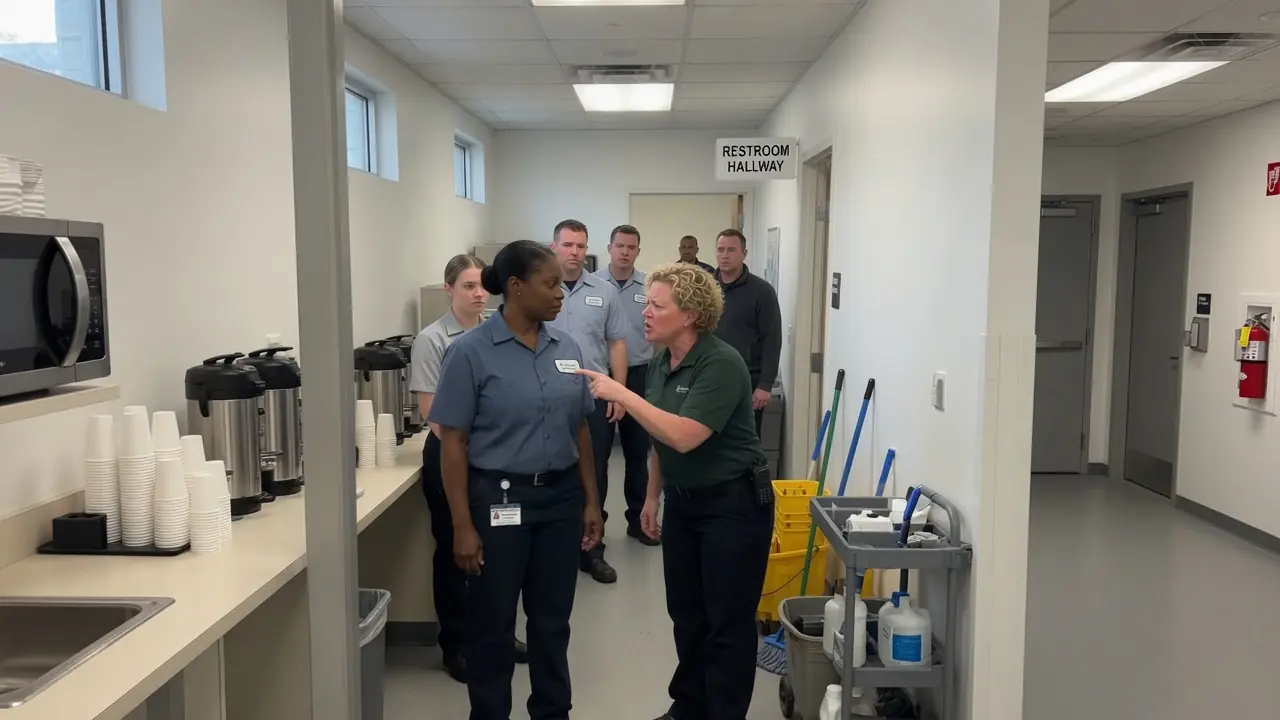
Nobody reported pain unless they were ready to lose hours the following week.
That was why Celeste Warren walked in through the employee entrance at 5:07 a.m. wearing scuffed sneakers, black work pants, a faded olive jacket, and a temporary badge clipped crookedly to her chest. Her hair was tied back in a plain bun, her nails bare, her face makeup-free except for lip balm. No watch, no driver, no designer bag, no assistant walking behind her with a tablet.
Nothing about her looked important.
That was the point.
Celeste Warren had not come to Westbridge Logistics to be recognized.
She had come to hear what people said when they believed power was nowhere near them. For nine months, reports had reached her executive office in fragments. Anonymous emails. Half-finished complaints. A resignation note that said, “I cannot keep being treated like I am less than the boxes we move.” A voicemail from a man who cried once, apologized, and hung up before giving his name.
On paper, Westbridge looked excellent.
Shipment speed was up.
Labor cost was down.
Reported injuries had dropped for three straight quarters.
Employee complaints were almost nonexistent.
But Celeste had built Warren Freight Systems from one leased delivery van and a borrowed office behind a tire shop into one of the largest regional logistics companies in the South. She knew good numbers could be made out of bad fear. Her mother had cleaned offices at night and worked warehouse returns in the day, and she had taught Celeste early that silence in a workplace did not always mean peace.
“Sometimes people stop complaining because they gave up believing anyone is coming,” her mother used to say.
Celeste remembered that sentence every time a dashboard looked too clean.
So she chose a Monday in January, before sunrise, before any announced audit, before regional management had time to polish floors and rehearse honesty. She entered alone with a paper cup of gas-station coffee, a cheap canvas backpack, and a temporary worker badge that said C. Warren.
The badge did not say founder.
It did not say CEO.
It did not say the building, the trucks, the equipment, the payroll, the contracts, and the brand on every trailer outside belonged to her company.
It only said temporary floor support.
Nobody looked twice.
That alone told her enough to keep walking.
The breakroom sat beside Dock Six, a square, harshly lit room with two vending machines, scratched tables, a dented refrigerator, and a microwave that sounded like it was chewing gravel. Workers sat in scattered silence with their shoulders rounded over paper cups and plastic containers. The room did not feel like a place where people rested.
It felt like a place where people waited to be called out.
A young picker named Mateo Ruiz sat at the far table with athletic tape wrapped around his wrist. He flexed his fingers carefully, trying not to let anyone see the pain. A woman in a red hoodie quietly counted coins from a sandwich bag, separating bus fare from lunch money. Near the sink, an older maintenance worker wiped the same clean spot on the counter again and again while staring at nothing.
Celeste stood by the coffee machine and listened.
The silence had shape.
People did not just avoid talking. They avoided being seen deciding whether to talk.
At 5:29, Rochelle Dane walked in.
The breakroom changed before she said a word.
Chairs stopped scraping.
A vending machine door clicked shut.
The woman counting coins slid them back into the bag so quickly that two quarters fell to the floor, but she did not bend to pick them up until Rochelle passed. Rochelle’s boots hit the tile with hard little cracks, each step announcing that the building belonged to her.
Rochelle Dane was the senior floor supervisor for the early shift.
She had a tight blond ponytail, a sharp mouth, red nails, and a company radio clipped to her belt like a badge she had awarded herself. Two assistant leads trailed behind her, Nolan Pierce and Avery Bell, both young, both ambitious, both wearing smiles that had learned to survive by standing beside cruelty rather than under it.
Rochelle looked around the breakroom.
“Well,” she said, “must be nice.”
Nobody answered.
A few workers stood at once.
Rochelle pointed at Mateo. “Ruiz, if that wrist slows you down today, clock out and go home. I’m not paying people to act injured for attention.”
Mateo swallowed. “It’s swollen, ma’am.”
“Then stop looking at it like that fixes anything.”
Nolan laughed under his breath.
Avery smiled into her coffee.
Celeste watched Mateo lower his hand beneath the table.
Rochelle turned toward the woman in the red hoodie. “Tanya, if returns is behind again, don’t start with the daycare excuse. We all have lives. Somehow most of us manage not to bring our problems in a tote bag.”
Tanya’s face went still.
The maintenance worker by the sink looked down.
Celeste took a slow sip of coffee and let the words settle. Reports used phrases like hostile environment and retaliatory scheduling. Those phrases were clean, legal, bloodless. They did not capture the way a room shrank when one woman walked in with a radio and a bad mood.
Then Rochelle saw Celeste.
Her eyes traveled from Celeste’s shoes to her jacket to the temporary badge. The judgment formed before the question.
“You,” Rochelle said.
Celeste looked up. “Yes?”
“Why are you standing around my breakroom?”
“I’m waiting for assignment.”
“Perfect.” Rochelle smiled. “Restrooms by Dock Three are disgusting. Grab a bucket and start there.”
A few workers looked away.
Tanya closed her eyes for half a second.
Celeste set her coffee on the counter. “I was told I’d be helping with floor operations.”
Rochelle’s smile widened. “You were told?”
“Yes.”
“By who?”
“The staffing coordinator.”
Rochelle stepped closer. “Let me help you understand something before you get comfortable. Staffing coordinators sit in offices. I run this floor. If I tell you to clean toilets, that is floor operations.”
Celeste’s face stayed calm. “Why did you choose me?”
The room went still.
It was not a loud question. It was worse than loud. It was clear.
Rochelle blinked once. “Because I can.”
“That’s not an operational reason.”
“It is the only reason you need.”
Nolan whispered something to Avery, and Avery gave a small laugh.
Celeste looked at them briefly.
Then back at Rochelle.
“Is this how you normally assign work?”
Rochelle’s eyes sharpened. “Listen carefully, temp. This is not a community college seminar. People come here, do what they’re told, and earn their hours. Especially people who walk in here with no seniority, no skills, and shoes that look like they came out of a donation bin.”
Someone near the refrigerator shifted.
Rochelle turned her head fast. “Something funny?”
No one answered.
“That’s what I thought.”
Celeste let the silence hang for one beat. “And if I refuse?”
Rochelle’s expression brightened with a kind of pleasure that made the room colder.
“Then I call security, have you walked out, and make sure your agency file says difficult. Uncooperative. Bad attitude. Not worth placement.” She leaned closer. “Do you know how many warehouses in this city use the same staffing pool? You’ll be lucky to get a night shift wiping carts at a grocery store.”
The words were practiced.
That was what bothered Celeste most.
Rochelle had said them before.
Probably many times.
“Difficult,” Celeste repeated.
“Don’t like that one?” Rochelle asked. “Fine. Entitled. Lazy. Combative. Choose whatever fits.”
Celeste looked around the breakroom.
No one seemed surprised.
Ashamed, yes.
Angry, yes.
Afraid, certainly.
But not surprised.
That told her this was not an outburst.
It was culture.
“You use those words often?” Celeste asked.
Rochelle took another step in. “You people always want to debate before doing basic work.”
The woman near the refrigerator inhaled sharply.
The older maintenance worker raised his head.
Celeste stood very still.
“You people,” she said softly.
Rochelle’s smile flickered, but she recovered quickly. “Don’t start trying to make this something it isn’t.”
“I didn’t.”
“Good. Then stop acting special and go clean the restrooms.”
Celeste looked toward the storage closet. “You want me on my knees scrubbing toilets because you think I’m temporary and powerless.”
“I want you scrubbing toilets because I told you to.” Rochelle pointed down the hall. “Move.”
No one breathed.
Celeste walked to the closet.
A few faces dropped when she did, as if watching her obey confirmed something they had already been forced to believe about the world. Maybe they thought she had surrendered. Maybe they hated seeing it because they had surrendered in the same way too many times. Survival can look like weakness from a distance, especially to people who never had to survive anything.
Celeste opened the closet and took out yellow gloves, a blue bucket, disinfectant, and a toilet brush.
Then she returned and placed each item carefully on the nearest breakroom table.
Rochelle frowned. “What are you doing?”
“Making the assignment visible.”
Rochelle stared at her. “Pick it up.”
Celeste did not move.
“I said pick it up.”
“I heard you.”
Rochelle grabbed the bucket and shoved it hard into Celeste’s chest. A little brown water left in the bottom sloshed out and splattered across Celeste’s jacket. The sound it made was small, but the room reacted like something much larger had broken.
Mateo half rose from his chair.
Nolan turned toward him. “Sit down.”
Mateo sat.
Rochelle leaned close to Celeste’s face. “You don’t embarrass me in front of my floor.”
Celeste looked down at the stain on her jacket.
Then back at Rochelle.
“Your floor?”
“That’s right.”
A voice came from the doorway.
“Rochelle.”
Everyone turned.
Elliot Frayne, regional operations director, stood just inside the breakroom with a tablet in one hand and fear already hollowing out his face. He wore a clean navy overcoat, polished shoes, and the look of a man who had arrived for an ordinary site visit and discovered the roof had been missing for years.
His eyes locked on Celeste.
“Ms. Warren,” he said, barely above a whisper. “I didn’t realize you were already here.”
The room froze.
Rochelle’s irritation showed first.
Then confusion.
“Ms. who?”
Elliot swallowed. “Celeste Warren.”
For three seconds, nobody moved.
Celeste reached into the inside pocket of her jacket and removed a slim black credential card. She held it up, not dramatically, not angrily, just high enough for everyone in the breakroom to read.
Celeste Warren.
Founder and Chief Executive Officer.
Warren Freight Systems.
A spoon fell into a coffee cup with a sharp little clink.
Tanya covered her mouth.
Mateo stared like he had forgotten how to blink.
Avery took one slow step backward.
Rochelle looked at the card as if refusing to understand it might make it disappear.
Celeste lowered the credential.
“You told me to scrub toilets.”
Rochelle’s voice cracked. “I didn’t know—”
“That I owned the company?”
Rochelle’s lips parted.
No answer came.
Celeste nodded once. “That is not your excuse. That is the problem.”
Elliot stepped forward quickly. “Ms. Warren, I am so sorry. Rochelle can be intense, yes, but this facility has been under enormous pressure, and the numbers here are some of the best in the network. I’m certain this is not representative of—”
Celeste turned her head.
Elliot stopped mid-sentence.
“The numbers are excellent,” she said, “because people are afraid to tell you what those numbers cost.”
His face tightened. “I had no idea it was this bad.”
A dry sound came from the sink.
Not quite a laugh.
Not quite disbelief.
Celeste turned toward the older worker. “What’s your name?”
The man straightened slowly. “Henry Cole.”
“How long have you worked here, Mr. Cole?”
“Thirteen years.”
Celeste nodded toward Rochelle. “Is this a misunderstanding?”
Rochelle snapped, “Henry, don’t.”
Celeste held up one hand without looking away from him. “You can answer.”
Henry looked at Rochelle.
Then at Elliot.
Then at the workers around him.
The fear did not leave his face, but something older stepped in front of it.
“No, ma’am,” he said. “This is normal.”
The room changed.
Not loudly.
Not like a movie.
It changed like a locked door opening two inches.
Henry kept speaking. “She calls people useless. Stupid. Replaceable. She gives the worst jobs to whoever she wants to break. If you complain, your schedule changes. If you speak up, suddenly there’s a write-up waiting.”
“That’s a lie,” Rochelle said.
“It’s not,” Tanya said.
Her voice shook, but it carried.
“She cut my Friday hours after I asked to leave early for my son’s asthma appointment. Then she said people like me always have a story.”
Mateo lifted his taped wrist. “She made me unload Dock Two after I filed an injury form. Said if I could hold a pen, I could hold a box.”
Another worker stood near the vending machine. “She made Terrence clean a chemical spill without proper gloves because he was ‘built for dirty work.’ Those were her words.”
“She told me temps are disposable,” a young woman by the door said. “Disposable.”
“She called my cousin slow because English is his second language,” someone else added.
“She made us clock out, then finish loading a late truck.”
The room filled with voices.
Not shouting.
Testifying.
Each statement became a brick removed from the wall Rochelle had built around herself. Nolan and Avery stood frozen now, no longer laughing, no longer smirking. Elliot looked as if every sentence were landing on paper with his signature already attached.
Celeste looked at him. “How many complaints reached your office?”
Elliot gripped the tablet tighter. “I would need to review the files.”
“I already did.”
His face went still.
Celeste opened her backpack and removed a folder.
It was not thick, but the room seemed to feel its weight.
“Fifty-one complaints in twenty-six months,” she said. “Seventeen naming Rochelle Dane directly. Eight naming assistant leads. Eleven describing schedule retaliation. Six marked resolved without any employee interview attached.”
Elliot’s mouth went dry.
Celeste turned one page. “Your name is on thirty-two closure approvals.”
The workers looked at him.
He lowered his eyes.
“I was trying to maintain stability,” he said.
Henry shook his head slowly.
Celeste’s voice remained calm. “You maintained silence.”
“I trusted site leadership.”
“No. You trusted clean reports because they made your job easier.”
Rochelle began crying then.
Not with sorrow.
With anger and fear.
“You set me up,” she said. “You came in here pretending to be nobody.”
Celeste looked at her. “No. I came in as someone you believed you could mistreat safely.”
“I didn’t know who you were.”
“You should not need to know who someone is before deciding whether they deserve dignity.”
Rochelle wiped at her face. “I can apologize.”
“You can.”
Relief flashed across Rochelle’s eyes.
“But not as an employee of this company.”
The relief died.
“Rochelle Dane,” Celeste said, “your employment is terminated effective immediately for gross misconduct, discriminatory behavior, retaliation, and abuse of authority.”
Rochelle grabbed the table. “You can’t fire me in front of everyone.”
“You humiliated people in front of everyone,” Celeste said. “You will be held accountable in front of everyone.”
Security appeared at the breakroom door.
Rochelle looked toward Elliot.
He did not look back.
That told the workers plenty.
Men like Elliot often stand close to cruelty when it is useful, then discover distance the moment consequences arrive.
Rochelle was still talking as security escorted her down the hall. Still explaining. Still accusing. Still trying to turn the room she had ruled into a room that owed her sympathy.
When she disappeared, no one clapped.
No one laughed.
The workers watched with the sober quiet of people who understood that accountability was necessary, but not entertainment.
Celeste turned to Nolan and Avery.
They both looked pale now.
“You laughed,” she said.
Neither answered.
“You repeated her behavior.”
Still silence.
“You helped make this place feel unsafe because standing beside her was easier than standing up to her.”
Avery’s eyes filled. “I was scared of her too.”
Celeste looked at her for a moment. “That may be true. It is not enough.”
Nolan stared at the floor.
“You are both suspended pending investigation. If you return, it will be after formal review, direct apology, documented retraining, and probation. If that sounds unfair, resign today.”
Avery nodded, crying silently.
Nolan did not move.
Then Celeste turned back to Elliot.
He was waiting like a man who hoped remorse might arrive before judgment.
“Ms. Warren,” he said quietly. “I failed.”
“Yes.”
“I should have acted sooner.”
“Yes.”
“I will cooperate with whatever review you order.”
“You will not be part of it.”
His eyes lifted.
Celeste closed the folder. “Elliot Frayne, your employment is terminated effective immediately.”
His face changed. “After twelve years?”
“After fifty-one complaints.”
The words landed cleanly.
Security returned.
Elliot handed over his tablet, badge, and company phone. Unlike Rochelle, he did not cry or argue. He simply walked out with the stunned expression of a man who had mistaken ignored warnings for resolved problems.
When he was gone, the breakroom stayed silent.
Celeste let it.
Rooms that have carried fear too long need time to understand that the danger has actually left.
Then she unclipped the temporary badge and placed it beside the bucket on the table.
“No one in this room will lose hours for speaking today,” she said. “No schedule changes. No retaliatory write-ups. No quiet punishment through bad assignments. If anything happens, it comes directly to my office.”
Tanya began to cry quietly.
Mateo looked down at his wrist.
Henry stood by the sink with both hands folded, breathing like someone trying not to let hope hurt him.
Celeste continued. “This facility will pause operations at noon for an all-hands meeting. Outside investigators arrive tomorrow. Payroll records, injury reports, complaint logs, shift changes, disciplinary files, termination decisions, supervisor messages, everything will be reviewed.”
A worker near the vending machine raised his hand slightly. “What happens to us?”
Celeste heard the real question inside the question.
Do we pay for this later?
Do we still have jobs?
Is this another speech?
“You keep your jobs,” she said. “You keep your dignity. And if this company cannot provide both, then I am not the leader I claim to be.”
Henry looked at her for a long moment.
“I’ve heard speeches before.”
“I know.”
He nodded once.
He believed the honesty more than the promise.
At noon, Westbridge Logistics stopped moving.
Forklifts parked in straight rows.
Bay doors paused.
Shipping lines shut down.
Workers gathered between pallet racks and conveyor belts, some with arms crossed, some with faces guarded, some whispering because hope can feel dangerous when it arrives without warning. Managers stood along the side wall, exposed in a way they had never been when they were the only ones allowed to give instructions.
Celeste climbed onto a low metal platform near Dock Five.
She still wore the stained jacket.
She wanted them to see it.
“My mother worked in buildings like this,” she began. “She came home with cracked hands, tired feet, and stories she softened so her children would not know how much disrespect she swallowed to keep food in the house.”
The warehouse listened.
No engines.
No beeping.
No radios.
Only Celeste’s voice moving through the cold air.
“I built Warren Freight Systems because I believed hard work should not require humiliation. Somewhere in this building, that belief was betrayed. Not in one dramatic moment, maybe, but one insult at a time. One ignored complaint. One retaliatory schedule. One supervisor laughing when another human being should have been defended.”
Several workers looked toward the managers.
Celeste continued. “Leadership is not permission to scare people. A title is not protection from accountability. And productivity that depends on fear is not excellence. It is failure wearing clean numbers.”
Mateo nodded.
Tanya wiped her eyes.
Henry stood with his arms folded, face lifted now, no longer trying to disappear.
“Every complaint will be reopened,” Celeste said. “Every injury report reviewed. Every hour stolen will be paid. Every retaliatory write-up will be examined. Every supervisor will be evaluated. Some will be retrained. Some will be removed. Some will learn that authority and cruelty are not the same thing.”
A small laugh moved through the group.
Not because it was funny.
Because relief sometimes escapes in strange shapes.
Celeste looked across the warehouse. “I cannot undo what happened here. But I can decide what happens after the truth is spoken.”
She paused.
“And I am deciding today that this building will not run on fear again.”
The first clap came from Tanya.
Then Mateo.
Then Henry.
Then the applause spread, steady and low at first, then stronger. It echoed against steel racks and concrete floors, bouncing up into the ceiling beams where years of silence seemed to loosen at once.
It was not celebration.
Too much had happened for that.
It was recognition.
Someone with power had finally named the thing everyone else had been forced to live around.
After the meeting, Celeste stayed.
She did not go upstairs to a polished conference room or let a vice president handle the harm from a distance. She sat in a plain HR office with a legal pad, a bottle of water, and two outside investigators, listening until the late afternoon sun turned the loading dock windows orange.
Workers came in one at a time.
Some were angry.
Some embarrassed.
Some so trained to expect dismissal that they apologized before telling the truth.
Celeste gave every one of them the same answer.
“Do not apologize for what was done to you.”
By the end of the day, she had nineteen pages of notes.
By the end of the week, investigators had enough documentation to trigger back pay, medical leave corrections, disciplinary action, and a regional audit that reached beyond Westbridge.
The changes did not arrive like a clean ending.
Real change rarely does.
They came through interviews, payroll corrections, HR hearings, termination letters, policy rewrites, safety committees, grievance channels, supervisor training, and uncomfortable meetings where people who once hid behind procedure had to explain why procedure had failed the same workers again and again.
Mateo received treatment and paid recovery time.
Tanya’s schedule was restored, and her lost hours were reimbursed.
Henry became facilities safety coordinator with a raise, two assistants, and the authority to halt unsafe cleanup work without supervisor approval.
Workers who had been written up after complaints had their files reviewed.
Some write-ups disappeared.
Some managers did too.
Nolan resigned before his investigation finished. Avery returned after seven weeks, quieter and visibly changed. She apologized in person to the workers she had mocked. Some accepted it. Some did not. Celeste did not force forgiveness into an HR form.
Forgiveness was not a company deliverable.
Six months later, Celeste returned without warning.
This time, she entered through Dock Six after sunrise. The warehouse was loud again, but the sound had changed. Forklifts still beeped. Pallets still rolled. Radios still cracked with instructions. The work remained hard because warehouse work had never been easy.
But the air did not feel like people were waiting to be punished for breathing wrong.
In the breakroom, Henry was pinning a safety checklist to the board while arguing with Mateo about basketball. Tanya stood near the microwave, laughing with a new temporary worker who looked nervous enough to fold herself into the wall.
The temp dropped her lunch bag.
An orange rolled under a chair.
Mateo picked it up and handed it back before she could apologize.
“First week?” he asked.
She nodded.
He smiled. “Don’t worry. People help around here.”
Celeste stopped just outside the doorway.
People help around here.
That sentence would not appear on an investor slide.
It would not be measured cleanly on a productivity dashboard.
But it meant more than almost every number executives liked to worship.
Henry saw her and grinned. “Morning, Ms. Warren.”
“Morning, Mr. Cole.”
He nodded toward the coffee machine. “Still tastes like burnt cardboard.”
“Some traditions are stubborn.”
He laughed.
The new temp looked from Henry to Celeste, confused. “Do you work here too?”
The room went quiet for half a second.
Celeste smiled. “Yes,” she said. “I do.”
Henry chuckled, but nobody rushed to explain.
Celeste preferred it that way.
For the next hour, she walked the floor without cameras, without an announcement, without a performance. She watched supervisors answer questions without sarcasm. She watched a team lead pause work when a spill happened and call Henry instead of blaming the nearest worker. She watched a new employee ask where something belonged and receive directions without humiliation.
It was not perfect.
No workplace is.
But it was different.
And different, when protected long enough, can become better.
Before leaving, Celeste stopped near the restroom hallway by Dock Three.
The same blue bucket sat on a clean janitorial cart, properly stored now. The brush had been replaced. The gloves were stocked. The floor smelled sharply of disinfectant and nothing else.
She remembered Rochelle shoving that bucket into her chest.
The wet jacket.
The laughter.
The silence of workers who had seen too much to be shocked.
Then she remembered Henry’s voice.
This is normal.
Celeste stood there a moment longer because that sentence still hurt.
Leadership did not mean knowing everything.
It meant building a company where people could tell the truth before they were desperate enough to risk everything.
A year later, Warren Freight Systems added one sentence to every supervisor handbook.
Respect begins before rank is known.
Celeste wrote it herself.
Not because it sounded polished.
Because it was the lesson Rochelle Dane had never learned, Elliot Frayne had ignored, and an entire warehouse had paid for until a woman in worn sneakers walked in with a temporary badge and let cruelty introduce itself.
People asked later why Celeste had gone undercover instead of sending investigators first.
She always gave the same answer.
“Reports tell you what happened. Rooms tell you what it felt like.”
And on that cold Monday morning, the room had told her everything.
It told her who laughed.
Who looked away.
Who held power.
Who was afraid.
And who, after years of being ignored, still had enough courage left to speak once someone finally asked the right question.
From that day forward, nobody at Westbridge Logistics was ever ordered to scrub a toilet as punishment again.
Work was work.
Dignity was dignity.
And every supervisor in the building understood that the next person they tried to humiliate might not own the company.
But that should never have mattered in the first place.