"Translate for her, she's only the nursemaid," the Countess of Stanwick said, and did not trouble to lower her voice.
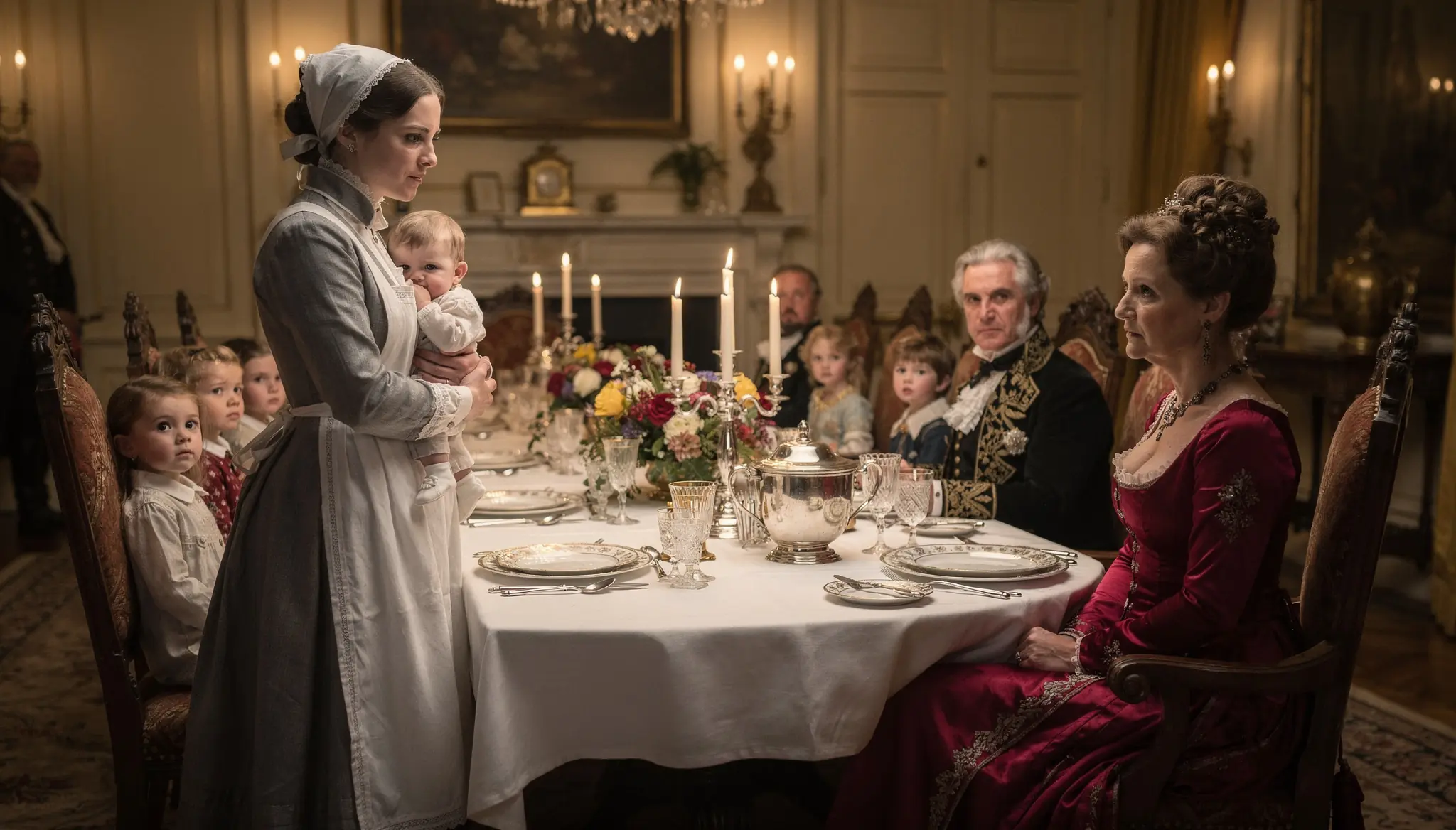 It was a Tuesday afternoon in May in the year 1819, and the marble hall of Stanwick House in Berkeley Square was fuller than it had any right to be. A Russian count had just arrived from the coast with a small daughter, a mountain of trunks, and a reputation for being the Tsar's own voice in London. His title was special envoy, but all London already called him the Russian ambassador.Two callers had stayed to look at him. Lady Honoria, the eldest daughter of the house, had come down to be looked at by him. And the Duke of Calderwood, who had brought the count from Harwich on behalf of the Foreign Office, stood by the door with his hat in his hand, saying nothing, which was his habit.In the middle of all this stood a child of six in a traveling coat too warm for the day, with both fists in the skirts of her father's coat, weeping in a language nobody in the hall admitted to understanding. Count Savolin was wanted at the Foreign Office within the hour. He was a tall, grave man with gray at his temples, and he looked, for a moment, more like a tired father than an envoy. He bent and spoke to the child softly.The child only cried harder."Marlow," said the Countess to the young woman who had come down from the nursery at the bell, "take the count's daughter upstairs. She is to have the small bed by Louisa."The nursemaid, a slender woman of five and twenty in gray, with her hair plainly dressed, came forward and held out her hand. The little girl shrank from it and said something quick and furious in Russian.That was when Mr. Pomfret, the hired interpreter, cleared his throat. And the Countess, impatient, told him to translate for the nursemaid, who was only the nursemaid and could not be expected to know what a Russian child was saying.Mr. Pomfret drew himself up. "The child says that she is fatigued from the journey and wishes to be taken up to rest."The nursemaid's face did not change. She knelt so that her eyes were level with the child's and said something very quietly—so quietly that the Countess, who was already turning to Mrs. Audley to remark on foreign children and their nerves, heard nothing at all.The child stopped crying. She looked at the nursemaid as if a window had opened in a wall, then she let go of her father's coat and put her hand into the gray sleeve.