Her granddaughter would become on her own. Amara left the office that afternoon in a kind of daze she could not fully describe. Driving home along familiar streets that suddenly felt unfamiliar, gripping a manila folder full of documents that could change everything about the life she had built. She thought about calling Ethan immediately, about rushing home to tell him the impossible news, but something held her back.
Some quiet and painful instinct she did not want to examine too closely. If she told him now, she would never truly know whether the man who stayed was staying for her or for the number that had just attached itself to her name. She decided sitting alone in her car outside their house that she would say nothing yet. She wanted, more than anything, to know the truth of her marriage before the truth of her fortune ever entered the room.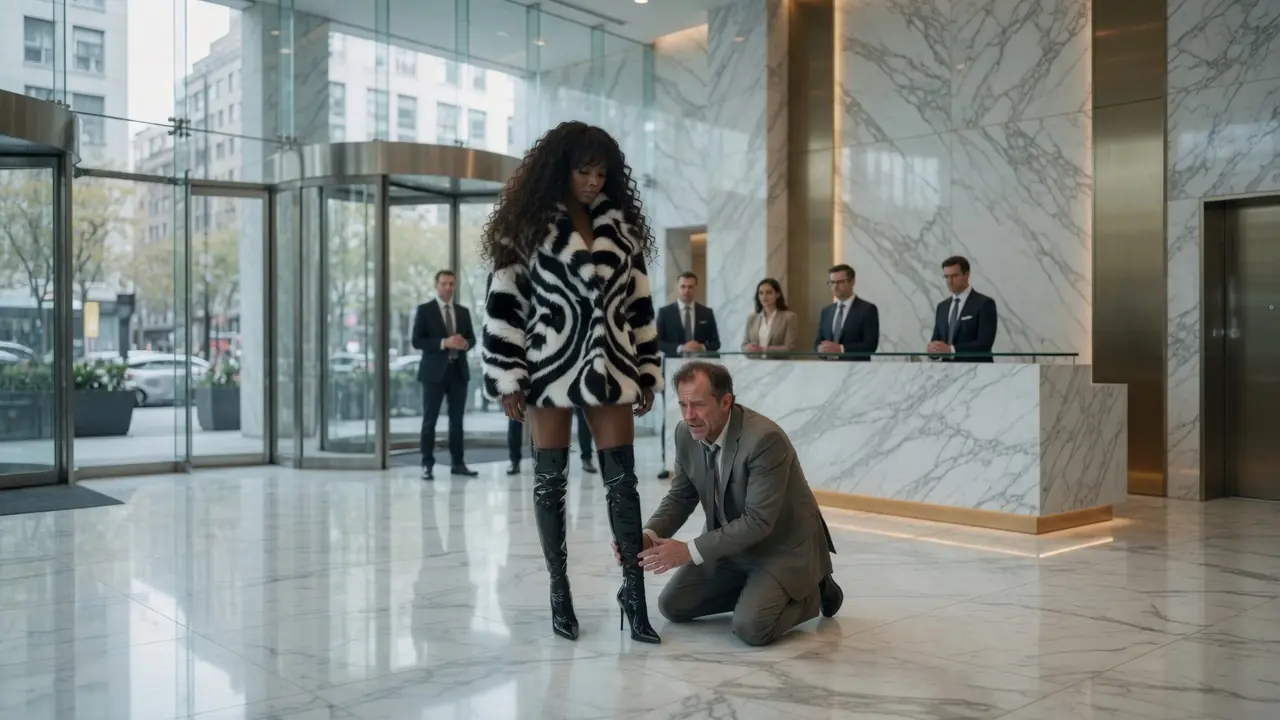
That same evening, while Amara was still turning the day's revelation over quietly in her mind, Ethan came home earlier than usual, his expression unusually rigid, his jaw set the way it got right before he said something he had clearly rehearsed. He sat her down at the kitchen table where they had eaten a thousand ordinary dinners together and without any warmth in his voice at all, he told her he wanted a divorce. He had already spoken to a lawyer. He had already begun drafting the paperwork.
Amara stared at him across the table, the manila folder from that afternoon still sitting untouched in her bag by the front door, and felt the two halves of her day collide in a way that nearly knocked the breath out of her. Ethan spoke quickly, as if he had practiced the words in his car on the drive home and wanted to get through them before his courage failed him. He told her he had fallen out of love a long time ago, that he wanted to feel alive again, that he wanted a life more exciting than the one they had built together in that quiet house with its careful budget and its predictable routines. He told her, without seeming to notice how cruel it sounded, that she was too content with being ordinary, that she had never pushed him to want more, that being married to her felt like standing still while the rest of the world moved forward without them.
Amara listened to all of it without interrupting, her hands folded in her lap, her expression calm in a way that seemed to unsettle him more than tears would have. She asked him only one question. She asked if there was someone else. Ethan hesitated for a long moment before admitting that yes, there was someone, a woman named Vanessa, who understood him in a way he felt Amara never had.
He said it gently, as though gentleness could soften the blow, but the words still landed exactly the way betrayal always lands, sharp and final. She could have told him everything right then. She could have mentioned the attorney's phone call, the manila folder in her bag, the number that had rewritten her entire future only hours earlier. Instead, she simply nodded and said that if this was truly what he wanted, she would not fight him on it.
In the weeks that followed, Ethan blamed his restlessness entirely on her, repeating to friends and co-workers that his wife had never encouraged his ambitions, that she had kept him small and cautious when he was capable of so much more. He told himself this story so many times that he began to believe it completely, using it to justify the excitement he felt whenever Vanessa called, whenever she sent him photographs from expensive restaurants, whenever she whispered that a man like him was wasted on a woman who wanted nothing more than a quiet, predictable life. Vanessa, for her part, played her role with practiced skill. She encouraged the divorce at every opportunity, telling Ethan that he deserved a partner who could match his energy and his appetite for life, someone who understood that success meant more than a steady paycheck and a modest house in a quiet neighborhood.
She never asked about Amara's feelings, never once wondered aloud whether the woman being left behind might be hurting. Her attention was fixed entirely on Ethan's potential, on the version of him she imagined once he was free of what she called his dead-weight marriage. Amara signed the divorce papers three weeks later in a lawyer's office that smelled of stale coffee. Her signature steady and unhurried, despite the storm quietly building beneath her calm exterior.
She said nothing about the inheritance, not to the lawyer, not to Ethan, not even to her closest friends who assumed she was simply enduring the divorce with unusual grace. Ethan signed his own copy with something close to relief written across his face, already imagining the new apartment he would share with Vanessa, the vacations they would take, the life that felt, to him, finally within reach. He believed, walking out of that office into the bright afternoon sun, that he had won something. He had traded a quiet, unremarkable life for a vibrant one, and he felt for the first time in years like a man who had made a bold and decisive choice about his own future.
Vanessa was waiting for him outside, leaning against her car with a satisfied smile. And when he told her the papers were signed, she kissed him and said that everything was finally about to change for both of them. She had no idea how right she was, though not in the way either of them expected. On the very same day the divorce was finalized, three states away, Margaret Ellis sat at her desk and began the quiet, methodical process of transferring the full weight of Eleanor Whitfield's estate into Amara's name.
Ethan was still content with a life he had decided was too small for a man like him. He had no way of knowing that the woman he pitied now controlled more wealth than he would earn in a dozen lifetimes at his current salary, and that she had built in the ashes of their marriage a life more substantial and more meaningful than anything he and Vanessa were constructing on borrowed money and rented rooms. It was on an ordinary morning, waiting in line at a coffee shop near his office, that Ethan happened to glance at a business magazine displayed near the register. Its glossy cover featured a striking photograph of a woman he recognized instantly, despite the unfamiliar confidence in her posture and the expensive but understated blazer she wore.
Beneath her photograph in bold letters ran a headline describing her as one of the city's most promising new business leaders, a woman whose personal fortune had recently been estimated at well over $100 million. Ethan stood frozen in that line, the magazine trembling slightly in his hand, staring at a face he had once seen every single morning across a kitchen table, now looking back at him from the cover of a magazine he never would have imagined she belonged on. Ethan did not buy the magazine. He simply stood there staring until the barista called his name twice and the woman behind him in line cleared her throat with visible irritation.
He walked out without his coffee at all, the image of Amara's face burned into his mind, and sat in his car in the parking lot for nearly twenty minutes before he could bring himself to search her name on his phone. What he found only deepened the disbelief settling into his chest like a stone. There were photographs of Amara at a charity gala dressed in a way he had never seen her dressed before. Confident and composed among a crowd of people who clearly respected her.
There were mentions of her scholarship fund, her investments, her design firm, all of it described with the kind of respectful admiration usually reserved for people who had spent decades building an empire, not months. He read article after article, his hands growing colder with each new detail until he finally understood that this was not a coincidence of shared names or a distant relative who happened to look like his ex-wife. This was Amara, his Amara, except she clearly wasn't his anything anymore. Ethan spent the rest of that day making phone calls.
First to mutual friends who offered only vague and careful answers. And then, in a fit of desperation, to the law firm that had handled their divorce, though they refused to discuss any details of a former client's private affairs. Finally, unable to bear the uncertainty any longer, he drove to the small county courthouse where public records were kept. And after nearly an hour of searching, he found what he was looking for.
A filing dated just weeks before their divorce was finalized, formally recognizing Amara Johnson as the sole beneficiary of the estate of one Eleanor Whitfield valued at over $100 million. The date struck him like a physical blow. The inheritance had been finalized before their divorce was even complete. If he had simply waited, if he had simply stayed even a few weeks longer, everything might have been different.
He sat in his car outside the courthouse for a long time doing the kind of frantic mental math that men do when they realize they have made an irreversible mistake, trying to calculate what portion of her fortune might legally have belonged to him as her husband. But the answer, when he finally forced himself to call a lawyer and ask directly, was simple and devastating. Because the inheritance came to Amara individually, through a will naming her specifically and exclusively, and because their state's laws protected inherited assets from division in divorce, regardless of timing, Ethan was entitled to nothing. Not one dollar.
Not one square foot of penthouse. Nothing at all. He drove home that evening in something close to a daze, replaying every conversation from the final months of his marriage, searching for some clue he might have missed, some sign that Amara had known and said nothing. He remembered her calm agreement to the divorce, her steady signature on the papers, her refusal to fight for anything, and what had once looked to him like weakness now looked, in hindsight, like something far more unsettling.
She had known, or at least suspected, and she had let him walk away anyway, without a single word of warning. That night, sitting across from Vanessa at their kitchen table, Ethan told her everything. The magazine cover, the courthouse records, the impossible number attached to his ex-wife's name. He expected sympathy, perhaps even excitement on his behalf, some acknowledgement of how unfair the whole situation was.
What he got instead was silence, and then a question that revealed, in a single sentence, exactly how little Vanessa's affection had ever had to do with him at all. She asked him where her share of the money was. Ethan blinked at her, certain he had misheard, and asked what she meant. Vanessa's expression had already begun to change, the warmth she usually performed for him draining out of her face and replaced by something colder and more calculating, something he had never seen directed at him before.
She told him plainly that she had assumed, all this time, that he was on the verge of some kind of promotion, some inheritance of his own, some hidden reserve of money that would eventually surface and justify the sacrifices she believed she was making by staying with him. She had not, she said with brutal honesty, signed up for a man with an empty bank account and a mountain of new debt. Ethan tried to explain that none of the money had ever been his to lose, that he had never promised her wealth he did not have, but Vanessa was no longer listening in any way that mattered. Over the following days, small things began disappearing from the apartment.
First her belongings, packed quietly while he was at work, and then, more alarmingly, money from their shared accounts, transferred out in amounts just below the threshold that might have triggered his bank's fraud alerts. She had, it turned out, memorized his passwords months earlier under the guise of helping him manage his finances. And she used that access with ruthless efficiency once she decided their relationship no longer served her purposes. By the time Ethan realized what was happening and rushed to freeze his accounts, Vanessa had already withdrawn the bulk of his remaining savings and maxed out two credit cards he had opened at her urging for a vacation they had taken to celebrate his freshly finalized divorce.
She left behind a single folded note on the kitchen counter, unsigned, explaining only that she needed a man who could actually provide the life she had been promised, and that she hoped he would understand there were no hard feelings, as though the destruction of his finances were simply a minor inconvenience between two reasonable adults. Ethan sat alone in the apartment that night, surrounded by the empty spaces where Vanessa's belongings used to be, staring at bank statements that showed numbers far worse than he had imagined possible. He had lost his wife, his savings, his credit standing, and the woman he had left everything for, all within the span of a few short months, and he had nothing at all to show for any of it, except a mailing address he could no longer really afford, and a growing, sickening realization about the true nature of the choices he had made. He tried calling Vanessa dozens of times over the following weeks, first with anger, and then with something closer to pleading, but her number had already been disconnected, and none of their mutual acquaintances seemed to know where she had gone, or seemed particularly surprised that she had left the way she did.
Several co-workers mentioned, almost as an afterthought, that Vanessa had a history of moving quickly through relationships with men who showed promise, and moving on just as quickly once that promise failed to materialize into anything concrete. Ethan realized, far too late, that he had never actually known her at all, that everything about their relationship had been a careful performance aimed at a payoff that never came, because the payoff had never truly belonged to him in the first place. He thought often, in those bitter weeks, about the life he had walked away from without a second glance, about the woman who had never once asked him for anything extravagant, who had saved quietly, and dreamed modestly, and loved him without condition for nine long years. He thought about how he had called her boring, called her small, called her a woman without ambition, and how all of that judgment now curdled painfully in his stomach every time he remembered the calm, steady way she had signed the divorce papers without ever once mentioning the fortune that would, within days, make her one of the wealthiest women in the entire region.
While Ethan sat alone in the wreckage of his choices, Amara's life had continued to expand in directions she never could have imagined during those quiet years of counting pennies and hoping her marriage would find its way back to solid ground. She opened a design academy in a renovated warehouse near the river, offering full scholarships to students from backgrounds like her own, students with talent and drive, but no family connections to open doors that talent alone rarely opened on its own. She remembered vividly what it had felt like to sit in rooms full of people who assumed she did not belong there simply because of how she looked or where she came from, and she built her academy specifically to dismantle that same barrier for others. She expanded her investment portfolio carefully, focusing much of her attention on businesses owned by other Black entrepreneurs who struggled, as she once had, to secure funding from traditional banks that seemed to find endless reasons to say no.
She funded a small chain of community health clinics in underserved neighborhoods, established a grant program for single mothers pursuing vocational training, and quietly became one of the most significant philanthropic forces in the city, all while continuing to dress simply and drive a car that, while newer than her old one, still cost far less than what most people in her financial position would have chosen. Friends who reconnected with her during this period noticed something different in the way she carried herself. Not arrogance, never that, but a settled confidence that seemed to come from finally living in complete alignment with her own values. She spoke often, when asked about her sudden rise, about the importance of patience, about how real strength often looked quiet from the outside, about how the people who underestimated you were usually the ones who ended up needing you most in the end.
Though she rarely elaborated on exactly who she meant by that. She dated no one during this time, despite plenty of interest from men who recognized both her success and her steady, grounded warmth. She told Margaret Ellis, during one of their regular meetings to review the academy's finances, that she was not interested in being wanted for what she now had, only in being loved someday for exactly who she had always been, long before any of this money existed. Margaret, who had grown genuinely fond of her over their months of working together, simply nodded and said that the right person, when he or she finally arrived, would understand the difference immediately.
Amara's Academy graduated its first class of twenty-two students that spring, and she stood at the front of a modest auditorium to deliver a short speech, telling the young designers gathered there that talent without opportunity was simply a door that never opened, and that her only goal was to make sure none of them ever had to knock as long or as hard as she once had. The applause that followed was warm and genuine, and for the first time in longer than she could remember, Amara felt something close to complete peace settle over her, unhurried and unforced, exactly the way she had always believed real happiness was supposed to feel. It was only a few weeks after that graduation ceremony, on a bright afternoon while she was reviewing blueprints in the lobby of her design firm, that the front desk receptionist approached her with an unusually hesitant expression and told her that a man was waiting outside asking to see her, refusing to leave until she agreed to speak with him. Amara did not need to ask his name.
She walked out into the lobby, past employees who quietly slowed their work to watch, and found Ethan standing near the entrance, looking thinner than she remembered. His clothes noticeably less polished, his posture lacking the confident swagger he had once carried so easily. He looked at her the way a drowning man looks at a rope, desperate and disbelieving all at once. And when he finally spoke, his voice cracked in a way she had never once heard during their nine years of marriage.
He told her he was sorry, that he had made the worst mistake of his life, that leaving her had been an act of pure blindness he would regret for the rest of his days. He told her he still loved her, that he had always loved her, even when he was too foolish and too vain to recognize it, and that he wanted, more than anything, a chance to make things right between them. His words tumbled out quickly, almost frantically, as though he believed that sheer volume might somehow overwhelm the years of damage he had caused, with far fewer words spoken far more coldly. Amara listened to all of it without interrupting.
The same steady calm she had shown on the night he first asked for a divorce settling over her now, though this time it carried a different weight entirely. When he finally finished speaking, she asked him a simple question, gently, but without softness. She asked him what exactly he loved. Ethan hesitated, clearly unprepared for the question, and Amara continued before he could answer, telling him quietly that she suspected what he actually loved was not her, but the life he now imagined she had, a life he had glimpsed only after it was already too late to claim any part of it.
Ethan dropped to his knees right there in the lobby, in front of employees and clients and anyone else who happened to be passing through the glass doors at that exact moment, begging her to give him another chance, telling her he did not care about the money, that he only wanted her back, that he would prove himself worthy this time if she would simply let him try. The lobby had gone almost entirely silent. Every person present pretending to focus on their phones or their paperwork while straining to hear every word of a scene none of them would ever forget. Amara looked down at him for a long moment, and something in her chest, some old and tender part of her that had once loved this man completely, ached briefly at the sight of him kneeling there in obvious pain, but the ache passed quickly, replaced by a clarity she had earned through months of rebuilding a life on her own terms, without him, without his approval, without needing his validation to feel whole.
She reached down, not to help him up, but to retrieve a folder from her assistant, who had appeared quietly at her side without being asked. She held the folder out to him and asked him to stand, telling him in a voice that held no cruelty, but no softness either, that everything he needed to understand about their marriage was contained inside. Ethan rose slowly to his feet, his knees still trembling, and opened the folder with hands that were not entirely steady. Inside, he found a copy of their finalized divorce decree, the same document he had signed with such relief months earlier, now paired with a single handwritten letter, folded neatly beneath it.
He recognized Amara's handwriting immediately, the careful, deliberate script she had always used, the same handwriting that once filled his lunch bags with small notes he had barely bothered to read. The letter did not accuse him of anything. It did not list his failures or catalog the pain he had caused. Instead, it thanked him, plainly and without irony, for leaving when he did.
She wrote that his departure had forced her to discover a strength in herself she might never have found otherwise, a strength that had allowed her to build something meaningful entirely on her own terms, without compromise, without waiting for anyone else's permission or approval. She wrote that she no longer felt anger toward him, only a quiet gratitude that their story had ended exactly when it needed to, before either of them wasted any more years pretending it was something it was not. Ethan read the letter twice, standing there in the middle of the lobby, and by the time he finished, something inside him finally cracked open completely. He understood, with a clarity that arrived far too late to change anything, that what he had lost was never really about the money at all.
He had lost a woman who had loved him without condition for nearly a decade, who had never once asked him to be anyone other than exactly who he was, and he had thrown that away chasing a version of excitement that turned out to be nothing but a costume worn by someone who had never cared about him in the first place. He looked up at Amara, wanting to say something, anything that might undo even a fraction of the damage, but she was already turning away. Her assistant fell into step beside her, already discussing the afternoon schedule as though the last several minutes had simply been a brief and unremarkable interruption in an otherwise ordinary day. Ethan stood alone in the lobby.
The folder still open in his hands, he watched the woman he had once called ordinary walk confidently toward an elevator that would carry her back up into a life he no longer had any place in. He left the building that day without saying another word to anyone, and though he tried in the weeks that followed to reach out to her a few more times through letters and messages that always went unanswered, he eventually understood that some doors, once closed with enough finality, simply do not open again. No matter how sincerely or how desperately a person knocks on the other side. Amara, meanwhile, had already moved forward.
Her attention fixed on an upcoming appearance she had agreed to make at a regional conference for entrepreneurs and community leaders, an invitation she had initially hesitated to accept before deciding that her story, or at least the part of it she was willing to share, might genuinely help someone else find their own way through a similar darkness. The conference took place in a large hall downtown filled with rows of entrepreneurs, students, and community leaders who had come to hear from a woman whose rise had become something of a quiet legend throughout the region, spoken about in admiring tones by people who barely knew half the real story behind it. Amara walked onto the stage dressed simply, the same understated elegance she always favored, and stood for a moment in front of the microphone, looking out at hundreds of faces waiting to hear what she had to say. She began not with numbers or achievements, but with a story about a young woman who once sat quietly in rooms where nobody expected her to succeed, who saved small amounts of money out of every paycheck because that was the only kind of security she had ever known how to build for herself.
She spoke about marriage, carefully and without naming anyone directly, describing how she had once believed that loyalty and love were simply things a person gave freely and received in equal measure, only to learn, through painful experience, that some people only value what they can see and measure and show off to others. She told the audience that money, in her experience, did not change a person's character so much as it revealed what had always been quietly hiding underneath the surface. She said that a person who abandons you when you have little will almost always abandon you again once you have more because their loyalty was never truly attached to you in the first place, only to what they believed you could eventually provide them. The room grew very still as she spoke.
Many in the audience recognized in her careful words the shape of their own private histories. She spoke about her academy, about the young designers she had watched grow into confident professionals, about the small businesses she had helped fund that were now employing dozens of people who might otherwise have struggled for years to find stable work. She spoke about her grandmother, mentioning her only briefly, describing a woman who had watched from a distance for decades before finally, in her final act of love, choosing to hand her granddaughter not just wealth, but the freedom to discover exactly who she was capable of becoming without anyone else's help. Her closing words were simple, delivered without dramatic flourish, exactly the way she delivered most things in her life.
She told the audience that she hoped every person listening would learn to recognize their own worth long before circumstance forced the lesson upon them, that true partners reveal themselves not in moments of comfort, but in moments of difficulty, and that the people who once made you feel small were rarely the ones qualified to judge how large you were always capable of becoming. The room rose to its feet in applause that lasted far longer than she expected, a warm and sustained wave of appreciation that seemed to fill every corner of the hall. Near the back, seated alone in one of the last rows, Ethan sat quietly among strangers, having learned of the event through a mutual acquaintance and unable to resist the pull of seeing her one final time, if only from a distance. He watched her accept the applause with the same quiet grace she carried through everything, and he understood, watching her, that whatever chance he once had of standing beside her had closed permanently months earlier in a courthouse filing he had discovered days too late to matter.
He slipped out of the hall before the closing remarks concluded, walking alone through the parking lot in the fading afternoon light, carrying with him a lesson he now understood he would spend the rest of his life trying, and mostly failing, to fully absorb. He thought about Vanessa only briefly these days, mostly with a kind of bitter embarrassment rather than any lingering affection. And he thought about Amara far more often than he ever admitted to anyone, replaying again and again the quiet dignity she had shown him even in the moment of his most desperate humiliation. Amara, meanwhile, stepped outside through a side entrance after the conference concluded, declining several requests for further interviews with a polite but firm smile, and stood for a moment in the cool evening air, looking out over a city skyline that had once felt entirely out of reach, and now simply felt like home.
She thought, briefly, about the woman she had been nine years earlier, folding chairs borrowed from a neighbor, baking her own wedding cake, believing that love alone could carry a marriage through every hardship it might face. She did not regret that woman, not for a single moment, because everything that woman had endured had ultimately built the foundation for exactly who she had become. She was no longer a wife waiting anxiously for her husband's attention, no longer a woman quietly wondering whether she was enough, no longer someone who measured her own worth by whether or not someone else chose to stay. She had become, instead, precisely what her grandmother had always quietly hoped she would become, a woman fully in command of her own life, generous with her success, unshaken by the betrayals that had once threatened to define her, and utterly, completely free.
She got into her car, glanced once more at the lit windows of the conference hall behind her, and drove home through streets she now knew intimately as her own, toward a penthouse that held nothing borrowed and nothing broken, only the quiet, steady proof of a life she had built entirely on her own terms, brick by brick, decision by decision, exactly the way she had always believed the strongest things were meant to be built.