The glass doors of Williams & Associates' flagship store reflect Marcus Williams's tired face as he pushes through. His $3,000 Armani suit wrinkles from the cross-country flight. Store manager Ashley Chen glances up from her tablet, her eyes scanning his disheveled appearance with practiced disdain. Excuse me, sir. Are you lost?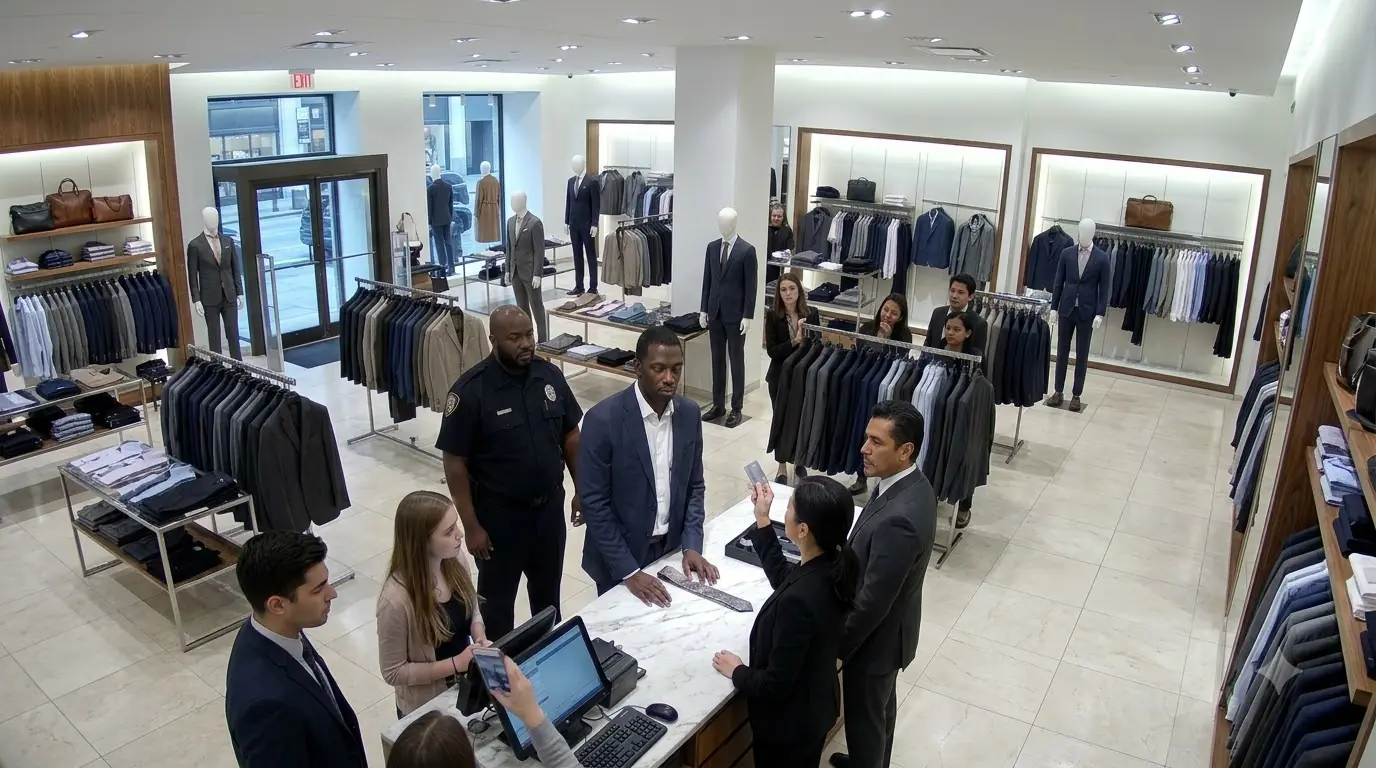
The question hangs in the air like smoke. Polished marble floors echo each footstep. Fluorescent lights buzz overhead, casting harsh shadows. The air conditioning raises goosebumps on Marcus's arms as he processes the tone. Not helpful, but suspicious.
Marcus Williams stands 6'2 in his Italian leather shoes. 42 years old, Harvard MBA, CEO of a 127-store retail empire worth $2.3 billion. But right now he's just another black man in an expensive store being watched. He's been gone 6 months. His mother's funeral then extended grief leave.
The board insisted he take time. “Family first,” they said. Now he's back, wanting to reconnect with the business that consumed his 20s and 30s. An unannounced visit to store one, his first location, his baby. Ashley Chen, 28, three years with the company, taps her manicured nails against her tablet.
She's worked her way up from sales associate to manager. Good numbers, strong performance reviews, but she's never met the CEO, never attended the mandatory diversity training sessions that were postponed during his absence. Her eyes dart to the security guard, Dave, a former police officer who understands her silent signals. Dave shifts position, casual but alert. Other customers browse nearby.
A middle-aged white woman examining cashmere sweaters, a young professional couple debating tie colors. They receive warm smiles, helpful suggestions, genuine engagement. Marcus notices everything. The quarterly sales reports scattered across Ashley's desk. Numbers he approved last month.
Projections he signed off on. The new inventory management system he'd authorized. The company mission statement mounted on the wall behind her. Dignity and respect for every person, every interaction. He approaches the men's section, fingers brushing against fabric.
The prices are higher than he remembers authorizing. The quality seems lower. Six months away and already things are slipping. Can I help you find something? Ashley's voice carries across the store, but she's addressing the white couple.
Her tone is honey sweet, professional, accommodating. Marcus lifts a navy blazer from the rack. Hand-stitched lapels. Mother-of-pearl buttons. $895. He knows the cost breakdown. $127 in materials, $89 in labor, $194 in overhead.
The profit margin that pays Ashley's salary. “Sir.” Ashley appears beside him, her smile thin. That particular item is quite expensive. We have more affordable options in the back. The polite dismissal stings more than outright hostility.
It's the assumption that he doesn't belong, can't afford, shouldn't even be looking. Marcus has felt this before at banks, at country clubs, at board meetings before he owned the room, but never in his own store. He sets the blazer back on the rack. I'm just browsing, of course. Ashley's smile doesn't reach her eyes.
Take your time, but please don't disturb the merchandise unless you're seriously considering a purchase. The fluorescent lights seem brighter now. The air conditioning colder. Marcus realizes he's being managed, handled, dismissed in his own store by his own employee using policies he never approved. Dave, the security guard, moves closer, pretending to straighten a display of belts.
His radio crackles softly. Unit three, status check. Marcus pulls out his phone, scrolls through emails, board meeting minutes, profit loss statements, vendor contracts, his digital signature on dozens of documents, the mundane paperwork of running a retail empire. He looks up to find Ashley watching him intently. Her expression suggests she's waiting for him to pocket something to give her a reason to call security.
The white couple approaches the register, arms full of purchases. Ashley's transformation is immediate. Bright smile, animated conversation, genuine enthusiasm. She recommends accessories, suggests coordinating pieces, offers their premium alteration service. Would you like to sign up for our VIP membership?
It comes with exclusive previews and 15% off all future purchases. The transaction takes 12 minutes. Gift wrapping, loyalty program, enrollment, email capture. Ashley treats them like valued customers because that's what they look like to her. Marcus watches and waits.
This is his test, not of Ashley, but of the culture he built, the values he thought he'd instilled, the training programs he'd implemented, the policies he'd written. He sees the moment as a measure of his ethics and realizes the values he thought he had instilled are failing. The white couple leaves with their purchases, chatting about their great experience. Ashley turns her attention back to Marcus, her smile evaporating like morning dew. Sir, is there something specific you need?
A black man in an expensive suit being watched, being judged, being managed. Ashley shadows him from a distance, her heels clicking on marble floors. She speaks in stage whispers to other employees, heads turning in his direction. The whispers spread like ripples in a pond. Customer in men's section, keep an eye on him.
Expensive suit, but something feels off. Dave's watching. Don't worry. Marcus examines a rack of ties, noting the pricing errors. Several items marked 40% higher than his approved rates.
He pulls out his phone, takes a photo of the price tag. Market research, he tells himself. But really, he's documenting what feels like evidence. Ashley appears beside him instantly. Sir, photography isn't allowed in the store.
Marcus looks up, surprised. “Since when?” “Company policy. Trademark protection.” She points to a small sign near the entrance. Didn't you see it when you came in? He didn't because it wasn't there Six months ago.
Because he never approved such a policy. Because someone made decisions without him. “I’m sorry. I didn’t know.” “Now you do.” Ashley's tone sharpens. Please delete the photo.
Marcus hesitates. This is his store, his merchandise, his pricing. But he's not supposed to know that yet. Of course. He deletes the photo, but the damage is done.
In Ashley's mind, he's crossed a line, gone from suspicious to problematic. She signals Dave again, more urgently this time. The security guard approaches, his bulk casting a shadow over the tie display. Everything okay here, ma'am? This gentleman was taking photos of our merchandise.
I've asked him to stop. Dave's eyes narrow. Sir, I'm going to need you to step over here with me. This is escalation. From suspicious glances to direct confrontation.
Marcus feels the weight of every eye in the store. Other customers pretend to shop while listening intently. Employees gather at safe distances, watching the drama unfold. I deleted the photo, Marcus says calmly. Is there a problem?
Store policy, sir. No photography, no exceptions. I understand. It won't happen again. Dave doesn't move.
I'll need to see your phone. Confirm the photos deleted. Now it's a dignity issue. Marcus has every right to refuse, but refusal will escalate further. He's trapped between compliance and self-respect.
“Here.” Marcus shows his phone’s camera roll. “Deleted.” Dave examines the screen, satisfied. Appreciate your cooperation, sir. But the interaction has shifted something fundamental. Marcus is no longer a customer.
He's a problem to be managed, a threat to be contained. Marcus selects a tie instead. A silk tie with hand-rolled edges, $247. He's worn identical ties to board meetings, television interviews, White House dinners, but Ashley's eyes say he can't afford it. At the register, the scrutiny intensifies.
Ashley examines the tie like it might be contaminated. She scans the barcode three times, frowning at her screen. I'll need to see some identification. Marcus raises an eyebrow. For a tie store policy, purchases over $200 require ID verification.
Since when? Ashley's patience evaporates. Sir, do you want to buy this tie or not? Marcus produces his driver's license. Ashley examines it like a border guard, comparing the photo to his face.
She types his information into her system, taking longer than necessary. “Credit card.” Marcus hands over his platinum Amex. Ashley holds it up to the light, checking for authenticity. She runs her finger over the embossed numbers, testing their raised texture. This is a very expensive card, she says suspiciously.
How did you get it? The question hangs like an accusation. Other customers in line exchange glances. Someone pulls out their phone, starts recording. I qualified for it, Marcus says simply.
Ashley runs the card through her machine. Declined. She tries again. Declined. Sir, your card isn't working.
Marcus knows why. He's been traveling, triggering fraud alerts. A simple phone call would fix it. But Ashley's expression suggests she thinks the card is stolen. Let me call the bank.
That won't be necessary. Ashley's voice carries across the store. Tom, can you come to register three? Tom Rodriguez, the general manager, appears within minutes. 45 years old, 8 years with the company, solid performance record.
He should recognize Marcus from company photos, training videos, town halls. But he's focused on the situation, not the man. What seems to be the problem? Customer's card was declined twice. High-end merchandise.
Suspicious behavior. Tom looks at Marcus with practiced assessment. Sir, do you have an alternate form of payment? The card works fine. Let me call.
Sir, I'm going to ask you to step aside. You're holding up the line. Marcus feels the humiliation burn in his chest. Behind him. Customers mutter impatiently.
Ashley and Tom exchange knowing looks. Dave moves closer, his hand resting on his radio. This is the moment, the breaking point. Marcus can end this with two words. “I’m the CEO.” But something stops him.
Maybe it's the need to see how far this goes. Maybe it's the realization that this happens to others who don't have his power. He steps aside, still holding the tie. Tom processes the next customer, a young white woman buying a $890 scarf. No ID required.
No card verification, just a friendly transaction between equals. Have a wonderful day, Ashley tells her warmly. Come back soon. The contrast is stark, undeniable, documented by the customer still recording with her phone. Marcus's phone buzzes.
Text from his bank. Unusual activity detected. Reply YES to authorize this charge. He types yes, then approaches the register again. The card should work now.
Ashley sigh dramatically. Sir, you've already disrupted our operation once. I'm not comfortable processing this transaction. I'd like to speak with your manager. I am the manager.
Then I'd like to speak with your supervisor. Ashley's face hardens. Mr. Rodriguez is the general manager. He's already addressed your situation. Tom steps forward.
Sir, I think there might be a misunderstanding. This particular store caters to a specific clientele. You might find better prices at the outlet mall across town. The words hit like a physical blow. Not just the dismissal, but the assumption, the coded language that says, "You don't belong here.
Try somewhere more appropriate for your kind." Marcus looks around the store. His store, the mission statement on the wall, the diversity posters from last year's campaign, the company values he wrote himself. “I understand,” he says quietly, crystal clear. The customer with the phone is still recording. Her expression shows she understands what she's witnessing.
Social media will amplify this moment, make it viral, force accountability. But Marcus makes a different choice. He sets the tie on the counter, and walks toward the exit. But he doesn't leave. Instead, he moves to the men's section, selects an $800 suit jacket, and returns to the register.
"I'd like to purchase this," he says calmly. Ashley's eyes widen. Tom shakes his head in disbelief. Dave's hand moves to his radio. Sir, Tom says firmly.
I think it's time for you to leave. I'm a customer. I have money. I want to buy this jacket. You've already caused enough disruption.
What disruption? I tried to buy a tie. Now I want to buy a jacket. The standoff intensifies. Other customers stop pretending to shop.
Employees gather at safe distances. The store's normal rhythm grinds to a halt. Ashley leans toward Tom, whispers urgently. He nods, then signals Dave. Sir, I'm asking you to leave voluntarily.
Don't make this harder than it needs to be. Marcus holds the jacket, feeling its weight. Italian wool, perfect construction, his signature style. In his closet at home, he has a dozen identical jackets, but this one has become a symbol. I'm not leaving until I buy this jacket.
Dave steps forward, his presence imposing. Sir, you're being asked to leave. Continued refusal constitutes trespassing. The legal threat hangs in the air. Marcus could push back, demand his rights, escalate to police involvement, but he's seen how those encounters end for men who look like him.
Instead, he does something unexpected. He laughs. Not bitter laughter, but genuine amusement. As if he's seeing a joke no one else understands. What's so funny?
Ashley demands. Marcus looks at her, then at Tom, then at Dave. You have no idea what you've just done, sir. You have absolutely no idea. He sets the jacket on the counter, pulls out his phone, and makes a call.
“This is Marcus Williams,” he says clearly. I need an emergency conference call with Store One management right now. The name means nothing to Ashley, but Tom's face goes pale. Dave's hand drops from his radio. Marcus continues into the phone.
Yes, I'll hold. He looks at the assembled group, Ashley, Tom, Dave, the gathering crowd of customers and employees. His expression is calm, almost serene. You might want to get comfortable, he tells them. This is going to be interesting.
The phone rings once. Corporate headquarters 3,000 miles away in Seattle. Marcus Williams's corner office where his assistant Jennifer handles his calendar, his emails, his life. Mr. Williams's office, Jennifer speaking. Jennifer, it's Marcus.
I need an immediate conference call with store 1 management. Of course, sir, are you calling from your office line? The system shows I'm calling from inside store 1. Patch me through to the general manager's office phone. Now, Jennifer's efficiency kicks in.
She's worked for Marcus for 7 years. Knows his voice, his moods, his methods. Right away, sir, please hold. Marcus keeps the phone pressed to his ear, watching Ashley's face as confusion replaces confidence. Tom shifts uncomfortably, recognition dawning in his eyes.
Dave maintains his position, but no longer looks certain. The store's background noise fades to a hum. Cash registers, soft music, customer conversations. Marcus built this soundscape, designed this environment. Every detail reflects his vision of retail excellence.
But right now, it feels like a foreign country. The phone rings in Tom's office. He glances at Marcus, then at the phone, then back at Marcus. His face shows the terrible mathematics of realization. Should I answer that?
Tom asks quietly. Marcus nods toward the phone. “It’s for you.” Tom walks to his office, visible through glass panels. His voice carries across the store. Tom Rodriguez, general manager.
Then silence. Tom's face goes white. He looks through the glass at Marcus, who gives a small wave. Yes, sir. He's here in the store right now.
Ashley follows Tom's gaze, her confidence cracking like thin ice. Who is he talking to? Marcus ends his call, slides the phone into his pocket. The store feels different now, charged, electric, like the moment before lightning strikes. Ashley, he says gently, have you ever seen a photo of our CEO?
She shakes her head, but her eyes show dawning comprehension. He's been on sabbatical for six months. Family emergency, but he's back now. Tom emerges from his office, his face ashen.
He approaches Marcus with the caution of a man walking toward a cliff edge. "Mr. Williams, I—we—" Marcus raises a hand, stopping him. "Tom, I need you to call an all-hands meeting right now. Every employee currently in the store." "Sir, I—" "Right now, Tom." Tom reaches for the store's intercom system. His hand shakes slightly as he lifts the microphone. Attention all Williams & Associates team members, please report to the main floor immediately for an emergency meeting. All associates, please report to the main floor.
The store transforms. Employees emerge from stock rooms, offices, fitting rooms. They gather in a semicircle, faces showing curiosity mixed with concern. Emergency meetings usually mean bad news. Layoffs, closures, corporate restructuring.
Marcus looks at the assembled group. 12 people, mostly young, mostly diverse. Good people trying to do good work, but they've been trained by managers who never received his training. Supervised by people who missed his message. Ashley stands apart from the group, her face pale.
She's beginning to understand the magnitude of her mistake. But understanding and accepting are different things. Marcus thinks about his mother's funeral six months ago. The church packed with people whose lives she'd touched. The stories they told about her kindness, her fairness, her refusal to judge people by their appearance.
Power isn't about proving you belong, she'd told him when he was young and angry. It's about changing the system so everyone belongs. He'd built Williams & Associates on that principle. Hired diverse managers, implemented bias training, created policies that promoted dignity. But policies on paper don't change hearts.
Training sessions don't eliminate unconscious prejudice. Sometimes you have to experience the system to understand its failures. Marcus steps forward, his voice carrying across the store without being raised. I want to tell you about something that just happened. Something that happens in retail stores across America every day.
He begins to speak not as a CEO but as a customer. He describes the suspicious glances, the assumptions, the different treatment. He talks about the tie purchase, the credit card drama, the suggestion that he shop elsewhere. The employees listen in growing discomfort. Some recognize the behavior.
Others realize they've been complicit in it. The most painful part, Marcus continues, wasn't the individual actions. It was the system that enabled them, the culture that made them feel normal. Ashley tries to interrupt. "Sir, I was just following—" "Ashley," Marcus says gently, "you were following instincts." Instincts shaped by a society that teaches us to fear certain people, to make assumptions based on appearance, to treat dignity as conditional. He's not yelling. He's not threatening.
He's teaching the way his mother taught him to channel anger into action, pain into purpose. I want you to think about your worst day, he tells the group. A day when you felt small, dismissed, invisible. When someone looked at you and saw a stereotype instead of a person. Heads nod.
Everyone has that day, that moment, that memory. Now imagine that day happening every time you shop, every time you enter a store, every time you try to buy something with your own money. The silence is profound. Customers have stopped pretending to shop. They're listening, learning, becoming part of something larger than a transaction.
Marcus reaches into his pocket, pulls out his business card. He hands it to Ashley. This is who I am. But more importantly, this is who I was before you knew who I am. I was a customer, a human being, someone deserving of respect regardless of my title or my bank account.
Ashley stares at the card. CEO Williams & Associates. The company logo she sees every day. The name on her paychecks. The signature on her employment contract.
"Mr. Williams," she whispers. "I'm so sorry. I didn't know." "That's exactly the point," Marcus says quietly. "You didn't know."
And you treated me based on what you thought you saw rather than who I actually am. Marcus looks around the store, his store, and makes a decision that will echo far beyond this moment. "I want to make a purchase," he says, walking back to the register. "I want to buy that suit jacket the same way any customer should be able to buy it." He places the jacket on the counter, pulls out his credit card, and waits. Ashley's hands shake as she reaches for the scanner.
This transaction will either redeem her or destroy her. The choice is hers. Ashley's hands tremble as she lifts the scanner. The $800 jacket lies between them like evidence in a trial. Every employee, every customer, every person in the store understands the weight of this moment.
Marcus watches her face, seeing the internal struggle, fear, embarrassment, confusion, desperation. She's processing the reality that she spent the last hour treating her CEO like a criminal. “The price is $799.99,” she says, her voice barely audible. “I know,” Marcus replies calmly. I approved that price point last quarter.
The scanner beeps. The register display shows the amount. Ashley looks at the credit card in her hand. The same card she'd questioned. Suspected, nearly confiscated.
“Will this be cash or credit?” she asks, the irony bitter in her mouth. “Credit. The same card you said looked suspicious.” Tom Rodriguez stands nearby, his face pale. 8 years with the company. Solid performance reviews, a wife and two kids depending on his income.
He knows his career hangs in the balance. Mr. Williams, Tom says, I need to apologize. We have no excuse for Marcus raises a hand, stopping him. Tom, I need you to do something for me. Call security footage from the last hour.
"I want every angle, every interaction, every moment documented." "Sir, I don't think—" "Not for punishment. For training. This is going to become a case study." Dave, the security guard, shifts uncomfortably. He's been in law enforcement for 15 years, seen every type of situation, but he's never been on the wrong side of a power dynamic this extreme.
"Sir," Dave says, "I was just doing my job." "Your job," Marcus replies, "is to make customers feel safe. All customers. Did I feel safe, Dave?" The question hangs in the air.
Dave's radio crackles softly, another reminder of the authority he wields, the assumptions he makes, the split-second decisions that can destroy lives. Ashley runs the credit card. It processes instantly. No fraud alerts, no verification needed. The same card that looked suspicious now works perfectly.
"Would you like a receipt?" she asks. “Yes. And I want the extended warranty, the premium garment bag, and enrollment in your VIP program.” Ashley's eyes widened. Sir, you don't need to. I want the full customer experience, the same experience you offered the white couple who were here earlier.
The comparison cuts deep. Everyone remembers the warm service, the upselling, the genuine enthusiasm. The contrast with Marcus's treatment is stark, undeniable, documented. Ashley processes the add-ons, her movements mechanical. Each keystroke feels like a small confession, an admission of guilt.
The receipt prints in sections. Purchase, warranty, membership, confirmation. "Your total is $847.23," she says. Marcus takes the receipt, examines it carefully. “Perfect.
Exactly what I expected.” He picks up the garment bag, feels its weight. Inside is a jacket identical to dozens in his closet, but this one means something different. This one cost more than money. Now, Marcus says, I have a question for everyone here. The store falls silent.
Employees, customers, even the background music seems to pause. What happens next? Tom clears his throat. Sir, we'll conduct a full investigation, review our policies, implement additional training. That's not what I mean.
Marcus' voice carries across the store. I mean, what happens to the next person who walks through those doors? The next customer who doesn't look like what you expect wealth to look like. Ashley's face crumbles. Mr. Williams, I'll never make this mistake again.
I swear to you, it's not about you anymore, Ashley. It's about the system that created this situation. The culture that made you feel justified in your actions. Marcus walks to the center of the store beneath the skylight that bathes everything in natural light.
He designed this space to feel welcoming, inclusive, aspirational, but today it feels like a courtroom. I want to tell you a story, he says, about a young black man who walked into a bank 15 years ago. He wore his best suit, carried a detailed business plan, had perfect credit. But the loan officer saw a risk, a threat, a statistic. The audience is captivated.
This isn't just a CEO addressing employees. This is a master storyteller revealing the origin myth of their company. That young man almost gave up, almost walked away, almost let prejudice win. Marcus pauses, letting the moment build. But his mother told him something that changed everything.
He looks at Ashley, then at Tom, then at each employee in turn. She said, "Power isn't about proving you belong. It's about changing the system so everyone belongs." The words echoed through the store like a mission statement, a call to action, a promise. I built Williams & Associates on that principle. Every store, every policy, every training program was designed to create a space where everyone feels valued, where dignity doesn't depend on your bank account or your appearance.
Marcus pulls out his phone, opens the camera app. I want to show you something. He displays his photo gallery, images from the past hour, the suspicious glances, the discriminatory treatment, the moment of revelation, but also the faces of employees learning, growing, changing. These photos will become part of our training materials, not to shame anyone, but to show what unconscious bias looks like in action, what it costs, what it teaches. Ashley steps forward, tears in her eyes.
Mr. Williams, I know I can't undo what happened, but I want to learn. I want to be better. Marcus studies her face, seeing genuine remorse mixed with fear. Ashley, you're not fired. You're enrolled in our new comprehensive bias training program.
You'll help develop it, test it, refine it. Her relief is palpable. Thank you, sir. Thank you for this chance. Don't thank me yet.
This program won't be easy. It'll challenge everything you think you know about customer service, about profiling, about the assumptions we make. Tom steps forward. Sir, I take full responsibility for Tom. You're not just responsible.
You're accountable. You'll lead the implementation across all 127 stores. Every manager, every supervisor, every employee will go through this training. The scope of the undertaking is staggering. 127 stores, thousands of employees, a complete cultural transformation.
But Marcus has the resources, the authority, the will to make it happen. Dave. Marcus calls to the security guard. You're going to help us redesign our security protocols. Make them about actual safety, not assumed threats.
Dave nods, understanding his role in the solution. Yes, sir. Whatever you need. Marcus looks around the store one final time at the employees who've learned something about themselves, at the customers who've witnessed something profound, at the space he created to reflect his values.
This is just the beginning, he says. Real change takes time, effort, constant vigilance, but it starts with moments like this. Moments when we choose to see people as they are, not as we assume them to be. He heads toward the exit, garment bag in hand, but he stops at the door, turns back. One more thing.
I want you to remember this feeling, the discomfort, the embarrassment, the recognition. Don't let it fade. Let it motivate you. The glass doors reflect his image as he pushes through them. But this time, he's not just a customer.
He's a catalyst, a change agent, a man who turned his worst experience into everyone's best opportunity. Behind him, the store buzzes with new energy. Conversations about bias, about assumptions, about the difference between policy and practice. Ashley and Tom and Dave huddle together, not as conspirators, but as collaborators in transformation. The customer who filmed the encounter approaches the counter.
"Excuse me," she says to Ashley. "I recorded what happened. Do you want me to delete it?" Ashley considers the question. The video could destroy her reputation, damage her career, follow her forever, but it also documents something important. A moment of truth that could help others.
"Keep it," she says. Finally, share it. Let people see what happened here. Let them learn from my mistakes. The customer nods, understanding the courage that decision requires.
What's your name? Ashley Chen. And I'm going to be a better person tomorrow than I was today. That evening, the video goes viral.
Unconscious bias trends on social media. Comments pour in from people sharing their own stories, their own aha moments of discrimination, their own hopes for change. But this isn't just another viral moment. It's the beginning of a movement, a companywide transformation that will ripple through an entire industry. Marcus Williams didn't just buy a jacket that day.
He purchased a future where everyone can shop with dignity, where assumptions don't determine treatment, where the content of character matters more than the color of skin. The price was $847.23. The value was immeasurable. Three weeks later, Marcus Williams stands in the same store, but everything has changed.
The morning sunlight streams through those same glass doors, illuminating a space that feels fundamentally different. Not the physical layout that remains the same, but the energy, the atmosphere, the invisible culture that shapes every interaction. Ashley Chen approaches him with genuine warmth. No suspicion, no judgment, just professional courtesy extended to every customer. She's completed the first phase of bias training, participating in role-playing exercises, implicit association tests, and deep conversations about prejudice and privilege.
Good morning, Mr. Williams. How can I help you today? Actually, I'm here to observe. Don't mind me. Marcus positions himself near the men's section, watching the morning rush.
Commuters grabbing last-minute accessories. Business travelers replacing forgotten essentials. Early shoppers browsing new arrivals. A young black man enters wearing jeans and a hoodie. Six months ago, this would have triggered immediate surveillance.
Today. Ashley greets him with the same warmth she shows everyone. Austin, good morning. Looking for anything specific? Job interview suit, the man says.
Nothing too expensive. Congratulations on the interview. Let me show you some great options. Ashley leads him to the professional wear section, pulls several suits in his size, explains the differences in fabric and construction. No assumptions about his budget.
No steering toward the cheapest options, just good service. Marcus watches the interaction with quiet satisfaction. This is what he built the company to be, what it should have been all along. Tom Rodriguez approaches, carrying a tablet loaded with data. Sir, I have the three-week report you requested.
Marcus scanned the numbers. Customer satisfaction scores up 23%. Employee engagement surveys showing dramatic improvement. Most importantly, the diversity of customer demographics has expanded significantly. Word is spreading, Tom explains.
People are talking about the changes here, posting on social media, recommending us to friends. We're attracting customers who never felt welcome before. The business case for inclusion is clear. When people feel valued, they spend money. When they feel respected, they return.
When they feel safe, they recommend. What about the other stores? Marcus asks. Roll out is ahead of schedule. The training program you developed is being implemented across all 127 locations.
We're seeing similar results everywhere. Marcus nods, but his attention is drawn to a commotion near the entrance. A middle-aged Latina woman has entered with her teenage daughter. They're dressed modestly, speaking Spanish to each other, clearly intimidated by the upscale environment. Dave, the security guard, notices them, too.
But instead of profiling them as potential threats, he applies his new training. He approaches with a warm smile. Good morning, ladies. Welcome to Williams & Associates. Is this your first time in our store?
The woman nods nervously. "Sí. Yes, my daughter. She has a job interview." "Wonderful."
Let me introduce you to our personal shopping service. Completely free. And our stylist speaks fluent Spanish. Dave calls over Maria, a bilingual employee who specializes in professional attire. Within minutes, the intimidated visitors are transformed into valued customers, receiving personalized attention.
Marcus smiles, remembering his own mother's struggles with language barriers, cultural assumptions, economic prejudice. Change is possible. It just requires intention, effort, and accountability. His phone buzzes with a text from Jennifer, his assistant. The Forbes reporter is here for your 10:00 a.m. Interview.
Marcus checks his watch. The journalist is early, but he's ready. The story of Williams & Associates transformation has attracted national attention. Not just business media, but mainstream news outlets interested in the intersection of corporate responsibility and social justice. The reporter Sarah Chen, no relation to Ashley, enters the store with a photographer.
She's researched the story thoroughly, interviewed employees, customers, industry experts, but she wants to hear Marcus' perspective firsthand. Mr. Williams, thank you for agreeing to this interview. Can we start with that day 3 weeks ago? What went through your mind when your own employee refused to help you? Marcus considers the question carefully.
Disappointment, but not surprise. I know these experiences happen every day to people who don't have my resources, my platform, my ability to demand change. Some critics say you staged this incident for publicity. How do you respond? The camera footage is available.
The employees involved are available for interviews. The customers who witnessed it have spoken publicly, but more importantly, ask yourself why anyone would stage something so personally humiliating for publicity. Sarah nods, making notes. Your company's stock price has risen 12% since the story broke. Coincidence?
Markets reward authentic change. We're not just implementing bias training. We're fundamentally restructuring how retail businesses can become more inclusive. That creates value. The photographer captures images of the store in action, the diverse customer base, the engaged employees, the visible changes in culture.
These photos will accompany an article that reaches millions of readers. What's next for Williams & Associates? Marcus gestures toward Ashley, who's helping an elderly black gentleman select a gift for his grandson. We're expanding the training program beyond our own company. Other retailers are asking to license our curriculum.
We're turning one painful experience into an industry transformation. The interview continues for an hour covering the business case for inclusion, the psychological impact of discrimination, the ripple effects of corporate leadership. But Marcus keeps returning to the personal dimension. This isn't just about policy changes or training programs. It's about recognizing the humanity in every person who walks through your door.
After the reporter leaves, Marcus walks through the store one final time. The lunch rush brings a steady stream of customers, diverse in age, race, economic status, style, all receiving the same respectful treatment. A young white man approaches Ashley with a return. No receipt. Item clearly worn outside the return window.
Six months ago, this would have been an automatic approval based on his appearance. Today, Ashley follows policy consistently. I'm sorry, but I can't process this return without a receipt and within the 30-day window. However, I can offer store credit at the current sale price. The customer becomes agitated.
This is ridiculous. I shop here all the time. I understand your frustration. Let me get my manager to see if there are other options. Tom handles the escalation professionally, explaining policies, offering alternatives, maintaining boundaries.
The customer leaves unhappy but understanding that rules apply equally to everyone. This is progress, not perfect, but consistent, fair treatment for all customers, regardless of appearance, attitude, or assumed spending power. Marcus receives a text from the mother of the young man Ashley helped with interview clothes. He got the job. Thank you for training your people to see potential instead of prejudice.
These are the moments that matter. Individual lives changed, opportunities created, dignity restored, the business metrics are important, but the human impact is everything. As evening approaches, Marcus prepares to leave. The store that humiliated him 3 weeks ago has become a symbol of transformation, not just for his company, but for an entire industry grappling with inclusion, bias, and the cost of assumptions. Ashley approaches as he heads toward the exit.
Mr. Williams, I want you to know this experience changed my life. Not just how I work, but how I see people. That's all any of us can ask for, Ashley. The chance to grow, to learn, to be better. Will you be back?
Marcus smiles. I'll be back. Not as CEO checking up on things, but as a customer, because now I know I'll be treated with respect. The glass doors reflect his image one last time as customer and owner, as teacher and student, as a man who turned personal pain into collective progress. Behind him, the store continues its evening rhythm.
Customers browsing, employees helping, transactions processing. But now there's something different in the air. Something that can't be measured in sales figures or customer surveys: dignity, respect, the radical idea that everyone deserves to be seen as human. Marcus Williams bought more than a jacket that day. He purchased a future where shopping while black or shopping while anything doesn't require courage.
The price was personal humiliation. The value was immeasurable change. Six months after that transformative day, Marcus Williams stands before a packed auditorium at Stanford Business School. The lecture hall buzzes with energy as MBA students, faculty, and business leaders wait to hear about the Williams & Associates transformation. The title of his talk, When Personal Pain Becomes Systemic Change, a case study in corporate responsibility.
Marcus clicks his remote and the first slide appears. A photo of him holding that $800 jacket surrounded by employees and customers in his flagship store. "How many of you have experienced discrimination while shopping?" he asks the audience. Hands rise throughout the auditorium. Women, people of color, young people, LGBTQ plus individuals, people with disabilities.
The majority of the audience has felt the sting of being judged, dismissed, or mistreated based on appearance. Keep your hands up, Marcus says. Look around. This is why business leaders must care about inclusion because our customers are human beings with feelings, dignity, and choices about where to spend their money. He advances to the next slide.
Williams & Associates financial results. Revenue up 34% year-over-year. Customer satisfaction scores at all-time highs. Employee retention improved by 28%. Market share expanded in previously underserved demographics.
Inclusion isn't just morally right, Marcus explains. It's economically smart. When you make everyone feel welcome, everyone wants to shop with you. A student raises her hand. Mr. Williams, what advice would you give to other CEOs who want to create inclusive cultures?
Marcus pauses, thinking of his mother's words, Ashley's transformation, the countless customers who now feel safe in his stores. Start by admitting you don't know everything. Then listen to people who've experienced what you haven't. Most importantly, be willing to feel uncomfortable as you learn and grow. Another student asks, "How do you measure the success of bias training?" Numbers tell part of the story.
Sales, satisfaction, retention. But the real measure is in individual moments. A customer feeling welcomed instead of watched. An employee growing beyond their assumptions. A child seeing respect modeled in public spaces.
Marcus advances to his final slide. A quote from his mother. Power isn't about proving you belong. It's about changing the system so everyone belongs. That day in my store was painful, he continues.
But it became powerful when we chose to learn from it rather than simply punish it. Ashley Chen, the manager who initially treated me poorly, now leads our bias training program. She's become one of our most effective teachers because she understands transformation from the inside. The audience erupts in applause. After the formal presentation, Marcus takes questions for another hour.
Students want to know about implementation strategies, resistance management, measuring cultural change. Faculty members explore the academic implications of his approach. But the most meaningful moment comes afterward when a young black woman approaches him privately. Mr. Williams, I wanted to thank you. I saw the video of what happened in your store.
It gave me courage to speak up when something similar happened to me. Marcus realizes his experience has become part of something larger, as more people share experiences of discrimination overcome, dignity restored, and courage found. Williams & Associates has become a case study taught in business schools nationwide. Other retail chains have licensed their bias training program.
The company's dignity first initiative has been adopted by competitors, suppliers, even companies in other industries. But success brings new challenges. Maintaining momentum as the initial shock fades. Training new employees who didn't experience the original transformation. Staying vigilant against the human tendency to revert to comfortable assumptions.
Marcus knows this work is never finished. Every day brings new opportunities to choose inclusion or exclusion, respect or prejudice, growth or stagnation. His phone buzzes with a text from Ashley. Mr. Williams, we just had our best quarter ever, but more importantly, we had zero discrimination complaints. Zero.
Zero complaints doesn't mean zero bias. It means zero tolerance for acting on that bias. It means systems that catch problems early. Training that changes hearts as well as behaviors. Leadership that models the values they espouse.
Marcus texts back, "Proud of you, Ashley. Proud of the entire team." As he drives home, Marcus passes other retail stores, restaurants, businesses. He wonders about their cultures, their training, their commitment to dignity. The work Williams & Associates started needs to spread everywhere people shop, eat, work, live. Change is contagious when it's genuine.
When it creates value rather than just checking boxes, when it transforms both the discriminated against and those who discriminate. That evening, Marcus's phone rings. It's a CEO from a major restaurant chain calling for advice on implementing similar changes after the company's own viral discrimination incident. "The question isn't whether you have bias in your organization," Marcus tells him.
"The question is what you're going to do about it." These calls come weekly now. CEOs, HR directors, diversity officers seeking guidance. Marcus has become an unofficial consultant for companies learning that inclusion isn't optional. It's essential, but he always returns to the personal dimension.
Behind every policy change is a human being who deserves respect. Behind every training program is someone's child, parent, friend, neighbor. Behind every transformation is the possibility that tomorrow can be better than today. The Williams & Associates story has reached millions through social media, news coverage, business publications, and word of mouth.
Dignity First became a rallying cry for retail workers and customers alike. The video of Marcus's experience has been viewed over 50 million times, sparking conversations in break rooms, boardrooms, and living rooms across the country. More importantly, it's changed individual lives. Ashley Chen has become a sought-after speaker on unconscious bias. Tom Rodriguez has been promoted to regional director overseeing inclusion initiatives across multiple states.
Dave has helped redesign security training for retail environments nationwide. Marcus Williams continues leading Williams & Associates, but with a deeper understanding of his responsibility, not just to shareholders, but to every person who enters his stores, seeking the basic human dignity of being seen, respected, and valued.