Grandparents love to compliment their grandchildren.
It comes naturally. A granddaughter walks into the room wearing a new dress, and Grandma says, “You look beautiful.” A grandson smiles for a photograph, and Grandpa tells him how handsome he is. A toddler’s curls, bright eyes, missing front tooth, or carefully chosen outfit can fill a grandparent’s heart with joy.
There is nothing wrong with telling a child that they look lovely.
Warm words about appearance can make children feel noticed, especially when those words are offered with affection rather than judgment. A grandchild may remember Grandma fixing their collar, smiling at their reflection, or saying, “You look wonderful today.”
But appearance should not become the primary language of praise.
Children already live in a world that pays enormous attention to how they look. They see carefully edited photographs, beauty products, clothing trends, body comparisons, filters, celebrities, and messages suggesting that being attractive is one of the most important ways to receive attention.
These pressures begin earlier than many adults realize.
Young children notice who is called pretty, thin, tall, handsome, stylish, or photogenic. Teenagers may become highly aware of skin, weight, hair, clothing, height, and every feature they believe does not meet an imagined standard.
Even children who appear confident can quietly wonder whether their appearance determines their value.
Grandparents have an opportunity to offer a different kind of reflection.
They can help grandchildren understand that their greatest qualities are not found in a mirror.
Kindness, courage, patience, creativity, persistence, humor, responsibility, inclusion, and emotional maturity may never appear in a photograph. Yet these qualities shape the kind of person a child becomes and the way other people feel in their presence.
When Grandma says, “I love how kind you are to others,” she teaches the child that kindness is visible and important.
When Grandpa says, “You worked really hard on that, and it shows,” he tells the child that effort matters more than effortless success.
When grandparents notice courage, patience, creativity, and inclusion, they give children language for an identity that is deeper than appearance.
This matters because children often understand themselves through the eyes of trusted adults.
A child who repeatedly hears, “You are so pretty,” may enjoy the praise but begin to wonder what happens when they do not feel pretty.
A child who often hears, “You are the handsome one,” may feel pressure to protect that role.
Appearance changes. Bodies grow. Faces age. Styles shift. A child may experience illness, injury, acne, weight changes, or other natural developments that affect how they see themselves.
If confidence is built almost entirely on appearance, it can become fragile.
Character-based compliments create a stronger foundation.
They tell the child, “You are valuable because of the way you think, try, care, respond, create, and contribute.”
The goal is not to praise constantly or turn every ordinary action into a performance. Excessive or vague praise can feel insincere. Children often know when adults are speaking automatically.
The most meaningful compliments are specific, honest, and connected to something the grandparent truly observed.
“I noticed how you waited while your little brother finished speaking.”
“You kept working even when the problem was difficult.”
“You made sure the new child had someone to sit with.”
These words show that Grandma or Grandpa was paying attention.
They also teach grandchildren which qualities help build a meaningful life.
Why Compliments About Character Matter So Deeply
Children are always gathering information about who they are.
They hear comments from parents, teachers, siblings, coaches, classmates, and strangers. Some comments become labels.
“You are the smart one.”
“You are shy.”
“You are the pretty one.”
“You are the difficult child.”
“You are not athletic.”
Labels can become powerful, even when they are meant positively.
A child praised only for intelligence may avoid difficult work because struggling threatens the identity of being smart. A child praised mainly for appearance may become anxious about comparison.
Character-based compliments offer something more flexible.
A child can choose kindness again.
They can practice patience.
They can return to a challenge.
They can learn from a mistake.
These qualities are not fixed gifts that must be protected. They are ways of living that can grow through practice.
Grandparents are uniquely positioned to notice these qualities because their relationship with grandchildren often carries less daily pressure than the parent-child relationship.
Parents must manage routines, school, bedtime, behavior, safety, and household responsibilities. Grandparents may have more emotional space to observe the child without constantly correcting the next task.
A grandmother may notice how gently a grandchild speaks to an elderly neighbor. A grandfather may see the child keep trying to repair a bicycle chain after becoming frustrated.
These moments might pass without public recognition.
A thoughtful compliment tells the child, “That part of you matters.”
Grandparents also bring the perspective of age.
By the time people reach their sixties, seventies, or eighties, many understand that appearance is temporary. They have watched beauty standards change. They have seen attractive people behave cruelly and ordinary-looking people become unforgettable because of their warmth, courage, or generosity.
Older adults often know that the people we miss most are not remembered because their hair was perfect or their clothes were fashionable.
They are remembered because they made others feel loved, welcomed, safe, understood, or hopeful.
Grandparents can pass that wisdom to grandchildren through the qualities they choose to praise.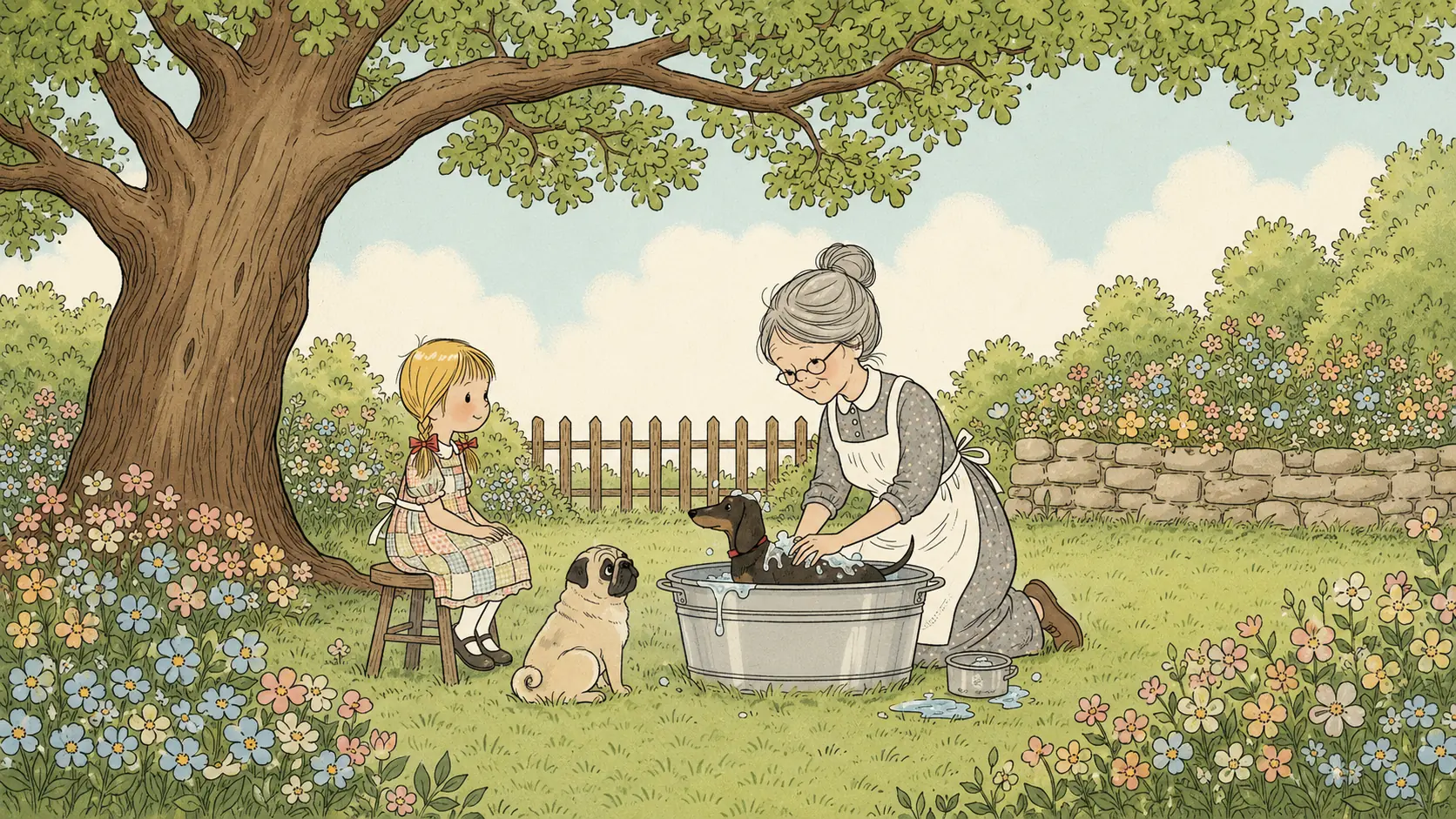
1. “I Love How Kind You Are to Others.”
Kindness is one of the most important qualities a child can develop, yet it is often quieter than achievement.
A trophy is visible.
A high grade is written on paper.
Kindness may appear in a small moment no one announces.
A child shares a snack, comforts someone who is crying, speaks gently to an animal, or includes a classmate who seems alone.
When Grandma says, “I love how kind you are to others,” she makes the invisible visible.
The child learns that kindness is not merely a rule adults repeat. It is a quality that trusted people notice and value.
The compliment becomes even more powerful when it is specific.
“I saw you move over so your cousin could sit beside you. That was kind.”
“You noticed your friend was upset and asked if they were okay.”
Specific language helps the child understand exactly what kindness looked like in that situation.
This matters because children are still learning the difference between being polite and being genuinely caring.
Politeness may involve saying please and thank you. Kindness often requires noticing another person’s needs and responding with empathy.
Grandparents should avoid praising kindness in a way that teaches self-erasure.
A child does not need to give away every toy, accept disrespect, or ignore personal boundaries to be considered kind.
Grandma can teach that kindness includes care for others and care for oneself.
“You were kind when you helped your friend, and it was also okay to say you needed your toy back.”
This prevents kindness from becoming people-pleasing.
Grandchildren also learn kindness from the way grandparents treat people.
A grandparent who praises compassion but speaks harshly to workers, neighbors, or family members sends a confusing message.
Children watch behavior more closely than adults realize.
Grandma can model kindness by speaking respectfully, offering help, apologizing, and treating people with dignity regardless of age, status, or usefulness.
Then the compliment feels credible because the child has seen the value lived.
Kindness should also be recognized when it costs the child something.
It is easy to be kind when there is no inconvenience. It is harder to wait, share attention, defend someone, or speak gently while frustrated.
Grandpa might say, “I know you wanted to go first, but you let your younger cousin have a turn. That showed real kindness.”
The child learns that kindness often involves a choice.
One day, appearance will change, achievements may be forgotten, and childhood trophies may sit in boxes.
The way a person treats others continues shaping relationships throughout life.
A grandchild who hears that kindness is one of their most valued qualities may begin to carry that identity intentionally.
2. “You Worked Really Hard on That, and It Shows.”
Children often receive praise for outcomes.
“You got an A.”
“You won the game.”
“You made the team.”
“You finished first.”
Results matter, and celebrating achievement can be appropriate. But when children receive attention only after success, they may begin to believe that effort matters only when it produces the desired result.
Grandparents can shift the focus.
“You worked really hard on that, and it shows.”
This compliment recognizes the process behind the outcome.
It tells the child that practice, concentration, revision, preparation, and persistence are worthy of attention.
A child may not have received the highest grade, but perhaps they studied more consistently than before.
They may not have won the game, but they practiced a difficult skill and improved.
Grandma can recognize progress without pretending the result was perfect.
“I can see how much time you spent on this drawing. The details show how carefully you worked.”
The compliment should remain truthful.
Children can sense exaggerated praise. If every rushed effort receives “You worked so hard,” the words lose meaning.
Grandparents should describe what they genuinely observed.
“You went back and corrected the part that was difficult.”
“You practiced every afternoon this week.”
“You asked for help instead of giving up.”
This kind of praise helps children connect effort with growth.
It also protects them from the belief that successful people achieve everything easily.
Many children assume ability is something a person either has or does not have. When a task becomes difficult, they may conclude that they are not talented.
Grandpa’s compliment can help them understand that skill often grows through work.
The phrase should not become pressure to work endlessly.
Children also need rest, play, and balance. Effort should be recognized, not demanded as proof of worth.
A child should not believe that Grandma loves them more when they are productive.
The compliment works best when it says, “I see your commitment,” not, “You must always push harder.”
Grandparents can also use the phrase after a disappointing outcome.
“You did not get the result you hoped for, but you worked very hard. Let’s think about what you learned.”
This validates disappointment while protecting the value of the process.
Effort does not guarantee success every time.
But the ability to work, adjust, and continue will serve the child through education, employment, relationships, and personal challenges.
3. “I Admire How You Kept Trying, Even When It Was Difficult.”
Persistence deserves its own recognition because the moment a child wants to quit can shape how they approach future challenges.
A puzzle will not fit.
The bicycle tips over.
The math problem makes no sense.
The instrument sounds wrong.
The child becomes frustrated and says, “I can’t do it.”
When they try again, even once, something important has happened.
“I admire how you kept trying, even when it was difficult.”
The compliment tells the child that courage is sometimes quiet. It can look like returning to the task after disappointment.
Grandparents should avoid praising endless persistence when stopping or changing direction would be wiser. Not every goal deserves unlimited effort.
Sometimes resilience means resting, asking for help, or choosing another approach.
Grandma can say, “You kept trying, and when that way did not work, you tried something different.”
This recognizes flexible persistence rather than stubborn repetition.
Children need to learn that struggling does not make them failures.
A grandchild may watch other children perform a skill more easily and assume something is wrong with them.
Grandpa can remind them, “Everyone learns at a different pace. What impressed me was that you did not let one hard moment decide the whole story.”
The compliment should focus on the child’s behavior, not create another fixed label.
“You kept trying today” is often healthier than “You are the child who never gives up.”
The second statement may create pressure. The child may later feel ashamed when they need to stop.
Specific praise leaves room for human limits.
Persistence becomes especially important during adolescence. Teenagers may experience academic pressure, social rejection, athletic disappointment, or uncertainty about the future.
They may not need a lecture about toughness.
They need an adult who sees the effort hidden behind the result.
“You kept showing up even when this season was hard.”
That sentence can bring enormous relief.
Children and teenagers often believe adults notice only mistakes or outcomes. A grandparent who notices persistence gives them evidence that their internal work is visible.
4. “You Have Such Creative Ideas.”
Creativity is not limited to painting, music, or traditional art.
It appears whenever a child imagines, combines, invents, questions, experiments, or sees a possibility others missed.
A grandchild may build a structure from cardboard, create a complicated pretend game, find an unusual solution, tell a surprising story, or rearrange ordinary materials into something new.
“You have such creative ideas” tells the child that original thinking matters.
The compliment can help protect creativity from the pressure to produce something perfect.
Many children begin freely. They draw without worrying whether the picture looks realistic. They invent stories without asking whether they make sense.
As they grow, comparison and evaluation can make them cautious.
They may say, “I’m not good at art,” because their drawing does not resemble someone else’s.
Grandma can focus on the idea rather than artistic skill.
“I never would have thought to turn that box into a hospital for stuffed animals.”
“You imagined an entire story around those rocks.”
This recognizes creativity as a way of thinking.
Grandparents should avoid taking over the child’s project.
When the adult fixes the drawing, rebuilds the structure, or shows the “right” way, the child may receive the message that their idea was not good enough.
Grandpa can offer help when requested but allow the creation to remain the child’s.
“What are you thinking of doing next?”
This question invites more imagination.
Creativity also appears in problem-solving.
A child may find a way to carry several objects, reorganize a game, or explain something using an unexpected example.
Grandma can say, “That was a creative solution.”
This helps the child see creativity as useful beyond art.
Creative thinking supports future innovation, adaptability, and self-expression. It allows people to imagine alternatives when the obvious path does not work.
Grandparents can nurture it by providing simple materials, unstructured time, stories, outdoor exploration, and permission to experiment.
The compliment should not become pressure to perform.
A child does not need to produce something creative on demand for adult approval.
The goal is to let them know that when their mind explores a new direction, Grandma or Grandpa appreciates that part of them.
5. “I Noticed How Patient You Were Today.”
Patience is difficult for children because waiting, sharing attention, and tolerating delay require developing self-control.
A young child may wait while another person speaks, take turns during a game, or remain calm while a sibling receives help.
These moments can easily be overlooked because they create no problem.
Adults often notice impatience more quickly than patience.
When a child interrupts, complains, or grabs, correction follows. When they wait quietly, the moment may pass without recognition.
“I noticed how patient you were today” brings attention to the successful behavior.
The phrase is strongest when connected to a specific situation.
“You waited while I helped your cousin, even though you wanted to show me something. That took patience.”
The child learns what patience feels like and when they demonstrated it.
Patience should not mean children must tolerate unreasonable neglect.
A child who has been waiting appropriately deserves follow-through.
If Grandma says, “Wait until I finish,” she should return when possible.
Otherwise, the child learns that patience means being forgotten.
Grandparents can also acknowledge the difficulty.
“I know waiting was hard, and you handled it patiently.”
This tells the child that patience does not require enjoying the delay.
It means managing the discomfort.
Older grandchildren may show patience in more complex ways. A teenager may help a younger sibling, work with an elderly relative, or remain calm during a frustrating group project.
Grandpa can say, “I noticed how patiently you explained that without making anyone feel embarrassed.”
The compliment connects patience with respect.
Grandparents should model patience too.
It is difficult for a child to value patience when adults become angry over slow shoes, long stories, repeated questions, or mistakes.
The way Grandma waits while the child finishes a sentence may teach more than any compliment.
When grandparents notice patience, they help children understand that self-control is not invisible.
It is a strength.
6. “You Make People Feel Welcome and Included.”
Inclusion is one of the most meaningful social qualities a child can develop.
A child may invite someone into a game, move over at the table, introduce a newcomer, or notice who has been left alone.
These actions create belonging.
“You make people feel welcome and included” tells the child that social kindness is valuable.
The compliment goes beyond being friendly.
It recognizes the ability to notice the emotional position of others.
Children who include people often change an entire environment. One welcoming child can transform a classroom, sports team, family gathering, or neighborhood activity.
Grandma may observe a grandchild explaining a game to a younger cousin instead of dismissing them.
She can say, “You made sure your cousin understood how to play. You helped them feel included.”
The child learns that leadership does not always mean being in charge.
Sometimes leadership means making room.
Grandparents should avoid turning inclusion into an obligation to befriend everyone or remain in unsafe relationships.
A child can be inclusive while maintaining healthy boundaries.
They do not need to tolerate bullying, manipulation, or disrespect to prove they are kind.
Grandpa can explain, “You can welcome people and still choose friendships that feel safe.”
This protects the child from confusing inclusion with self-sacrifice.
Grandparents can model hospitality through their own homes and behavior.
When visitors arrive, children notice whether people are greeted warmly, included in conversation, offered food, and treated with dignity.
A grandmother’s home can teach that no one should feel invisible.
She can involve grandchildren in welcoming others.
“Would you help me make sure our guest knows where to sit?”
These experiences turn the compliment into a lived family value.
Children who learn to include others often become adults who notice the person standing alone, the new employee, the quiet neighbor, or the family member who is struggling.
That quality leaves a deeper mark on the world than appearance ever could.
7. “I’m Proud of the Way You Handled That Situation.”
Children face emotionally difficult situations every day.
They lose games, disagree with friends, receive correction, experience disappointment, and encounter people who do not behave as they hope.
The outcome is not always within their control.
Their response is where growth happens.
“I’m proud of the way you handled that situation” focuses on emotional maturity.
Perhaps the child remained respectful while angry, asked for help, walked away from conflict, told the truth, or apologized.
The phrase should be followed by specifics.
“You were disappointed, but you congratulated the other team.”
“You told your friend you were hurt without calling them names.”
“You made a mistake and admitted it.”
This helps the child understand which part of the response deserves recognition.
Grandparents should be careful with the phrase “I’m proud of you.” It can be deeply loving, but children may sometimes interpret it as, “Your behavior determines whether I feel proud of you.”
Adding specifics keeps the focus on the action.
“I am proud of how honestly you handled that.”
The child understands that Grandma’s love is steady while certain choices are worthy of pride.
Handling a situation well does not always mean staying calm every second.
A child may cry, become angry, take a break, and later return to repair the problem.
Grandpa can recognize the entire process.
“You were very upset, but after you calmed down, you came back and apologized. That showed maturity.”
This teaches that recovery matters.
Children do not need to believe that emotional strength means never reacting.
It means learning what to do after the reaction.
Grandparents can also recognize when a child seeks adult help.
Some children fear that asking for help is weakness or tattling.
Grandma can say, “You handled that wisely by telling a trusted adult when you felt unsafe.”
This supports judgment.
A child who receives recognition for thoughtful responses begins building an internal sense of competence.
They learn, “I can face difficult moments without losing who I am.”
8. “I Love the Energy You Bring Whenever We’re Together.”
Some grandchildren are lively, expressive, talkative, curious, and physically active.
Their energy can fill a room.
Adults sometimes respond only to the inconvenience.
“Sit still.”
“Lower your voice.”
“Stop moving.”
“Why can’t you be calm?”
Children need to learn when quieter behavior is appropriate. But a child who hears constant correction may begin to believe that their natural presence is too much.
“I love the energy you bring whenever we’re together” offers acceptance.
It tells the child that their enthusiasm, curiosity, and joy contribute something valuable to the relationship.
The compliment should not mean every loud or disruptive behavior is acceptable.
Grandma can appreciate energy while setting limits.
“I love how excited you are. We use a quieter voice inside the restaurant.”
The child learns that the quality itself is not wrong; it simply needs appropriate direction.
Energy can take many forms.
A quieter grandchild may bring thoughtful, peaceful, or warm energy rather than obvious excitement.
The compliment can be adapted.
“I love the calm energy you bring.”
“You make our time together feel joyful.”
The goal is to notice how the child’s presence affects the relationship.
Children need to know they are not loved only for achievements or obedience. Sometimes Grandma simply enjoys who they are.
That message can be deeply protective.
A child who believes their presence is welcome is less likely to feel they must perform constantly to earn affection.
Grandparents should remain authentic. If a child’s energy becomes exhausting, adults are allowed to need rest and boundaries.
Grandpa can say, “I love being with you, and my body needs ten quiet minutes.”
This models that love and limits can coexist.
The compliment becomes especially meaningful for children who have been labeled “too loud,” “too much,” or “too energetic.”
Grandma can help them understand that their energy is a strength that can be guided rather than a flaw that must be erased.
9. “You Showed a Lot of Courage When You Did That.”
Courage is often misunderstood as the absence of fear.
Children may believe brave people are never nervous, hesitant, or uncertain.
In reality, courage usually means taking a meaningful action while fear is present.
A child may speak in front of a class, try a new activity, apologize, tell the truth, stand up for someone, enter a new school, or ask for help.
“You showed a lot of courage when you did that” helps the child see bravery accurately.
Grandma can say, “I knew you were nervous, and you still took the first step.”
This normalizes fear.
The child learns that being afraid does not disqualify them from courage.
Grandparents should recognize moral courage as well as performance.
It takes courage to refuse peer pressure, admit wrongdoing, defend someone being treated unfairly, or express an unpopular opinion respectfully.
Grandpa might say, “It took courage to tell the truth when you knew there would be consequences.”
This reinforces integrity.
Courage should not be used to push children into situations they are not ready to handle.
“You need to be brave” can become pressure when a child feels unsafe or overwhelmed.
Grandma can support courage through manageable steps.
“You do not have to do everything at once. What is one brave step you can take?”
This respects the child’s pace.
Some forms of courage are quiet.
A child returning to school after embarrassment, trying again after failure, or speaking to a counselor may not receive public recognition.
Grandparents can notice.
“You went back even though yesterday was difficult. That took courage.”
These words help children build a personal history of bravery.
During future challenges, they can remember, “I have been afraid before, and I still moved forward.”
10. “I Admire How You Use Your Sense of Humor to Make Others Smile.”
Humor is a powerful social gift.
A child who makes others laugh can bring relief, connection, and joy into a room.
“I admire how you use your sense of humor to make others smile” recognizes more than being funny.
It recognizes the positive effect of humor.
The phrase also creates an opportunity to teach the difference between humor that includes and humor that harms.
Children experiment with jokes. They may tease, imitate, exaggerate, or repeat things they heard elsewhere.
Some jokes make everyone feel connected.
Others make one person the target.
Grandma can praise healthy humor specifically.
“You made everyone laugh without embarrassing anyone.”
“That joke helped your cousin feel more relaxed.”
This teaches that humor is strongest when it brings people together.
If a joke hurts someone, Grandpa can guide without labeling the child as cruel.
“You are very funny, but that joke made someone feel small. Let’s think of a way to use your humor without hurting people.”
The child learns responsibility for impact.
Humor can also be a coping tool.
Families use laughter during difficult seasons to release tension and remember joy.
A grandchild who can bring gentle humor into a stressful situation may help others breathe.
Grandma can say, “You knew exactly how to make us smile when the day felt heavy.”
This recognizes emotional awareness.
However, adults should not expect the funny child to entertain everyone constantly. Children who become known for humor may feel pressure to hide sadness.
Grandparents should make room for the full person.
“You make us laugh, and you never have to be cheerful all the time. You can talk to me when you feel sad too.”
This protects the child from becoming trapped inside a role.
A healthy sense of humor is a gift, but the child deserves love even when they have no joke to offer.
The Difference Between Meaningful Praise and Constant Approval
Character-based compliments can be powerful, but grandparents do not need to praise every action.
Constant praise may cause children to depend heavily on external approval.
They may begin asking, “Did you see me?” after every small task or lose motivation when no adult is watching.
The goal is not to create a running commentary on everything the child does.
The goal is to notice meaningful moments honestly.
Sometimes observation is enough.
“You kept working.”
“You included your cousin.”
“You told the truth.”
These statements allow the child to reflect without turning every behavior into a performance.
Grandparents can also ask questions that help children evaluate themselves.
“How did you feel about the way you handled that?”
“What part are you most proud of?”
“What did you learn about yourself?”
This gradually shifts the source of confidence inward.
The child learns to recognize their own effort, kindness, and courage rather than waiting for someone else to name it every time.
Praise should also avoid comparison.
“You are kinder than your brother” may appear complimentary, but it creates rivalry.
“You were kind when you helped your brother” keeps the focus on the child’s action.
Each grandchild deserves to be seen individually.
Why Grandparents’ Words Can Stay for Decades
People often remember specific words spoken by grandparents long after childhood ends.
A grandmother’s voice may become part of the adult grandchild’s inner world.
When facing difficulty, they may remember, “Grandma said I was someone who kept trying.”
When welcoming a new person, they may remember, “Grandpa noticed that I made people feel included.”
These memories become part of identity.
Grandparents sometimes underestimate this influence because the interaction feels ordinary in the moment.
A short sentence spoken at the kitchen table may remain for forty years.
This is why words should be chosen with care.
Labels such as lazy, dramatic, selfish, difficult, or weak can remain too.
Children may carry them long after the adult has forgotten saying them.
Character-based compliments offer a healthier legacy.
They do not pretend the child is perfect.
They remind the child of the qualities they have demonstrated and can continue developing.
Compliments Should Never Replace Honest Guidance
Grandchildren need encouragement, but they also need truth.
A grandmother should not praise effort that was not made, kindness that was not shown, or courage that did not occur.
False praise can feel confusing and may reduce trust.
The grandparent can remain compassionate without pretending.
“You rushed through this. I know you are capable of more careful work.”
“You were frustrated, but speaking that way hurt your cousin.”
Honest guidance and affection can coexist.
After correction, grandparents can help the child identify the next step.
“What could you do differently?”
When the child repairs the situation, notice that too.
“You went back and apologized. I am proud of the way you took responsibility.”
The child learns that compliments are not empty rewards. They reflect genuine growth.
What to Say When a Child Rejects the Compliment
Some children respond to praise with discomfort.
“That’s not true.”
“I’m not creative.”
“I wasn’t brave.”
This may happen because the child feels embarrassed, has low confidence, or believes accepting praise sounds arrogant.
Grandma does not need to argue intensely.
She can simply describe what she observed.
“You may not feel brave, but I saw you take the step even though you were scared.”
“I understand you do not love the finished project. I still noticed how creatively you approached it.”
The compliment can remain available without forcing the child to agree immediately.
Over time, repeated honest observations may help the child build a more balanced view of themselves.
When Grandchildren Become Teenagers
Teenagers may appear less interested in compliments from grandparents, but they still need recognition.
They often reject praise that sounds childish or exaggerated.
Specific, respectful language works better.
“I noticed how thoughtfully you handled that conversation.”
“You showed patience with your younger cousin.”
“You kept working even when the course became difficult.”
Avoid giving compliments publicly if the teenager is easily embarrassed. A quiet comment in the car or a short message may feel more comfortable.
Teenagers also need grandparents to recognize qualities beyond grades, sports, college plans, and future careers.
Ask about the person they are becoming.
Notice integrity, humor, compassion, responsibility, and emotional growth.
A teenager may not respond with enthusiasm.
They may shrug or change the subject.
Do not assume the words did not matter.
Many young people store affirming words privately, especially when those words come from an adult who expects nothing in return.
A Legacy of Seeing What Truly Matters
Grandparents will not always be present to guide their grandchildren.
One day, the child will grow older. The visits will change. The toys will disappear, and family photographs will capture faces that continue changing with time.
What may remain is the way Grandma or Grandpa saw them.
Not merely as cute, beautiful, handsome, or well dressed.
But as kind.
Hardworking.
Persistent.
Creative.
Patient.
Welcoming.
Emotionally capable.
Joyful.
Courageous.
Funny in a way that brought light to others.
These qualities form a legacy no mirror can provide.
Conclusion: Compliment the Person They Are Becoming
There will always be room to tell a grandchild they look beautiful or handsome.
A warm compliment about appearance can be one small expression of affection.
But do not stop there.
Tell them, “I love how kind you are to others.”
Show them that compassion is more valuable than popularity.
Say, “You worked really hard on that, and it shows.”
Teach them that effort deserves recognition, even when the result is imperfect.
Tell them, “I admire how you kept trying, even when it was difficult.”
Help them understand that persistence matters more than immediate success.
Say, “You have such creative ideas.”
Protect the part of them that imagines possibilities the world has not yet seen.
Tell them, “I noticed how patient you were today.”
Recognize the quiet self-control that often passes without applause.
Say, “You make people feel welcome and included.”
Teach them that making room for others is a form of leadership.
Tell them, “I’m proud of the way you handled that situation.”
Help them see that maturity is built through choices during difficult moments.
Say, “I love the energy you bring whenever we’re together.”
Let them know that their presence brings something valuable into your life.
Tell them, “You showed a lot of courage when you did that.”
Remind them that courage can exist alongside fear.
And say, “I admire how you use your sense of humor to make others smile.”
Celebrate the joy they offer without requiring them to hide their own difficult feelings.
These compliments are not only kind words.
They are mirrors.
They reflect back the qualities that a child may not yet know how to recognize in themselves.
A grandchild who hears these words may begin to understand:
“My value is not limited to how I look.”
“I matter because of the way I treat people.”
“My effort is visible.”
“My ideas have worth.”
“I can handle hard things.”
“I bring something meaningful into the lives of others.”
One day, your grandchild’s appearance will change.
Their childhood face will become an adult face. Their hair, body, clothing, and style will move through many seasons.
But kindness can continue growing.
Creativity can continue opening doors.
Courage can carry them through loss.
Patience can protect relationships.
Humor can bring hope into difficult rooms.
The qualities you notice today may become the strengths they depend on tomorrow.
So look beyond the mirror.
Notice the small choices.
Name the courage, effort, compassion, and character you see.
Your grandchild may forget many compliments about a new outfit or haircut.
They may never forget that Grandma or Grandpa saw something deeper in them—and believed that who they were becoming mattered far more than how they looked.