Three months earlier, Underwood Blooms was the kind of place that made you slow down. Not because it was fancy. It wasn't. The coolers hummed a little too loud. The floor tiles were cracked near the register.
The bell above the door stuck every third customer, so Florence had to jiggle it loose with a butter knife she kept on the counter. But the flowers, Lord, the flowers. Every morning at 5:00, Florence was already there. Cutting stems at an angle the way her husband Raymond taught her. Soaking roses in lukewarm water.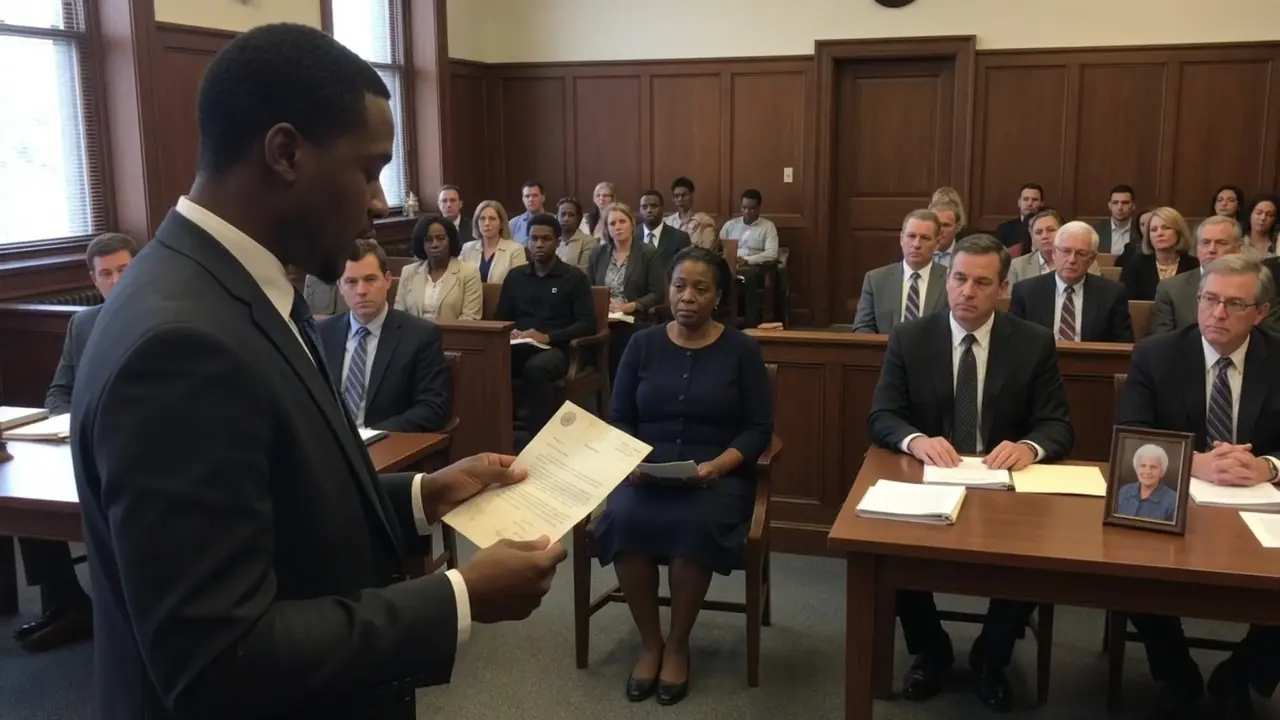
Never cold, because cold shocks the petals, and shocked petals don't open right. Her words. She talked about flowers the way some people talk about children. By 7:00, the shop smelled like it was breathing. Tuesdays were her favorite.
That's when Mr. Gerald came in. 86 years old, wool hat in every season, same order every single week. One bundle of yellow daisies for his wife's grave. He never said much, just stood at the counter, hands shaking a little, waiting while Florence wrapped them slow. She always tucked a handwritten note inside.
What do you write in those? he asked once. Something she'd want to hear, Florence said, even if she already knows. Mr. Gerald didn't ask again. He just nodded like that was enough.
After school, the neighborhood kids would pile in. Florence had a rule. Every child who walked through that door got to pick one flower. She called it a happiness flower. Free.
No questions. Miss Florence, can I get the big red one? Baby, you can get whatever your heart pulls you toward. Derek, Florence's son, 22, still figuring out what he wanted to be, handled deliveries in a dented Honda Civic with a trunk that smelled permanently like lavender. He'd tease his mother constantly.
Mom, you know you're losing money on those free flowers, right? I'm not losing anything. I'm planting something. Planting what? You'll see.
That was Florence. She never explained herself twice. She just did things and let time prove her right. The block around Underwood Blooms wasn't much to look at on a map. Four blocks of small businesses between a church and a gas station on Richmond's East Side.
The kind of neighborhood that real estate people call emerging when they mean, We're coming for it. But to the people who lived there, it was home. Terrence Moore, retired postal worker, 68, bad knee, good heart, sat on the bench outside Florence's shop like it was his office. He knew everyone, knew their schedules, their problems, their kids' names. If the barbershop next door was the block's mouth, Terrence was its memory.
Florence built that shop from nothing, he'd tell anyone who'd listen. After Raymond passed, she refinanced the house, taught herself floral design from library books and YouTube videos. Didn't have a business degree, didn't have investors, had grit and two hands. He'd pause, shake his head. That woman turned grief into a garden.
You don't see that every day. On a Thursday afternoon in September, Florence found a certified letter in her mailbox. Holloway Development Group. She didn't recognize the name. The envelope was thick, expensive paper, the kind that already feels like a decision's been made before you open it.
She read it at the counter, standing between a bucket of sunflowers and a half-finished wedding arrangement. The language was dense, legal, words like rezoning, mixed-use development, eminent domain consideration, fair market compensation. But the meaning was simple. Your block is ours now. You have 90 days to leave.
The project had a name, the Belmont Quarter. Luxury condos, artisan retail, a rooftop bar with a view of the river. The compensation offer was listed on page three. Florence read the number twice. It wouldn't cover six months of rent anywhere else in the city.
She set the letter on the counter, went back to the wedding arrangement. Her hands moved steady, snipping stems, adjusting angles, sliding baby's breath into the gaps. But her fingers were shaking. Derek came in from a delivery, saw the letter, picked it up. Mom, what is this?
Read it. He did. His face changed three times in 30 seconds. 90 days? They can't just They can.
Florence didn't look up. They already decided. This letter isn't asking, it's telling. She placed one last rose into the arrangement, stepped back, looked at it. Perfect.
Teeth too white, smile too ready. He clicked through renderings of the Belmont quarter like he was selling a vacation. Glass towers, rooftop gardens, a coffee shop with exposed brick and $8 lattes. This is going to transform the neighborhood, he said. New jobs, new housing, a real sense of community.
Terrence leaned over to Florence. We already got a community. He just can't see it from his car. Residents pushed back. A barber named Willie stood up.
Transform it for who? Because nobody in this room can afford what's on that screen. The representative nodded the way people nod when they're not listening. Progress requires transition, he said. And transition requires trust.
Trust? A woman in the third row laughed. You send eviction letters before you send invitations. The room got loud, voices overlapping, chairs scraping. Florence hadn't spoken yet.
She sat in the back row, hands folded, watching. When the noise died down just enough, she stood. Didn't raise her voice, didn't need to. I have one question. The room went quiet.
Did anyone from Holloway ever walk this street before deciding to erase it? The representative opened his mouth, closed it, looked at his laptop like the answer was somewhere in the slides. It wasn't. Florence sat down. She didn't say another word the rest of the night.
She didn't have to. That question hung in the room like smoke. After the meeting, the dominoes started falling. First, the laundromat. Old Mrs. Patterson signed the buyout within a week.
She was 73, tired, didn't have the energy for a fight she knew she'd lose. Then the barbershop. Willie held out for two weeks before his landlord, who'd already sold the building to Holloway, tripled his rent overnight. Then the corner store, then the nail salon, then the tax office that had been there since 1994. One by one, the sold signs went up like white flags.
Derek watched it happen from the delivery car. Every day another window went dark, another door locked for good. He came home one evening and sat across from Florence at the kitchen table. Mom, maybe we should talk about the offer. What's there to talk about?
The money. It could pay for my tuition. We could start over somewhere. Start over? Florence looked at him.
Not angry, something deeper. Your father built those walls with his hands, Derek. Sanded every shelf, hung every hook. You don't sell someone's hands. Derek didn't push it.
He knew that voice. That was the end of the conversation. But late that night, Florence sat alone at the kitchen table. The letter from Holloway in front of her. She read one line again.
In cases of structural liability or inhabitability, expedited demolition may proceed without tenant consent. She read it three times, folded the letter, put it away. She didn't know why that sentence kept pulling at her. Not yet. 18 days later at 2:14 a.m., her phone rang.
Ma'am, this is Richmond Fire Department. There's been a fire at your commercial address on She was already grabbing her keys. By the time she arrived, it was done. The front wall was gone. The coolers had melted into shapes that didn't make sense.
Water ran down the street carrying ash and ribbon and pieces of things that used to be whole. The fire marshal ruled it electrical. Old wiring, old building. Case closed in 48 hours. But Florence noticed something.
The fire started in the back wall, the newest part of the shop. Raymond had rewired that section himself up to code six years ago. She had the receipts. She didn't say anything to anyone, not yet. She just filed that detail in the same place she filed the sentence from the letter and waited.
Grant Holloway's office sat on the 42nd floor of a building he owned outright. Floor-to-ceiling glass, a desk the size of a dining table with nothing on it except a laptop and a single framed photograph he never looked at. He ran meetings the way surgeons run operations. Fast, sterile, no small talk. Belmont quarter, where are we?
His development director pulled up a map. Green highlights on every parcel, every lot acquired, every business relocated, except one. We still have the florist on Delmar Street. She's refused the buyout. Twice.
Grant didn't look up from his screen. Name? Florence Underwood. Nothing. No recognition, no pause.
Offer 10% above. If she refuses again, let legal handle it. I want that block cleared by Q2. That was it. Florence Underwood, her 15 years, her dead husband's sign, her happiness flowers, reduced to a pin on a map.
A line item between lunch and the 2:00 p.m. call with investors. Catherine Bellrose, Grant's executive assistant, mid-30s, sharp, quiet, made a note on her tablet. But her pen lingered a beat too long on the name. She didn't say anything, not yet. There was one thing in Grant Holloway's life that didn't run on schedule.
His mother. Vivian Holloway had passed eight months ago, heart failure complicated by pneumonia. She was 79. She died on a Wednesday. Grant found out on a Thursday because he'd silenced her calls the night before.
He never talked about it, not to Katherine, not to his board, not to anyone. But the photograph on his desk, the one he never looked at, was Vivian. Younger, smiling in a garden somewhere, holding flowers. Catherine mentioned it once, carefully. The anniversary of your mother's passing is next week.
Would you like me to send flowers to the grave? The usual arrangement, white lilies. He didn't look up. That's all. He never visited himself, never once.
The grave was 20 minutes from his office. Might as well have been on another planet. There was something sitting in Grant Holloway's chest that he'd cemented over a long time ago, and he planned to keep it that way. Three days after the fire, Florence put on her best dress, navy blue, the one she wore to Raymond's funeral, and took two buses across the city to Holloway Development's headquarters. The lobby was marble and glass, cold air, high ceilings, the kind of silence that costs money.
Florence walked to the front desk like she walked into everything, steady, straight, unhurried. I'd like to speak with Mr. Grant Holloway, please. The receptionist looked up, looked her over. The dress, the sensible shoes, the hands that still had soil under the nails no matter how hard she scrubbed. Do you have an appointment?
No. Mr. Holloway doesn't take walk-ins. You can leave a message with I'll wait. She sat in the lobby for 3 hours, watched men in suits walk past her like she was part of the furniture. Nobody offered her water.
Nobody asked if she was okay. At 4:15, a secretary told her Mr. Holloway had left for the day. Florence stood, nodded, picked up her purse, and then she saw it. On the wall beside the elevator, a framed memorial portrait, gold plaque beneath it. Vivian Holloway, 1945 to 2025, beloved mother.
Florence stopped. Her breath caught. Just barely, just enough that only someone watching closely would have noticed. She stared at the photograph for a long time. Her lips moved.
One word, maybe two. Too quiet for anyone to hear. Then she turned and walked out into the daylight. Whatever she whispered, it changed everything that came next. eleven months before the fire, on a Tuesday afternoon in October, Florence was closing the shop early.
It had been slow. One wedding consultation that canceled, a delivery that got rescheduled. She was sweeping the floor when she heard it. A sound like a bag of groceries hitting concrete. She looked through the window.
An elderly white woman had collapsed on the sidewalk, face down, purse spilled, one shoe half off. Nobody else on the street. Florence dropped the broom and was out the door in 3 seconds. Ma'am, ma'am, can you hear me? The woman's eyes were open but unfocused.
Her breathing was shallow, fast, then slow, then fast again. Her lips were turning gray. Florence called 911, cradled the woman's head off the pavement, talked to her the way she talked to everyone, calm, steady, like the world wasn't ending. You're okay. I'm right here.
I'm not going anywhere. The ambulance took 9 minutes. Florence rode with her. She didn't think about it, didn't calculate. She just got in.
At the hospital, the doctors moved fast. The woman, Vivian Holloway, 79, cardiac event, no emergency contact reachable, was stabilized but disoriented, frightened, alone. A nurse pulled Florence aside. Are you family? No, I found her outside my shop.
We've been trying her emergency contact, a son. He's not answering. Florence looked through the glass at Vivian, tiny in that hospital bed, wires on her chest, eyes searching the ceiling for a familiar face and finding nothing. Florence walked back in, sat down, and took Vivian's hand. Please don't leave me, Vivian whispered.
I'm not going anywhere. Florence said again. She stayed for six hours. She missed a catering order, a 50th anniversary party, $300 she couldn't afford to lose. Her phone buzzed with calls from the client.
She silenced it. Somewhere around hour three, Vivian started talking, slowly at first, then like a faucet someone had finally opened. She talked about her husband, Arthur, dead 12 years, about the garden she used to keep, roses, hydrangeas, lilacs in the spring, about how the house was too big now, how she could go Three days without hearing another voice. And she talked about her son. Grant was a sweet boy once, curious, used to catch fireflies and bring them to me in a jar.
She paused, stared at the ceiling. Then he grew up and started building things, big things, important things, and somewhere in all that building, he stopped sitting still. Florence listened, didn't interrupt, didn't judge. He doesn't call, Vivian said quietly. Not really.
His assistant sends flowers on my birthday, white lilies, every year, same arrangement, same card. I don't even think he picks them. Florence squeezed her hand. When's the last time he visited you? Vivian smiled, the kind of smile that's really a wound.
I can't remember. After that night, Florence started visiting. Every Tuesday, same time. She'd close the shop early, drive across town to Vivian's estate, a beautiful house full of beautiful things and absolutely no warmth, and sit with her for 2 hours. She always brought flowers, never white lilies.
She brought color, sunflowers, dahlias, birds of paradise, things that were loud and alive. Why never lilies? Vivian asked once. Because you've had enough quiet, Florence said. They talked about everything, Raymond, Arthur, motherhood, loss, the strange way grief reshapes a house, how a room you shared with someone becomes a room you avoid.
They talked about race once. Vivian brought it up, carefully, the way people do when they know they're walking on something fragile. Does it bother you coming here? People might talk. Florence laughed, actually laughed.
Vivian, I've spent my whole life being talked about. If someone's got a problem with me bringing flowers to a lonely woman, that's their problem, not mine. Vivian reached out and held Florence's hand the same way she had in the hospital. But this time, she wasn't scared. She was grateful.
You're the kindest soul I've ever known, she said, and I've known a lot of souls. On Florence's last visit, three weeks before Vivian passed, Vivian handed her an envelope, sealed, handwritten on the front, for Florence. Keep this, Vivian said. You'll know when to use it. What is it?
A truth that needs the right moment. Florence took it, put it in her apron pocket, the same pocket where she kept her scissors and her pen and her little notebook of flower orders. She didn't open it. She never saw Vivian again. Back in the present, Florence sat in the office of Nelson Perry, 28, pro bono attorney, too young to be cynical and too smart to be ignored.
His desk was buried in paper. His tie was crooked, but his eyes were sharp. The fire investigation was closed in 48 hours, Nelson said, leaning forward. That's fast. That's unusually fast.
I know. The inspector who signed off, a guy named Dale Whitfield, received a consulting contract from a Holloway subsidiary two weeks after the ruling. $14,000 for safety assessment services. Nelson made air quotes. That's not a smoking gun, but it smells like one.
Florence nodded. Nelson filed an injunction to halt all demolition on the block, citing potential arson, conflict of interest in the investigation, and improper rezoning procedure. A judge granted a temporary hold. It wasn't a victory, it was a delay, a crack in the wall, not a door. But it was enough to make Grant Holloway hear Florence Underwood's full name for the first time in a legal document.
It meant nothing to him. Not yet. That same week, Catherine Bellrose was in the Holloway family estate organizing Vivian's personal effects for the probate process. Tax documents, insurance papers, jewelry appraisals, and then a box, old, wooden, tucked in the back of Vivian's bedroom closet. Catherine opened it.
Inside, handwritten thank you cards, photographs of flower arrangements, a pressed dahlia between two sheets of wax paper, and a note in Vivian's handwriting folded once. If anything happens to me, make sure Florence Underwood is taken care of. She is the kindest soul I've ever known. My son will not understand this, but he will one day. Catherine read it twice, three times.
Her hands trembled slightly. She closed the box, set it on the shelf. She didn't tell Grant, not yet. For three weeks, things almost felt normal. Terrence found a spot at the Saturday farmers market on Broad Street, a 10 by 10 booth between a honey vendor and a woman selling handmade soap.
He paid the deposit himself, wouldn't let Florence argue about it. You can pay me back in flowers, he said. Preferably the ones that don't make me sneeze. Derek built a folding display rack out of scrap wood, spray-painted it white, hung a hand-lettered sign, Underwood Blooms, still growing. And people came.
Not just regulars, new faces, too. People who'd seen the news, people who'd heard about the fire and the woman who refused to fold. They bought bouquets they didn't need. They left tips they couldn't afford. A teenager handed Florence a $5 bill and said, My grandma says you're the real deal.
Florence smiled for the first time in weeks. Mr. Gerald found her on a Tuesday, of course. Wool hat, shaking hands, same order. Yellow daisies, Mr. Gerald? You know it.
She wrapped them slow, tucked in the note. He nodded, walked away without a word, the way they always did it. On a quiet afternoon between customers, Florence taught Derek how to make Raymond's signature arrangement, the Richmond Sunrise. Orange roses at the base, yellow spray roses fanning upward, a single red gerbera at the top tilted slightly left. Why left?
Derek asked. Because your father said sunrises aren't perfect. They lean. Derek placed the gerbera, tilted it, stepped back. For a second, Raymond was standing right there between them.
That Friday, Nelson called. The injunction was holding. No demolition activity permitted until the court reviewed the full complaint. That same evening, Derek came home with an envelope of his own. Virginia Commonwealth University, accepted into the business program, fall semester.
Florence held the letter and didn't say anything for a long time. Then she pinned it to the refrigerator next to a photograph of her and Vivian, the one taken in Vivian's garden, both of them laughing at something neither could remember. I wish you could see your boy, Viv, she whispered. Maybe he'd surprise you. Grant Holloway didn't get angry, he got efficient.
Within 72 hours of the injunction, his legal team, six attorneys, two paralegals, a firm that billed more per hour than Florence made in a week, filed 14 motions, counter filings, discovery demands, subpoenas for financial records Florence didn't even know she had, requests for depositions that would take weeks to schedule and months to complete. Nelson Perry's office was a one-room walk-up above a dry cleaner. He had no paralegal, no assistant. He had a printer that jammed every third page and a coffee maker that burned everything. He fought anyway.
But on a Thursday morning, a judge overturned the injunction on a procedural technicality. Nelson had missed a filing deadline by 11 hours. 11 hours. That was the margin between Florence's last wall of protection and nothing. Nelson called her that afternoon.
She could hear it in his voice before he said a word. They overturned it. Silence. Florence, I'm sorry. I What happens now?
They can resume demolition immediately. She hung up, walked to the window, watched the street she'd known for 30 years. The bulldozers came the next morning. Two days later, a man Florence had never seen before showed up at the farmers market booth. Dark suit, silver watch, leather briefcase that probably cost more than her car.
He didn't browse, didn't pretend to look at flowers. He walked straight to the counter and set down a manila envelope. Mrs. Underwood, I represent Holloway Development Group. I know who you represent. He opened the envelope, slid a check across the table.
Six figures. More money than Florence had seen in one place in her entire life. Enough to start over. Enough to disappear. Clipped to the check, a non-disclosure agreement.
12 pages, dense print. The summary was simple. Take the money, drop all legal claims, never speak publicly about the fire, the rezoning, or Holloway Development again. Mr. Holloway is being generous, the lawyer said. This offer expires in 72 hours.
Florence looked at the check. Then she reached into her apron. The same apron she'd worn every day for 15 years and touched the photograph of Vivian she kept in the front pocket. Right next to the sealed envelope she'd never opened. She looked back at the lawyer.
Tell your boss that some things aren't for sale, including the truth. The lawyer blinked, waited, realized she was done. He picked up the check, slid it back into the envelope, and left without another word. What happened next was surgical. A local news outlet, channel 4, the one with the highest evening ratings in Richmond, ran a story Three days later.
The headline, One holdout blocks major affordable housing project. The segment painted Florence as the problem, a stubborn woman refusing progress, standing in the way of 600 new housing units, including, the report emphasized, 200 affordable apartments that the city desperately needed. They didn't mention the fire, didn't mention the 48-hour investigation, didn't mention the buyout offers or the NDA. They showed a photograph of Florence at the farmers market with her arms crossed, a shot taken out of context that made her look defiant instead of dignified. The internet did the rest.
Comments flooded in. Strangers who'd never set foot on Delmar Street had opinions. Greedy, selfish, holding an entire community hostage for a flower shop. Someone found Derek's social media, sent him messages, called him things Florence would never repeat. Terrence's windows got egged on a Saturday night.
And the worst part, the thing that cut deeper than any headline, was the neighbors. Some of them turned. Mrs. Patterson, who'd already taken the buyout, stopped by the market. She didn't buy flowers, she just looked at Florence and said, Maybe it's time to let go, honey. You're making it harder for the rest of us.
The barber Willie, who'd been forced out by rent hikes, posted on Facebook. Some people don't know when the fight is over. Florence read it at midnight, alone, in the kitchen. The same table where she'd sat with Derek a hundred times, doing homework, eating dinner, talking about nothing. The phone didn't ring anymore.
The booth at the market was quiet. Even the regulars stopped coming. Not out of anger, but out of fear. Nobody wanted to be seen standing next to the woman who was blocking progress. Derek came home late one night, dropped his keys on the counter, stood in the doorway of the kitchen, and looked at his mother the way you look at someone you're about to hurt.
Mom, I know what you're going to say. Then let me say it. He sat down. His eyes were red. Dad's gone.
The shop's gone. The block is gone. The neighbors don't even He stopped, breathed. What are you fighting for? Florence didn't answer right away.
She reached into her apron, pulled out two things. The photograph of Vivian and the sealed envelope. The one Vivian had handed her three weeks before she died. Still unopened by anyone but Florence. Still waiting for its moment.
She held them both in her lap, looked at her son. I'm fighting because someone asked me to. Who? Florence looked at the photograph, ran her thumb across Vivian's face. Someone who deserved better than what she got.
Derek stared at her. He didn't understand. Not yet. He pushed back from the table, went to his room, closed the door. Not a slam, but something worse.
The quiet click of someone giving up. Florence sat in the dark. The market booth was shut down the next day. A permit issue that appeared out of nowhere. Paperwork that had been valid for weeks suddenly flagged for review.
She didn't need Nelson to tell her where it came from. For the first time in her life, Florence Underwood sat still and considered letting go. She held Vivian's letter to her chest, the same way she'd held that white lily in the wreckage. And she whispered, Viv, I don't know if I can do this. The apartment was silent.
No answer came, but she didn't put the letter down. The text came from a number Florence didn't recognize. I knew Vivian. We need to talk. Alone.
Florence almost deleted it. She'd gotten enough strange messages in the past two weeks. Threats, insults, strangers telling her to take the money and shut up. One more wouldn't surprise her, but something about the name stopped her. Not Mrs. Holloway, not Grant's mother.
Vivian. Only someone who knew her personally would call her that. Florence texted back one word. Where? They met at a diner off Route 1.
Vinyl booths, bad coffee, the kind of place nobody important goes to, which was exactly the point. Catherine Bellrose was already sitting in the back corner when Florence walked in. No suit today, jeans, hair pulled back. She looked like she hadn't slept in days. She had a box on the seat beside her.
Florence sat down, studied her, said nothing. Catherine spoke first. I'm Grant Holloway's executive assistant. I've worked for him for four years. Then why are you here?
Catherine opened the box, pulled out the stack of handwritten cards, Florence's thank you notes to Vivian, the photographs, the pressed dahlia, and at the bottom, Vivian's note. If anything happens to me, make sure Florence Underwood is taken care of. She is the kindest soul I've ever known. Florence read it. Her jaw tightened.
Her eyes stayed dry, but just barely. She wrote that two weeks before she passed, Catherine said. I found it in her closet. Grant has never seen it. Why not?
Because I wasn't sure what he'd do with it. Catherine paused. Now I am. He'd bury it. She reached into her bag and pulled out a second folder.
Printed emails, internal Holloway Development correspondence, subject lines like Delmar Street timeline and re fire clearance expedited. One email sent the day after the fire from a senior VP to Grant's chief of operations. Structural damage confirmed. Building now qualifies for expedited demolition under section 14.2. This accelerates Belmont quarter by 90 days.
Convenient timing. Convenient timing. Florence read it twice, set it down, looked at Catherine. You're risking everything by showing me this. Catherine's voice cracked for the first time.
Mrs. Holloway was the only person in that family who ever treated me like a human being. I watched her die knowing her son couldn't be bothered to show up. I'm not letting them erase her, too. Florence reached across the table and held Catherine's hand. Didn't say anything, didn't need to.
Same hands, same steadiness, same thing she'd done for Vivian eleven months ago. Nelson Perry had never moved so fast in his life. Catherine's documents, combined with his own research, painted a picture that was ugly and getting clearer. The fire inspector, Dale Whitfield, had received his $14,000 consulting contract from a Holloway subsidiary exactly 15 days after closing the investigation. The insurance adjuster assigned to Florence's claim had previously worked for a firm retained by Holloway Development on three separate projects.
Individually, each piece is circumstantial, Nelson told Florence. Together, it's a pattern. And patterns hold up in court. He filed a formal complaint with the Virginia Attorney General's office. Simultaneously, he prepared a civil suit against Holloway Development, citing destruction of property, fraudulent investigation, and coercive business practices.
The wheels turned. Slowly, but they turned. Then, Diane Ashford called, Vivian's former private nurse. 61, soft-spoken, had seen the news coverage and recognized Florence's name immediately. I was there, Diane told Nelson in a recorded deposition.
I saw Florence visit every Tuesday for months. Mrs. Holloway talked about her constantly, called her my angel, said Florence saved her life, not just her body, but her will to keep living. Then, Diane said something that changed everything. Three weeks before she passed, Vivian asked her estate attorney to amend her will. She wanted to include Florence, a direct bequest, enough to secure the flower shop permanently.
Nelson leaned forward. What happened to the amendment? Grant blocked it. As executor, he had power to challenge any late changes. He called it undue influence from a stranger.
Diane's voice hardened. Florence Underwood was not a stranger. She was the closest thing Vivian had to family at the end. The room was quiet. Florence sat in the corner, hands folded, eyes on the floor.
She finally understood why Vivian had given her that letter. You'll know when to use it. She knew now. The hearing was held in a state courthouse downtown. Wood-paneled walls, high ceilings, the kind of room built to make people feel small.
Florence didn't feel small. The Attorney General's representative opened the hearing. Evidence was presented. Nelson walked through the timeline, the rezoning, the buyout pressure, the fire, the 48-hour investigation, the inspector's contract, the internal emails. The Holloway attorneys objected repeatedly, loudly, on procedural grounds, on relevance, on admissibility.
The panel overruled them every time. Then Nelson called Florence to testify. She didn't rush, didn't perform. She sat in the witness chair and told the story the way she arranged flowers, one piece at a time, steady, until the whole picture came together. She told them about the shop, about Raymond building the shelves, about the happiness flowers and Mr. Gerald's daisies and the bell that stuck.
She told them about the letter from Holloway Development, the number that wouldn't cover six months of rent, the meetings, the buyouts, the sold signs. She told them about the fire, waking up at 2:14 a.m., arriving to nothing. The back wall, the newest section rewired by Raymond 6 years ago, somehow the origin point. She told them about the check, the NDA, the 12 pages that would have bought her silence. And then she told them about Vivian.
The courtroom shifted. You could feel it, a physical change in the air like a window opening in a room that had been sealed too long. She told them about the sidewalk, the collapse, the ambulance, the six hours, the hand that wouldn't let go. She asked me not to leave, Florence said. So I didn't.
She told them about the Tuesdays, the flowers, the conversations, the garden, the loneliness. Vivian Holloway was one of the finest people I have ever known, Florence said. And she died without the one person she wanted most in the room. She didn't look at Grant when she said it. She didn't have to.
The entire courtroom did. Nelson introduced the letter. Vivian's handwritten letter, the one she'd given Florence three weeks before she died. The one Florence had carried in her apron pocket for almost a year. Your honor, I'd like to enter this into the record.
A personal letter written by Vivian Holloway to the witness. The panel admitted it. Nelson read it aloud. The room went silent. Vivian's words filled the courtroom.
Written in the slightly unsteady hand of a woman who knew she was running out of time. She wrote about loneliness, about the house that echoed, about the son who built towers but couldn't build a bridge to his own mother. And she wrote about Florence. She described the sidewalk, the ambulance, the hours, the visits, the sunflowers that replaced the silence. She described the way Florence talked to her.
Not with pity, not with performance, but with the plain decency of someone who simply showed up. The final line, read aloud by Nelson in a voice that nearly broke, described Florence as the daughter she wished she'd had. A woman who proved that kindness doesn't need a reason. Nobody moved. A reporter in the second row wiped her eyes.
The Attorney General's representative removed his glasses and set them on the table. Grant Holloway stared at the floor. His hands, the hands that had signed demolition orders and development deals and checks designed to make people disappear, were shaking. The hearing adjourned. The panel announced a full investigation into Holloway Development's rezoning practices and the fire inspection process.
But the real damage was already done. Within hours, the story was everywhere. Not the version Holloway's PR team had planted, the real one. The woman who saved a billionaire's mother. The billionaire who burned her shop.
The letter from the grave. Holloway Development stock dropped 4% by close of business. Board members called emergency sessions. Investors requested explanations. Grant sat in his office that evening, door closed, lights off.
The framed photograph of Vivian, the one he'd never looked at, was in his hands for the first time in eight months. He stared at her face, and he didn't recognize the man she described in that letter. Not because she was wrong, because she was right. The next morning Grant's attorney called Nelson Perry. Mr. Holloway is requesting a private meeting with Mrs. Underwood.
No counsel, no recording, no conditions. Nelson told Florence it was a terrible idea. She went anyway. They met in a small conference room, neutral ground, a table, two chairs, a pitcher of water nobody touched. Grant looked different.
Not smaller, but uncovered, like someone had peeled off a layer he'd been wearing so long he'd forgotten it wasn't skin. He didn't apologize, not right away. He wouldn't have known where to start. Instead, he asked a question. What was she like at the end?
Florence studied him. This man who had called her shop a roadside stand, who had sent lawyers and bulldozers and silence money, who had burned her life to the ground without losing a minute of sleep. He was sitting across from her now, asking about his mother like a boy who'd missed the last bus home. Florence told him. She told him about the six hours, about Vivian's stories, the fireflies, the garden, the lilacs in spring.
About the way her grip softened when she finally fell asleep. About the Tuesdays, the sunflowers, the laughter. She talked about you every single visit, Florence said. Never with anger, just sadness. She missed you, Grant, every day.
Grant's jaw clenched. His eyes filled. He didn't make a sound, but his shoulders shook once, twice, the way a man breaks when he's never been taught how. Florence didn't reach across the table, didn't offer comfort, didn't say it was okay, because it wasn't. She just sat there, the way she sat with Vivian.
Sometimes presence is the only honest thing left. Two days later, Grant Holloway held a press conference on the steps of City Hall. He announced the complete withdrawal of the Belmont quarter from Florence's block. He committed Holloway Development funds to the full reconstruction of Underwood Blooms at its original location. He established a community land trust to protect the neighborhood from future displacement, permanently.
And he created the Vivian Holloway Community Fund, a foundation providing micro grants to small business owners across Richmond. He named Florence Underwood as its first director. At the podium, he paused, looked out at the cameras, and said the only thing that mattered. Real power isn't what you build, it's who you protect. He stepped away from the microphone, didn't take questions, didn't smile.
He just walked to his car alone, and for the first time in eight months, drove to his mother's grave. six months later, on a Tuesday morning in April, Florence Underwood unlocked the front door of Underwood Blooms for the second time in her life. Same address, same block, new walls, but the bones were right. Derek had overseen the rebuild, every detail. The coolers hummed the same way.
The floor tiles were new, but laid in the same pattern. The bell above the door worked perfectly, every single time, but Florence kept the butter knife on the counter anyway. Just in case, she said. And above the door, Raymond's sign, restored. The split wood glued and sanded and re-stained.
Not hidden, not replaced. Repaired. You could still see the crack if you looked closely, running through the center like a scar that had healed but never pretended it wasn't there. Florence ran her fingers across the letters, smiled. Still not too shy, she whispered.
By 9:00, the block was breathing again. Terrence was on his bench, same spot, same bad knee, same wave to every person who passed. The barbershop next door had reopened. Willie behind the chair, apologizing to Florence with a haircut coupon and eyes that couldn't quite meet hers. She took the coupon, gave him sunflowers, didn't say a word about the Facebook post.
That was Florence. She didn't keep receipts on people. The neighborhood kids showed up after school, same rule, one happiness flower, free. Miss Florence, can I get the purple one? Baby, you can get whatever your heart pulls you toward.
And at 3:15 p.m., right on schedule, Mr. Gerald walked in. Wool hat, shaking hands. Yellow daisies, Mr. Gerald? You know it. She wrapped them slow, tucked in the note.
He nodded, same as always. Some things don't need to change. That evening, Florence made her first arrangement in the new shop. White lilies. She wrapped them in brown paper, tucked a handwritten note inside, the way she always did.
Got in her car, drove to the cemetery herself. She knelt at Vivian's headstone, placed the lilies against the marble, straightened them twice. And then she noticed. Next to the spot where she'd set her flowers, another arrangement. Fresh, expensive, white roses and hydrangeas, professionally done.
No card, no name, but Florence knew. She touched the petals, smiled the kind of smile that carries weight. He came, Viv, she said quietly. He finally came. Back at the shop, Florence hung one last thing on the wall, between the orchids and the sunflowers, a framed photograph.
Her and Vivian, sitting in Vivian's garden, laughing. Below it, a small brass plaque. Kindness doesn't need a reason. Derek stood behind her, looked at the photo, looked at his mother. She would have loved this place, Mom.
Florence nodded. She already did. So, where are they now? Florence Underwood runs the Vivian Holloway Community Fund full-time. In its first year, the fund awarded 36 micro grants to small business owners across Virginia.
Florists, barbers, bakers, tailors, people who build things with their hands and keep neighborhoods alive. Derek graduated from Virginia Commonwealth University with a degree in business management. He opened a second Underwood Blooms location on the west side of Richmond. Same rules, same happiness flowers, same butter knife on the counter, just in case. Catherine Bellrose resigned from Holloway Development the day after the hearing.
She now works for a non-profit that provides legal advocacy for small business owners facing displacement. She never regretted it. Not once. Diane Ashford retired. She volunteers at a hospice on weekends.
She still talks about Vivian. Nelson Perry made partner at a civil rights law firm downtown. His printer still jams. Terrence Moore sits on his bench every single day, bad knee and all. And Grant Holloway?
He stepped back from daily operations at Holloway Development. He visits his mother's grave every Tuesday. And every Tuesday, before the cemetery, he stops by Underwood Blooms and buys flowers. He never sends his assistant anymore. He picks them himself.