The snow had come early that year, the way it did every year above Corbel, and by the second week of December Sabra Hale had stopped counting storms and started counting cords of wood instead.
There were nine left against the north wall of the cabin, stacked bark-up under a lean-to of split shakes, and four more under the drift by the shed that she would have to dig for when the nine ran down.
Thirteen cords. If the winter behaved, thirteen cords would carry her to the end of March. If it did not behave, she would be burning the shed by April, and she had already decided which wall she would start with.
She had decided a great many things in two years. That was the part nobody in Corbel had expected of her, and she suspected it was the part some of them held against her. A widow was supposed to come down the mountain. A widow was supposed to sell the claim and the cabin and the two mules to whichever man made the least insulting offer, and take a room above the Bettis store, and sew, and be a little grateful when people asked after her health. Sabra had come down the mountain exactly once in the first winter, to stand in the cemetery while the ground was too hard to dig and listen to Reverend Sedgwick say her husband's name over a box that would sit in the icehouse until April. Then she had gone back up. She had been going back up ever since.
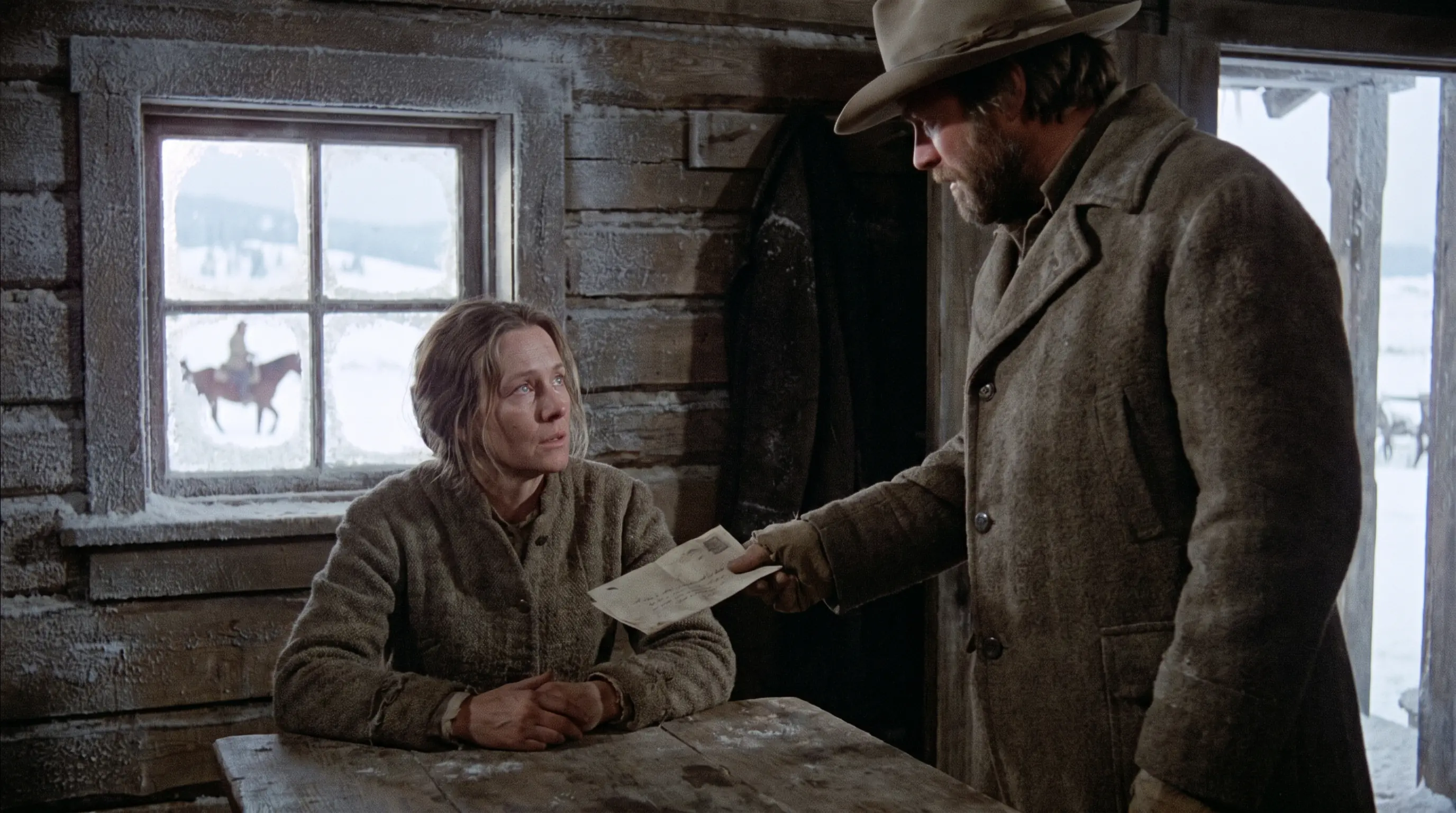
The cabin sat on a bench of ground above Silverthread Creek, eleven miles from town by the wagon road and seven by the trail Eben had cut through the aspens the first summer, when they still talked about the trail as if it were a thing they had made together. It was a good cabin. She could say that now without it hurting. Two rooms, a loft, a stone chimney Eben had laid with a skill he never showed at anything else, a puncheon floor she had scrubbed white. A window of real glass, four panes, freighted up from Denver in a crate of straw and set into the south wall so that in the short afternoons of winter the light came across the table and lay on her hands while she worked.
It lay on her hands now. She was mending the harness for the off mule, a long-eared, ill-tempered animal named Deacon who had broken his breeching strap twice that fall by sitting down in it when he did not care for the grade. She had the awl in one hand and the waxed thread in her teeth, and she was thinking about nothing at all, which was a thing she had learned to do and was rather proud of, when the dog stood up.
The dog was called Nimrod. He was a yellow, short-haired, deep-chested animal of no particular kind who had come with the cabin, more or less, having been left behind by whoever had worked the claim before them, and he did not stand up for weather or for elk or for the marten that worked the woodpile at night. He stood up for men. He stood now in the middle of the floor with his nose toward the door and the hair along his spine lifting in a slow ridge, and he did not bark. Nimrod never barked. He only waited, which was worse.
Sabra took the thread out of her teeth. She set down the awl. She did not hurry, because hurrying was how people dropped things, and she went to the wall by the door and took down Eben's rifle, the Winchester that she had learned to shoot in the first spring, alone, using up a box and a half of cartridges on a stump until she could put five out of six into a circle the size of her palm at sixty yards. She levered a round into it. Then she went to the window and looked out across the white bench toward the trees.