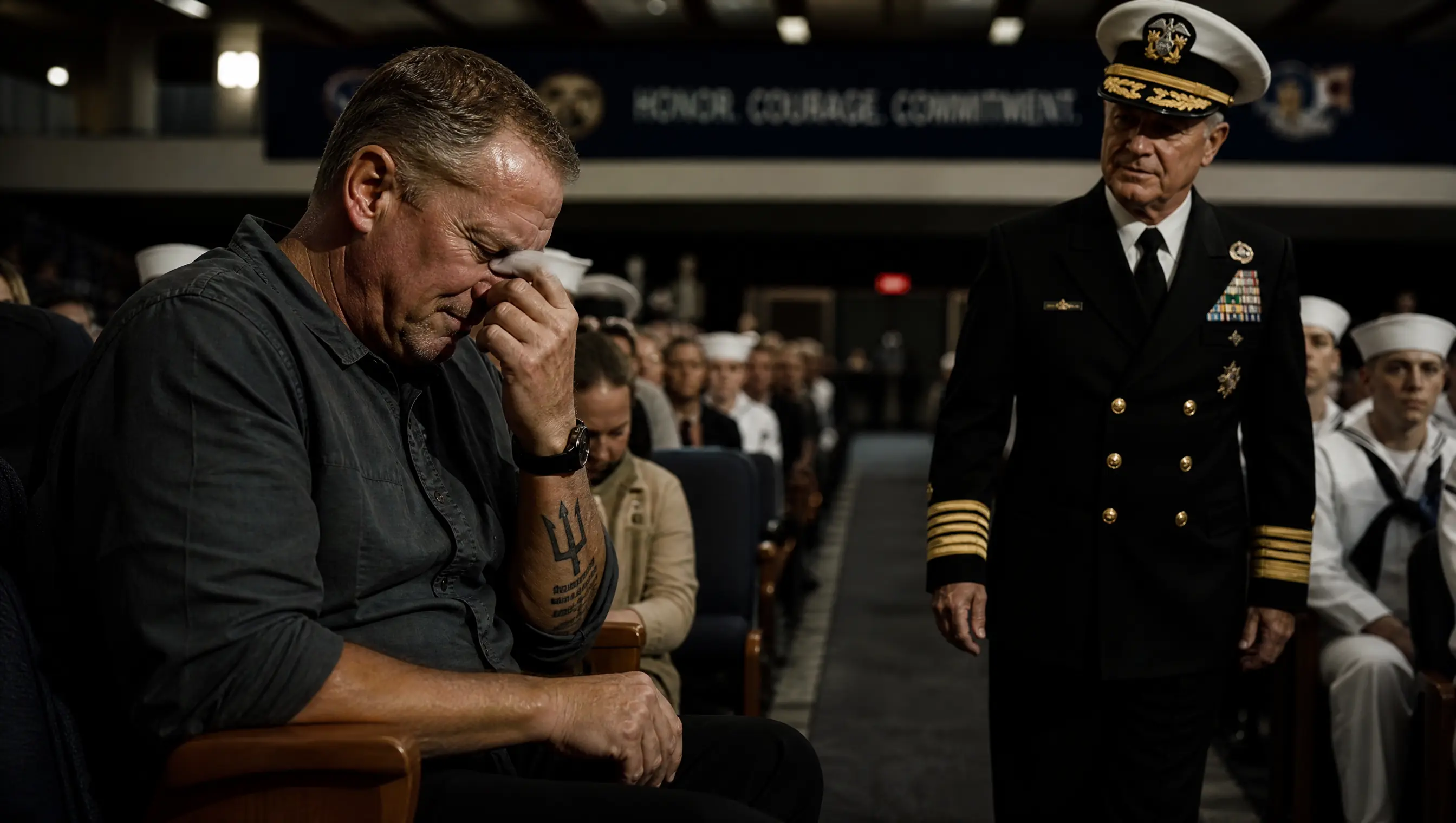
The shirt was olive, the color of a field jacket left too long in the sun, and Elena had bought it for him at the outlet mall in Freeport because, she said, it was the only thing in the store that didn't make him look like he was going to a funeral.
"Long sleeves," he said, holding it up in the hotel room in Newport. "Good."
"Roll them."
"It's a formal thing, Lena."
"It's a lawn with folding chairs on it, and it's going to be eighty degrees by ten o'clock." She took the shirt from his hands, shook it out, and held it open behind him the way she used to hold Lucas's coat when he was five and furious about mittens. "Arms."
He put his arms in. She came around the front and did the buttons herself, which she had not done in years, and he let her, because her hands were steadier than his this morning and they both knew it. When she reached the cuffs she unbuttoned them and began to fold the right one back, one neat turn, then another, up past the wrist bone, past the place where the hair on his arm had gone grey along with everything else.
He put his left hand over hers.
"Sam," she said. Then, more quietly, the other name, the one she only used when the doors were closed and the house was dark and she needed him to remember who she had married. "Danny."
"Somebody will see it."
"Somebody sees it every time you change the oil on the Hallorans' truck. Somebody saw it at Lucas's eighth-grade field day when you did the tug-of-war and nearly pulled the whole PTA into the pond." She waited for him to take his hand away. He didn't. "It's a tattoo. Half the men on that base will have one just like it."
"Not on that base. Not like this one."
She looked at it then, really looked, the way he knew she sometimes did when he was asleep: the trident, the eagle with its wings spread and its head turned, the anchor and the flintlock pistol, done in ink that had softened into the skin over thirty years so the lines had blurred a little, like a photograph left in a window. And under it, small, no bigger than a quarter, the compass rose he'd had added in Coronado the week he'd made lieutenant, because a drunk chief had told him that an officer ought to always know which way was home.