A home security camera mounted to catch a raccoon getting into the trash instead shows a man crossing a dark backyard at 2:14 in the morning walking directly to a side door and letting himself inside without ever touching a key. The homeowner who installed that camera had lived alone in that house for 3 years. She had never given anyone a code to that door. She would spend the next several weeks learning exactly how long someone else had been using one anyway.
The clip is unremarkable to look at, almost forgettable, the kind of motion-triggered footage most home security apps generate dozens of times a week and nobody watches twice. It shows a man in dark clothing, unhurried and confident, walking a path across a backyard he clearly already knew by memory, vanishing through a door that should have required something he should never have had. Nora Ellington was 33 years old, a software engineer for a regional utility company, and had owned her single-story home in Albuquerque, New Mexico for just over 3 years. She lived alone, worked mostly from home except for 2 office days a week, and had installed a smart lock on her side door during her first month in the house, a popular consumer model called Lockwise that allowed entry through a phone app or a rotating numeric code marketed heavily on the convenience of never needing a physical key again.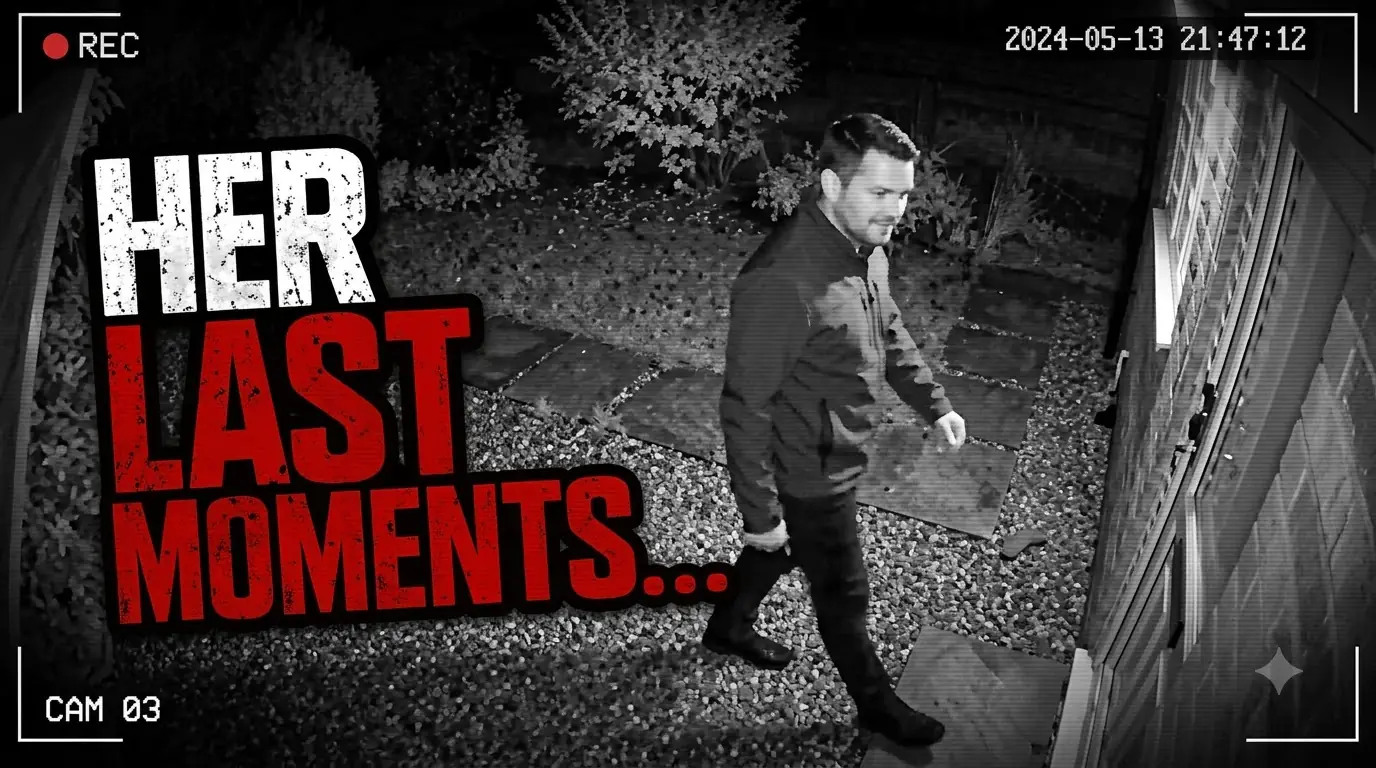
Co-workers described Nora as warm but private, the kind of person who brought homemade tamales to office potlucks every December, but rarely discussed her personal life beyond brief, pleasant updates. She had moved to the house specifically for its small backyard, intending, she told a friend at the time, to finally have space for a garden after years of apartment living. The garden never fully materialized beyond a few raised beds of tomatoes and peppers, a detail she mentioned often with self-deprecating humor, joking that her ambitions had outpaced her follow-through by a wide margin. Her next-door neighbor, Glenn Tibbits, 52, had lived on the street for 11 years and had a reputation, before any of this came to light, as the kind of neighbor every block hopes for.
Glenn had been divorced for 9 years at the time Nora moved in, a separation his ex-wife later described to investigators as amicable but lonely, noting that Glenn had always struggled to build new relationships after the marriage ended and had increasingly filled his time with small structured projects around the neighborhood. They were the kind of helpful tasks that gave him reason to interact with people without the unpredictability he found difficult in more open-ended social situations. She told investigators she had never once, in the years since their divorce, seen any sign of the behavior that would later be described in court, and that the man she had been married to for 11 years bore no resemblance in her memory to the picture prosecutors eventually built. What Nora did not know, and would not learn for 3 years, was that during that single afternoon of setup assistance, Glenn had used a network analysis tool on his own laptop, ostensibly to confirm her router's signal strength, to capture and record the encrypted handshake data transmitted between her phone and the Lockwise lock during a routine access cycle he asked her to demonstrate.
He spent the following several weeks, using skills built over a 14-year career, working out how to decode and replicate that signal on a separate device, eventually producing a cloned access credential that the lock's system could not distinguish from Nora's own phone. He used it for the first time 4 months after helping her move in, entering her home for 11 minutes on a Tuesday afternoon while she was at her office downtown, touching nothing, taking nothing, simply walking through the rooms of a house he had helped a stranger move into and had since spent every day looking at from his own front porch. Over the following 3 years, Glenn's entries became a private ritual rather than an escalating crime, at least in the way he later described it to investigators. He kept a small spiral notebook hidden inside a toolbox in his garage, logging the date and approximate duration of each entry, along with brief clinical notes about minor changes in the house, new furniture, a repainted accent wall, a houseplant that had died and been replaced.
He logged 146 separate entries across 3 years, an average of just under one per week, almost always timed to Nora's confirmed absence at her office or on weekend errands he had learned to predict from watching her routine from his own yard. The notebook's entries followed a consistent format Glenn had apparently established within his first few visits and maintained without variation for 3 years. Each entry contained a date, a duration recorded to the nearest 5 minutes, and a single line of observation. Investigators found no entries describing anything taken, moved permanently, or damaged.
The closest the notebook came to documenting any direct interference was a recurring note, appearing 11 times, about adjusting a slightly crooked picture frame in Nora's hallway each time he found it tilted. Based on the tone of the entries, he seemed to regard the act as a small kindness rather than an intrusion. Nora's life during those same 3 years proceeded entirely undisturbed by any sense that something was wrong. She dated occasionally, none of the relationships lasting more than a few months.
She adopted a cat in her second year, a detail Glenn's notebook recorded with unusual specificity, including the cat's apparent comfort around him during his visits, a detail he noted twice, as though it mattered to him in a way none of the furniture entries did. She hosted a small dinner party for co-workers in her third year. Glenn watched the event from his porch with what he later described as a feeling he had never been able to name. He watched lights and laughter move through windows in a house he had quietly walked through dozens of times when no one was home.
The pattern that eventually exposed Glenn had nothing to do with any suspicion of him directly. In the spring of Nora's third year in the house, a raccoon began getting into her trash cans roughly twice a week, tipping them over and scattering garbage across her side yard. After the third incident, mildly annoyed, Nora ordered a small battery-powered outdoor security camera online, intending only to identify the animal's pattern and adjust her trash schedule accordingly. She mounted the camera on her back patio, facing the side yard and trash cans, angled in a way that, by coincidence rather than design, also captured a partial view of the side door Glenn had been using for 3 years.
The camera began recording motion-triggered clips to an app on her phone, most of them capturing exactly what she expected, a raccoon, sometimes alone, occasionally with two smaller raccoons trailing behind it. 11 days after installing the camera, a motion alert triggered at 2:14 a.m. on a Tuesday night, while Nora was traveling out of state for a work conference. She did not check the alert until the following morning, assuming it was the raccoon again. The clip showed a man crossing her backyard in the dark, recognizable to her immediately, walking directly to her side door, and disappearing inside without any visible hesitation, without knocking, without any indication he believed he was doing anything other than what he had done a hundred times before. Nora watched the 8-second clip 11 times before she fully accepted what she was looking at.
She did not call Glenn. She did not confront him. She called a locksmith the following day from her hotel room and scheduled an emergency rekey of her side door for the morning after she returned, 3 days away, and in the meantime began quietly reviewing the camera's full motion history, going back to its installation, discovering two additional clips from the prior 11 days, both timestamped during windows she had been away from the house, both showing the same man, the same door, the same unhurried, practiced movement. She also posted a brief message to a local neighborhood social app, a platform most residents on her street used for lost pets, package theft alerts, and recommendations for contractors, mentioning only that she had discovered what appeared to be a smart lock vulnerability and was having her locks changed as a precaution.
It was a post intended as a helpful warning to neighbors using the same lock system, never imagining the neighbor she was warning about would read it himself within the hour. Phone records later recovered by investigators showed that Glenn viewed the neighborhood app's notification for Nora's post at 6:47 p.m. that same evening, 11 minutes after it was published. His internet browsing history for the following 90 minutes, also recovered later, showed searches related to the Lockwise system's rekeying process and how quickly a security firm could complete an emergency lock change. Those searches ended, according to the same browsing history, at 8:31 p.m., after which no further activity was recorded on his devices that night.
Nora's flight home was delayed by weather and arrived nearly 4 hours later than originally scheduled. She landed at 11:40 p.m., took a ride share home, and was last captured on a gas station camera two blocks from her house, stopping briefly for coffee at 12:17 a.m. No camera on her own street captured her arrival home as her own, newly installed outdoor unit had a battery that had drained 2 days earlier from the unusually high volume of motion alerts triggered by the raccoons' continued visits. Investigators would later note the detail with a kind of dark coincidence that none of them found easy to discuss. Nora did not show up for a scheduled video call with her utility company team the following morning.
Co-workers assumed travel delays. By the second missed day, a close co-worker who also knew Nora socially drove to the house and found her car in the driveway, her front door locked, and no response to repeated knocking. She called police for a welfare check that afternoon. Officers responding to the initial welfare check found no signs of forced entry at the front of the house, and finding the side door locked as well, did not initially treat the home as a likely crime scene, instead categorizing the case as a voluntary disappearance pending further information, a classification that delayed a full forensic search of the property by nearly 30 hours.
Detective Marisol Quinn was assigned the case on its third day after Nora's co-worker provided police with the camera footage from 11 days earlier, the clip showing the man entering through the side door, along with the neighborhood app post Nora had made the night before her disappearance. Quinn recognized immediately that the side door, despite appearing locked to the responding officers, was the same door shown being opened without a key in the footage, and ordered a full forensic examination of the smart lock's internal access logs, which the manufacturer, under a court order obtained within 24 hours, provided in full. Quinn's team also pulled the full 11-day history from Nora's outdoor camera before its battery died, recovering two additional clips of the same man entering the side door during the prior week and a half, neither of which Nora had reviewed before her trip. By then, the camera's motion alerts had become routine enough that she had stopped checking every notification individually.
Quinn would later note in an internal report that the timing was almost unbearable in retrospect. The evidence that could have warned Nora away from returning home that night had been sitting unreviewed on her own phone the entire time she was traveling. The logs showed 147 recorded entries through that side door over a 3-year period using a credential the manufacturer's own records did not associate with any phone Nora had ever registered to the lock. The 147th entry was logged at 12:52 a.m. the night Nora returned from her delayed flight, 35 minutes after her last confirmed sighting at the gas station two blocks away.
Quinn identified Glenn Tibbits as a person of interest within hours of cross-referencing the unregistered credentials usage pattern against the neighborhood's resident list and the timing of Nora's neighborhood app post. A search warrant for Glenn's home and garage executed the following morning recovered the spiral notebook from his toolbox along with the original laptop and network capture device used to clone the lock's credential 3 years earlier. Both still functional, both still containing the original handshake data recorded during the afternoon Glenn had helped Nora set up her network. The search also recovered a second smaller notebook documenting Glenn's own observation schedule of the street tracking which neighbors kept which routines, which houses had cameras and which did not, and which weekday afternoons left the block by his own assessment emptiest.
Prosecutors would later argue this second notebook demonstrated that Nora's house was not an isolated impulse but part of a broader methodical surveillance of the entire street. Though investigators found no evidence Glenn had ever used a cloned credential on any home besides hers. The notebook's 146 prior entries read in full by investigators painted a picture the prosecution would later describe in court as a man who had built an entire private relationship with a woman who did not know he existed beyond their occasional friendly waves across a shared property line. It was a relationship recorded in clinical, almost domestic detail across 3 years, entirely one-sided and entirely unknown to the only other person involved in it.
Glenn was arrested 4 days after Nora's disappearance at his home and made no statement to officers beyond confirming his identity. He did not request an attorney for nearly 6 hours, during which time, according to the interrogation room recording later reviewed by prosecutors, he sat largely still, occasionally shaking his head, at one point stating quietly to no one in particular that none of it was supposed to be found. Cell tower data placed Glenn's phone at his own home throughout the window investigators believed Nora had returned and disappeared. His attorney initially used that detail to argue against any direct connection to her disappearance beyond the historical pattern of unauthorized entry.
That argument weakened considerably when investigators, executing a second, more thorough search of Glenn's property 8 days later, recovered Nora's phone, intentionally powered off, hidden inside a sealed plastic container buried beneath a recently disturbed section of soil in his backyard less than 30 ft from the property line the two of them had shared for 3 years. Nora's body was recovered 11 days after that in a remote arroyo on the outskirts of the city, identified through dental records after exposure had made other forms of identification impossible. Forensic evidence recovered from Glenn's vehicle, including soil composition consistent with the arroyo site and a single fiber matching a blanket later found in his garage, connected him directly to the location, leading to a murder charge filed alongside the existing charges of unlawful surveillance and unauthorized computer access tied to the three-year pattern documented in his notebook. The trial began 13 months later in Bernalillo County District Court.
Prosecutors built the first half of their case entirely around the notebook and the cloned credential, establishing methodically that Glenn's access to Nora's home was neither accidental nor recent, but a deliberate, sustained intrusion built from a single afternoon of misplaced trust three years earlier. A digital forensics expert testified at length about how the original network capture from that afternoon had been preserved, unedited, on Glenn's laptop for the entire three years. The expert described that evidence as functionally identical to a signed confession, since no innocent explanation existed for why a man would retain and repeatedly reuse a stranger's encrypted access credential for three uninterrupted years. The same forensics expert walked the jury through the technical mechanics of the cloning process in plain language, explaining that the vulnerability Glenn exploited had nothing to do with any flaw a typical homeowner could have reasonably anticipated, and everything to do with a single afternoon of specialized access freely granted to someone with both the skill and eventually the motive to misuse it.
The explanation landed, by the prosecutor's own account afterward, as one of the most effective moments of the trial, reframing the case for jurors from a story about a faulty lock into a story about a betrayed afternoon of ordinary trust. A second forensic witness, a digital behavior analyst retained by the prosecution, walked the jury through the emotional register of the notebook's entries, noting the shift in tone across its three years, from purely observational notes about furniture and routine in the first year to entries in the final months that referenced Nora by name with a familiarity the analyst testified reflected an escalating deeply private fixation entirely unknown to its subject. The analyst argued that the fixation had likely reached a breaking point the moment Glenn realized from her own public post that his access was about to end permanently. Glenn's ex-wife testified briefly for the defense describing the man she had known for 11 years of marriage as gentle and conflict averse.
The prosecution did not dispute that portrait directly, but argued it was simply incomplete, built from a relationship that had ended nine years before any of the conduct at issue in the trial began. Nora's close co-worker testified about discovering her missing, describing the disorienting normalcy of the locked, undisturbed house. The scene gave no indication on its surface that anything inside it had been wrong for three years before the night it finally was. She told the jury that the hardest part of testifying was knowing that for three years on ordinary Tuesday afternoons a man Nora considered a friendly helpful neighbor had been standing in her living room and that nothing about Nora's life viewed from the outside had ever once looked unsafe.
The defense argued that the unauthorized entries, however troubling, did not establish intent to harm and that the murder charge rested on circumstantial forensic evidence rather than any direct link placing Glenn at the arroyo on the specific night Nora disappeared. The argument did not survive the combined weight of the buried phone, the soil and fiber evidence, and the browsing history showing Glenn researching the re-keying timeline within minutes of learning his three-year access was about to be discovered and permanently revoked. The jury convicted Glenn Tibbits on all counts after 10 hours of deliberation, including first-degree murder, 3 years of unauthorized computer access, and unlawful surveillance of a private residence. He was sentenced to life in prison without the possibility of parole, with the sentencing judge noting that the case represented one of the longest documented periods of undetected residential intrusion the court had encountered, made possible entirely by a single afternoon of ordinary neighborly trust.
Lockwise issued a software update within 5 months of the case becoming public, requiring periodic re-authentication of all paired devices, and invalidating any credential not actively re-verified through the company's app at least once every 90 days. The company described the change in a brief public statement as a routine security enhancement unrelated to any specific incident. Nora's coworker has said publicly, in the only interview she has given since the trial, that she still thinks, more than she expected to, about the dinner party Nora hosted in her third year in the house, the one Glenn watched from his porch, wondering now how many of those same rooms he had already memorized long before any of them ever sat in them as guests, and whether anything about that ordinary happy evening would have felt different to anyone inside it had they known. Detective Quinn has said in a follow-up interview that the case has changed how her department handles welfare check classifications, particularly the 30-hour delay before officers treated Nora's home as a potential crime scene, a delay the department has since acknowledged in an internal review cost the investigation time it could not afford to lose.
Quinn noted that the locked, undisturbed appearance of a home is no longer treated in her department's revised protocol as evidence that nothing inside it could be wrong. Several of Nora's neighbors have said, in brief comments to local reporters following the trial, that they have since had their own smart locks inspected or removed entirely, unable to look at the convenience the technology once offered without remembering how easily 3 years of someone else's key had hidden inside a system designed to make keys obsolete. One neighbor said she had started locking her doors with an old-fashioned deadbolt again, a habit she had abandoned years earlier and never expected to return to, simply because she no longer trusted any lock she could not see being turned with her own hands. Another neighbor, who had also used Glenn's help setting up a smart device years earlier, said she had spent an entire weekend after the verdict combing through her own home's settings, checking and rechecking every paired device, unable to fully convince herself the search had actually found everything there was to find. The raccoon, by all accounts, eventually found another street.