"Another general, I presume, or some governor the king wishes to flatter."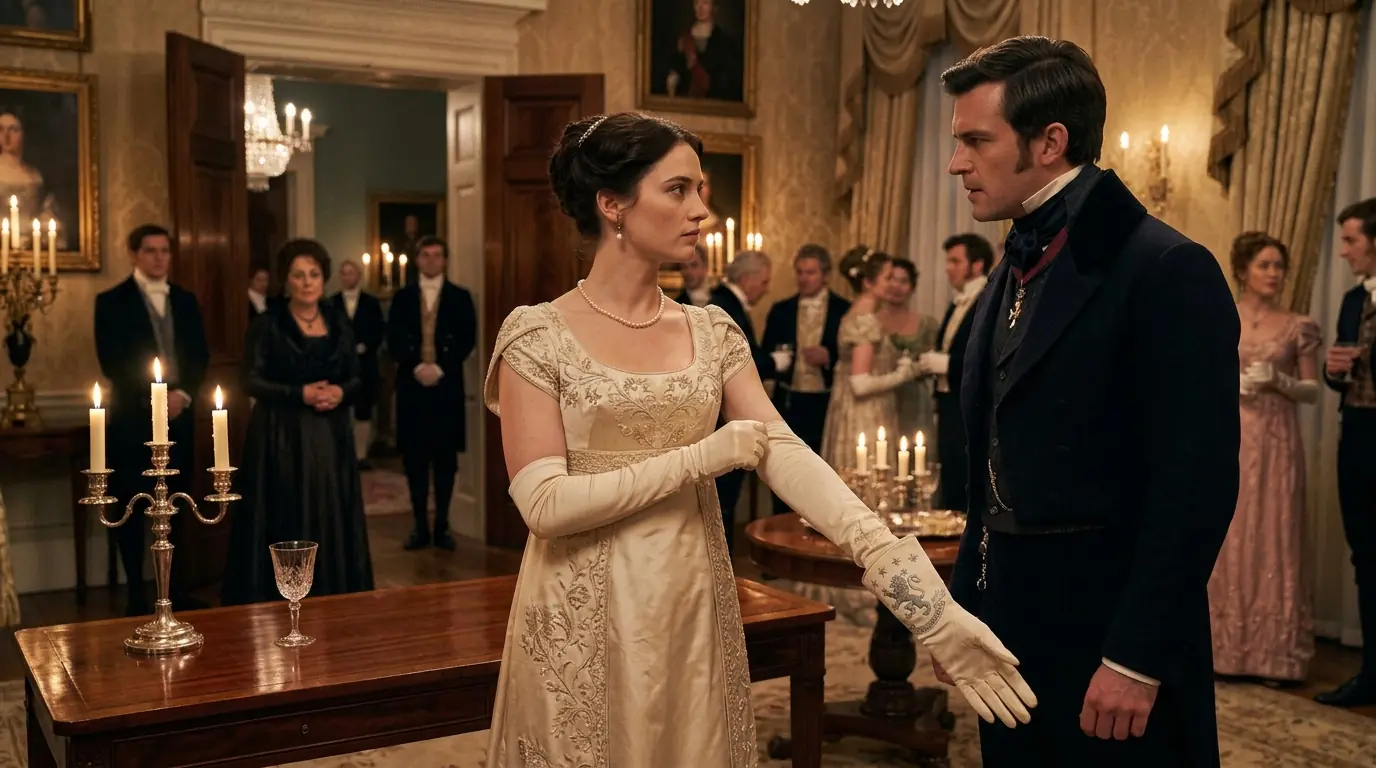
"Before this assembly begins, there is someone to whom the crown owes a debt it can no longer leave unrecognized."
The ceremonial chamber of the Palace of Saint Ormond had been built to make even powerful men feel small. Marble columns climbed toward a painted ceiling crowded with kings, saints, victories, and the golden lions of Avalon. Hundreds of nobles filled the tiered rows beneath them. Ministers sat beside senior judges. Generals in decorated uniforms occupied the eastern benches. Duchesses glittered beneath chandeliers while earls and marquesses exchanged quiet greetings before the annual opening assembly of the crown.
At the front of the chamber stood the empty throne of King Edmund IV. Trumpeters waited in the gallery above. Duke Tristan Ashcombe of Harrowmere sat among the kingdom's senior dukes, handsome and composed in formal black and silver. Several places away, among the duchesses, sat his wife, Helena.
Then the great doors opened. A royal clerk entered carrying an enormous crimson leather volume. Conversation faded almost immediately: The Book of Crown Service.
For generations, the names of those who had rendered extraordinary service to Avalon had been entered into that book: generals who saved cities, ministers who prevented wars, judges whose decisions changed the kingdom. The clerk carried it toward Lord Chancellor Nathaniel Wren, who placed it carefully on the table before the king's empty throne.
Whispers spread through the chamber. Tristan leaned toward the nobleman beside him.
"Probably another general," he murmured. "Or some governor the king wishes to flatter."
Helena heard nothing from where she sat today. She merely watched the book with everyone else.
The trumpet sounded. Every person rose.
"His Majesty, King Edmund the Fourth of Avalon."
The king entered beneath the royal canopy and approached his throne. At fifty-two, Edmund possessed none of the theatrical arrogance associated with lesser rulers; his authority rested in something quieter. He observed before he spoke, remembered what others forgot, and had developed an inconvenient habit of valuing competence more than pedigree.
He sat today. The court followed.
Yet instead of opening the assembly, Edmund looked across the enormous chamber. His eyes settled directly upon Helena. She glanced behind herself, genuinely believing he must be looking at someone else. He was not.
"Before this court conducts the business of the crown," Edmund said, "there is a debt this crown must acknowledge."
Helena's expression changed. Across the chamber, Tristan's smile disappeared.
Six months earlier, Briarwood Hall had seemed like a different world. Helena and Tristan had been married for seven years. There had been happiness once. When Tristan first courted Helena Fairborn, he had delighted in the very qualities he later learned to resent: she was intelligent without being showy, gracious without being weak, and possessed an unusual ability to listen carefully enough that people often told her things they had never intended to reveal.
Helena had not been born into one of Avalon's great houses. Her father, Thomas Fairborn, had spent thirty years as a provincial magistrate. Their home had been respectable but modest compared with Briarwood Hall. Helena's childhood memories were filled not with royal receptions, but with petitions, tenancy disagreements, court correspondence, and frightened families waiting outside her father's study. Thomas sometimes allowed his daughter to organize harmless papers.
"Never begin with the name at the top," he once told her. "Begin with the facts underneath it."
Helena never forgot.
Tristan once admired those stories. Then his father died. Tristan became Duke of Harrowmere, inherited Briarwood Hall, thousands of acres, dozens of ceremonial responsibilities, and the crushing consciousness of belonging to one of Avalon's oldest families.
Portraits of Ashcombes covered Briarwood's galleries: Ashcombe generals had fought beside kings; an Ashcombe had served as Lord Chancellor; another had commanded the royal cavalry. Lady Maryann Ashcombe, Tristan's widowed mother, ensured her son remembered every ancestor. She also ensured he remembered Helena had none comparable.
"Your wife is fortunate," Maryann once remarked over dinner. "Helena Fairborn would scarcely have entered half these rooms without you."
At first, Tristan corrected her. Eventually, he stopped. Later, he began agreeing.
Slowly, almost invisibly, affection became condescension: Helena's title came from him; her invitations came because she was his duchess; important people listened because she carried Ashcombe's name. Or so Tristan convinced himself.
Then an elderly widow arrived at Briarwood Hall on a rainy afternoon carrying a bundle of receipts tied together with faded blue ribbon. Her name was Margaret Pell. Her husband had recently died, and her family had occupied the same leased farm for thirty-eight years. Now they were being removed.
"The notice says we owe nine months," Margaret told Helena, hands trembling. "But we paid. My husband never missed rent."
Helena examined the receipts. Each carried a date, amount, and the signature of the district collector. She requested a copy of the official account; the records claimed no payment had been received. Helena checked again: something was wrong.
She asked Margaret to return two days later. Before then, Helena quietly requested several other petitions involving disputed arrears. The pattern repeated: farmers possessed receipts proving payment; official ledgers recorded arrears; families were removed; then, within weeks, their valuable leases were transferred to relatives, business partners, or associates of local land agents.
Helena spent evenings comparing dates. She requested parish records and copied names. Soon, her writing desk disappeared beneath papers. What began with one widow became seven families, then fourteen. The discrepancies were too consistent to be mistakes.
Helena eventually carried a thick folder into Tristan's study. He was reviewing estate correspondence.
"I need you to see something."
Tristan looked up. Helena explained Margaret's case, then the others. She showed him receipts beside altered records and a list of confiscated leases transferred to associates of the same officials.
Tristan's initial concern vanished when he recognized several names. "Edwin Vale is Lord Caraway's cousin."
"That does not alter these records."
"And Harland's brother sits on the county council."
"That does not alter them, either."
Tristan closed the folder. "Helena, you are wandering into matters you do not understand."
She stared at him. "My father adjudicated tenancy disputes for thirty years."
"Your father was a provincial magistrate, Helena. I am the Duke of Harrowmere."
"Neither title changes what these receipts prove."
The answer struck precisely where Helena had not intended it to: Tristan's pride.
He stood. "Do you understand what happens if you begin accusing men connected to half the influential families in this county?"
"I understand what happens if nobody does: families lose their homes."
"Leave this to people whose position allows them to understand the consequences."
Helena looked at him for several seconds. Then she gathered the folder. "I thought your position might allow you to care about them."
She left.
Several weeks later, Tristan hosted a reception at Briarwood Hall. Landowners, judges, nobles, and political acquaintances crowded the drawing rooms. Helena performed every duty expected of the Duchess of Harrowmere.
Then Lord Caraway casually mentioned hearing that Helena had been corresponding with provincial officials about tenant complaints. Tristan's expression tightened; he laughed it away.
After the guests moved toward supper, he followed Helena into an adjoining drawing room. "You will stop writing those letters."
Helena turned. Several servants remained in the corridor outside; Lady Maryann stood near enough to hear.
"No."
Tristan seemed stunned. "I beg your pardon?"
"Innocent families are being removed from their homes because powerful men believe nobody important will care."
"And who exactly do you imagine listens to you?"