Rosie assessed her, then him, then Eleanor again. "Are you cross?" Rosie asked. "Terribly," Eleanor said. "At him or at me?" A pause that lasted slightly too long. "Go to the rose room, Rosie." Rosie went. But she looked satisfied in the way only a six-year-old general could look after a successful campaign, tired, smudged with mud, and entirely certain she had done the right thing. The door swung shut behind her.
Eleanor stared at the Stanhopea. "I'm sorry," she said. "She is she has a great deal of feeling and very little understanding of what to do with it. She misses our mother and she has decided that the solution is to she doesn't" Eleanor stopped herself. She was rambling and she knew it. She pressed her lips together, tried again. What she said was not "Miss Calloway," he said. She stopped.
He was looking at her. The rain had returned, softer now, making the conservatory feel smaller. The orchid stood between them, pale and patient. "I didn't think the letter was misdirected," he said quietly. She looked at him. His jaw was tight in the way of someone choosing words with the same care they would choose footing on uncertain ground. "I hoped it wasn't," he said. "That is" a pause, the smallest fracture in that unhurried composure. "I'm not accustomed to hoping for things. I had retired from it."
Eleanor's chest did something she could not describe to herself in botanical terms. She looked at him, at the careful set of his shoulders and the gray of his eyes and the way he held himself like a man who had learned that stillness was safer than reaching. And she understood suddenly and completely that he was just as frightened as she was. The difference was he had said it. She hadn't yet.
She opened her mouth and the Stanhopea bloomed. Not fully, one bract only, peeling back in a slow curl to reveal the pale interior beneath, the first opening after 11 years of silence. It was small and unhurried and completely indifferent to the two people standing before it. But they both saw it. Neither of them spoke for a long moment.
"She said you were lonely," he said at last, very quietly. Eleanor looked at the orchid. "She is perceptive for her age." "Are you?" The question landed softly, no demand in it. "Just wait." She looked at him. The rain moved across the glass above them in long, slow rivulets. The conservatory smelled of green growing things and damp earth and something warmer. "Yes," she said. It was the smallest word. It cost her more than any argument she had ever made.
He did not reach for her hand. He did not move at all, but something in the room changed in the quality of the space between them, like a door not yet opened but no longer locked. They stood together in front of the blooming orchid until Lady Pemwick's voice drifted through from the next room, calling her guests for tea. Eleanor stepped back first, but not far.
Society noticed on a Wednesday. It was not a dramatic noticing. London's upper circles rarely announce their observations. They simply began arranging themselves differently around whatever they had seen, the way water reroutes quietly around a new stone without any particular fuss until suddenly the whole current has changed.
What they had seen was this. The Duke of Ashworth, who had attended perhaps four social engagements in the past calendar year, had now been present at six in the span of three weeks. And at three of those six, Miss Eleanor Callaway had also been present. And at two of those three, they had been observed in conversation that lasted longer than courtesy required. That was enough.
Eleanor became aware of it gradually, the way you become aware of a headache, not the moment it begins, but the moment it has already been there long enough to have opinions. The first sign was Mrs. Alderton at the Botanical Society's summer address, who greeted Eleanor with a warmth slightly too emphatic to be innocent and asked, with her eyes doing most of the work, whether Eleanor had been keeping well lately.
The second was an invitation to Lady Morfield's dinner. The third such invitation Eleanor had received and previously declined without consequence, except that this one arrived with a handwritten note at the bottom that said, "Do come, dearest. The table simply won't be right without you." Which was the kind of thing Lady Morfield said to women she was planning to seat next to someone interesting.
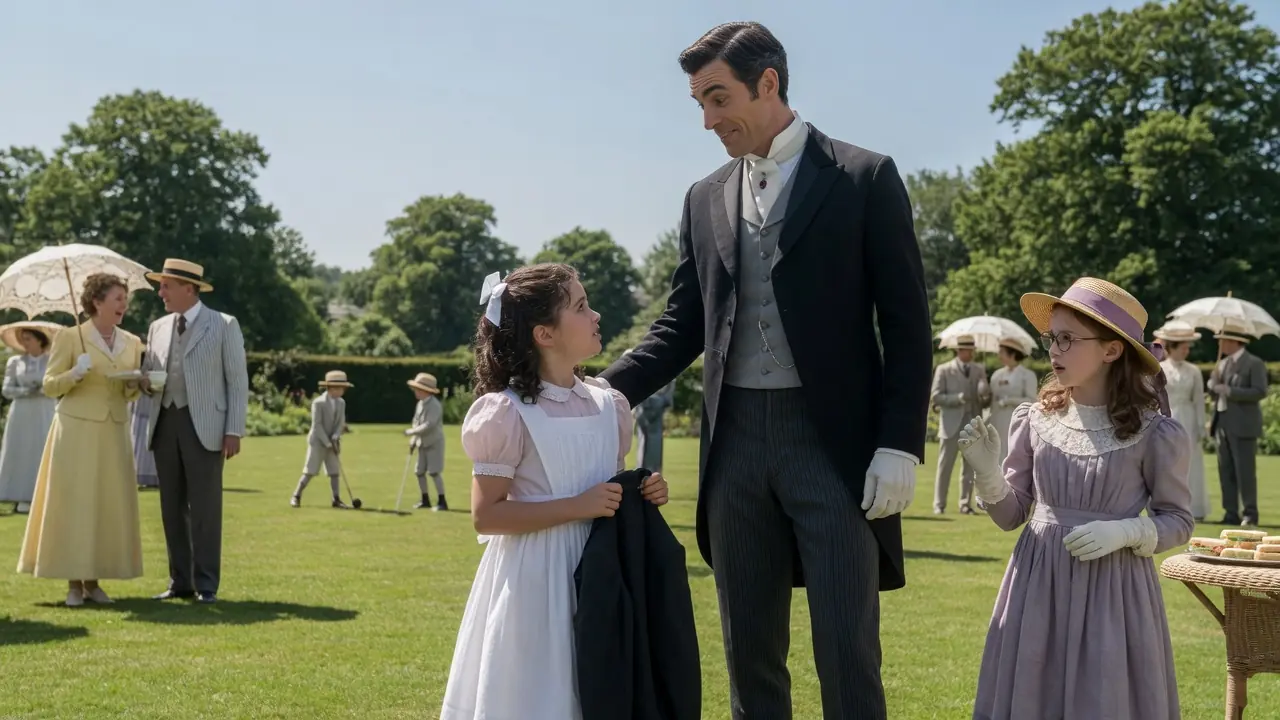
The third sign was her stepmother, Mrs. Aldridge Calloway, Eleanor's father's second wife, a woman who had treated Eleanor with the particular brand of polite indifference reserved for things you cannot get rid of but have no use for, arrived on a Thursday morning unannounced, sat herself in the parlor, and looked at Eleanor across the tea tray with the expression of someone who had just discovered that a piece of furniture they had stored in the attic was worth considerably more than they thought.
"I hear," Mrs. Aldridge said, stirring her tea with slow precision, "that you have been seen with the Duke of Ashworth." Eleanor set down the teapot. "I have been at several of the same social gatherings as the Duke of Ashworth." "Three times." "London is not as large as it pretends." Mrs. Aldridge looked at her with cool, calculating eyes. She was not an unkind woman, exactly. She was simply a woman who had never once made a decision that was not economic, and she saw the world in those terms with a consistency that was almost impressive.