At twenty-five years old, Grace Miller had learned to recognize the different kinds of silence.
There was peaceful silence, like the soft quiet inside a hospital room after a patient finally fell asleep.
There was heavy silence, like the pause after a doctor gave bad news.
There was angry silence, the kind people carried with stiff shoulders and tight jaws.
And then there was frightened silence.
Grace saw that kind often.
She saw it in elderly patients who did not understand their discharge papers but were too embarrassed to ask. She saw it in mothers waiting for test results. She saw it in children sitting on exam tables, swinging their legs while pretending they were not scared.
Grace worked as a nursing assistant at St. Agnes Medical Center in Columbus, Ohio. She was young, Black American, with warm brown skin, soft dark eyes, and curly black hair usually tied into a low bun at the back of her neck. She had a gentle face, but there was a quiet strength in the way she moved, the strength of someone who had been tired for years and still knew how to be kind.
She was not a registered nurse yet.
That was the dream.
But dreams required tuition, time, and money, and Grace had very little of all three.
She worked twelve-hour shifts at the hospital, took evening prerequisite classes at the community college, and lived in a small apartment with her younger brother, Isaiah, who was sixteen and convinced he was grown enough to survive on cereal and instant noodles.
Their mother had passed away when Grace was twenty-one. Their father had been gone long before that, drifting in and out of their lives until one day he simply stopped drifting back.
So Grace became the responsible one.
She worked.
She cooked.
She signed school forms.
She sat through parent-teacher meetings for a boy who was technically her brother but sometimes felt like her son.
She paid rent, bought groceries, checked Isaiah’s homework, and still kept a notebook under her pillow filled with nursing school brochures.
Whenever life felt impossible, she opened that notebook and reminded herself that she was not done becoming.
On the first Monday of March, rain fell over Columbus in cold silver sheets.
It was not the kind of rain that felt fresh or romantic. It was the kind that soaked through shoes, turned bus windows gray, and made every person on the sidewalk look like they had somewhere warmer they should have been.
Grace had just finished a brutal shift.
The emergency department had been overcrowded all afternoon. A flu outbreak had filled half the pediatric beds. An elderly man with pneumonia had cried because his daughter lived three states away and could not come. A toddler had thrown up on Grace’s shoes. Twice.
By the time she changed out of her scrubs and pulled on her gray coat, her back hurt, her feet throbbed, and her stomach was empty except for vending machine crackers eaten at noon.
She missed the 7:10 bus by thirty seconds.
She watched its red taillights disappear down the street and closed her eyes.
“Of course,” she whispered.
The next bus would not come for thirty minutes.
Grace pulled her hood over her hair and stood beneath the narrow bus shelter outside the hospital. The bench was wet on one end. The wind kept blowing rain sideways. Traffic hissed along the road.
She checked her phone.
Three missed texts from Isaiah.
Are you off yet?
There’s no milk.
Also don’t be mad but I maybe broke the toaster.
Grace sighed.
“Lord, give me strength,” she muttered.
That was when she noticed the little girl.
At first, Grace thought the child belonged to one of the people waiting nearby.
A man in a brown jacket stood at the far end of the shelter, scrolling through his phone. A woman with grocery bags stood near the curb. Two college students huddled under one umbrella, laughing too loudly.
But none of them seemed connected to the girl.
She stood just outside the shelter, half under the roof and half in the rain, wearing a pale yellow coat too thin for the weather. Her dark blond hair clung damply to her cheeks. She had a pink backpack on her shoulders and white sneakers splashed with mud.
She was small.
Maybe seven years old.
She held a folded piece of paper in both hands.
Her eyes moved from the street to the bus sign, then back to the paper.
Grace’s exhaustion shifted into alertness.
Children alone near busy roads made every instinct in her body stand up.
She watched for a few seconds, hoping a parent would rush over, laughing and apologizing.
No one came.
The little girl looked toward the hospital entrance, then down the street, then at the paper again.
Her mouth trembled.
Grace stepped closer, slowly.
“Hi, sweetheart,” she said gently. “Are you waiting for someone?”
The girl looked up.
Her eyes were blue, wide, and full of panic.
She did not answer.
Grace softened her voice even more.
“My name is Grace. I work at the hospital right there.”
She pointed to her ID badge clipped to her coat.
The girl looked at the badge, then at Grace’s face.
Still no words.
“That’s a pretty backpack,” Grace said. “Do you have a name?”
The girl’s fingers tightened around the paper.
The man in the brown jacket glanced over and frowned.
“Kid lost?” he asked.
Grace did not take her eyes off the girl.
“I’m checking.”
The woman with grocery bags said, “Probably waiting for her mom.”
“Maybe,” Grace replied.
But the child was shivering.
Grace crouched slightly, keeping enough distance not to frighten her.
“Can you show me that paper?”
The girl hesitated.
Then she handed it over.
The paper was wet and creased, written in an adult’s rushed handwriting.
Room 318 — St. Agnes. Ask for Daddy.
Grace’s stomach tightened.
“Your daddy is in the hospital?”
The girl nodded.
“What’s his name?”
The girl opened her mouth.
Nothing came out.
Her face crumpled with frustration, and tears filled her eyes.
Grace recognized it then.
Not stubborn silence.
Not rude silence.
A child too scared to speak.
“It’s okay,” Grace said quickly. “You don’t have to talk. Can you write?”
The girl nodded faintly.
Grace reached into her bag and pulled out a pen. Then she turned the paper over and held it against her clipboard.
The girl wrote slowly with trembling fingers.
Lily.
“Your name is Lily?”
A nod.
“Okay, Lily. You’re doing great.”
Grace pointed to the hospital. “You came here to see your dad?”
Another nod.
“Were you with someone?”
Lily looked down.
She wrote again.
Aunt Carla. She left me.
Grace went still.
The rain seemed to grow louder.
“Your aunt left you here?”
Lily nodded once.
Her face showed no surprise, only fear and shame, as if being abandoned at a bus stop was somehow her fault.
Grace felt anger rise inside her, hot and immediate.
But she kept her voice calm.
“Okay. Listen to me, Lily. You are safe right now. I’m going to help you find your dad.”
Lily stared at her.
“Do you know your dad’s full name?”
Lily wrote:
Matthew Reed.
Grace knew the name.
Not personally, but she remembered a patient in room 318. Matthew Reed. Thirty-six years old. Admitted after a construction accident. Broken ribs, concussion, internal injuries that had required surgery.
He had no visitors listed except a sister.
Carla Reed.
Grace looked toward the hospital entrance, then at the bus stop. Her bus would come eventually. Isaiah was waiting at home. She was off duty. She had no official responsibility here.
But Lily was seven.
Wet.
Scared.
Alone.
Grace stood and held out her hand.
“Come on, sweetheart. Let’s get you inside.”
Lily took her hand immediately.
Her fingers were ice cold.
Inside the hospital lobby, warmth wrapped around them. The floor shone beneath fluorescent lights, and the air smelled faintly of disinfectant and coffee. Grace guided Lily toward a quiet seating area near the information desk.
“Stay right here with me,” Grace said.
Lily nodded.
Grace went to the desk and spoke quietly to the receptionist, then called the pediatric social worker’s extension. No answer. After hours. She called the charge nurse on the third floor.
“Hey, Denise, it’s Grace Miller. I’m off shift, but I found a little girl outside. Says her dad is Matthew Reed in 318.”
There was a pause on the line.
“Matthew Reed?” Denise said. “His daughter?”
“I think so.”
“His sister was supposed to bring her tomorrow, not tonight.”
“She wrote that her aunt left her.”
Denise swore softly under her breath.
Grace looked back at Lily, who sat with both feet together, clutching her backpack straps.
“Can I bring her up?” Grace asked.
“Bring her. I’ll call security and social work.”
Grace hung up and returned to Lily.
“Good news,” she said. “Your dad is upstairs.”
Lily’s eyes widened.
“We’re going to see him, okay?”
Tears spilled silently down Lily’s cheeks.
Grace pulled a tissue from her pocket and handed it to her.
Lily wiped her face quickly, embarrassed.
“Hey,” Grace said softly. “Crying is allowed here.”
Lily looked at her as if no one had told her that before.
They took the elevator to the third floor.
Grace could feel the girl trembling beside her. When the elevator doors opened, Lily suddenly stopped.
Grace knelt in front of her.
“You scared?”
Lily nodded.
“Is it because of the hospital?”
Another nod.
“Or because you don’t know how your dad looks right now?”
Lily’s lip quivered.
Grace understood.
Hospital rooms could frighten adults. For a child, wires, monitors, bruises, bandages, and the strange stillness of a recovering body could turn someone familiar into someone terrifying.
“Your dad is hurt,” Grace said gently. “But he is being cared for. He might look tired. There may be machines near him, and he may have bruises. But he is still your dad.”
Lily wrote on the damp paper:
Will he die?
Grace felt her heart ache.
She did not give promises lightly.
She had seen too much.
But Matthew Reed was stable. Recovering. Awake.
“No,” Grace said softly. “Not tonight. He is awake, and he is waiting to get better.”
Lily took a shaky breath.
“Do you want me to walk in with you?”
Lily nodded hard.
Grace stood and held her hand.
Room 318 was at the end of the hall.
Denise, the charge nurse, waited outside with a concerned expression. She was a tall woman in her fifties with silver braids and sharp eyes that missed nothing.
She looked at Lily, then at Grace.
“Poor baby,” Denise murmured.
Lily moved closer to Grace.
Denise softened immediately.
“Hi, Lily. I’m Nurse Denise. Your daddy has been asking about you.”
Lily’s eyes filled again.
Denise opened the door.
Matthew Reed lay in the hospital bed, propped up by pillows. His face was pale and bruised along one cheekbone. A bandage wrapped part of his forehead. Tubes ran from his arm. His chest rose carefully, as if each breath cost him something.
But when he saw Lily, everything in his face changed.
“Lily,” he breathed.
The girl made a broken sound, not quite a word, and ran to the bed.
Grace caught her gently before she could climb onto him too fast.
“Careful, sweetheart. His ribs hurt.”
Lily froze, then reached for his hand instead.
Matthew gripped her small fingers with visible effort.
“What are you doing here?” he whispered.
Lily started crying silently.
Matthew looked past her to Grace, panic sharpening his face.
“What happened?”
Grace stepped forward.
“I found her outside near the bus stop. She had a note with your room number.”
His face drained.
“Carla,” he said.
Denise’s mouth tightened.
Matthew closed his eyes, and Grace could see fury fighting with helplessness.
“She was supposed to keep Lily until I got out,” he said. “She promised.”
Lily pressed her forehead to his hand.
Matthew looked at his daughter and softened immediately.
“Hey, hey,” he whispered. “It’s not your fault. Look at me, butterfly.”
Lily lifted her head.
Butterfly.
Grace saw the nickname land gently.
Matthew’s voice broke. “You did nothing wrong.”
Lily’s shoulders shook.
Grace stepped back toward the door, giving them space, but Lily turned quickly and reached for her.
Not wanting her to leave.
Grace stayed.
For nearly an hour, she remained in the room while Denise made calls. Social work was contacted. Security reviewed lobby footage. Matthew tried calling his sister again and again, but the calls went straight to voicemail.
Lily sat in a chair beside the bed, wrapped in a warm blanket Grace found from the supply closet. She held her father’s hand and refused to let go.
Eventually, Matthew looked at Grace.
“You were going home, weren’t you?”
Grace smiled tiredly. “Eventually.”
“I’m sorry.”
“You don’t need to apologize.”
“You helped my daughter when no one else did.”
Grace glanced at Lily.
“She was brave.”
Matthew’s eyes filled.
“She hasn’t spoken much since her mother died.”
Grace’s heart sank.
Matthew looked at his daughter with unbearable tenderness.
“Car accident,” he said quietly. “Two years ago. Lily was in the back seat. She survived. My wife didn’t.”
Lily looked down at her lap.
Grace wanted to say something comforting, but some grief was too large for ordinary words.
So she simply said, “I’m sorry.”
Matthew nodded.
“She talks sometimes at home. A little. But when she’s scared, nothing comes out.”
Grace looked at the paper still in Lily’s lap, covered in shaky writing.
“She found another way.”
For the first time, Matthew smiled faintly.
“She always does.”
At nearly ten o’clock, the on-call social worker arrived. Because Matthew was hospitalized and the listed temporary guardian had abandoned Lily, arrangements had to be made. The hospital would not simply release a child into uncertainty.
Matthew was devastated.
“I don’t have anyone else,” he said. “Her grandparents are gone. Her mother’s family lives in Arizona. I can’t leave this bed.”
The social worker spoke kindly but firmly. Lily would need emergency placement until Matthew was discharged or another safe caregiver was approved.
Lily understood enough.
She began to shake.
Matthew tried to sit up and cried out in pain.
Grace moved immediately.
“Mr. Reed, don’t.”
“Don’t take her,” he gasped. “Please.”
Denise put a hand on his shoulder. “We’re trying to find the best option.”
Lily stared at the adults, her whole body rigid with terror.
Grace looked at her.
Then at Matthew.
Then at the social worker.
“I can stay with her here tonight,” Grace said.
Everyone turned.
The social worker frowned gently. “Ms. Miller, that’s kind of you, but—”
“I work here. My supervisor knows me. I’ve passed background checks. I’m not asking to take her home. I’m asking if she can stay in the family room overnight while we sort things out. I’ll sit with her. I’m off tomorrow.”
Denise looked at Grace with a mixture of admiration and concern.
“Grace, you’ve been on your feet all day.”
“I know.”
Matthew stared at her.
“You’d do that?”
Grace looked at Lily, who had gone completely still, hope too fragile to show.
“Yes,” Grace said. “I would.”
It took phone calls, paperwork, approvals, and Denise using the tone that made administrators move faster.
But by midnight, Lily was allowed to sleep in the family room down the hall under temporary hospital supervision, with Grace staying beside her and social work reviewing options in the morning.
Matthew cried when Lily kissed his hand goodnight.
“Be brave, butterfly,” he whispered.
Lily shook her head hard.
Matthew’s face crumpled.
Grace knelt beside her.
“You don’t have to be brave all night,” she said. “Just until the next minute. Then the next one. I’ll be right there.”
Lily stared at her.
Then she nodded.
In the family room, Grace helped Lily settle onto a small couch with blankets. She gave her crackers, apple juice, and a hospital teddy bear someone had donated.
Lily wrote on her paper:
Will you leave?
Grace sat in the chair beside the couch.
“No.”
Promise?
Grace held out her pinky.
“I promise.”
Lily wrapped her tiny finger around Grace’s.
Within twenty minutes, exhaustion pulled the child under.
Grace stayed awake.
Rain tapped against the hospital windows. The vending machine hummed. Somewhere down the hall, monitors beeped steadily.
Grace’s phone buzzed.
Isaiah.
You alive?
She typed back:
Yes. Emergency at work. There’s leftover pasta in the fridge. Don’t burn the apartment down.
A moment later:
Too late for toaster. But apartment okay. Love you.
Grace smiled despite everything.
Love you too.
At two in the morning, Lily woke crying.
No sound.
Just tears and shaking.
Grace moved to the couch.
“Bad dream?”
Lily nodded.
Grace sat beside her, leaving space.
“My mom used to do this thing when I was scared,” Grace said softly. “She told me to name five things I could see.”
Lily wiped her eyes.
“Want to try?”
A tiny nod.
Grace looked around.
“I see a blue chair. A clock. Your pink backpack. The teddy bear. And…” She smiled. “One very brave girl.”
Lily looked at her.
Then she took the pen and wrote:
I see you.
Grace felt the words settle somewhere deep.
“I see you too,” she whispered.
By morning, everything had changed again.
Matthew’s sister, Carla, was found.
She had left Lily at the hospital after deciding she “could not handle babysitting anymore” and gone to her boyfriend’s apartment. She claimed she thought Lily would “figure it out” because she had the room number.
Grace heard Denise’s voice go cold when she repeated those words.
Matthew refused to let Carla near his daughter again.
The social worker arranged for Lily to stay temporarily with a foster family licensed for emergency placements, but only until Matthew could leave the hospital. Grace hated the fear in Lily’s face when she heard the plan.
So did Matthew.
But there were rules, and rules did not bend easily even when hearts did.
Grace stayed until the foster mother arrived.
Her name was Mrs. Alvarez, a soft-spoken woman in her sixties who had cared for emergency placements for years. She brought Lily a purple blanket and spoke to her like a person, not a problem.
That helped.
A little.
Before Lily left, she ran to Grace and hugged her tightly.
Grace froze for half a second, then wrapped her arms around the girl.
“You remember what I said?” Grace whispered. “One minute at a time.”
Lily nodded against her coat.
Then she slipped something into Grace’s hand.
The wet paper from the bus stop.
On the back, beneath all the other writing, Lily had added one line.
Thank you for finding me.
Grace kept that paper.
She folded it carefully and placed it in her nursing school notebook.
Life moved forward, because life always did, even after nights that changed people.
Matthew recovered slowly.
Grace checked on him when she could, though she was careful not to cross lines. She was not his nurse. Not officially. She was just the woman who had found his daughter in the rain.
But Lily did not see lines that way.
Every time she visited, she looked for Grace.
Sometimes she spoke.
Only a little.
“Hi.”
“Thank you.”
“Daddy hurts.”
Grace celebrated every word silently.
Matthew was discharged after three weeks. He walked slowly, with a brace and instructions not to lift anything heavy. Lily returned home with him under social work supervision.
Before leaving the hospital, Matthew found Grace near the nurses’ station.
He held an envelope.
“I don’t know how to thank you,” he said.
Grace shook her head. “You don’t have to.”
“Yes, I do.”
He looked thinner than when he arrived, but stronger too. His bruises had faded into yellow shadows. Lily stood beside him, holding his hand.
Inside the envelope was a drawing.
A bus stop.
Rain.
A little girl in a yellow coat.
And a woman holding her hand beneath a hospital sign.
At the bottom, in careful letters, Lily had written:
Grace came.
Grace stared at the drawing until her eyes blurred.
“I’m going to frame this,” she said.
Lily smiled.
Matthew’s voice was quiet. “I lost my wife two years ago. Then I almost lost my daughter because I trusted the wrong person. That night could have ended very differently.”
Grace swallowed.
“But it didn’t.”
“Because of you.”
Grace looked at Lily. “Because she was smart enough to carry a note.”
Lily held her father’s hand tighter.
Matthew smiled faintly.
“If you ever need anything,” he said, “please call me.”
Grace accepted his number to be polite.
She never planned to use it.
People said things like that in emotional moments. Most meant it then. Few remembered later.
Grace did not resent that.
She had learned not to build hopes on gratitude.
She returned to her life.
Work.
Classes.
Bills.
Isaiah’s broken toaster became a family joke. Grace bought a used one from a thrift store and made him watch a video about kitchen safety. He rolled his eyes but hugged her afterward when he thought she was too tired to notice.
Months passed.
Spring became summer.
Summer became autumn.
Grace applied to nursing school.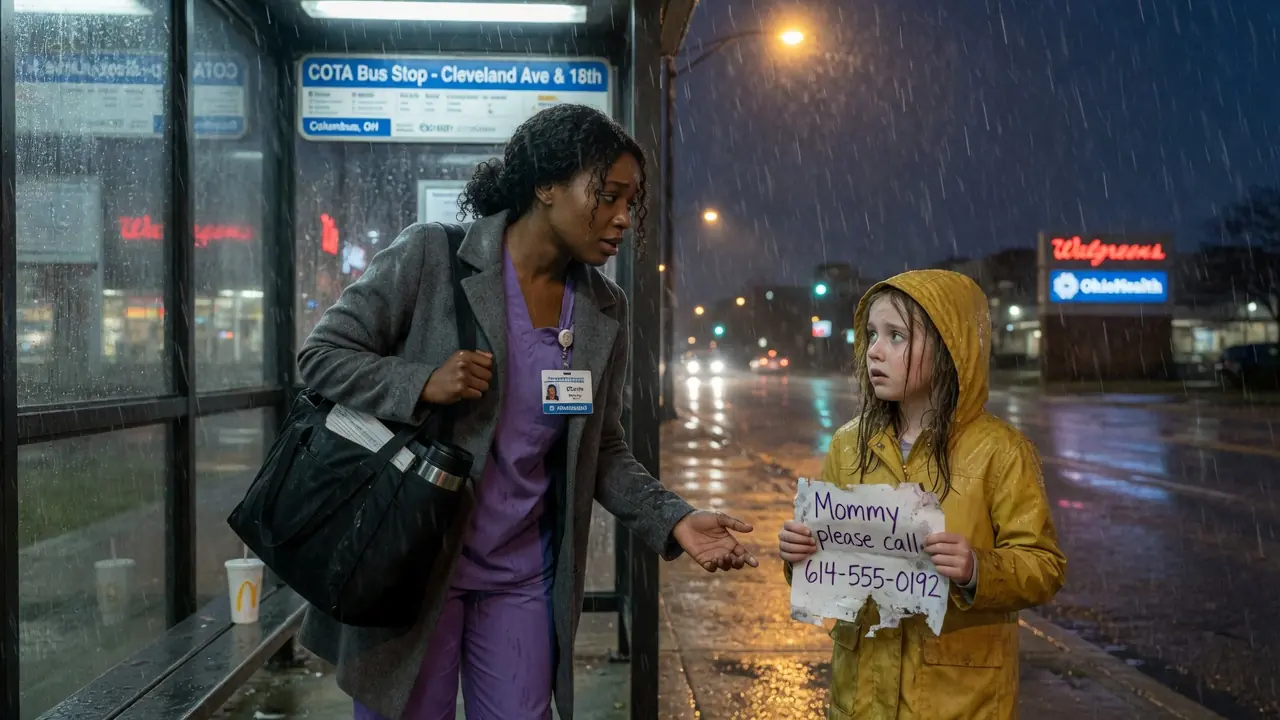
She told almost no one.
Not because she was not excited, but because wanting something loudly made the possibility of losing it feel dangerous.
In November, an email arrived.
She had been accepted.
For ten full seconds, Grace simply stared at the screen.
Then she screamed.
Isaiah ran into the room holding a basketball.
“What happened?”
Grace pointed at the laptop.
He read the first line.
Then he screamed louder than she had.
They jumped around the apartment like children.
Then reality arrived quietly behind the joy.
Tuition.
Books.
Reduced work hours.
Clinical fees.
Uniforms.
Transportation.
Grace spent the next week calculating, applying for scholarships, talking to financial aid, and trying not to panic.
The numbers did not work.
Even with loans, even with part-time work, even with every dollar stretched thin, she was short.
Not a little short.
Painfully short.
She considered deferring.
Just one year.
One year to save.
One year to prepare.
One year that might become two.
Then three.
Dreams could die politely that way.
Not in a dramatic explosion.
Just one practical delay at a time.
Grace was sitting in the hospital cafeteria during her break, staring at the tuition estimate, when Denise sat across from her.
“Why do you look like someone stole your birthday?”
Grace quickly turned her phone over.
“I’m fine.”
Denise raised one eyebrow.
“I have been a nurse for thirty-one years. Try again.”
Grace sighed.
“I got into nursing school.”
Denise’s face lit up. “Grace!”
“I might not be able to go.”
The light dimmed.
“Money?”
Grace nodded.
Denise leaned back.
“How much?”
“Too much.”
“Grace.”
“What?”
“People want to help you.”
Grace shook her head immediately.
“No.”
“You don’t even know what I’m going to say.”
“I know enough.”
Denise studied her.
“You help everybody else like breathing. But when someone tries to help you, suddenly you act like kindness is a trap.”
Grace looked away.
That hit too close.
Denise softened.
“Baby, needing help does not erase your strength.”
Grace said nothing.
Because if she spoke, she might cry in the cafeteria.
That night, she went home and found Isaiah cooking spaghetti.
Actual spaghetti.
Not instant noodles.
The kitchen was a disaster, but the food was edible.
He placed a bowl in front of her and said, “We’re celebrating.”
Grace smiled tiredly. “Celebrating what?”
“You getting into nursing school.”
“I haven’t decided if I can—”
“No,” Isaiah interrupted. “We’re not doing that.”
Grace looked at him.
He sat across from her, suddenly serious in a way that made him look older.
“You gave up college for me.”
“I didn’t give it up.”
“You delayed it.”
“That’s different.”
“Grace.”
She looked down.
Isaiah’s voice softened.
“I’m sixteen, not six. I know what you did. I know you worked extra shifts. I know you skipped things. I know you lied about not being hungry sometimes.”
Grace closed her eyes.
“I didn’t want you to worry.”
“I worried anyway.”
He reached across the table and pushed an envelope toward her.
“What is this?”
“My savings.”
“No.”
“Grace—”
“No, Isaiah.”
“It’s not a lot.”
“I said no.”
“You can use it for books.”
“Absolutely not.”
His eyes flashed. “Why do you get to sacrifice for me, but I don’t get to help you?”
Grace froze.
The apartment went quiet except for the bubbling pot on the stove.
Isaiah looked away, embarrassed by his own emotion.
“I want you to become a nurse,” he muttered. “Mom would want it too.”
Grace pressed her hands over her face.
She did not take his savings.
But she did let him hug her.
And for the first time, she admitted aloud that she was afraid.
Two days later, Grace received a phone call from an unknown number.
She almost ignored it.
Then she answered.
“Hello?”
“Is this Grace Miller?” a man asked.
“Yes.”
“This is Matthew Reed.”
Grace sat up straighter. “Matthew? Hi. Is everything okay? Is Lily okay?”
“She’s good,” he said quickly. “She’s right here, actually.”
A small voice came on the line.
“Hi, Grace.”
Grace’s heart warmed instantly.
“Hi, Lily.”
“I got a 100 on my spelling test.”
“That’s amazing!”
“And Daddy burned pancakes.”
Matthew’s voice returned, amused. “They were slightly overdone.”
Lily said something in the background.
Matthew sighed. “Fine. They were black.”
Grace laughed.
It felt good.
Then Matthew grew serious.
“I heard you got into nursing school.”
Grace’s smile faded.
“How did you hear that?”
“Denise.”
Grace was going to have a conversation with Denise.
“She also said you might not go because of money.”
Grace closed her eyes.
“Matthew—”
“Before you tell me no, please listen.”
She went quiet.
“I run a small construction company,” he said. “After the accident, I couldn’t work for months. Insurance helped, but not enough. People stepped up. Neighbors brought food. My crew covered jobs. A church paid one month of rent without telling me. I hated needing help.”
Grace leaned against the wall.
“Then I realized something. Lily was watching. And if I taught her that receiving help was shameful, she would spend her life suffering quietly.”
Grace swallowed.
Matthew continued.
“I can’t pay your tuition. I wish I could. But my company has a community education fund. We started it after my wife died. It was supposed to help trade students, single parents, people rebuilding after hardship. We haven’t awarded it this year.”
Grace’s pulse quickened.
“No.”
“You don’t know what I’m offering.”
“Yes, I do.”
“Grace.”
“I didn’t help Lily for money.”
“I know that.”
“I don’t want her to think—”
“She thinks you’re the reason she still believes strangers can be safe.”
Grace could not speak.
Matthew’s voice softened.
“This isn’t payment. This is continuation.”
“What does that mean?”
“It means you helped my child survive a terrible night. Now we want to help you become the nurse you were clearly meant to be.”
Tears gathered in Grace’s eyes.
“I can’t accept something that big.”
Lily’s voice came back, small but determined.
“Yes, you can.”
Grace laughed through a sob.
“Lily.”
“You said crying is allowed,” Lily reminded her.
Grace wiped her cheek.
“That is unfair.”
“My teacher says use what you know.”
Matthew returned to the phone, and Grace could hear the smile in his voice.
“The fund committee still has to approve it formally, but I wanted to ask if you would apply. Not accept blindly. Apply. Let us consider you properly.”
Grace looked across the room at her nursing school notebook.
The one with Lily’s bus stop paper still folded inside.
“Okay,” she whispered.
“Okay?”
“I’ll apply.”
Three weeks later, Grace received the award.
It covered her first year.
Not everything forever.
But enough to begin.
Enough to stop the dream from dying at the doorway.
When Denise found out, she hugged Grace so tightly that Grace could hardly breathe.
“See?” Denise said. “Help came back.”
Grace laughed. “You meddled.”
“I coordinated.”
“You gossiped.”
“I networked with purpose.”
Grace could not even be angry.
In January, Grace started nursing school.
It was harder than she imagined.
She studied anatomy until midnight, woke at five for clinical rotations, worked weekend shifts, helped Isaiah study for exams, and drank coffee like it was a medical necessity.
Some days, she felt powerful.
Other days, she cried in her car because she had forgotten a lab value or could not afford a new textbook until payday.
But she did not quit.
Whenever she felt close to breaking, she opened her notebook and looked at Lily’s note.
Thank you for finding me.
Then the scholarship letter.
Then Isaiah’s envelope, still sealed, because she had never used his money but kept it as proof that love sometimes wanted to give back.
Matthew and Lily stayed in her life.
Not constantly.
Not intrusively.
But gently.
Lily sent drawings. Grace sent stickers. Matthew texted updates after doctor appointments and school events. Sometimes, on Grace’s rare free afternoons, she met them at a park or café.
Lily spoke more each year.
Not loudly.
Not all the time.
But enough.
The first time she told Grace an entire story without writing anything down, Matthew turned away and pretended to check his phone.
Grace saw his shoulders shaking.
She pretended not to notice.
Three years passed.
Grace became a registered nurse at twenty-eight.
At her pinning ceremony, Isaiah sat in the audience wearing a suit he claimed made him look like a lawyer. Denise sat beside him, crying openly. Matthew and Lily came too.
Lily was ten now, taller, with her blond hair cut to her shoulders and a confidence that still came and went like sunlight through clouds.
After Grace walked across the stage, Lily ran to her and wrapped her arms around her waist.
“You did it,” Lily said.
Grace hugged her tightly.
“We did it.”
Matthew stood nearby, eyes bright.
“You earned this,” he said.
Grace smiled.
“I had help.”
He nodded.
“Good.”
That night, Grace went home and placed her nursing pin beside her mother’s photograph.
For a long time, she stood there quietly.
“Made it, Mama,” she whispered.
But the story did not end there.
Kindness rarely ends where people think it does.
Years continued moving.
Isaiah graduated high school and joined a technical program. Grace began working in the pediatric unit at St. Agnes, where frightened silence still appeared in exam rooms and hallways, but now she had more tools to meet it.
She became known as the nurse who carried tiny notebooks and pens in her pocket for children who could not speak when afraid.
She kept stickers shaped like butterflies.
She always asked children, “Do you want to tell me, point to it, or write it down?”
Doctors noticed.
Parents noticed.
Children noticed most of all.
One winter evening, almost seven years after the night at the bus stop, Grace was asked to speak at a hospital fundraiser for child trauma support services.
She almost refused.
Public speaking terrified her.
Denise said, “Absolutely not. You are speaking.”
So Grace stood before a room of donors, doctors, nurses, and community leaders wearing a navy dress and the silver nursing pin she had once thought she might never earn.
She looked out at the crowd and found Isaiah in the back, grinning proudly.
Matthew sat near the front.
Beside him was Lily, now fourteen, holding a folded piece of paper.
Grace began.
“When I was twenty-five, I missed my bus after a long shift,” she said. “At the time, it felt like one more inconvenience in a life full of them. I was tired. I was broke. I was worried about my brother, my bills, and whether I would ever become the nurse I wanted to be.”
The room was silent.
“Then I saw a little girl standing in the rain.”
Lily looked down at her lap.
Grace continued.
“She was alone. She was scared. And she could not speak. But she had a note. She had a name. She had a father upstairs in a hospital bed who loved her desperately. What she needed in that moment was not a hero. She needed an adult to slow down long enough to see her.”
Grace’s voice trembled, but she steadied it.
“That night changed my life because it taught me something I carry into every room now. Silence is not emptiness. Sometimes silence is fear. Sometimes it is trauma. Sometimes it is a child waiting to find out if the world is safe enough to answer.”
Several people wiped their eyes.
“I helped that little girl find her father. Later, her family helped me begin nursing school. That was a gift I can never repay, except by continuing the work.”
Grace looked at Lily.
“So tonight, I’m asking you to support a program that gives frightened children more ways to communicate. Writing boards. comfort kits, family advocates, trauma-informed training, and quiet rooms where children can breathe before they are expected to explain pain.”
She paused.
“No child should have to be loud to be found.”
The applause was immediate and strong.
Grace stepped back from the microphone, overwhelmed.
Then Matthew stood.
So did Lily.
Then everyone.
Afterward, Lily approached the stage.
“Can I read something?” she asked.
Grace blinked. “Now?”
Lily smiled nervously. “I asked them already.”
Matthew shrugged, pretending innocence.
Grace laughed softly and stepped aside.
Lily stood at the microphone.
She unfolded her paper.
Her hands shook, but her voice was clear.
“When I was seven, I thought being quiet made me disappear,” Lily said. “After my mom died, words got stuck. Adults asked questions too fast. Some got annoyed. Some talked over me. Some acted like I was broken.”
Grace pressed a hand to her chest.
“Then Grace found me. She didn’t make me talk. She gave me a pen. She waited. She saw me before I could explain myself.”
Lily looked up.
“That night, I learned that safety can sound like a soft voice. It can look like a stranger kneeling in the rain. It can feel like someone saying, ‘Crying is allowed here.’”
The room was completely still.
Lily’s eyes found Grace.
“I want to become a child therapist someday. Because Grace came. Because she stayed. Because she helped me believe my voice was still there.”
Grace began to cry.
Lily smiled through her own tears.
“So this is my gift back to her. I’m going to spend my life finding quiet kids too.”
The applause that followed felt different from the first.
It was not just admiration.
It was recognition.
The room understood that it was witnessing a circle completing and beginning again.
After the fundraiser, Matthew handed Grace a small framed picture.
It was Lily’s old drawing.
The bus stop. The rain. The woman holding the little girl’s hand.
Below it, newly engraved on a silver plate, were the words:
Grace Came.
Grace looked at it and laughed softly through tears.
“You kept it?”
Matthew smiled. “We kept everything.”
Lily hugged her.
“You found me first,” she whispered.
Grace held her tightly.
“No, sweetheart,” she said. “You helped me find myself too.”
Years later, when people asked Grace why she became such a patient nurse, why she never rushed frightened children, why she always carried pens in her pocket, she told them the story.
Not the whole story every time.
Sometimes just enough.
“I once met a little girl at a bus stop,” she would say. “She reminded me that silence still has a voice.”
And every March, on the anniversary of that rainy night, Grace received a card.
Sometimes from Matthew.
Sometimes from Lily.
Eventually from both.
The message was never long.
It did not need to be.
One year, it said:
Thank you for missing your bus.
Another year:
Thank you for waiting.
And on the year Lily left for college to study psychology, Grace received a card with a butterfly drawn on the front.
Inside, Lily had written:
You told me to be brave for one minute at a time. I think I can do that for the rest of my life now.
Grace placed that card beside her nursing pin, her mother’s photograph, Isaiah’s sealed envelope, and the framed drawing.
A small collection of proof.
Proof that one exhausted young woman could stop at a bus shelter and change a child’s life.
Proof that a child could grow up and return the gift by choosing to help others.
Proof that kindness was never as small as it looked in the moment.
On the night Grace found Lily, she had thought she was only helping a lost little girl get out of the rain.
She had not known she was stepping into the future.
She had not known the child’s father would help open the door to nursing school.
She had not known Lily’s quiet courage would shape the way she cared for hundreds of children after her.
She had not known that years later, a young woman who once could not speak at a bus stop would stand in front of a crowded room and say, clearly and bravely, that her voice had survived.
Grace had simply seen a child in the rain and decided to stop.
And sometimes, that was how the greatest stories began.
Not with wealth.
Not with power.
Not with perfect timing.
But with one person noticing another person’s fear and saying, in whatever way they could:
I see you.
You are safe.
I will stay.