A grandmother sees a brightly colored toy in a store and immediately imagines the child’s face lighting up. She notices a new game online, a stuffed animal on sale, a box of building pieces, or the latest toy everyone seems to be talking about. Before long, she is carrying another bag into the house, smiling as her grandchild tears through the paper.
For a few minutes, the excitement is real.
The child may hug the toy, press every button, scatter every piece across the floor, and declare that it is the best gift they have ever received. Grandma feels happy because giving is one of the ways she expresses love.
Then something familiar happens.
A week later, the toy is under the couch, missing a piece, or sitting untouched beside many others. The child is more interested in the cardboard box, the kitchen drawer, the puddle outside, or the collection of rocks they found near the driveway.
This does not mean the gift was meaningless. Toys can bring joy, support development, and become part of treasured childhood memories. There is nothing wrong with a grandmother occasionally buying something special.
But children rarely need as many toys as the adults who love them believe they do.
What grandchildren need most cannot be ordered, wrapped, or placed on a shelf.
They need time when Grandma’s phone is put away and her attention is fully available. They need slow afternoons without an adult rushing the activity toward a goal. They need conversations at eye level, where their thoughts are treated as important.
They need mud, water, sticks, bicycles, paper, crayons, curiosity, and enough unplanned time to discover what interests them. They need opportunities to become bored, experiment, make mistakes, and find their own solutions.
Most importantly, they need grandparents who are willing to enter their world.
A grandchild’s world may look small to an adult. It may revolve around an imaginary animal, a collection of bottle caps, a game with rules that change constantly, or a story that takes fifteen minutes to explain.
But to the child, that world is real and important.
When Grandma enters it with patience, she communicates something deeper than entertainment.
She says, “What matters to you matters to me.”
That message shapes a child’s sense of worth.
Grandmothers often worry that children will remember the things they bought. They may believe the grandchild with the most impressive gifts will feel the most loved.
But childhood memory does not work like a store receipt.
Children may forget which toy came from which person. They may forget how much it cost or what year they received it.
What they often remember is the feeling of being known.
They remember who sat on the floor.
Who listened without looking at a screen.
Who followed them through the woods while they searched for a “perfect” stick.
Who allowed paint to get on the table and mud to cover their shoes.
Who taught them to ride a bicycle without making them ashamed when they fell.
Who entered their world rather than constantly demanding that they enter the adult world.
Those experiences become part of a child’s emotional foundation.
A grandmother does not need unlimited energy, perfect health, a large home, or an expensive plan to offer them. The form may change depending on her mobility, finances, location, and the grandchild’s age.
The essential gift is not the activity itself.
It is presence, curiosity, and the willingness to let the relationship unfold at the child’s pace.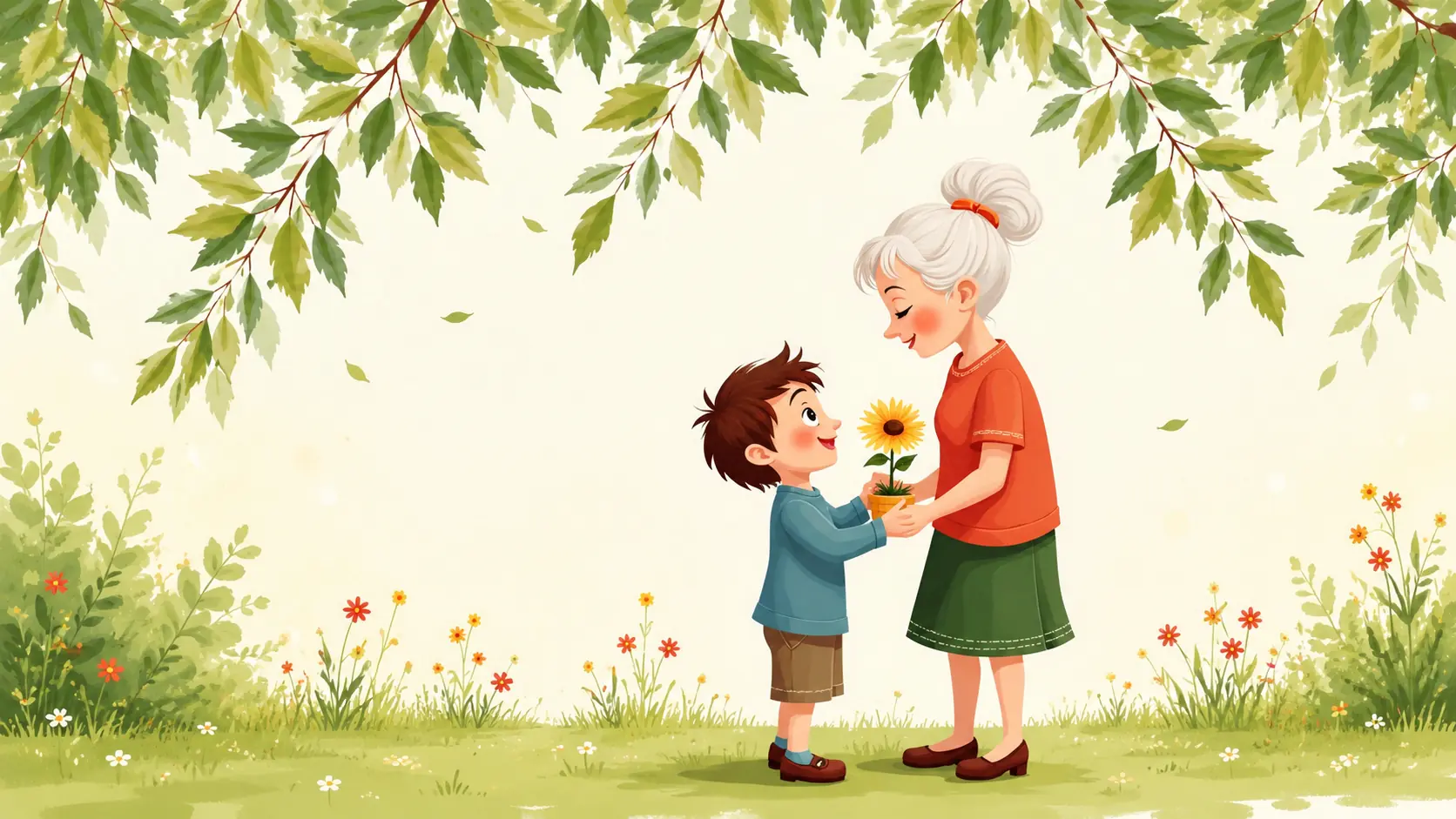
1. They Need Moments When You Put Your Phone Down
Phones have become part of ordinary life.
They hold messages, photographs, calendars, news, medical information, directions, family updates, and countless small responsibilities. For many grandparents, the phone is also the main way they stay connected with distant relatives.
The problem is not simply owning or using one.
The problem begins when the phone quietly receives more attention than the child sitting nearby.
A grandmother may believe she is only checking one message. Then another notification appears. She reads a comment, answers a call, looks at a photograph, or begins scrolling through updates.
The grandchild notices.
Children are sensitive to where an adult’s attention goes. They may not understand the reason for the distraction, but they understand the feeling of waiting for someone to look up.
A child may repeat, “Grandma, watch this,” several times before giving up. They may become louder, more demanding, or more disruptive because negative attention still feels better than being invisible.
Adults sometimes interpret this behavior as impatience.
But the child may simply be asking, “Am I more important than what is happening on that screen?”
Putting the phone down for a while offers a powerful answer.
It does not mean Grandma must remain unreachable all day. She may have legitimate reasons to keep the phone nearby. The goal is not perfection.
The goal is creating clear moments when the child receives undivided attention.
Perhaps the phone goes into a drawer during lunch. Perhaps it remains on a shelf during a board game, walk, or conversation. Grandma can tell the child, “I am putting this away because I want to be with you.”
That sentence makes the action visible.
The child learns that attention can be chosen.
These phone-free moments do not need to last for hours. Even fifteen fully present minutes can feel more meaningful than an entire afternoon of partial attention.
Children can sense when an adult is truly with them.
The adult’s face responds. The conversation develops. The child does not have to compete with alerts, messages, or photographs from other people’s lives.
Grandma may discover that putting the phone down changes her experience too.
Without the constant interruption, she notices more. She hears the unusual words the child uses, sees how carefully they arrange their toys, and recognizes small changes in mood.
She may notice that the grandchild is not merely showing her a drawing. They are waiting to see whether she finds it beautiful.
They are not merely telling a long story about school. They are trying to explain who made them feel left out.
Attention helps Grandma hear what exists beneath the words.
When grandchildren grow older, they may become less direct. A teenager may begin talking while riding in the car, cooking, or sitting outside. If Grandma is distracted, the moment can close quickly.
Young people often test whether an adult is emotionally available before sharing something important.
A small comment may be an opening.
When Grandma looks up, listens, and does not immediately return to the phone, the grandchild learns that she is safe to approach.
Phone-free presence also teaches by example.
Children and teenagers are constantly told to reduce screen time. Yet they notice when adults cannot tolerate silence without checking a device.
Grandma’s behavior can show that people deserve full attention.
She can say, “I want to hear you, so I am putting this away.”
This is a lesson in respect.
Years from now, the grandchild may not remember the exact conversation. But they may remember that Grandma’s eyes were on them.
In a world designed to divide attention, being fully seen is a rare and lasting gift.
2. They Need Slow, Grandchild-Led Time Where You Follow Their Lead
Adults often approach time with children as something that must be organized.
There should be a plan, a lesson, an activity, a destination, or a measurable result. If Grandma has only a few hours with the grandchildren, she may feel pressure to make those hours special.
She plans crafts, outings, baking, games, and photographs.
The intentions are loving.
But children do not always need another adult-designed experience.
Sometimes they need an adult willing to follow.
Grandchild-led time begins with a simple question:
“What would you like to do?”
Then Grandma resists the urge to improve the answer.
If the child wants to move rocks from one bucket to another, she does not immediately turn it into a counting lesson. If they want to build the same tower repeatedly, she does not insist on creating something more impressive.
She enters the activity they chose.
Following a child’s lead communicates trust.
It tells the child that their ideas have value, their pace is acceptable, and they do not always need an adult to direct the experience.
Children spend much of life following instructions.
Wake up. Get dressed. Eat. Hurry. Sit down. Leave the house. Complete the assignment. Clean the room. Stop playing. Prepare for bed.
These directions are necessary, but they leave limited space for autonomy.
Time with Grandma can become one of the places where a child experiences greater freedom.
She can allow the child to decide whether the blanket fort is a castle, a store, or a spaceship. She can accept that the rules of the game may not make perfect sense.
She can ask, “What happens next?” instead of telling the child what should happen.
This kind of play supports imagination and confidence.
The child becomes the creator rather than the audience.
Slow time also means refusing to rush every moment.
A walk with a grandchild may take much longer than an adult expects. The child stops to inspect ants, collect leaves, examine cracks in the sidewalk, and ask questions with no simple answers.
Grandma may feel tempted to say, “Come on, we need to keep moving.”
Sometimes the schedule truly requires moving faster.
But when it does not, she can slow down.
She can kneel beside the child and look at the ant.
She can allow the destination to become less important than the discoveries along the way.
Older adults may be uniquely positioned to offer this gift. Many grandparents remember how quickly childhood passed for their own children. They now understand that efficiency is not always the highest value.
The slow walk may be the important thing.
Grandchild-led time does not mean the child controls every decision or ignores all boundaries. Grandma remains responsible for safety, timing, and respectful behavior.
Following the child’s lead occurs within those limits.
She can say, “We cannot throw rocks toward the house, but we can throw them into the empty field.”
She protects the boundary while preserving the child’s idea.
The grandmother may also need to tolerate repetition.
Children often repeat activities because repetition creates mastery. They want the same story, game, song, or pretend scene again and again.
To an adult, it can feel boring.
To the child, each repetition contains new understanding.
Grandma’s willingness to remain with the activity says that the relationship matters more than constant novelty.
A child who leads play may reveal important things.
Their pretend characters may argue about something happening at school. Their drawing may include a worry they have not stated directly. Their game may show what they are trying to understand.
When Grandma follows instead of directing, she gains a view into the child’s inner world.
She should not overanalyze every game, but she can remain attentive.
Grandchild-led time is not wasted time.
It is connection without performance.
3. They Need Eye-Level Conversations That Make Them Feel Heard
Children spend much of their early lives looking upward.
Adults are taller, louder, and more powerful. Instructions often come from above: “Put that down,” “Come here,” “Listen to me,” or “We need to go.”
When Grandma lowers herself to the child’s eye level, the emotional meaning of the conversation changes.
She is no longer only speaking over the child.
She is meeting them.
Eye-level conversation tells a grandchild, “I am not too important or too busy to come into your space.”
This matters during joyful moments and difficult ones.
When a child is excited, Grandma can sit beside them and allow the story to unfold without rushing. Children often provide details adults consider unnecessary.
They explain who stood where, what color an object was, what happened before the main event, and why a particular sound was funny.
A rushed adult may interrupt: “What is the point?”
Grandma can listen long enough to discover that the details are the point.
Children use long stories to organize experience.
Being heard helps them make sense of what happened.
Eye-level connection becomes even more important when the child is upset.
A grandmother may be tempted to correct immediately.
“Stop crying.”
“That is not a big deal.”
“You need to calm down.”
But what seems small to an adult can feel enormous to a child.
A broken toy, changed plan, lost game, or unkind comment may overwhelm them because they do not yet have decades of perspective.
Grandma does not have to agree that the event is catastrophic.
She can acknowledge that it feels painful.
“You really wanted that to work.”
“It hurt when they left you out.”
“You are disappointed.”
These statements help a child feel understood.
Being heard does not mean receiving everything they want. Grandma can validate the feeling while maintaining the limit.
“You are angry that we have to leave. I understand. We are still going home.”
The child learns that emotions are welcome even when the answer remains no.
Eye-level conversation also requires questions that are not interrogations.
“How was school?” often receives “Fine.”
Grandma can ask more specific questions.
“What made you laugh today?”
“What was difficult?”
“Who did you sit with?”
“What is something you wish adults understood?”
Older children may resist direct questioning, especially if every answer produces advice.
Sometimes they need Grandma to listen without solving.
A teenager may say, “I do not know what to do about my friend.”
Grandma may want to immediately explain what the teenager should do. But advice offered too quickly can close the conversation.
She can begin with, “Tell me more.”
Then she listens.
When advice is appropriate, she can ask, “Would you like my thoughts, or do you mostly need me to hear you?”
That question respects the young person’s autonomy.
Listening at eye level also means taking apologies seriously.
If Grandma speaks harshly, misunderstands, or breaks a promise, she can apologize directly.
“I was impatient, and I am sorry.”
Adults sometimes fear that apologizing weakens authority. In reality, it strengthens trust.
The child learns that respect moves in both directions.
A grandmother’s calm, attentive conversation may become especially meaningful if the child feels misunderstood elsewhere. She can become the adult who does not laugh at their concern or immediately compare it to something worse.
This does not require agreement with every belief or choice.
It requires curiosity.
“Help me understand why that matters to you.”
These words can keep a relationship open across generations.
Grandchildren may forget much of what Grandma said.
They will remember how it felt to speak without being dismissed.
4. They Need Unstructured Outdoor Play
Outdoor play does not always need equipment, coaching, rules, or an educational objective.
Children benefit deeply from simply being outside with time and space to explore.
A backyard, park, garden, trail, field, beach, or quiet neighborhood can become a place of discovery.
Unstructured outdoor play allows children to decide how the environment will be used. A fallen branch becomes a bridge. A pile of leaves becomes a nest. A tree becomes a fort, a ship, or a hiding place.
The child’s imagination interacts with the physical world.
This kind of play engages the body in varied ways. Children climb, balance, run, squat, dig, carry, throw, and build. They encounter uneven surfaces and unpredictable materials.
They learn through movement.
Grandma does not need to direct every minute.
She may sit nearby, walk slowly, tend the garden, or observe while the child creates a game.
Her presence provides safety without controlling the experience.
Some grandparents worry about dirt, risk, or injury.
Safety matters, and age-appropriate supervision is essential. But removing every small risk can prevent children from learning how to judge their own bodies.
A child who climbs a low rock, balances on a log, or carries a heavy branch is learning limits.
Grandma can remain close without constantly saying, “Be careful.”
That phrase, repeated too often, may teach fear without teaching a skill.
She can use more specific language.
“Notice where your foot is.”
“Check whether the branch feels strong.”
“Move slowly near the edge.”
These statements support awareness.
Outdoor play also offers freedom from the visual and auditory pressure of indoor life. Children can use larger movements and louder voices. The environment changes naturally through weather, seasons, light, and living things.
No two outdoor experiences are exactly the same.
A grandmother can share her own knowledge without turning the walk into a classroom lecture. She might identify a bird, explain how a tomato grows, or tell a story about playing outside as a child.
Then she allows silence.
The child needs space to notice things independently.
Outdoor time can strengthen the grandparent-grandchild relationship because conversation often develops naturally while walking or working side by side.
Children may share more when they are not required to sit face-to-face.
A quiet walk can become a place where important words emerge.
Grandma’s physical ability may affect what outdoor play looks like.
She may not be able to hike, run, or ride alongside the child. She can still offer outdoor experiences.
She may sit on a bench while the child explores nearby, watch from a porch, help plant seeds in containers, or bring a bowl of water outside.
The goal is not athletic performance.
It is giving the child access to open-ended physical space.
5. They Need Opportunities to Solve Their Own Boredom
Adults often treat boredom as a problem that must be eliminated immediately.
A child says, “I’m bored,” and someone offers a screen, snack, toy, outing, craft, or list of suggestions.
Grandma may feel responsible for making every visit exciting.
But boredom is not always an emergency.
Sometimes it is the uncomfortable doorway to creativity.
When a child first becomes bored, they may complain because their brain is accustomed to immediate stimulation. If an adult does not solve the problem, the child must search internally and externally for an idea.
They look around.
They combine objects.
They begin a game.
They invent a story.
They return to a neglected activity.
This process builds independence.
A child who never experiences boredom may learn that entertainment must always come from outside. They wait for an adult, device, or purchased object to create interest.
A child who is allowed to work through boredom begins to understand, “I can create something to do.”
Grandma can support this process without becoming the entertainment director.
She might say, “It is okay to be bored. I wonder what you will decide to do.”
The child may continue complaining.
Grandma can remain calm.
She does not need to offer twelve choices immediately.
The environment should contain a few accessible materials and safe possibilities. Boredom is easier to solve when the child can reach paper, books, blocks, outdoor space, or simple household objects.
Too many options can be as overwhelming as too few.
Grandma may place a small number of materials where the child can find them and then step back.
Boredom also gives children practice tolerating discomfort.
Not every uncomfortable feeling needs immediate removal. The ability to remain with mild frustration and search for a solution supports resilience.
This does not mean ignoring a child who needs connection. Sometimes “I’m bored” really means “I want to spend time with you.”
Grandma can recognize the difference.
She may offer a short period of connection and then say, “I am going to finish this task. You can decide what to do nearby.”
The child receives both attention and space.
Grandma can also invite the child into ordinary life without turning everything into entertainment.
“I am folding towels. You can help or find something else.”
“I am watering the plants. You may join me.”
Children sometimes discover that real work is more interesting than another planned activity.
Solving boredom does not always produce beautiful results. The child may create a strange pile of objects, invent a noisy game, or abandon several ideas.
The value lies in the process.
Grandma should resist correcting the creativity simply because it does not look productive.
Boredom solved by the child becomes evidence of inner resourcefulness.
6. They Need Messy Play With Dirt, Sticks, Rocks, and Water
Mess makes many adults uncomfortable.
Dirt enters the house. Water spills. Rocks appear in pockets. Sticks accumulate near the door. Clothing becomes stained, and cleanup takes time.
It can feel easier to keep play contained, clean, and predictable.
But natural materials offer children something polished toys often cannot.
They are open-ended.
A stick has no single purpose. It can become a wand, fishing pole, flag, tool, sword, measuring device, or building material.
A rock can become treasure, food in a pretend kitchen, a character, a marker, or part of a pattern.
Water can be poured, mixed, moved, frozen, warmed, splashed, and observed.
Dirt can become roads, cakes, walls, holes, farms, or entire imaginary worlds.
Children make decisions rather than follow the object’s instructions.
This kind of play strengthens creativity and problem-solving.
It also engages the senses.
Children feel texture, weight, temperature, resistance, and change. They learn that dry dirt behaves differently from wet dirt, heavy rocks cannot balance like light ones, and water follows gravity.
These are early experiences with the physical world.
Grandma does not need to explain every concept. The child is learning through direct experience.
Messy play can also be emotionally regulating. Pouring water, digging, stirring mud, or arranging stones can create repetitive, focused activity.
A child who has been restless indoors may settle when given a bucket, spoon, and patch of dirt.
The grandmother can prepare in ways that protect both play and household peace.
Keep old clothes available. Set clear boundaries about where mud may go. Place towels near the door. Use a shallow container of water when a larger activity is not practical.
Structure can support freedom.
Grandma may say, “You can make mud here, but not on the porch.”
The child receives room to explore within a clear limit.
Messy play should remain age-appropriate and supervised. Small objects can be unsafe for young children, and natural areas may contain hazards.
But safety does not require eliminating the experience.
Grandma’s attitude matters.
If every spill produces alarm and every dirty hand creates criticism, the child may become anxious about exploration.
She can distinguish between a mess and damage.
A mess can be cleaned.
The child can participate in cleanup.
This becomes another lesson: freedom includes responsibility.
“You had a wonderful time with the water. Now we will wipe the floor together.”
The goal is not a spotless childhood.
It is a childhood with enough room for discovery.
7. They Need Open-Ended Materials Like Crayons, Paper, and Random Art Supplies
Many toys are designed to do something specific.
A button produces a sound. Pieces fit in one correct place. A character follows a known story.
Open-ended materials ask a different question:
“What can you make?”
Crayons, paper, tape, cardboard, fabric scraps, child-safe scissors, stickers, yarn, and reusable containers can become almost anything.
They invite the child to create rather than consume.
A grandmother does not need a perfect craft room. A simple box of materials can provide hours of exploration.
The supplies do not need to match.
In fact, the random collection often encourages more imagination. A small cardboard box, ribbon, paper cup, and sheet of stickers might become a robot, animal home, vehicle, or object no adult would have imagined.
Grandma’s role is not to make the project look correct.
This can be difficult.
Adults see crooked lines, unusual color choices, and uneven shapes. They may be tempted to redraw, fix, or demonstrate the proper way.
But when Grandma takes over, the project becomes hers.
The child learns that their version was not good enough.
Instead, she can allow the work to remain genuinely child-made.
She can comment on the process.
“You used a lot of lines.”
“You kept working when the tape was difficult.”
“You chose where every piece would go.”
These observations respect effort without evaluating the art as beautiful or ugly.
Questions should remain open and limited.
“Tell me about it” allows the child to define the creation.
“What is that supposed to be?” can sound as though the drawing failed to communicate.
Sometimes the child does not want the creation to represent anything. The marks themselves were the experience.
Grandma can accept that.
Art materials also give children another language for feelings. A child may draw an experience they cannot explain directly. They may use color, shape, or characters to work through emotion.
Grandma can remain available without forcing interpretation.
She does not need to turn every dark color into a concern or every family drawing into a psychological test.
She can simply say, “I am here if you want to tell me about it.”
Open-ended art also teaches children to tolerate imperfection.
Paper tears. Glue dries strangely. A structure falls apart. Colors mix differently from what the child expected.
These small frustrations offer opportunities for problem-solving.
Grandma should avoid rescuing too quickly.
She can ask, “What could you try?”
The child learns that a mistake may lead to another idea.
Art becomes exploration rather than performance.
The finished object matters less than the freedom the child experienced while making it.
8. They Need Time to Explore a Place They Have Never Been
New places awaken curiosity.
A grandchild does not need an expensive vacation to experience discovery. A nearby trail, library, farmers market, small museum, train station, garden, lake, neighborhood, historical site, or unfamiliar park can feel like an adventure.
Exploring with Grandma creates shared memory.
The child is not only visiting a location. They are learning how to encounter the world.
Grandma can model observation.
“What do you notice?”
“What feels different here?”
“What do you think happened in this building?”
She does not need to provide every answer.
Wonder can exist without immediate explanation.
New places help children practice flexibility. The layout, sounds, expectations, and people may be unfamiliar. The child learns to look, ask, adapt, and orient themselves.
Grandma provides a secure base.
The child can explore because a trusted adult is nearby.
Before the outing, Grandma can offer a simple preview. This is especially helpful for young or anxious children.
“We are going to a garden. We will walk on paths and look at plants. We may see people we do not know.”
A preview reduces uncertainty without removing surprise.
The pace should match the child.
Adults often move quickly through museums, gardens, or attractions because they want to see everything. Children may become fascinated by one fountain, staircase, insect, or display.
Grandma can allow one small part of the place to become the experience.
Seeing less with attention may matter more than seeing everything in a rush.
Exploration can include the grandmother’s history.
She may take the grandchild to the street where she grew up, the church she attended, the place where she worked, or a town connected to family stories.
The new place becomes a bridge between past and present.
She can say, “This is where your mother played when she was little,” or “I used to walk through this door every morning.”
The grandchild begins to understand that Grandma had a full life before becoming Grandma.
This strengthens family identity.
New experiences should not become tests of gratitude.
A child may become tired, complain, or lose interest. Grandma can prepare realistically with food, water, rest, and reasonable timing.
The goal is not to force a perfect memory.
It is to create an opportunity for shared discovery.
Years later, the child may not remember every fact about the place.
They may remember the feeling of walking beside Grandma into somewhere new.
9. They Need Bike Rides, Roller Skating, and Opportunities to Learn a New Sport
Physical skills build more than strength.
When a child learns to ride a bicycle, skate, throw a ball, swim, or play a new sport, they experience the relationship between effort and progress.
At first, the skill feels impossible.
The body does not cooperate. Balance fails. The ball moves in the wrong direction. Falling, missing, and frustration are part of the process.
A supportive grandmother can help the child understand that difficulty is not evidence that they cannot learn.
It is evidence that they are learning.
Grandma does not need to be an athlete.
She may walk beside a bicycle, sit nearby during skating practice, toss a soft ball, watch a lesson, or offer encouragement from a chair.
Her role is emotional as much as physical.
Children are sensitive to adult reactions when they fail.
If Grandma laughs harshly, becomes impatient, or compares the child to someone else, the experience may create shame.
If she remains calm, the child learns that mistakes are survivable.
“You fell, and you got back up.”
“You are learning where to put your feet.”
“You do not have to master it today.”
This kind of encouragement focuses on persistence rather than talent.
Grandma should avoid pushing beyond the child’s readiness simply because she wants to create a memorable moment.
Some children are cautious. They need time to observe and practice small steps.
Respecting that pace builds trust.
She can invite without forcing.
“Would you like to try once while I stand beside you?”
The child gains courage without feeling that love depends on performance.
Learning a sport can also connect generations.
Grandma may share a game she played as a child, teach a simple skill, or tell stories about sports in the family.
The activity becomes both movement and history.
Physical play offers natural opportunities for laughter. Not every game needs to be competitive.
A child can ride slowly, make up skating challenges, kick a ball toward homemade targets, or create new rules.
The purpose is not producing an elite athlete.
It is helping the child experience their body as capable, adaptable, and worthy of care.
These activities also create powerful memories because they include emotion.
The nervousness before trying.
The hand held for balance.
The first successful movement.
The proud look toward Grandma.
A purchased toy may eventually disappear.
The memory of Grandma saying, “I knew you could keep trying,” may remain inside the child for years.
10. They Need You to Enter Their World Instead of Always Pulling Them Into Yours
Adults often ask children to enter adult spaces.
Sit quietly during a long meal. Greet relatives. Follow the schedule. Attend the event. Listen to the conversation. Be patient while adults complete tasks.
Children must learn how to participate in family and community life.
But relationships become unbalanced when the child is always required to enter the adult world while the adult rarely enters theirs.
Entering a grandchild’s world means becoming curious about what they love.
It may mean learning the names of characters, listening to music that is not Grandma’s preference, understanding a game, watching the child demonstrate a hobby, or sitting inside an imaginary restaurant.
The subject itself may not matter to Grandma.
The child matters.
A grandmother may not care about a particular video game, sport, toy animal, television show, or online trend. She does not need to pretend that she loves everything the child loves.
She can still ask sincere questions.
“What do you enjoy about it?”
“Who is your favorite character?”
“Can you show me how this works?”
The grandchild becomes the expert.
This reversal can be meaningful. Children spend much of life being taught by adults. When Grandma allows them to teach her, she communicates respect for their knowledge.
She should avoid immediately comparing everything to the past.
“When I was your age, we did not need that.”
“Our games were better.”
“Children today do not know how to have fun.”
These comments may be intended as conversation, but repeated criticism tells the child that their world is inferior.
Grandma can share her childhood without dismissing theirs.
“We played differently when I was young. Would you like to hear about it?”
Then she also listens to the child’s experience.
The relationship becomes an exchange rather than a lecture.
Entering the child’s world also means accepting their emotional reality.
A school problem may seem temporary to an adult, but it occupies the child’s current world. A friendship conflict, team disappointment, or fear about fitting in can feel enormous.
Grandma should not reduce it with, “You will understand when you are older.”
Perhaps the child will gain perspective later.
For now, they need someone to understand why it matters today.
Entering their world may involve physical play, but it can also happen through attention.
Grandma may sit beside the child while they draw, ask to hear a song, or watch them practice. She does not have to participate in every activity.
Witnessing can be enough.
As grandchildren become teenagers, entering their world requires even more humility.
Their language, music, technology, and social expectations may feel unfamiliar. Grandma may fear losing connection and respond with criticism.
Curiosity works better.
She can ask without mocking. She can listen without trying to prove that previous generations were wiser in every way.
Teenagers need roots, but they also need room to become people Grandma did not fully predict.
Entering their world says, “I want to know who you actually are, not only who I expected you to become.”
This does not mean approving every choice.
Love can contain boundaries, concern, and honest disagreement.
But correction is more likely to be heard when the relationship already contains respect.
A grandchild who knows Grandma values their world may be more willing to listen when she offers wisdom from her own.
Why Presence Matters More Than More Possessions
Toys provide stimulation.
Presence provides relationship.
A toy may keep a child occupied for a while. A responsive grandmother helps the child understand that they are worthy of attention.
A toy may offer a challenge with a designed solution. Open-ended time helps the child create a challenge and discover their own solution.
A toy may become part of a memory. But the emotional meaning of that memory often comes from who was there.
The most valuable experiences described here share one quality: they allow the child to participate actively.
The child leads, explores, asks, creates, moves, solves, and imagines.
Grandma does not merely deliver entertainment.
She becomes a companion.
This form of grandparenting can feel less impressive from the outside. There may be no large package or perfect photograph to display.
The afternoon may appear ordinary.
A child draws on scrap paper while Grandma drinks coffee. They walk slowly and collect stones. They build something strange from cardboard. They sit on the floor and talk.
Yet these are the moments in which attachment grows.
The child experiences Grandma as someone who is interested in their inner world.
That feeling can remain long after the details disappear.
What Grandchildren May Remember Years From Now
One day, the toys will be donated, broken, lost, or forgotten.
The grandchildren will grow.
Their hands will become too large for the crayons. The bicycle will become too small. The sticks and rocks may disappear from the yard.
Grandma may no longer be able to sit on the floor or walk beside them.
Eventually, her chair may be empty.
What will remain?
Perhaps the grandchild will remember that Grandma always put her phone away when they talked.
They may remember that she allowed a simple game to continue without rushing.
They may remember looking directly into her eyes while explaining something no one else seemed to understand.
They may remember muddy shoes by the door, water spilled on the porch, and a box of random art materials kept within reach.
They may remember becoming bored and discovering that they could invent an entire world.
They may remember a new park, an unfamiliar museum, or the first time they balanced on a bicycle while Grandma encouraged them.
Most of all, they may remember that she entered their world.
She learned their interests, listened to their stories, and allowed them to be fully themselves in her presence.
That memory can shape how they treat others.
A child who has been listened to learns that listening matters.
A child whose creativity was respected learns to trust their own ideas.
A child who was allowed to solve problems develops confidence.
A child who experienced presence may become an adult capable of offering presence.
Grandma’s attention becomes part of the legacy.
Conclusion: Give Them Less to Store and More to Carry in Their Hearts
Your grandchild does not need another toy nearly as much as they need you.
They need moments when you put your phone down and show them that their face, voice, and ideas are more important than the next notification.
They need slow, grandchild-led time when you follow their imagination without rushing to improve, teach, or control every part of it.
They need eye-level conversations that make them feel heard, especially when their feelings seem small from an adult perspective.
They need unstructured outdoor play where the world is not already designed for them and a branch can become anything.
They need opportunities to experience boredom long enough to discover that they are capable of creating their own interest.
They need dirt, sticks, rocks, and water because real materials invite experimentation in ways polished toys cannot always offer.
They need crayons, paper, cardboard, tape, and random supplies that ask them to imagine rather than simply press a button.
They need new places that awaken curiosity and remind them that the world is larger than the routines they already know.
They need bicycle rides, skating practice, and new sports that teach them how persistence feels inside their own bodies.
Most of all, they need you to enter their world.
Sit where they sit.
Look at what they are looking at.
Learn the game.
Listen to the long explanation.
Let them teach you something.
Do not make every moment about what you want them to learn, remember, perform, or become.
Sometimes the deepest lesson is simply this:
“My grandmother enjoyed being with me.”
That sentence contains belonging.
It tells a child they were not loved only when they were polite, successful, entertaining, or easy. They were loved in the slow, messy, repetitive, ordinary moments.
Toys may express affection, and there will always be birthdays and holidays when Grandma wants to wrap something beautiful.
Buy the special gift when it brings you joy.
But do not mistake the object for the relationship.
The toy cannot replace your attention.
It cannot kneel beside a worried child, laugh during a made-up game, or wait patiently while they try again.
It cannot enter their world.
Only you can do that.
And years from now, when the toy boxes are gone and childhood has become memory, the most precious gift your grandchild may carry is the certainty that Grandma did not merely buy things for them.
She knew them.
She listened.
She showed up.
And whenever she entered the room, she made time to enter their world too.