Robot 'Kidnaps' Fellow Machines at Shanghai Exhibition, Sparking Debate on AI Autonomy and Labor Rights
Facts 13/12/2025 00:19
Woman Ends Marriage After Husband Repeatedly Leaves Dogs Outside in the Cold: A Story of Trust, Responsibility, and Values
When a woman returned early from a work trip to find her two beloved dogs missing, the shock she experienced was not limited to the uncertainty surrounding their whereabouts, but to what the situation ultimately revealed about her marriage. What started as a simple understanding about feeding and basic care for their pets quietly evolved into a test of trust, empathy, and shared responsibility. Her decision to file for divorce due to how her husband treated their dogs has sparked a heated debate online, yet it also brings to light a larger issue that many couples face: how far values can stretch before they break, and whether love is enough when one partner fails to protect what the other holds most dear.
A Test of Trust, A Failure of Care
The woman, 34, had carefully organized her life around a demanding work schedule that often required travel, along with the care of two dogs she had owned long before her marriage. Prior to leaving for a two-week trip, she and her husband, 36, had a clear agreement: she would handle most of the dogs' daily needs, while he would be responsible for feeding them in the evenings and looking after them during her absence.
However, shortly after she left, the woman’s mother alerted her to a troubling situation. She had stopped by the house and found the dogs tied up on the front porch in the cold. Concerned for their safety, she took photos and brought the animals inside to protect them from the harsh weather.
When the woman returned early from her trip, she was greeted by her husband, who was on the phone and sounded distressed. He claimed the dogs had gone missing. But as the conversation unfolded, it became clear that the dogs had not disappeared—they had been locked outside because her husband was frustrated with their noise and did not feel responsible for their care. His actions were not just an oversight; they were a complete disregard for an agreement made between them, and a disturbing lack of concern for the dogs’ well-being.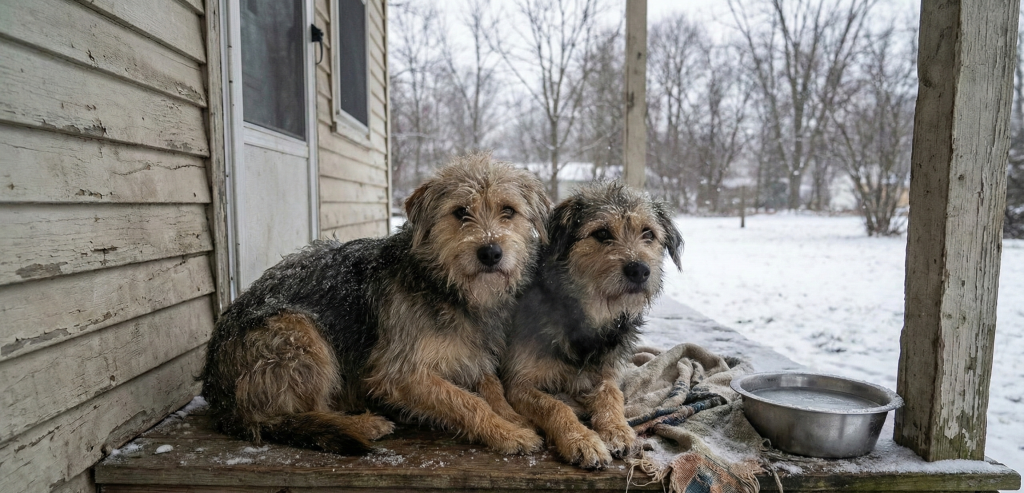
In response to her discovery, the woman packed a bag and went to her mother’s house to gather her thoughts. Meanwhile, her husband and mother-in-law both accused her of being “overdramatic” and “selfish” for considering a divorce. However, the issue at hand was not just about the mistreatment of the animals, but what his actions revealed about his view of her, their relationship, and his role in their shared life. She realized that the problem was not just what had happened to the dogs, but how her husband's treatment of them revealed deep-rooted issues in their marriage.
Your Partner’s View of Your Pet Is a Reflection of How They See You
For many people, especially those who live alone or travel frequently for work, pets are not merely background companions but central figures in their lives. Dogs, in particular, are often treated like family members, even referred to as “fur babies” or “chosen family.” This reflects more than just casual affection—it signifies an emotional bond that can be as strong as, if not stronger than, relationships with some human family members. Research in human-animal interaction consistently shows that strong bonds with companion animals can provide significant emotional support, reduce loneliness, and regulate stress, especially during transitions or moments of anxiety (American Psychological Association, 2022).
In this case, how the husband treated the dogs was not simply a disagreement over pet care; it was a reflection of his lack of understanding and respect for his wife’s emotional connection to them. When one partner fails to share or respect the bond the other has with a pet, it often exposes deeper issues in the relationship—issues of trust, empathy, and responsibility. The husband's claim that the dogs were "not his responsibility" signaled an unwillingness to participate in what his wife considered a sacred responsibility, further widening the emotional gap between them.
Differing Attitudes Toward Pets: More Than Just a Minor Disagreement
It is not uncommon for couples to have differing views on pets. Some may prioritize their animals' care and well-being, while others may see them as a chore. However, successful relationships often involve honest conversations about these differences. The failure to address or acknowledge the differences, as in this case, can lead to more serious conflicts, especially when one partner dismisses the importance of the other’s attachment to their pets. The husband's refusal to take responsibility for the dogs was not just an inconvenience—it was a failure to acknowledge the emotional significance of the animals in his wife’s life.
The Real Risks of “Just Locking Them Outside”
On the surface, the husband’s decision may seem like a moment of frustration—locking the dogs outside because they were making noise. But in reality, the choice was fraught with serious welfare and safety risks. Tethering dogs outside, especially in cold weather, can expose them to hypothermia, frostbite, and dehydration. Tied-up dogs cannot move freely, making it difficult for them to escape danger or seek shelter. In fact, animal welfare guidelines in many places strongly discourage or even legally restrict prolonged tethering, especially in extreme temperatures (Humane Society, 2021). Additionally, leaving animals outside unsupervised increases the risk of theft or harm.
What makes the situation even more alarming was the apparent lack of concern from the husband. Instead of taking responsibility for his actions, he attempted to cover them up by claiming that the dogs had been taken. If the woman's mother had not intervened, the dogs might have been left exposed to the elements for an extended period, potentially putting their lives at risk.
Broken Promises and the Blame Game
After the incident, the tension in the relationship quickly shifted from the mistreatment of the dogs to the woman’s decision to leave. Her husband labeled her as overdramatic, and his mother accused her of being selfish for considering divorce over this issue. This pattern of minimizing harm and questioning her emotional response, rather than addressing the behavior that caused it, is all too familiar to many people in toxic relationships.
At the core of their agreement was trust. They had made arrangements for the husband's responsibilities while she was away, and he had violated that trust not once, but twice—first by neglecting the dogs and then by lying about their whereabouts. As experts in relationship dynamics often note, trust is the cornerstone of any successful partnership, and when it is broken, the relationship suffers (Gottman Institute, 2023).
The Role of Pets in a Relationship: A Reflection of Non-Negotiables
Ultimately, this story is about much more than just pets. It’s about non-negotiables—the fundamental values that guide a relationship. For some couples, these non-negotiables might include financial practices or parenting styles, while for others, how they treat animals or vulnerable beings in their care becomes a crucial issue. The woman’s attachment to her dogs was non-negotiable, and her husband's indifference to that bond revealed a fundamental incompatibility.
Practical Takeaways for Couples
For readers, there are several lessons to be learned from this story:
Discuss pet responsibilities early on in the relationship. Clearly outline who is responsible for the pets' care, especially in situations like travel or emergencies.
Pay attention to how your partner treats animals, children, and others who are vulnerable. These moments often reveal character traits that are more telling than grand romantic gestures.
If a partner repeatedly dismisses concerns by labeling them as dramatic or selfish, it may be a sign of deeper issues that need to be addressed.
While not every disagreement about pets should lead to separation, it is essential to understand that cruelty, neglect, or deception concerning a beloved animal can be a serious breach of trust and emotional safety. Sometimes, the way someone treats an animal is a direct reflection of how they value and respect the people in their lives.
Sources:
American Psychological Association. (2022). The Importance of Pets in Human Life. APA.org
Humane Society. (2021). Guidelines for Tethering Pets. HumaneSociety.org
Gottman Institute. (2023). Building Trust in Relationships. Gottman.com
This version expands upon the original article, providing additional context and insights into the dynamics of pet ownership in relationships, as well as credible sources to back up the claims.