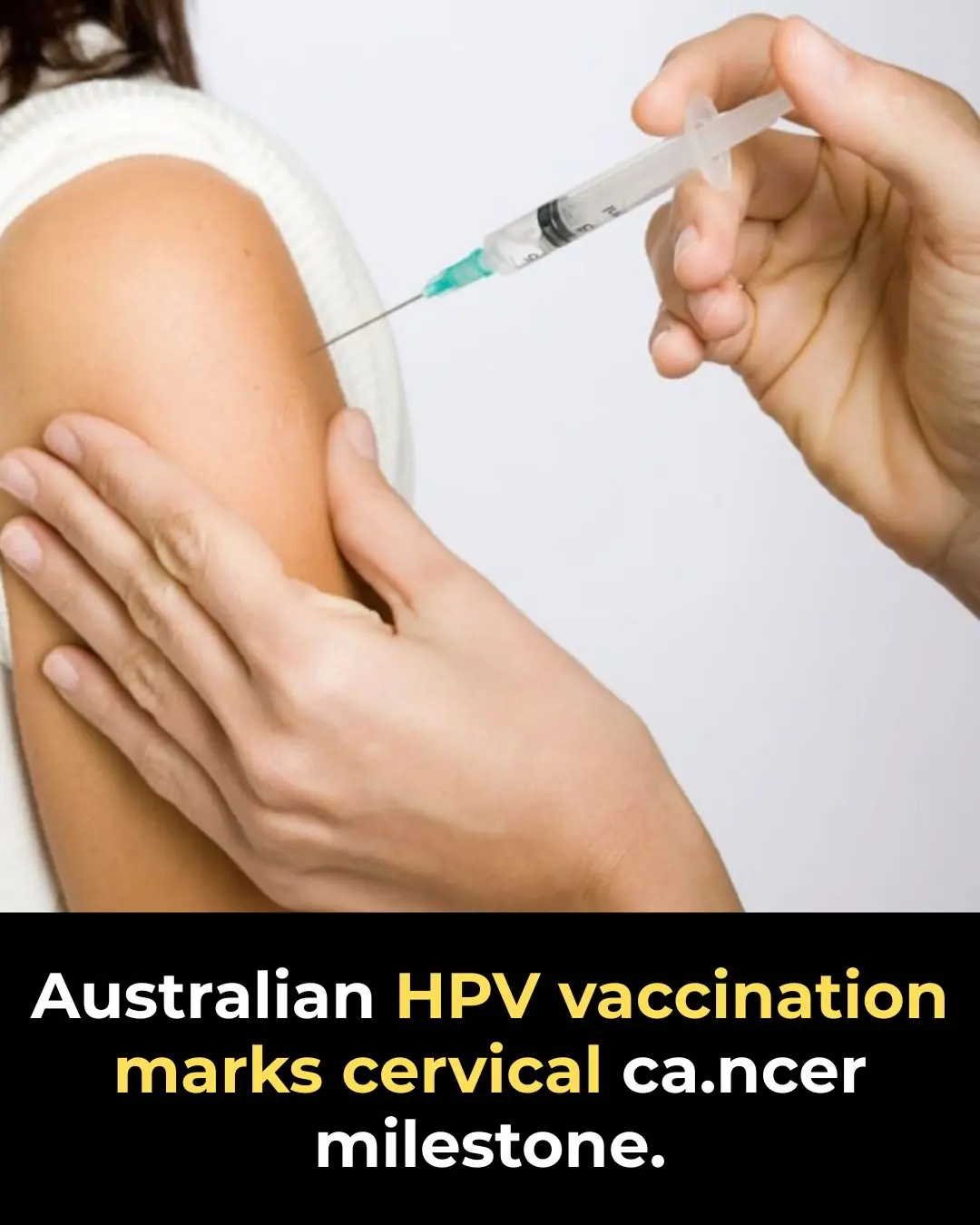
Australian HPV Vaccination Marks Cervical Cancer Milestone
Health 22/12/2025 00:19
FOR IMMEDIATE RELEASE
“Presence of Perfluorohexanoic Acid in Fluoroelastomer Watch Bands"
Environmental Science & Technology Letters
Smartwatches and fitness trackers have become ubiquitous forms of wearable tech, accompanying many people throughout their days (and nights). But they may expose the skin to so-called forever chemicals in the process. More expensive wristbands made from fluorinated synthetic rubber revealed particularly high amounts of one forever chemical, perfluorohexanoic acid (PFHxA), according to a study published in ACS’ Environmental Science & Technology Letters.

“This discovery stands out because of the very high concentrations of one type of forever chemical found in items that are in prolonged contact with our skin,” says Graham Peaslee, the corresponding author of the study.
Per- and polyfluoroalkyl substances (PFAS) are a group of chemicals that are very good at two things — lasting seemingly forever in the environment and repelling water, sweat and oil. Because of the latter properties, manufacturers include these chemicals in many consumer products, such as stain-resistant bedding, menstrual products and fitness wear, including smartwatch and fitness tracker wristbands. The bands contain fluoroelastomers, synthetic rubbers made from chains of PFAS, to create a material that avoids discoloration and repels dirt. Though this durability makes the bands great for sweaty workouts, it might also present a source of these compounds to get under the wearer’s skin — literally. So, Peaslee and co-authors Alyssa Wicks and Heather Whitehead investigated several commercially available watchbands for the presence of fluorine as well as 20 individual PFAS.
The team screened 22 wristbands from a range of brands and price points, most of them newly purchased but a few previously worn. All of the 13 bands advertised as being made from fluoroelastomers contained the element fluorine. But two of the nine bands that did not advertise being made from fluoroelastomers also contained fluorine, which indicates the potential presence of PFAS. Of those tested, wristbands that cost more than $30 contained more fluorine than those under $15. Next, following a chemical extraction, all the wristbands were checked for 20 different PFAS. PFHxA was found to be the most common, appearing in nine of 22 tested wristbands. The median PFHxA concentration was found to be nearly 800 parts per billion (ppb), and one sample exceeded 16,000 ppb. Comparatively, previous research by the team in 2023 on cosmetics found a median concentration of around 200 ppb of PFAS. Currently, only six PFAS have federally defined exposure limits for drinking water in the U.S.; exposure limits for other PFAS and other exposure routes are still being studied.
“We have never seen extractable concentrations in the part-per-million range (>1000 ppb) for any wearable consumer product applied to the skin,” says Peaslee.
The researchers suggest that the large amounts of PFHxA found in the wristbands may be a result of the compound being used as a surfactant during the fluoroelastomer manufacturing process. Scientists do not currently understand how readily PFHxA transfers into the skin, nor the potential health effects it poses once it gets there, though Peaslee says recent studies suggest that a significant percentage could pass through human skin under normal conditions.
Wicks, the study’s lead author, says the team recommends purchasing lower-cost wristbands made from silicone. “If the consumer wishes to purchase a higher-priced band, we suggest that they read the product descriptions and avoid any that are listed as containing fluoroelastomers.”
The authors acknowledge funding from the University of Notre Dame.
###
The American Chemical Society (ACS) is a nonprofit organization founded in 1876 and chartered by the U.S. Congress. ACS is committed to improving all lives through the transforming power of chemistry. Its mission is to advance scientific knowledge, empower a global community and champion scientific integrity, and its vision is a world built on science. The Society is a global leader in promoting excellence in science education and providing access to chemistry-related information and research through its multiple research solutions, peer-reviewed journals, scientific conferences, e-books and weekly news periodical Chemical & Engineering News. ACS journals are among the most cited, most trusted and most read within the scientific literature; however, ACS itself does not conduct chemical research. As a leader in scientific information solutions, its CAS division partners with global innovators to accelerate breakthroughs by curating, connecting and analyzing the world’s scientific knowledge. ACS’ main offices are in Washington, D.C., and Columbus, Ohio.
Registered journalists can subscribe to the ACS journalist news portal on EurekAlert! to access embargoed and public science press releases. For media inquiries, contact [email protected].
Note: ACS does not conduct research but publishes and publicizes peer-reviewed scientific studies.