Love, Sacrifice, and the Healing Power of Commitment 💖🩺
Life stories 07/01/2026 18:05
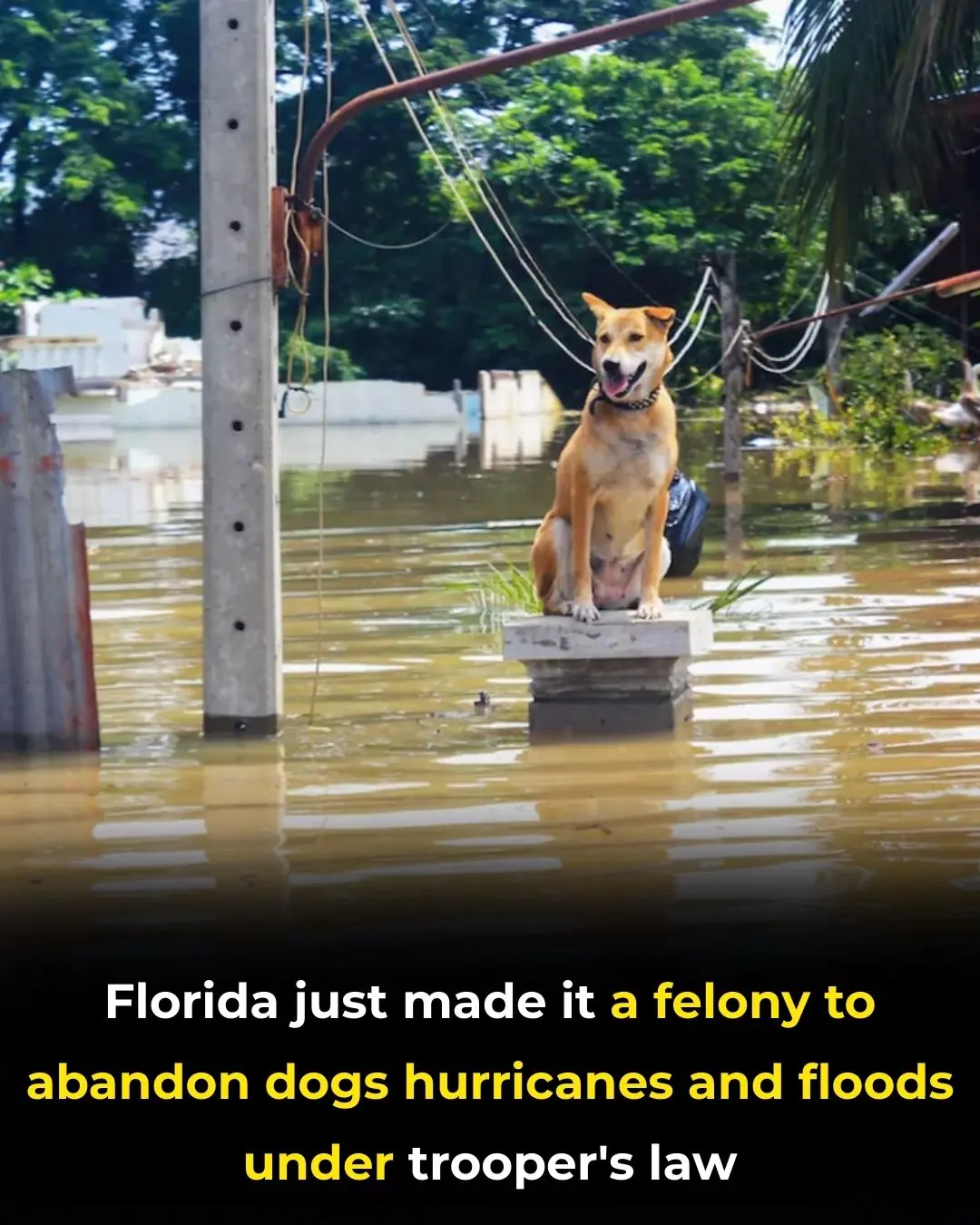
In a landmark move, the state of Florida has enacted what is now known as “Trooper’s Law,” a significant new statute that makes it a felony to abandon dogs during hurricanes and other natural disasters. This legislation was inspired by an unforgettable real-life incident involving a German Shepherd mix named Trooper, who was found tied up and left alone in rising floodwaters as a devastating storm approached. His plight captured national attention, prompting widespread outrage and a renewed debate about how society treats its most vulnerable companions during emergencies.
Trooper’s story is both heartbreaking and powerful. In the fall of 2024, Florida Highway Patrol officers discovered Trooper chained to a fence on the side of Interstate 75 as Hurricane Milton neared landfall. The floodwaters were rising and the terrified dog was trapped with no way to escape. A trooper rescued him from the rising water, and the dog was later adopted, earning the name Trooper in honor of the officer who saved him.
The emotional response to Trooper’s ordeal underscored a broader issue: far too many pets are left behind during mandatory evacuations and severe weather events. National studies show that a large percentage of pets are displaced in natural disasters, and pet owners often face difficult choices when preparing to evacuate. According to the ASPCA, while most pet owners intend to take their animals with them, fewer than half have an emergency preparedness plan that includes their pets, leaving many animals vulnerable when disaster strikes.
In response, Florida lawmakers moved quickly. Trooper’s Law (Senate Bill 150) was passed unanimously by the Florida Legislature and signed into law by Governor Ron DeSantis, taking effect on October 1, 2025. Under its provisions, any person who restrains a dog outdoors during a natural disaster and then abandons that animal commits a third-degree felony, punishable by up to five years in prison and a fine of up to $10,000. This law adds a dedicated criminal offense to Florida’s legal framework specifically for abandonment during extreme weather and evacuation scenarios, filling a gap in existing animal cruelty statutes.
The definition of abandonment in the law is precise: it applies when a person attaches a dog to a stationary object—whether a rope, leash, chain, or cable—and leaves that dog behind during a declared natural disaster or when there is an active evacuation order. In legislative language, natural disaster includes hurricanes, tropical storms, and tornado warnings issued by the National Weather Service, or any period when a municipality or county is under mandatory or voluntary evacuation orders.
Trooper’s Law represents more than just punitive measures. It also reflects a growing recognition that pets are integral members of families and should be considered in disaster response planning. On a federal level, the Pets Evacuation and Transportation Standards (PETS) Act of 2006 already requires states to include pets and service animals in evacuation plans in order to qualify for certain Federal Emergency Management Agency (FEMA) disaster assistance, acknowledging how essential it is to protect animals alongside their people.
Supporters of the law argue that tougher penalties will discourage negligent behavior and ensure that pet owners take responsibility for their animals’ safety during emergencies. In addition to the felony provisions, many local authorities now promote pet-friendly evacuation shelters and resources so that families can stay together when a storm approaches. These improvements are essential, given that animals left behind in disasters often suffer severe injuries, dehydration, starvation, or death.
Trooper’s Law sends a clear message: the life of a pet is not optional, and the instinctive fear and trauma animals experience in disasters are real. By codifying protections for animals and imposing serious consequences for abandonment, Florida hopes to prevent future tragedies like the one Trooper survived. For many advocates, this is not just a legal milestone—it’s a moral obligation to protect those who depend entirely on their human caregivers for survival and well-being.
Beyond Florida, Trooper’s Law is already influencing a broader national conversation about animal welfare in times of crisis. Animal rights organizations, emergency management agencies, and lawmakers in other disaster-prone states have cited the law as a potential model for strengthening protections for pets during evacuations. Groups such as the Humane Society of the United States and Best Friends Animal Society have long argued that clearer legal consequences, combined with better disaster planning, are essential to reducing pet abandonment when hurricanes, wildfires, and floods strike.
Data underscores the urgency of this issue. According to the Federal Emergency Management Agency (FEMA), an estimated 60% of households affected by major U.S. disasters own pets, yet many evacuation plans still fail to adequately accommodate animals. When shelters are not pet-friendly or transportation options are limited, owners may feel forced into impossible decisions—sometimes leaving animals behind with the hope that they will somehow survive. Studies published in journals such as Animals and Disasters have shown that pets left behind often exhibit signs of extreme stress and trauma, even when they are later rescued, reinforcing the need for preventive measures rather than reactive rescue efforts.
Trooper’s Law also highlights the emotional bond between humans and animals, a bond that becomes even more visible in moments of crisis. Research from the American Veterinary Medical Association (AVMA) confirms that pets play a critical role in emotional stability, particularly during traumatic events such as evacuations and displacement. When animals are protected, families are more likely to comply with evacuation orders, reducing risk to both human and animal life. In this sense, animal-centered disaster planning is not only compassionate—it is practical public safety policy.
Equally important is the symbolic power of the law. By naming the statute after Trooper, Florida lawmakers ensured that his story would not be forgotten. The image of a loyal dog waiting at a doorway for people who never returned has become a stark reminder of what abandonment truly means. Trooper survived, but many animals do not. Each year, shelters across the country report surges in lost, injured, or deceased pets following major storms, a pattern that experts say is largely preventable with clearer laws, better education, and accessible emergency resources.
Ultimately, Trooper’s Law represents justice, accountability, and hope. It acknowledges that animals experience fear, pain, and confusion just as humans do, and that society has a responsibility to protect those who cannot protect themselves. As climate change increases the frequency and intensity of natural disasters, laws like this may become not just progressive, but necessary. Trooper’s legacy is a step toward a future where compassion does not end when a storm begins—and where loyalty, especially from those who give it unconditionally, is never met with abandonment.