Groundbreaking Discovery: Eggs Actively Choose Sperm, Changing Our Understanding of Fertilization
Facts 04/12/2025 11:54
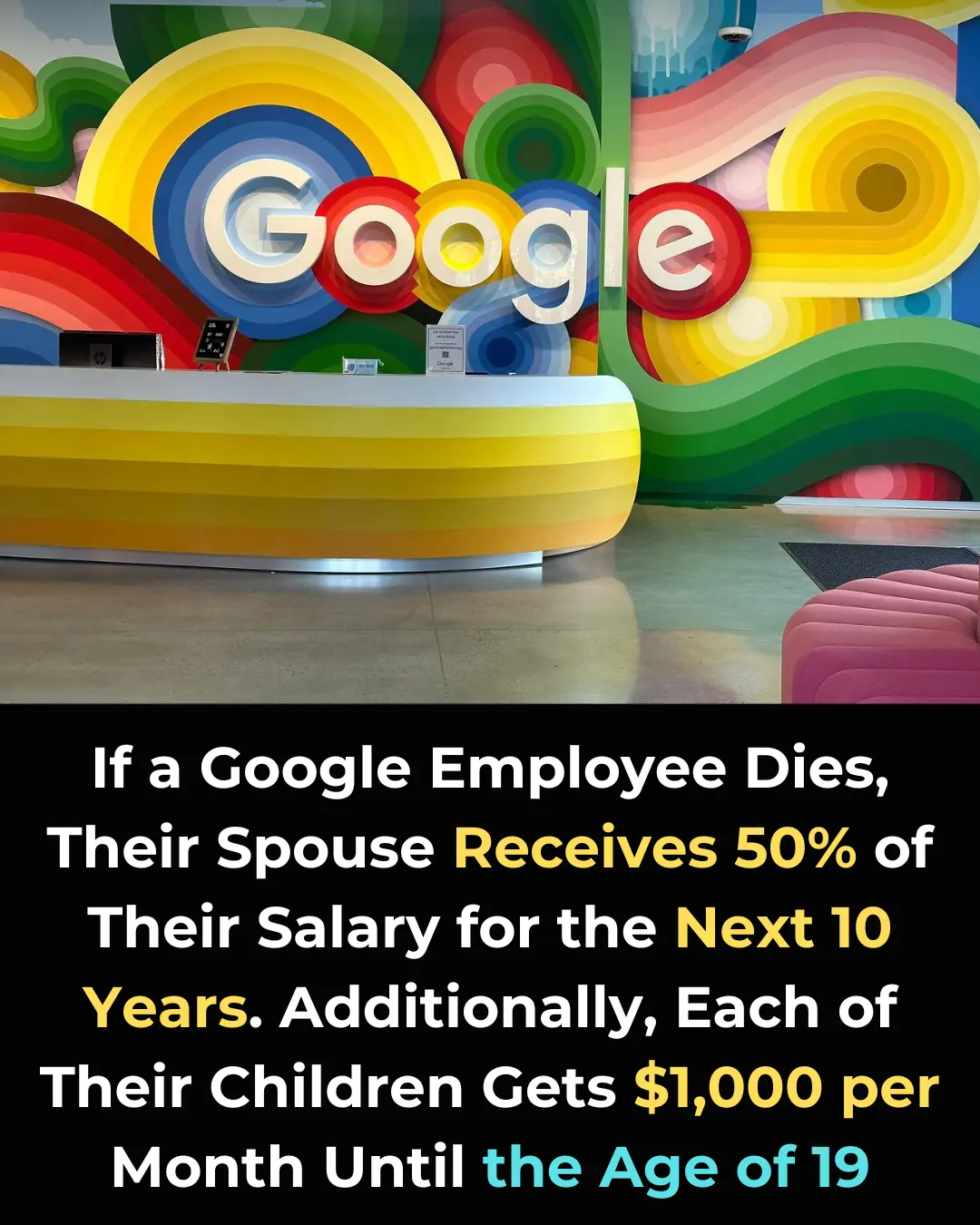
When it comes to corporate benefits, Google stands out — not only for its perks during employment, but also for what it offers when an employee dies. Under Google’s “death benefit” policy, if an employee passes away while working at the company, their surviving spouse or domestic partner receives 50 % of the employee’s salary per year for the next ten years. Meanwhile, each of the employee’s children is entitled to US$1,000 per month until they turn 19 — or until 23, if they are full-time students.
This program — introduced around 2011–2012 — reflects Google’s commitment to providing security for families even after an untimely death. What makes this benefit especially notable is that there is no minimum tenure requirement: the coverage applies from the very first day of employment.
In addition to the ongoing salary support and child allowances, the policy also ensures that any unvested company stock or equity awards held by the deceased employee immediately vest — meaning the spouse (or partner) and beneficiaries gain full ownership of those stocks.
This benefit structure provides a substantial financial safety net for surviving families. For example, if an employee earning a generous salary passes away, the spouse’s twenty-year equivalent might amount to half a salary per year for ten years — which is a significant sum — plus monthly support for children. Over time, that adds up to a considerable buffer, helping families handle living expenses, education costs, housing, and other long-term commitments.
Critically, this benefit isn’t limited to senior staff or long-time employees; it extends to all “Googlers.” According to the company’s own description, the benefit is designed to help families “through this horrific if inevitable life event.”
In recent years, this policy has received renewed attention — especially following tragic incidents involving employees at the company. For example, a 2025 report highlighted how Google’s benefit plan offered financial support to the bereaved family of an employee who died in an accident.
The generosity of the package — combining long-term salary continuation, child allowances, and immediate vesting of stock — is widely regarded as among the most generous death-in-service policies in Silicon Valley or among major global corporations.
By offering such comprehensive support, Google reinforces that its concern for employees goes beyond their time in the office. The policy reflects a corporate philosophy that recognizes employees as people with families and long-term responsibilities — and aims to reduce the financial shock and hardship that often follow the sudden loss of a primary earner.
Why this matters: Such a benefit is rare. Most companies provide a basic life insurance or a lump-sum payout upon death, but very few commit to a decade-long monthly/annual payment schedule plus child allowances and vesting of equity. Google's program thus stands as a benchmark for employee welfare and corporate responsibility.