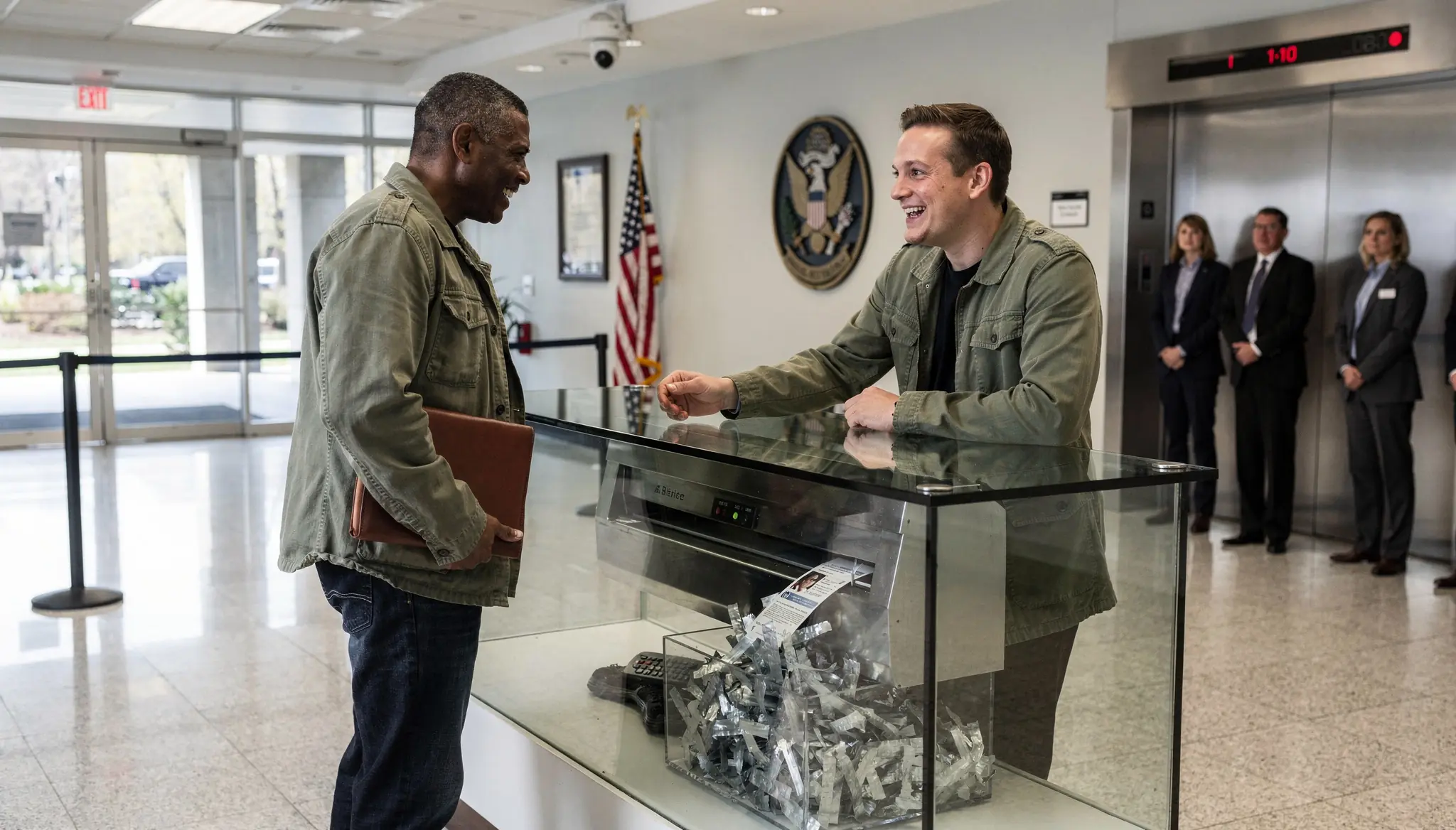
Dailey looked at Raymond, then he looked at his own hands. "I didn't know who he was," he said.Raymond answered before Wren could, his voice entirely without heat: "That's not the problem, Officer Dailey. The problem is that it shouldn't have mattered."Gary Elton's investigation of Dailey's security logs took six days. What it revealed was not surprising to anyone who worked the building's lobby but had never had enough authority to say something: over eleven months, Dailey had flagged thirty-seven individuals for mandatory identity verification beyond standard procedure; thirty-four of them were Black or Hispanic; twenty-six had been dressed in casual clothing. Two formal complaints had been filed with the complex's HR office and routed to a middle management inbox that no one had opened since March.The civil rights investigation that followed was initiated by the Department of Justice's Civil Rights Division. Dailey's federal facility certification was suspended within thirty-six hours. The complex's parent management company announced the findings publicly before the DOJ required them to, which fooled nobody and impressed even fewer.The contract signing ceremony took place that afternoon in the executive conference suite on the 14th floor. The room was full of Pentagon officials, Ashford Systems Group board members, and the quiet, efficient energy of people who understood what 11,000 jobs and four allied nations' threat assessment infrastructure actually meant.Secretary Wren signed first, then Raymond.When the final authentication confirmed and the room broke into restrained, professional applause, Raymond stood at the window for a moment and looked out over Arlington: the low line of the Pentagon visible in the middle distance, the Potomac a gray ribbon beyond it.He thought about a twenty-six-year-old man in a security booth who had looked at him and seen something disposable. He thought about the forty-five minutes in that lobby, the composure it required, the calculus of staying still when everything in him wanted to move, and the particular exhaustion of being a man who had spent thirty years serving a country that still occasionally could not see him clearly. He thought about the green confirmation screen at 9:39 a.m. and the six minutes to spare.Then he put his jacket back on, picked up his leather portfolio, and went to work.