The servers had been briefed on three things: keep moving, keep quiet, and do not draw attention.
Daniel had been told all three, and for the first part of the night, he followed them exactly the way he was supposed to.
He moved through the grand hall like someone who had practiced being invisible, his steps quiet, his posture controlled, his eyes never lingering too long on any one face.
The silver tray in his hand stayed perfectly balanced as he navigated between tables filled with people who spoke in low voices about deals, investments, and numbers that felt impossible to imagine.
The room itself seemed to hum with a kind of quiet power, the kind that didn’t need to raise its voice because everyone already knew who was in control.
Daniel didn’t belong there, and he understood that before he even stepped inside the estate. He had seen places like this only from the outside before, through windows or open doors he was never meant to walk through. The floors were polished to a shine that reflected the chandeliers above, the walls lined with art that probably cost more than everything he and his uncle owned combined, and the guests carried themselves with a kind of ease that came from never having to question whether they were supposed to be there. Daniel had learned long ago that some people moved through the world with certainty, while others learned to move around that certainty without disturbing it.
He had gotten the job through his uncle’s catering company, and even that had taken effort. His uncle had pulled him aside before they arrived, his voice low and serious. Don’t talk unless they talk to you. Don’t stand still for too long. And don’t, under any circumstances, draw attention to yourself. Daniel had nodded, because those rules weren’t new to him. They were just a clearer version of the ones he had already been living by for years.
For the first hour, everything went smoothly. He served drinks, collected empty glasses, adjusted napkins, and moved exactly the way he was expected to move. No one stopped him. No one questioned him. No one noticed him. And that was exactly how it was supposed to be.
Then he saw the piano.
It stood near the far wall, slightly apart from the rest of the room, like it didn’t need to compete for attention. It didn’t have to. The black surface reflected the soft light from above, its shape unmistakable even from a distance. Daniel didn’t know the exact model, but he knew what it meant. He had seen one before, years ago, through the window of a music school in Manhattan. He had been small enough then that he had to stretch just to see over the edge of the glass, his hands pressed flat against it as he stared inside.
His mother had stood beside him that day, watching him instead of the piano. Don’t stare, she had said gently. They’ll think you want it. I do want it, he had answered without hesitation. She had smiled then, a soft smile that carried both belief and something unspoken. Then one day you’ll have one.
That had been seven years ago.
She had been gone for four.
The memory came back without warning, as clear as if it had happened that morning. Daniel blinked, pulling himself back into the present, but something had already shifted inside him. The tray in his hand suddenly felt heavier, like it belonged to a different version of himself, one that had nothing to do with the piano standing just a few steps away.
He set the tray down carefully on the edge of a table, making sure no one noticed. His eyes moved toward the man standing closest to the instrument. Harlan Voss. Even without being introduced, Daniel knew who he was. Some people carried their identity in the way others reacted to them. The space around Harlan felt slightly different, like the air adjusted itself to accommodate him.
Daniel stepped forward.
Excuse me, he said.
The word wasn’t loud, but it carried just enough to be heard.
Harlan turned, his expression calm, controlled, the kind of face that had learned to assess people quickly and decide their place even faster. Yes, he said.
Daniel swallowed once. Can I play the piano?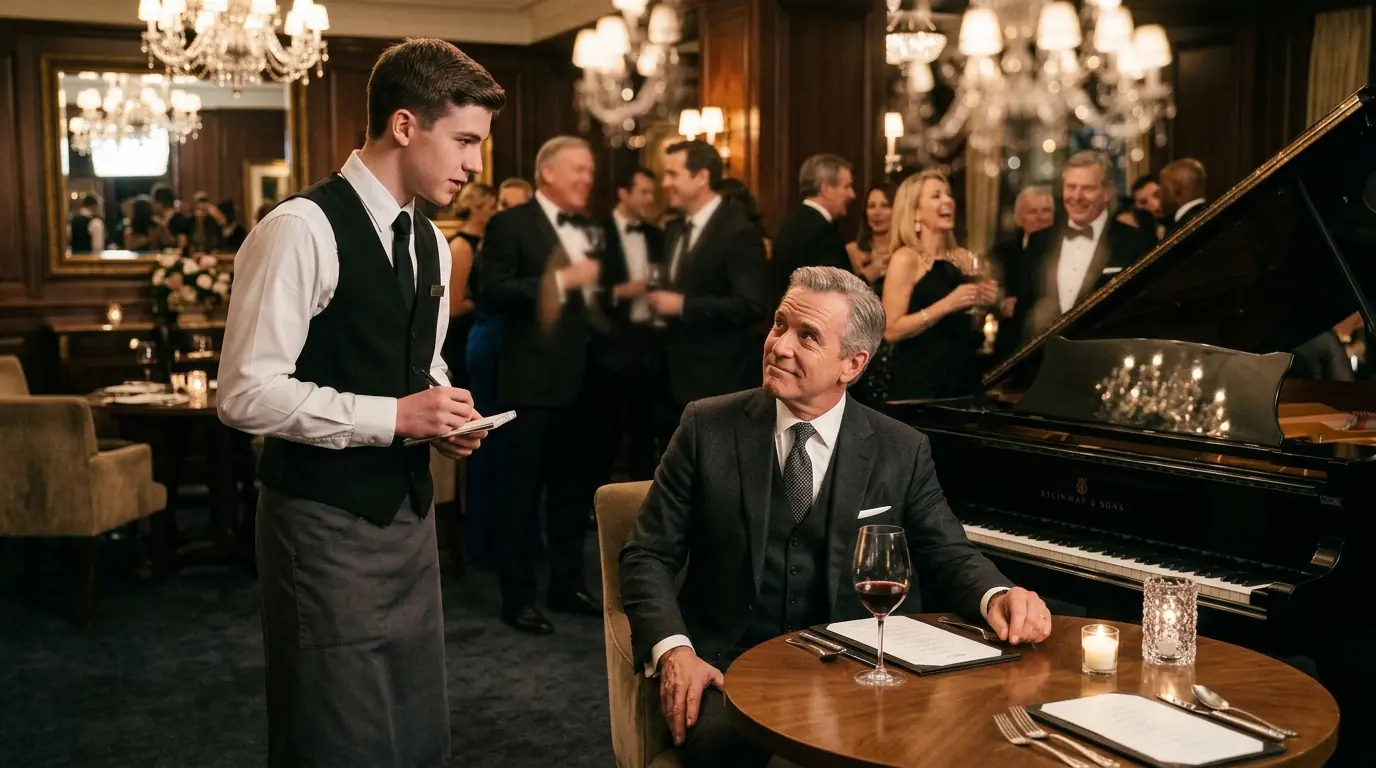
The question settled into the space between them. It didn’t interrupt the entire room, but it created a small pocket of silence, enough for a few nearby conversations to slow. Harlan looked at him, really looked this time, his eyes moving over the uniform, the age, the shoes, the details that told him everything he thought he needed to know.
Do you even know how, he asked.
There was no anger in his voice, just disbelief, and something sharper beneath it.
Yes, Daniel said.
He didn’t explain. He didn’t defend himself. He just answered.
Harlan’s mouth curved slightly, not quite a smile. Go ahead, he said.
It wasn’t encouragement.
It was a challenge.
Daniel walked to the piano. Each step felt different now, heavier in a way that had nothing to do with fear. He sat down on the bench and adjusted it carefully, just the way his mother had taught him. Not too far. Not too close. His hands hovered above the keys for a moment, and then everything else faded.
The room didn’t disappear completely, but it stopped mattering.
He pressed the first note.
It was soft, almost hesitant, but it carried in a way that made two people nearby pause mid-sentence. Then another note followed, and then another, until both hands were moving together. Within seconds, the atmosphere in the room began to shift. The music wasn’t loud, but it was present in a way nothing else had been. It moved through the space without asking permission, filling the silence that conversations had left behind.
Daniel didn’t play for the people in the room. He played because he couldn’t not play. The music came from somewhere deeper than memory, somewhere beneath thought, a place he had kept locked away during shifts like this one. It wasn’t polished. It wasn’t perfect. But it was real.
Fragments of years came together in those notes. Early mornings in empty classrooms. Late nights in subway stations. The quiet moments when he had nothing else except the sound of keys under his fingers. And beneath all of it, the memory of his mother’s voice, steady and certain.
By the third minute, the room had changed completely. Conversations had stopped. People were listening, not because they had decided to, but because they couldn’t ignore what was happening in front of them.
Harlan Voss stood still, his expression no longer amused. His eyes had moved from Daniel’s face to his wrist. The small tattoo there, a simple guitar, faded but distinct. Something about it triggered a memory.
Six years earlier, a video had circulated in certain music circles. A young boy playing on a broken keyboard outside a PATH station in Newark. The video hadn’t gone viral, not in the way most things did, but it had reached the right people. And next to that keyboard, drawn in marker on the concrete, had been a small guitar.
Harlan felt his chest tighten.
That’s him, he said quietly.
Daniel finished the piece on a long, suspended chord. He didn’t rush the ending. He let it exist. Then he lifted his hands.
The room was silent.
Then the applause began, real and unfiltered.
Daniel sat still, unsure how to react. He wasn’t used to being seen.
Daniel, Harlan said.
He looked up.
How long have you been playing?
Since I was four.
Who taught you?
My mom.
Where is she now?
Daniel looked down at the keys. She passed.
Harlan paused. I’m sorry.
You didn’t know her.
I know. I’m still sorry.
And for the first time that night, the words carried weight.
I’ve been looking for you, Harlan said.
Daniel frowned. What?
The video. Newark.
Daniel shook his head slowly. I didn’t know anyone recorded that.
Harlan nodded. We tried to find you.
There was a pause, then a question.
Why did you stop playing?
Because it didn’t pay for anything, Daniel said.
And now?
Daniel looked at the piano.
I couldn’t stop.
Harlan studied him carefully. I want to offer you something, he said.
Daniel didn’t react immediately.
Why?
Because I almost missed you.
That was the truth.
And for a moment, that was enough.
The servers had been briefed on three things: keep moving, keep quiet, and do not draw attention. Daniel had been told all three, and for the first part of the night, he followed them exactly the way he was supposed to. He moved through the grand hall like someone who had practiced being invisible, his steps quiet, his posture controlled, his eyes never lingering too long on any one face. The silver tray in his hand stayed perfectly balanced as he navigated between tables filled with people who spoke in low voices about deals, investments, and numbers that felt impossible to imagine. The room itself seemed to hum with a kind of quiet power, the kind that didn’t need to raise its voice because everyone already knew who was in control.
Daniel didn’t belong there, and he understood that before he even stepped inside the estate. He had seen places like this only from the outside before, through windows or open doors he was never meant to walk through. The floors were polished to a shine that reflected the chandeliers above, the walls lined with art that probably cost more than everything he and his uncle owned combined, and the guests carried themselves with a kind of ease that came from never having to question whether they were supposed to be there. Daniel had learned long ago that some people moved through the world with certainty, while others learned to move around that certainty without disturbing it.
He had gotten the job through his uncle’s catering company, and even that had taken effort. His uncle had pulled him aside before they arrived, his voice low and serious. Don’t talk unless they talk to you. Don’t stand still for too long. And don’t, under any circumstances, draw attention to yourself. Daniel had nodded, because those rules weren’t new to him. They were just a clearer version of the ones he had already been living by for years.
For the first hour, everything went smoothly. He served drinks, collected empty glasses, adjusted napkins, and moved exactly the way he was expected to move. No one stopped him. No one questioned him. No one noticed him. And that was exactly how it was supposed to be.
Then he saw the piano.
It stood near the far wall, slightly apart from the rest of the room, like it didn’t need to compete for attention. It didn’t have to. The black surface reflected the soft light from above, its shape unmistakable even from a distance. Daniel didn’t know the exact model, but he knew what it meant. He had seen one before, years ago, through the window of a music school in Manhattan. He had been small enough then that he had to stretch just to see over the edge of the glass, his hands pressed flat against it as he stared inside.
His mother had stood beside him that day, watching him instead of the piano. Don’t stare, she had said gently. They’ll think you want it. I do want it, he had answered without hesitation. She had smiled then, a soft smile that carried both belief and something unspoken. Then one day you’ll have one.
That had been seven years ago.
She had been gone for four.
The memory came back without warning, as clear as if it had happened that morning. Daniel blinked, pulling himself back into the present, but something had already shifted inside him. The tray in his hand suddenly felt heavier, like it belonged to a different version of himself, one that had nothing to do with the piano standing just a few steps away.
He set the tray down carefully on the edge of a table, making sure no one noticed. His eyes moved toward the man standing closest to the instrument. Harlan Voss. Even without being introduced, Daniel knew who he was. Some people carried their identity in the way others reacted to them. The space around Harlan felt slightly different, like the air adjusted itself to accommodate him.
Daniel stepped forward.
Excuse me, he said.
The word wasn’t loud, but it carried just enough to be heard.
Harlan turned, his expression calm, controlled, the kind of face that had learned to assess people quickly and decide their place even faster. Yes, he said.
Daniel swallowed once. Can I play the piano?
The question settled into the space between them. It didn’t interrupt the entire room, but it created a small pocket of silence, enough for a few nearby conversations to slow. Harlan looked at him, really looked this time, his eyes moving over the uniform, the age, the shoes, the details that told him everything he thought he needed to know.
Do you even know how, he asked.
There was no anger in his voice, just disbelief, and something sharper beneath it.
Yes, Daniel said.
He didn’t explain. He didn’t defend himself. He just answered.
Harlan’s mouth curved slightly, not quite a smile. Go ahead, he said.
It wasn’t encouragement.
It was a challenge.
Daniel walked to the piano. Each step felt different now, heavier in a way that had nothing to do with fear. He sat down on the bench and adjusted it carefully, just the way his mother had taught him. Not too far. Not too close. His hands hovered above the keys for a moment, and then everything else faded.
The room didn’t disappear completely, but it stopped mattering.
He pressed the first note.
It was soft, almost hesitant, but it carried in a way that made two people nearby pause mid-sentence. Then another note followed, and then another, until both hands were moving together. Within seconds, the atmosphere in the room began to shift. The music wasn’t loud, but it was present in a way nothing else had been. It moved through the space without asking permission, filling the silence that conversations had left behind.
Daniel didn’t play for the people in the room. He played because he couldn’t not play. The music came from somewhere deeper than memory, somewhere beneath thought, a place he had kept locked away during shifts like this one. It wasn’t polished. It wasn’t perfect. But it was real.
Fragments of years came together in those notes. Early mornings in empty classrooms. Late nights in subway stations. The quiet moments when he had nothing else except the sound of keys under his fingers. And beneath all of it, the memory of his mother’s voice, steady and certain.
By the third minute, the room had changed completely. Conversations had stopped. People were listening, not because they had decided to, but because they couldn’t ignore what was happening in front of them.
Harlan Voss stood still, his expression no longer amused. His eyes had moved from Daniel’s face to his wrist. The small tattoo there, a simple guitar, faded but distinct. Something about it triggered a memory.
Six years earlier, a video had circulated in certain music circles. A young boy playing on a broken keyboard outside a PATH station in Newark. The video hadn’t gone viral, not in the way most things did, but it had reached the right people. And next to that keyboard, drawn in marker on the concrete, had been a small guitar.
Harlan felt his chest tighten.
That’s him, he said quietly.
Daniel finished the piece on a long, suspended chord. He didn’t rush the ending. He let it exist. Then he lifted his hands.
The room was silent.
Then the applause began, real and unfiltered.
Daniel sat still, unsure how to react. He wasn’t used to being seen.
Daniel, Harlan said.
He looked up.
How long have you been playing?
Since I was four.
Who taught you?
My mom.
Where is she now?
Daniel looked down at the keys. She passed.
Harlan paused. I’m sorry.
You didn’t know her.
I know. I’m still sorry.
And for the first time that night, the words carried weight.
I’ve been looking for you, Harlan said.
Daniel frowned. What?
The video. Newark.
Daniel shook his head slowly. I didn’t know anyone recorded that.
Harlan nodded. We tried to find you.
There was a pause, then a question.
Why did you stop playing?
Because it didn’t pay for anything, Daniel said.
And now?
Daniel looked at the piano.
I couldn’t stop.
Harlan studied him carefully. I want to offer you something, he said.
Daniel didn’t react immediately.
Why?
Because I almost missed you.
That was the truth.
And for a moment, that was enough.
Daniel didn’t answer right away. The applause had faded, but the weight of it still lingered in the room, like something that hadn’t fully settled yet. People were still watching him, still trying to understand what they had just witnessed. A boy who had been invisible an hour ago now stood at the center of everything, and that kind of shift didn’t happen quietly.
He looked at Harlan, then at the piano, then back at his own hands.
“Almost,” Daniel repeated softly.
Harlan nodded. “Almost.”
There was no defensiveness in his voice now. No authority. Just honesty, stripped down to something simpler than the man he had been at the beginning of the night.
Daniel exhaled slowly. “What are you offering?”
Harlan didn’t rush his answer. He knew this moment mattered, not because of the offer itself, but because of how it would be received.
“Everything you need,” he said. “Training, mentorship, access to instruments, space to create, connections to people who can help you build a future in music. Not control. Not ownership. Support.”
Daniel listened carefully.
“And in return?” he asked.
Harlan shook his head. “Nothing that takes away from who you are.”
That answer mattered.
Daniel had spent enough time around adults to know that most offers came with something hidden inside them. Expectations. Conditions. Quiet obligations that showed up later. But this didn’t sound like that.
Still, he didn’t accept immediately.
“My uncle decides with me,” Daniel said.
“Of course.”
“I keep writing my own music.”
“You should.”
“And I don’t play for people who think they own what I do.”
Harlan met his eyes. “Then you won’t.”
There was a pause.
Not uncomfortable.
Just real.
Daniel nodded once. “Then… I’ll think about it.”
It wasn’t a yes.
But it wasn’t a no.
And for Harlan, that was more than enough.
The night didn’t go back to what it had been. It couldn’t. Conversations resumed, but they were quieter now, less certain. People who had arrived confident in their place in the world were suddenly aware that they had just witnessed something that didn’t fit inside their usual assumptions.
Some approached Daniel, asking questions, offering compliments, trying to place him into something they understood.
He answered politely, but briefly.
He wasn’t interested in becoming a moment.
He had spent too long being invisible to suddenly become something performative.
Later, as the evening began to wind down, Daniel stepped outside onto the terrace. The air was cooler there, the city stretching out in lights below him. For the first time that night, he was alone.
Or at least, he thought he was.
“You didn’t say yes.”
He turned.
Harlan stood a few steps behind him.
“I said I’d think about it,” Daniel replied.
Harlan nodded. “That’s fair.”
They stood in silence for a moment, looking out at the city.
“You know,” Harlan said after a while, “I’ve spent most of my life building things that look impressive from the outside.”
Daniel didn’t respond.
“But tonight,” Harlan continued, “I realized I’ve missed things that mattered more than any of that.”
Daniel glanced at him. “Like what?”
Harlan didn’t answer immediately.
“Like people who don’t announce themselves,” he said finally.
Daniel looked back at the city.
“That’s most people,” he said quietly.
Harlan let that sit.
The next morning, Daniel was back in Queens, sitting at the small kitchen table with his uncle. The apartment was quiet except for the faint hum of traffic outside. The contrast between that and the estate from the night before felt almost unreal.
“You serious?” his uncle asked, leaning back in his chair.
Daniel nodded. “Yeah.”
His uncle rubbed his face slowly. “That’s a big offer.”
“I know.”
“You trust him?”
Daniel thought about it.
“I trust what happened,” he said.
His uncle studied him for a long moment.
Then he nodded. “Alright.”
That was enough.
Three weeks later, Daniel walked into a rehearsal space in Manhattan that was bigger than his entire apartment. A grand piano stood at the center of the room, untouched, waiting.
He approached it slowly.
Not because he was intimidated.
But because he understood what it meant.
For years, he had played wherever he could. Borrowed time. Borrowed space. Broken instruments. Empty rooms. Moments that never belonged fully to him.
This did.
He sat down.
Adjusted the bench.
Not too far.
Not too close.
And placed his hands on the keys.
The first note came easier this time.
Not because the piano was better.
But because something inside him had shifted.
Over the next months, everything changed.
But not in the way people expected.
Daniel didn’t suddenly become someone else.
He didn’t adopt new habits, new attitudes, or new ways of speaking just because he now had access to spaces he hadn’t before.
He stayed the same.
Quiet.
Observant.
Focused.
But the world around him began to respond differently.
Teachers who once overlooked him now leaned in. Musicians who had spent decades mastering their craft listened when he played. Rooms that once would have ignored him now made space.
Not because he demanded it.
But because he no longer needed to disappear.
Harlan kept his word.
There were no hidden conditions. No attempts to shape Daniel into something more “marketable.” If anything, Harlan stepped back more than Daniel expected, allowing others to guide him, to challenge him, to refine what was already there without taking it away.
Six months later, the concert was announced.
It wasn’t supposed to be big.
At least, that’s what they said.
But word spread quickly.
Not through advertisements.
Not through promotion.
Through people.
Musicians talked. Teachers talked. Those who had heard him once told others they needed to hear him too.
By the time the night arrived, the hall was full.
Daniel stood backstage, adjusting his sleeves.
“You ready?” his uncle asked.
Daniel nodded.
But this time, it wasn’t just an answer.
He stepped onto the stage.
The lights hit him, but they didn’t overwhelm him.
The audience was there, but they didn’t intimidate him.
Because this wasn’t new.
He had been here before.
Not in this room.
But in every moment that had led to it.
He sat down.
Adjusted the bench.
Not too far.
Not too close.
And for a brief moment, he closed his eyes.
Not to block anything out.
But to remember.
His mother.
The window.
The subway platforms.
The silence.
Then he played.
The music was different now.
Not louder.
Not more complex.
Just clearer.
Every note carried intention. Every pause meant something. The piece he had been building for years finally felt complete, not because it had reached perfection, but because it had reached truth.
The audience didn’t move.
Didn’t cough.
Didn’t shift.
They just listened.
Because something in the room had changed again.
But this time, it wasn’t about surprise.
It was about recognition.
When the final note landed, it didn’t fade away.
It stayed.
And then—
Silence.
Not empty.
Full.
Then the applause came.
Not explosive.
Not chaotic.
But powerful.
Twelve hundred people standing, not because they felt like they should, but because they couldn’t remain seated after what they had just experienced.
Daniel stood.
He didn’t bow immediately.
He just looked.
Out at the audience.
At the people who saw him now.
And for the first time, it didn’t feel like too much.
It felt right.
In the third row, Harlan stood with everyone else.
But his expression was different.
Because he understood something now that he hadn’t before.
He hadn’t given Daniel a chance.
Daniel had always had it.
The only difference was that someone had finally stopped long enough to notice.
After the concert, after the crowd, after the noise faded, Daniel returned to the stage alone.
The hall was empty now.
Quiet.
He sat down at the piano one last time.
No audience.
No expectations.
Just him.
He placed his hands on the keys.
But instead of playing immediately, he spoke softly.
“I didn’t stop.”
The words weren’t for anyone in the room.
They didn’t need to be.
He played a single note.
Then another.
Simple.
Quiet.
And then he stood up.
Walked off the stage.
Not as a boy who had been discovered.
But as someone who had never needed to be.
Because the truth had never been about whether he belonged.
It had always been about whether anyone was willing to see it.
And now—
They finally did.