The first thing Sam Whitley noticed was the peanut butter.
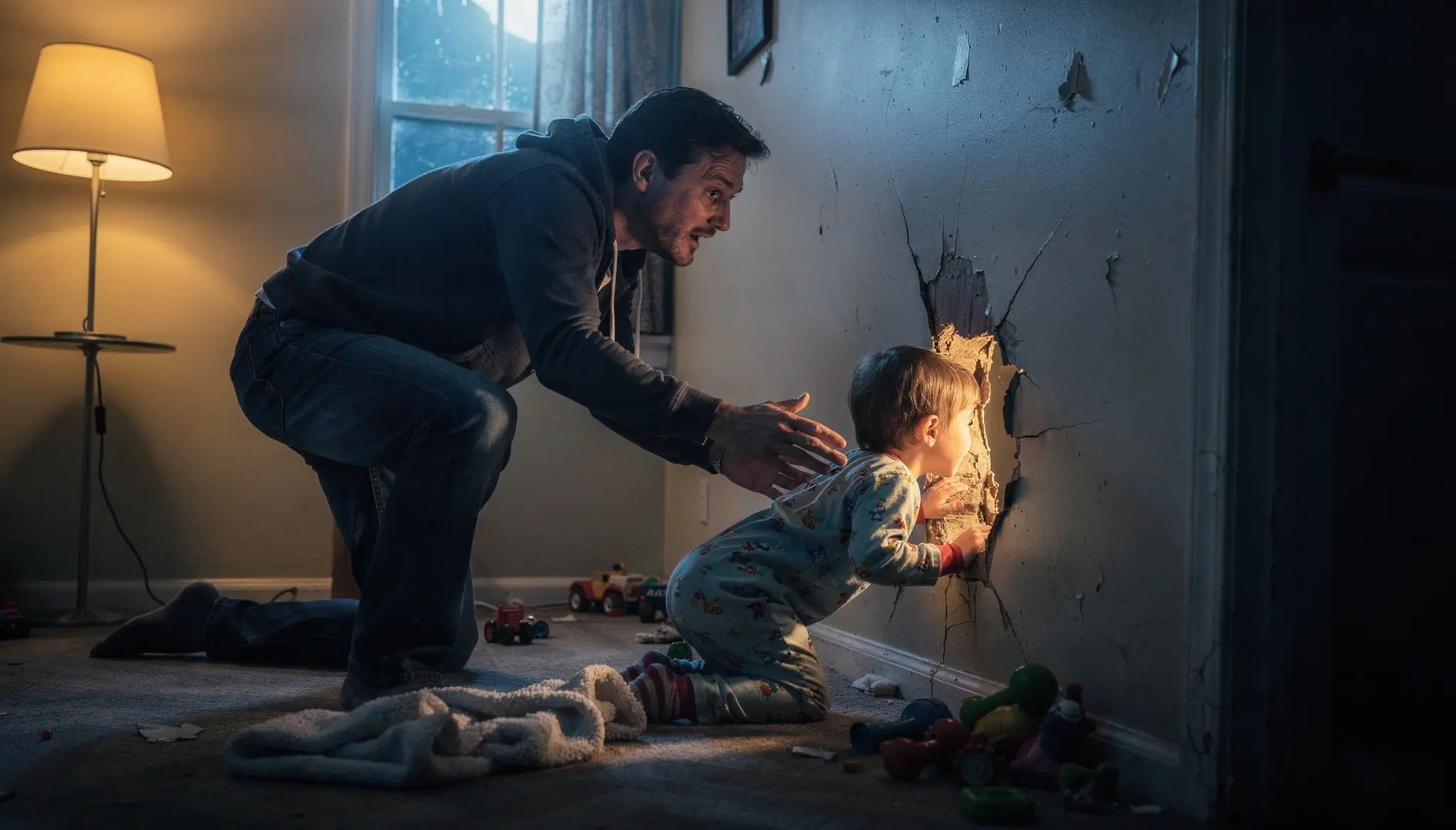
It was a small thing. He would think about that later, how the whole story began with something so small he almost didn't see it. He had bought a new jar on Sunday, the big one, the store brand with the red lid, because Nora ate peanut butter on everything: toast, apples, celery, once memorably on a pickle. By Wednesday night the jar was empty. Not low. Empty, scraped clean, rinsed, and put in the recycling bin under the sink as if it had never existed.
He stood in the kitchen with the empty jar in his hand and did the math. Nora was eleven. She was thin as a fence rail and ate like a bird at dinner, pushing her food around the plate the way she had since her mother died. There was no way she had eaten forty ounces of peanut butter in three days.
"Nora," he called up the stairs. "Did you have friends over this week?"
"No," came the answer, after a pause just slightly too long. "Why?"
"No reason."
He put the jar back in the recycling bin, and he told himself it didn't matter, and he went back to the dishes.
But after that he started noticing things.
The bread went fast. So did the granola bars, and the little cups of applesauce he packed in her lunch, and the cheese sticks. A fleece blanket disappeared from the back of the couch, the blue one with the moons on it that Elena had bought at a craft fair the year Nora was born. The good flashlight vanished from the junk drawer, along with a whole package of double-A batteries. A bottle of children's ibuprofen he was sure had been half full in the bathroom cabinet was suddenly almost empty. And Nora, who had always been a heavy sleeper, who used to have to be shaken awake for school, started coming down to breakfast gray-faced and hollow-eyed, as if she hadn't slept at all.
It was November in Harlow, Pennsylvania, and the cold had come early that year. The river that ran through the middle of town had a skin of ice along its edges by the second week of the month. The old mill buildings along Water Street, empty since the eighties, stood dark and frost-rimed against the sky, their windows broken or boarded, their brick gone black with a century of coal smoke. Harlow had been a textile town once, and then a nothing town, and now it was trying, in fits and starts, to become a commuter town for people who worked in Allentown and couldn't afford to live there. Sam had grown up here. He had left for the Army at eighteen and come back at twenty-six with a wife and a trade, and he had never really thought about leaving again.