Everyone in London knew Clara Huntington was bred to wear a ducal coronet. Her mother made sure of it, polishing her like a prize mare for the marriage mart. When the Duke of Ashborne arrived at their crumbling estate seeking a bride, the family practically shoved Clara into his lap.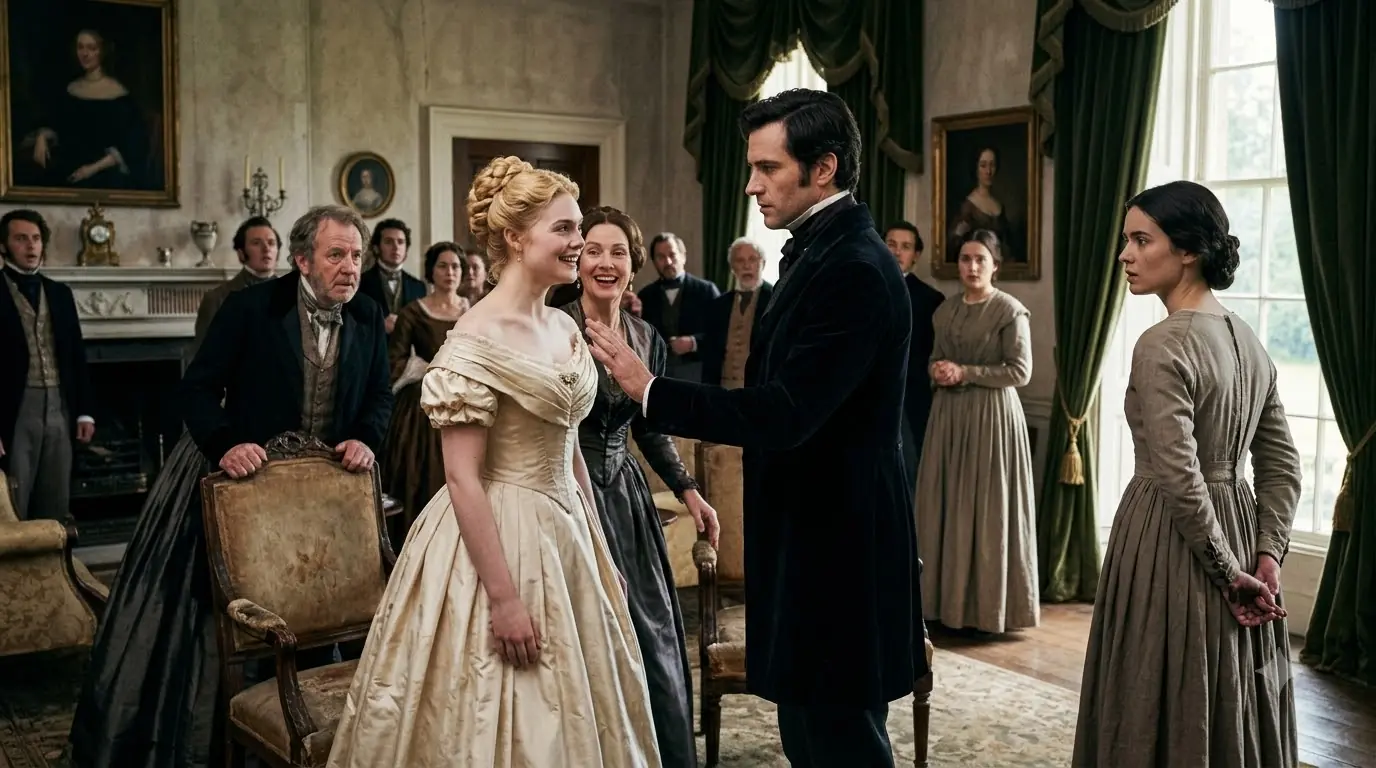
But Ashborne didn't want a porcelain doll. He wanted the girl in the corner with ink-stained fingers and a scowl—the sister who didn't even bother to comb her hair.
The ledger was heavy, bound in cracked leather that smelled of damp dust and despair. Norah Huntington dragged her quill across the parchment, the scratching sound loud in the cavernous, freezing library. Subtract £30 for the butcher, carry the one, subtract 15 for the seamstress. The ink blotted. She swore softly, wiping her smudged index finger on the hem of her gray day dress. It was a habit that horrified her mother, which was precisely why Norah kept doing it.
Upstairs, the floorboards groaned under the frantic pacing of Lady Margaret Huntington. The entire house was in a state of violent upheaval, vibrating with the manic energy of a family staring down the barrel of financial ruin.
Tomorrow, Arthur Pendleton, the Duke of Ashborne, was arriving. He was 32, notoriously pragmatic, and entirely out of their league. He was also in need of a wife.
"Norah!"
The library doors slammed open. Margaret stood there, her face flushed, a piece of cream-colored silk clutched in her fist.
"Are you still staring at those wretched numbers? The Duke arrives at noon tomorrow. Have you seen to the guest linens?"
"Yes, Mother," Norah said, not looking up. "I had Mary patch the tear in the Egyptian cotton. If His Grace sleeps on his left side, he won't even notice it."
Margaret let out a sharp, distressed sound. "He is a duke, Norah. He notices everything! This is Clara's one chance. If she doesn't secure an offer before the season ends, we will be forced to let out the London house."
Norah finally looked up. Her eyes, a sharp, unremarkable slate gray, met her mother's frantic gaze. "We should have let out the London house 3 years ago. We are currently funding Clara's wardrobe on credit from a man who threatened to repossess our carriage last Tuesday."
"Quiet!" Margaret snapped. She stepped into the room, her voice dropping to a desperate hiss. "Do not speak of such things. Not tomorrow. Tomorrow we are a family of leisure and standing. You will stay in the background. You will not mention the accounts, the leaky roof, or the horses we had to sell. Clara is perfect. Let her shine."
"I have no intention of eclipsing Clara," Norah said dryly.
It was the easiest promise she had ever made. Clara was the golden child, born with spun-gold hair, sapphire eyes, and a laugh that sounded like silver bells. Clara was an investment. From the age of 12, every penny the Huntingtons could scrape together had been poured into her education, her dresses, her deportment. She spoke French, played the pianoforte, and knew exactly how to lower her eyelashes to make a man feel like a god.
Norah, two years older, had been left to grow like a weed in the shadows. When the governess was dismissed to save money, Norah took over her own education, trading poetry for mathematics and history. When her father's steward quit because of unpaid wages, Norah quietly took the ledgers into the library and taught herself how to keep a sprawling, dying estate on life support. She didn't resent Clara; resentment required energy. Norah only felt a bone-deep exhaustion.
The next day, the Duke's carriage crunched up the gravel drive. It was a massive, unadorned black thing pulled by four magnificent bays. Norah stood by the window in the drawing room, watching.
Clara was arranged on the velvet sofa, positioned perfectly so the midday sun caught the golden highlights in her hair. Her pale blue dress was a masterpiece of illusion, designed to look effortless while costing more than the entire household's yearly wages.
The heavy front doors opened. Footsteps echoed in the hall. Arthur Pendleton, Duke of Ashborne, walked into the room.
He was not a fairytale prince. There was a severity to his jaw and a hard, unyielding line to his mouth. He wore dark riding clothes devoid of the flashy cravats and jewel-toned waistcoats favored by the London dandies. He looked like a man who spent his time managing land, not lounging in drawing rooms.
Lord Huntington stepped forward, bowing a little too low. "Your Grace, an absolute honor. Welcome to Oak Haven."
"Huntington," Arthur said. His voice was a low, gravelly baritone. It wasn't unkind, but it lacked any trace of artificial warmth.
He didn't want to be here, Norah realized instantly. He was fulfilling a duty.
"May I present my wife, Lady Margaret," Huntington continued, sweating slightly, "and my eldest daughter, Eleanora, and my youngest, Clara."
Arthur offered a stiff bow to Margaret. His gaze swept over Norah, taking in her plain brown dress, her pulled-back hair, and her complete lack of a smile before landing on Clara.
Clara rose gracefully. She sank into a flawless curtsy, her neck bowed perfectly. "Your Grace," she breathed.
Arthur looked at her. Really looked at her. Norah watched his eyes. He cataloged the expensive silk, the practiced posture, the desperate hope in Lord Huntington's eyes. He saw the entire charade in a fraction of a second.
"Miss Clara," he said evenly. "Miss Eleanora—"
"Just Norah," she corrected out of habit, her voice flat.
Her mother shot her a murderous glare. Arthur's gaze flicked back to Norah. One dark eyebrow twitched upward, just a fraction.
"Norah, then," he murmured. He turned back to Lord Huntington. "I prefer to dine early if it isn't an imposition. The roads from London were treacherous."
"Of course, immediately!" Huntington blustered, practically sprinting to the bell pull.
Norah remained by the window, folding her arms. She caught Arthur watching her in the reflection of the glass. She didn't look away. Instead, she offered him a slight, almost imperceptible shrug. Welcome to the circus, her eyes said.
Arthur turned away, but for the first time since he walked in, the hard line of his mouth softened.
Dinner was a masterclass in agonizing small talk. The dining room at Oak Haven was freezing. To save coal, Norah had ordered the fires in the unused rooms extinguished, but the dining room fireplace smoked if piled too high, resulting in a drafty, miserable chill. Clara, wearing a dress cut perilously low for the country, was shivering. She tried to hide it beneath a bright, practiced smile.
"Have you attended the theater recently, Your Grace?" Clara asked, pushing a piece of overcooked mutton around her plate. "I found the latest production at Drury Lane to be entirely sublime. The costuming alone was a triumph of the modern age."