"If you win this case, I'll resign as judge."
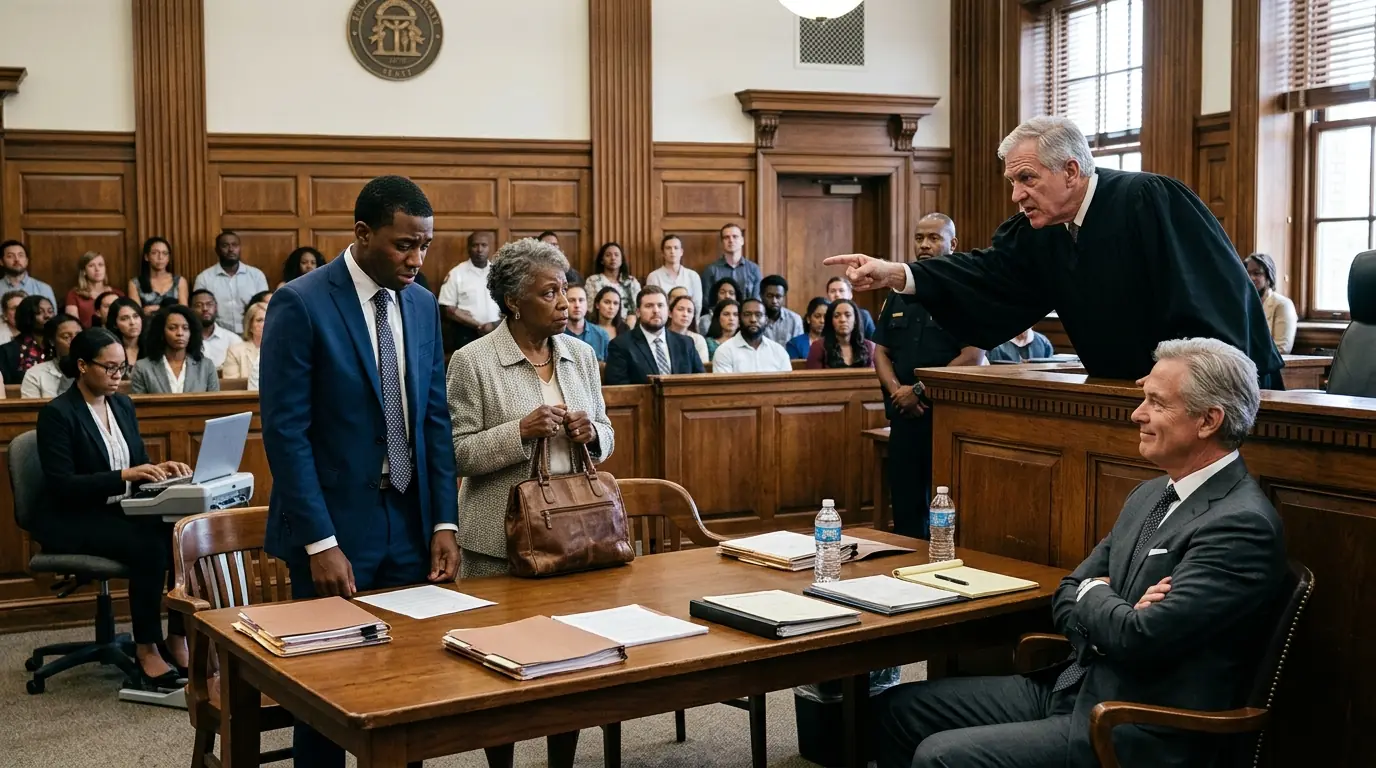
The old judge sneered, staring down at the young Black intern. He thought he was humiliating a helpless law student. He had no idea the young man standing before him actually owned the firm.
The heavy oak doors of courtroom 4B in the Fulton County Courthouse swung shut, sealing the fate of dozens of working-class families. The air inside was stifling, smelling of old paper, floor wax, and the quiet desperation of people who couldn't afford high-priced justice.
At the plaintiff's table sat Mrs. Evelyn Porter, a 72-year-old retired schoolteacher whose hands trembled as she clutched a worn leather handbag. She was the lead plaintiff in a class-action lawsuit against Oakhaven Development, a multi-billion-dollar real estate conglomerate attempting to bulldoze her historic, predominantly Black neighborhood using a shady eminent domain loophole.
Beside her sat Isaiah Crawford. To the naked eye, Isaiah was nobody. He was a 24-year-old summer intern at Harrison, Gable & Reed, wearing a slightly ill-fitting navy suit from a department store and a tie that had seen better days. He had spent the last three months fetching coffee, organizing discovery files, and remaining entirely invisible.
Opposite them sat Bradley Whitmore, a senior partner representing Oakhaven. Whitmore's suit cost more than Evelyn's annual pension. He lounged in his chair, clicking a gold pen, projecting the absolute confidence of a man who knew the game was rigged in his favor.
And then there was the man controlling the room: the Honorable Judge Richard T. Caldwell.
Judge Caldwell was a fixture in Atlanta's legal scene—a man of old money, older prejudices, and a notorious lack of patience for anyone who didn't fit into his country club circle. He peered over his reading glasses, his gaze landing like a physical weight on the plaintiff's table.
"Mr. Crawford, is it?" Judge Caldwell drawled, his voice echoing off the mahogany walls. "Where is Mr. Brentwood? I was told a senior partner would be trying this matter, not a glorified errand boy."
Isaiah stood up, buttoning his jacket. He kept his posture straight, his expression entirely neutral. "Your Honor, Mr. Brentwood suffered a sudden and severe medical emergency this morning. He was transported to Emory University Hospital. I have his affidavit here requesting a standard 48-hour continuance so substitute counsel can be briefed."
"Objection, Your Honor," Whitmore interjected lazily, not even bothering to stand. "This case has been delayed twice already by the plaintiffs. My client is losing hundreds of thousands of dollars a day in construction delays because these people refuse to accept a more than generous buyout. It's a stall tactic."
"I agree with Mr. Whitmore," Judge Caldwell said sharply. "Motion for a continuance is denied. You have a choice, son. You can dismiss this frivolous lawsuit right now, saving your firm further embarrassment, or you can proceed today representing these people yourself. Under the student practice rules of this state, you are technically permitted to speak on the record, provided you don't make a complete fool of yourself."