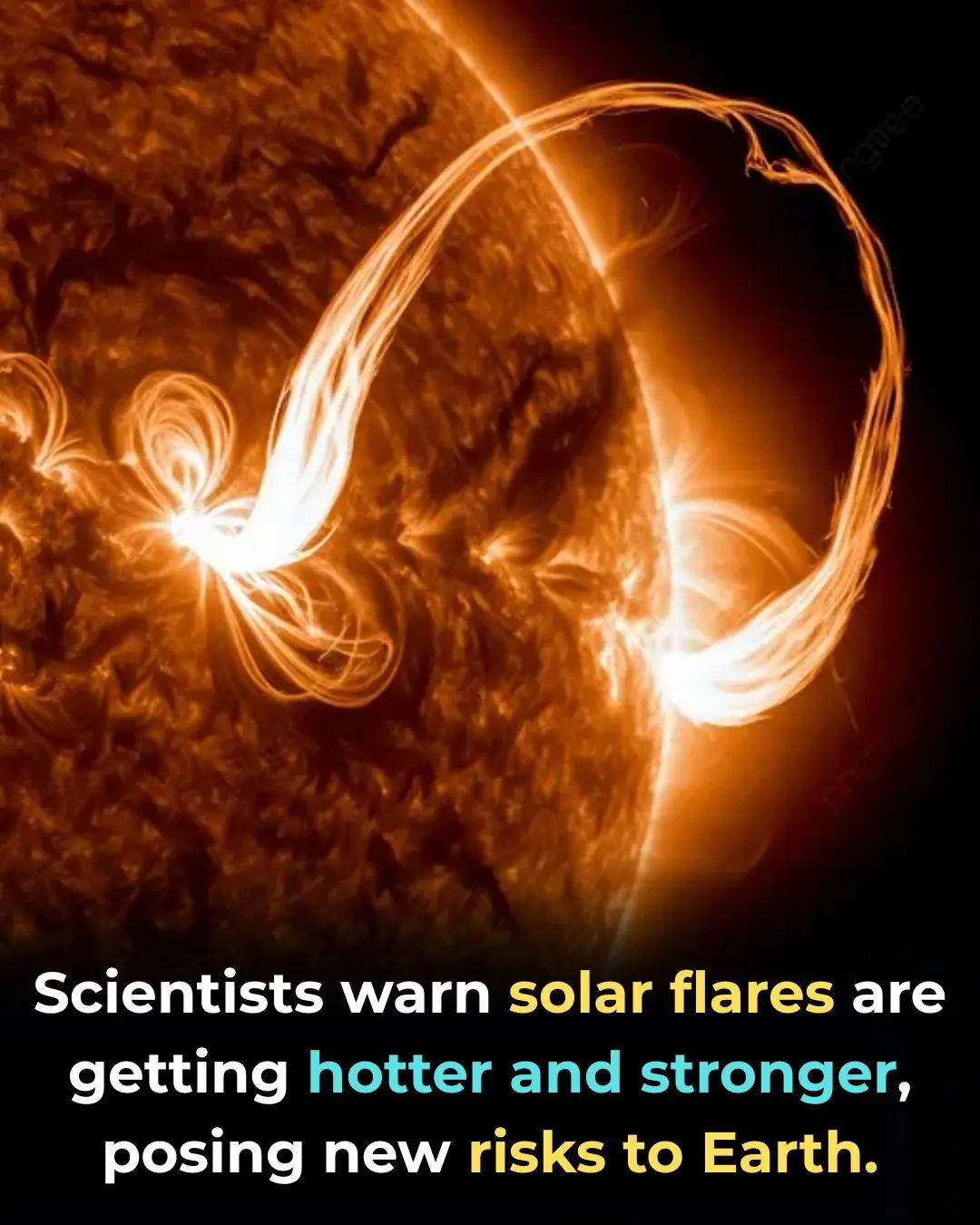
Increasingly Hot Solar Flares Pose Growing Threat to Space Weather and Earth's Technology
Solar flares are intense bursts of energy and radiation emitted by the Sun, and recent observations have shown a troubling trend: these flares are not only occurring more frequently but are also becoming significantly hotter. This rise in temperature means that solar flares are releasing greater amounts of energy, potentially amplifying their effects on space weather and posing a more substantial risk to technology on Earth.
The Sun operates on an 11-year activity cycle, transitioning from a quiet phase to a more active one. During the active phase, solar flares and other solar phenomena, such as coronal mass ejections (CMEs), are much more common. These events can cause serious disruptions to satellite communications, GPS systems, and even power grids, highlighting the importance of understanding solar activity. As the intensity and frequency of solar flares increase, the potential for technological disturbances on Earth grows.
Experts believe that studying the rising temperatures of solar flares is essential for improving our understanding of space weather. These hotter flares release more energy, which can create stronger geomagnetic storms when they interact with the Earth's magnetosphere. These storms can lead to a range of issues, from interference with satellite systems to power outages caused by fluctuations in Earth's magnetic field. By studying these temperature changes, scientists aim to develop better forecasting models and early warning systems that could help mitigate the impact of solar flares on Earth's infrastructure.
Ongoing research is focused on improving our ability to predict and prepare for space weather events. Advanced instruments and satellites are being used to monitor solar activity in real-time, providing scientists with more accurate data on solar flares and CMEs. This data helps improve the models used to predict space weather and provides insights into how these solar phenomena affect our planet's technological systems.
Ultimately, the goal is to develop strategies and technologies that can protect vital infrastructure from the disruptive effects of solar flares. By improving our preparedness, scientists hope to ensure that modern technology remains safe and reliable, even in the face of increasingly powerful solar activity. This research is critical for safeguarding our technology-dependent society against the unpredictable and potentially damaging effects of space weather.
Additional Sources:
-
NASA - Solar Flares and Space Weather: NASA Website
-
NOAA Space Weather Prediction Center: NOAA Website
-
European Space Agency - Understanding Solar Activity: ESA Website

News in the same category


Revolutionary Chip Prototype Achieves 100 Gbps Wireless Speeds, Paving the Way for 6G Networks

The Gut-Liver Connection: How Alcohol Impairs Immune Defenses and Exacerbates Liver Damage

Scientists Have Finally Figured Out What Causes ‘Hoarding’

Lab Study Shows Dandelion Root Kills Over 90% of Colon Cancer Cells In Just Two Days

Your Cat Might Love You More Than You Think—Here’s How to Tell

Woman Declared Dead for 8 Minutes Says She Discovered Death Is An Illusion

Reviving Italy’s Old Barns: Creative Studios Where Pottery and Bread Bring Generations Together

Sweden's Kindness Drawers: A Quiet Act of Sharing Fresh Bread with Those in Need

Urban Gardens in Italy: Transforming into Nighttime Sanctuaries for the Homeless

Modular Sleep Pods in Germany: A Subtle Solution for Refuge and Dignity in Public Spaces

A Month in Space Can Rapidly Age Human Stem Cells, Scientists Find

Hyperactive Brain Cells May Trigger Schizophrenia Symptoms—and Point to a Critical Window for Early Intervention

Even a month in space can leave your cells looking older.

Solar Flares Are Growing Hotter and More Powerful, Scientists Warn

The Brain’s Backup Plan: Neuroplasticity and Rehabilitation

12 Things That Seem Rude But Are Secretly Signs of Wisdom

Japan Just Hit 100,000 Citizens Over 100-Years-Old — Their Longevity Secret Isn’t What You’d Think

Why Highly Intelligent People Enjoy What Most People Avoid
News Post

Pokeweed (Phytolacca americana): Why You Should Keep Your Distance from This Toxic Plant

How to Preserve Meat and Rice in Jars: A Hearty Homemade Meal That Lasts for Months

Breakthrough RNA-Based Blood Test Shows 95% Accuracy in Early-Stage Colon Cancer Detection

Revolutionary Chip Prototype Achieves 100 Gbps Wireless Speeds, Paving the Way for 6G Networks

How to Cook Broccoli the Right Way: Simple Methods for Perfect Flavor, Color, and Nutrition

The Gut-Liver Connection: How Alcohol Impairs Immune Defenses and Exacerbates Liver Damage

Scientists Have Finally Figured Out What Causes ‘Hoarding’

Lab Study Shows Dandelion Root Kills Over 90% of Colon Cancer Cells In Just Two Days

Your Cat Might Love You More Than You Think—Here’s How to Tell

Woman Declared Dead for 8 Minutes Says She Discovered Death Is An Illusion

Reviving Italy’s Old Barns: Creative Studios Where Pottery and Bread Bring Generations Together

Sweden's Kindness Drawers: A Quiet Act of Sharing Fresh Bread with Those in Need

Urban Gardens in Italy: Transforming into Nighttime Sanctuaries for the Homeless

Modular Sleep Pods in Germany: A Subtle Solution for Refuge and Dignity in Public Spaces

A Month in Space Can Rapidly Age Human Stem Cells, Scientists Find

Hyperactive Brain Cells May Trigger Schizophrenia Symptoms—and Point to a Critical Window for Early Intervention

Tips for freezing tomatoes to enjoy year-round, keeping them fresh and delicious like they were just picked.

'You'll regret it if you throw away the water used to boil eggs: 4 clever ways to use it that you already know?'