“Excuse me,” I said softly, keeping my voice respectful in a room that never forgave the wrong tone. “Could I borrow a pen?”
The lawyer in the expensive suit didn’t even answer right away. He looked me up and down as if I were a stain on the courthouse marble. His eyes paused on the frayed cuffs of my sweater, the worn seams at my elbows, the cracks in my black Oxford shoes.
Then he smirked.
“You even know how to write?” he asked, loud enough for the row behind him to hear. “Don’t waste the court’s time.”
A few attorneys nearby chuckled—quick, sharp laughs that sounded practiced. The kind of laughter that didn’t come from humor, but from hierarchy.
He turned to his colleagues as if I weren’t sitting right there. “Why do they let people like this in here? She looks homeless.”
The laughter spread. Someone lifted a phone and angled it toward me. I heard the faint click of a camera focusing.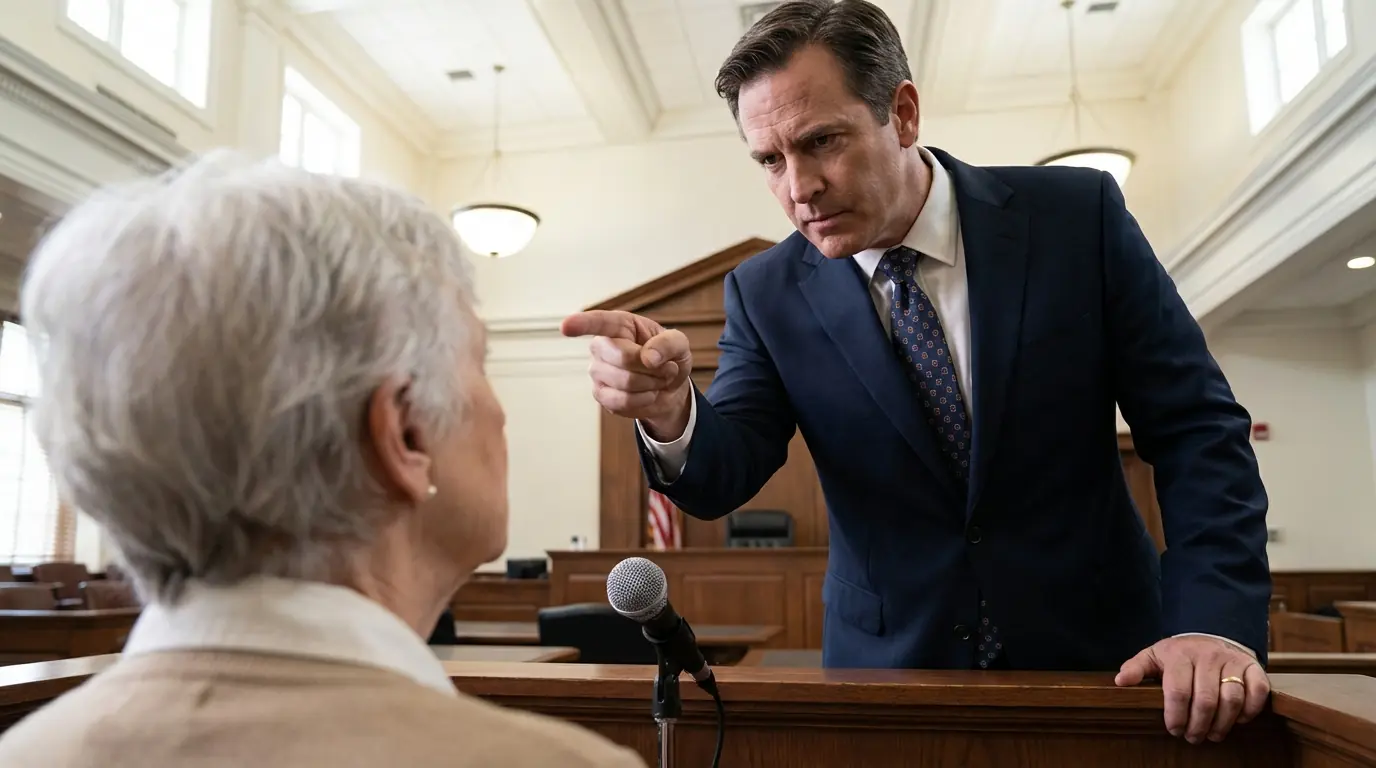
At the doorway, the security guard shifted his feet, his hand hovering near his radio. His suspicious stare was heavy, not quite hostile, but ready to be. Ready to believe the worst. Ready to act.
No one said a word in my defense.
Not the bailiff. Not the young clerk sorting folders. Not the lawyers who should have known better. Not the people in the gallery who had come to watch a case like it was afternoon entertainment.
The entire room felt like it had decided what I was before I’d said a second sentence.
And still, I didn’t flinch.
My name is Margaret Hayes. I’m seventy-three years old.
That morning, I wore an old brown sweater with holes in the sleeves, faded pants, and cracked black Oxford shoes. My hair was pinned back with a plain clip. I carried a worn purse that looked like it had survived decades of bus seats and courtroom benches. I didn’t wear jewelry. I didn’t carry a briefcase. I didn’t look like the kind of person anyone in that room was trained to respect.
That was the point.
Because what they didn’t know—what none of them suspected—was that I was one of the most decorated civil rights attorneys in the South.
One hundred eighty-seven cases won.
A record that included wrongful convictions, housing discrimination, voting rights, and police misconduct. Cases that had changed policy. Cases that had changed lives. Cases that had forced judges to sit up straighter and stare at their own rulings like they were seeing them for the first time.
Time magazine once called me one of the most influential lawyers of the twentieth century.
I retired eight years ago. My hands began to ache in the winter, and my lungs didn’t like climbing courthouse stairs the way they used to. I told myself I had done my part. I told myself the next generation would carry it forward.
Then I got a call about a nineteen-year-old Black boy named Malik Johnson.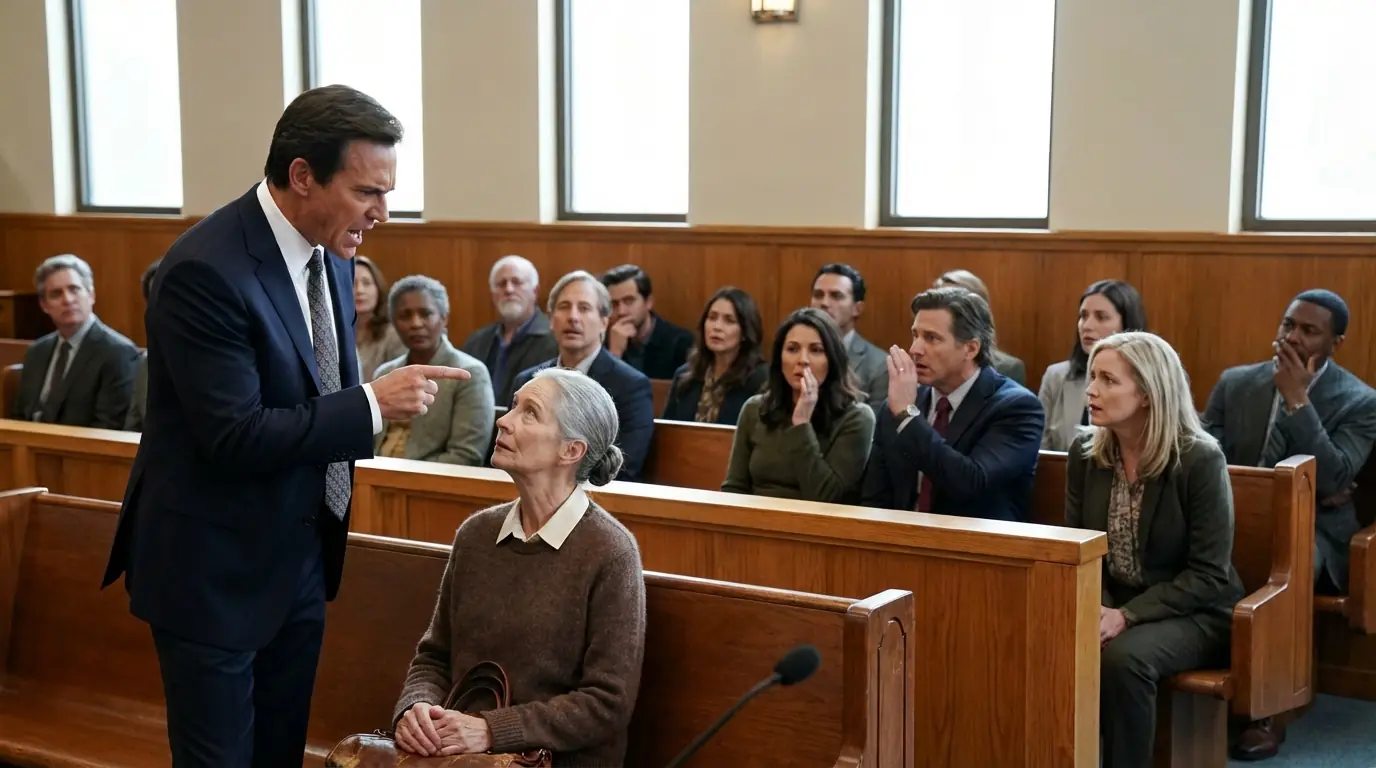
Falsely accused of theft.
A store manager claimed he stole a watch worth two thousand dollars from a luxury boutique downtown. The police report said Malik matched “the description.” That phrase again—the elastic phrase that could be stretched to fit any young Black boy within a mile.
Malik’s public defender was new, overworked, and terrified. He was trying his best, but the system was built to make “best” feel like a weak substitute for power.
I agreed to come, not because I needed to prove anything, and not because I wanted to relive my old life.
I came because I needed to see something.
I needed to see whether the justice system I gave my life to still respected the dignity of the people it was supposed to protect—even when they looked poor, tired, or out of place.
So I dressed like the people who were laughed out of rooms.
I dressed like the ones who were assumed guilty.
I dressed like the ones the courthouse treated as disposable.
I walked through the metal detector, waited for my bag to be searched, and sat down in that courtroom with my hands folded, listening to men with polished shoes and polished voices talk about “order” and “standards” and “professionalism.”
Robert Crawford was the prosecutor—young enough to be arrogant and old enough to have learned how to hide it behind a smile. He wore a tailored suit, cufflinks that caught the light when he moved his hands, and a watch that looked like it belonged in a museum.
He spoke like a man who thought the courtroom was his stage and the law was his script.
When the judge hadn’t arrived yet, Crawford entertained himself by whispering with the attorneys beside him. Their laughter came in bursts, like small firecrackers.
I asked for a pen because mine had run out of ink, and I needed to fill out a witness form—something small, procedural, easy.
Crawford decided to make it a spectacle.
When I looked away, someone nudged my bag. My pen slipped from my lap and rolled to the floor. Before I could lean down to retrieve it, Crawford took one slow step forward and pressed the sole of his polished shoe on top of it.
He didn’t stomp. He didn’t crush it. He just pinned it there like he was pinning me.
“Oops,” he said with theatrical innocence.
Then he reached into his pocket and tossed a cheap plastic pen toward me, letting it clatter against the bench.
“Here,” he said, smiling broadly now. “This matches your outfit.”
Laughter erupted again, louder, bolder. One lawyer leaned back as if enjoying a show. Someone in the gallery snorted.
My chest tightened—not from fear, not from humiliation, but from grief.
Because I recognized that sound.
It wasn’t just a laugh. It was the sound of a system congratulating itself for being cruel.
It was the sound of power reminding the powerless that the room belonged to someone else.
For a moment, I sat very still.
I let the room have its laughter.
I let Crawford enjoy his little victory.
And then a soft voice cut through the noise.
“Ma’am,” someone said gently, close enough that the warmth of the words mattered. “Would you like some water?”
I turned my head.
A young court clerk stood there, holding a small cup in both hands as if she were offering something fragile. Her name tag read: SARAH CHEN. Her eyes were steady, but kind. Not pitying. Not condescending. Just respectful.
“Yes,” I said quietly. “Thank you.”
She handed me the water. Her fingers trembled slightly—whether from nerves or anger, I couldn’t tell. Then she glanced at the form in my hand and frowned.
“Did they explain how to fill out the witness section?” she asked.
“No,” I said. “They didn’t.”
Sarah sat beside me on the bench like it was the most natural thing in the world. She didn’t care that lawyers were watching. She didn’t care that Crawford’s mouth curled in contempt.
She pointed to the lines on the form, explaining them softly. “Your name here. Relationship to the case here. And here, you check the box for sworn testimony.”
Crawford noticed.
He sneered across the aisle. “Stop wasting time with nobody,” he snapped. “Do your actual job.”
Sarah’s face tightened. She didn’t look at him. She kept her eyes on the paper.
“My job is to assist the court,” she said calmly. “And that includes assisting witnesses.”
Crawford laughed again. “A witness?” He leaned toward his colleagues. “Sure. She probably wandered in off the street.”
The security guard glanced at me again, as if considering whether he should move closer.
Sarah stayed seated.
That small act—simply staying—lit something in me that had felt dim for years.
It reminded me of the first time someone sat beside me in a room that wanted me gone. A judge’s clerk in 1974 who handed me a stapler when a lawyer refused. A bailiff who made sure my client’s family had seats when others tried to block them. Small moments. Quiet courage. The kind of courage no one applauds, but everyone depends on.
I reached into my purse. My fingers found the envelope I had prepared before I left home: a white envelope, sealed, my handwriting neat and steady across the front.
I held it out to Sarah.
“Sweetheart,” I said quietly, “could you give this to Judge Henderson before the hearing starts? It’s urgent.”
Sarah hesitated. Her eyes flicked toward Crawford, then to the bench, then back to me.
“Is it appropriate?” she whispered.
“It is,” I said gently. “And it’s important.”
She took the envelope with both hands and stood.
Crawford’s voice followed her like a whip. “Look at that. Running errands for freeloaders now.”
His colleagues laughed again, but it sounded smaller this time—like even they weren’t fully sure.
Sarah walked toward the judge’s chambers, clutching the envelope.
I watched her go, then looked straight ahead, breathing slowly.
Crawford leaned back in his chair as if he’d already won.
He had no idea what was inside that envelope.
Because inside it wasn’t a plea.
It wasn’t a complaint.
It wasn’t a desperate note from an old woman looking for sympathy.
Inside was a letter on official State Bar letterhead.
A temporary reinstatement order.
A request from the Attorney General’s office for me to observe and report on procedural misconduct in sensitive cases, specifically those involving vulnerable defendants and potential constitutional violations.
And beneath that, a second page—signed—authorizing a limited role in the proceedings as a court-recognized expert witness on civil rights and due process violations.
It wasn’t about me having power again.
It was about the court being forced to look itself in the mirror.
A few minutes later, the courtroom doors opened.
The bailiff announced, “All rise.”
Judge Henderson entered.
He was a tall man with silver hair and a face that had learned how to be stern without being cruel. He walked toward the bench—and then stopped.
He didn’t sit.
He looked directly at me.
For a heartbeat, the entire room paused.
Then the judge stepped down from the bench.
His robe swayed slightly with the movement, and the sound of his shoes on the floor was clear enough to slice through the murmurs.
He approached me.
Crawford’s smile faltered. He sat straighter, confused.
Judge Henderson extended his hand.
“Mrs. Hayes,” he said clearly, his voice carrying across the room. “It’s an honor.”
Silence slammed down like a door.
Phones lowered. Eyes widened. People stopped breathing.
I took his hand. “Your Honor.”
Judge Henderson turned to face the room, still standing on the floor rather than behind the bench.
“For those who do not recognize her,” he said calmly, “Margaret Hayes is responsible for the precedent this court relies on for wrongful conviction reviews and due process protections. She argued the case that reformed our procedures. Many of you,” he added, eyes narrowing slightly, “built your careers inside the framework she fought for.”
Crawford’s face drained of color.
He opened his mouth as if to speak, then closed it.
Judge Henderson held up the envelope Sarah had delivered. “This morning, I received this.”
His eyes flicked toward Sarah, who stood near the clerk’s desk, hands clasped, looking like she might faint.
“Thank you, Ms. Chen,” the judge said.
Sarah nodded, her lips pressed tight.
Judge Henderson looked back to the room.
“This letter confirms Mrs. Hayes has been temporarily reinstated by the State Bar at the request of the Attorney General to observe courtroom conduct in certain proceedings.”
A murmur ran through the attorneys like wind through dry leaves.
Crawford swallowed hard.
The judge’s voice sharpened just slightly—enough that anyone who understood power recognized the shift.
“And before we begin,” he said, “I want to address conduct in this courtroom.”
Crawford tried to recover. “Your Honor, if this is about—”
“If this is about professionalism?” the judge interrupted calmly. “Yes. It is.”
He looked at Crawford directly.
“Mr. Crawford, did you step on a pen that belonged to Mrs. Hayes?”
Crawford blinked fast. “I—Your Honor, it was an accident.”
“Was it?” the judge asked, voice flat.
Crawford’s colleagues stared at the table, suddenly fascinated by their notes.
The judge continued. “Did you also make remarks about her appearance? Did you question her ability to write? Did you refer to her as homeless? Did you encourage laughter?”
Crawford’s mouth opened, but no words came.
Judge Henderson’s eyes swept the room. “This court does not tolerate humiliation as entertainment. Not from counsel. Not from staff. Not from anyone.”
His gaze landed briefly on the security guard. “And it does not tolerate suspicion without cause.”
The guard stiffened.
Judge Henderson finally returned to the bench and sat, but the room was not the same room anymore.
The hearing began.
Malik Johnson sat at the defense table in a borrowed shirt that didn’t quite fit his shoulders. His hands were clasped so tightly his knuckles looked pale. Beside him, his public defender, Mr. Alvarez, flipped through a thin folder that looked too small for a case that could ruin a life.
Malik’s mother sat behind him, eyes red, holding a tissue in one hand and a cheap plastic cross in the other.
Crawford rose to speak, but his voice sounded different now—less theatrical, more careful.
He presented the accusation. The store manager’s claim. The police report. The so-called “matching description.” The allegation that Malik “attempted to flee.”
Then the defense rose.
Mr. Alvarez’s hands trembled, but his voice stayed steady. He requested review of surveillance footage.
Crawford stiffened. “The footage was… unavailable,” he said. “The store’s system—”
Judge Henderson held up a hand. “We will determine availability. Proceed.”
And that was the moment the case began to crack.
Because the footage existed.
It always had.
It had been “unavailable” only because no one had tried hard enough to obtain it.
The bailiff wheeled in a monitor. The store manager testified first. His words were confident—until the video played.
The video showed Malik standing near a display case, yes, but it also showed an employee walking past him twice. It showed Malik picking up a brochure. It showed him speaking briefly to someone off-camera, then stepping away.
No theft.
No pocketing.
No panic.
No sprinting.
Just a teenager standing in a store, looking uncertain, as teenagers often do.
The store manager’s face tightened.
Crawford’s jaw flexed.
Then the police officer testified.
He repeated the report—verbatim—like it was scripture.
“Defendant matched the description.”
“Defendant appeared nervous.”
“Defendant attempted to flee.”
Judge Henderson asked, “Define ‘nervous.’”
The officer hesitated.
Crawford interjected, “Your Honor—”
The judge cut him off with a look.
I sat quietly, listening, watching the rhythm of the courtroom. Watching who was believed automatically and who had to earn belief like it was a privilege.
When the defense asked the officer why the report listed the wrong time stamp, the officer stumbled.
When asked why the officer never checked Malik’s receipt from a different store showing he’d made a purchase minutes earlier, the officer said he “didn’t see it.”
When asked why the report mentioned a witness who later denied seeing anything, the officer said he “might have misheard.”
Misheard.
Mistakes.
Always mistakes.
They were always called mistakes when the damage landed on the same kind of bodies.
Finally, Judge Henderson turned toward me.
“Mrs. Hayes,” he said, “you are here as an expert witness on due process and procedural abuse. Do you wish to speak?”
I stood slowly. The old ache in my knees flared, but I did not let it show.
“Yes, Your Honor.”
I didn’t look at Crawford. I looked at the judge, then at the record, then at Malik.
“This case,” I said evenly, “shows a familiar pattern. A presumption of guilt based on appearance. Evidence treated as optional. Procedure treated as inconvenience. And when the defendant is young and Black, those shortcuts become normalized.”
Crawford shifted in his seat.
I continued, “The court must demand that accusations be supported by facts, not feelings. ‘Nervous’ is not evidence. ‘Matches the description’ is not proof. A missing investigation is not a minor oversight when it can cost a teenager his entire future.”
The courtroom was silent.
Judge Henderson nodded slowly.
Within another hour, the prosecution’s case collapsed. The judge dismissed the charges for lack of evidence and admonished the state for failing to meet its burden.
Malik’s mother cried quietly, shoulders shaking. Malik stared down at the table like he couldn’t quite believe the words had been real.
Mr. Alvarez exhaled like he had been holding his breath for weeks.
Crawford packed his papers too quickly, avoiding everyone’s eyes.
As the room emptied, Sarah approached me again. Her face was pale, but her gaze was steady.
“I’m sorry,” she said softly. “For what they said. For what they did.”
I looked at her, really looked at her.
“You don’t need to apologize,” I said. “You did the one thing that matters.”
“What?” she whispered.
“You stayed,” I said simply. “You didn’t join the laughter. You didn’t step away. You didn’t pretend you didn’t see.”
Sarah’s eyes filled with tears, embarrassed by them. She blinked quickly.
“I didn’t know who you were,” she admitted.
I smiled, small and tired but real. “That’s why it mattered.”
Because respect that depends on reputation is not respect. It’s strategy.
A week later, Judge Henderson filed a formal complaint about Crawford’s courtroom conduct. The State Bar opened an inquiry. The clerk’s office updated its staff training and protocol about witness treatment and public dignity in courthouse spaces.
Sarah received a letter in the mail two months later—an invitation to apply for a fellowship at a civil rights legal foundation that had once funded my earliest cases. My signature was on the recommendation.
Malik enrolled in community college the next semester. He started working part-time at a shipping company. He wrote me a letter on lined paper, thanking me for showing up when the world expected him to fold.
And me?
I walked out of that courthouse the way I used to walk out decades ago—slowly, with my head high, my purse strap tight in my hand, and an old familiar ache in my chest that had nothing to do with age.
Because the truth was simple and painful:
The justice system doesn’t collapse with explosions.
It erodes in small moments.
In the snide comment.
In the laughter that goes unchecked.
In the way a courtroom decides who belongs before anyone speaks.
But it can also be repaired in small moments.
In a cup of water offered without judgment.
In a young clerk who stays seated beside an old woman everyone mocked.
In a judge who chooses to protect dignity rather than protect ego.
That day, I didn’t come to court to be recognized.
I came to see whether the system still knew what dignity looked like when it didn’t wear an expensive suit.
And for the first time in a long time, I left believing something I hadn’t believed in years:
That even in rooms built to break people, there are still some who refuse to let cruelty become normal.