The first time my mother called my dress beautiful, she was looking at it in my sister's hands.
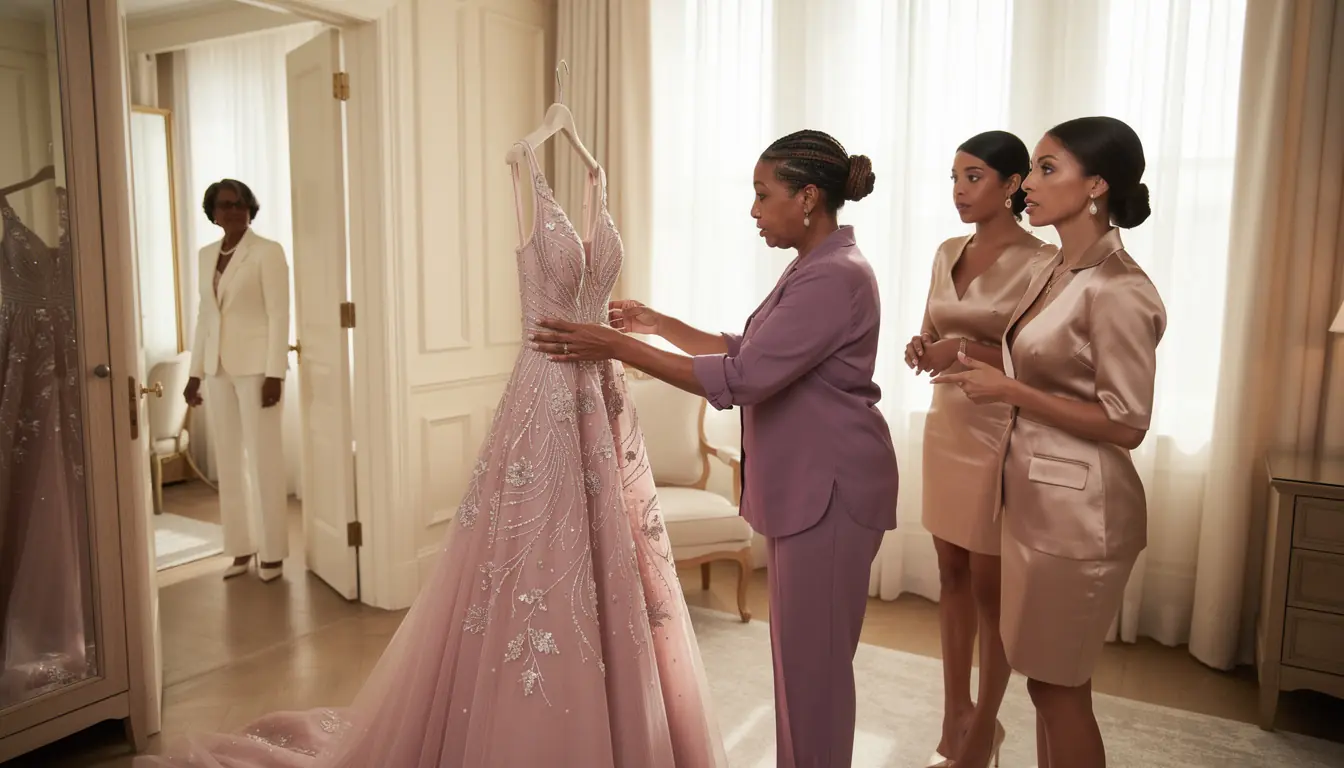
I stood beside the sewing table in the spare bedroom, still wearing the purple work shirt I'd had on since breakfast.
Three tiny cuts crossed the pad of my right thumb.
A loose pink thread clung to my sleeve, and there was a pale semicircle beneath each eye where seven months of late nights had settled into my face.
But the gown hanging between us looked like something from a dream: deep rose silk beneath layers of blush tulle, a fitted bodice scattered with hand-beaded flowers, and a skirt that caught the afternoon light as though someone had woven dawn into the fabric.
My sister Sienna held its hanger with one hand and stroked the neckline with the other. She was twenty-seven, five years older than me, and she had arrived in a champagne-colored satin dress as if the photographer she'd promised to bring was already waiting outside. My mother, Marianne, stood beside her in a cream pantsuit, studying the gown with an expression I had been hoping to see for as long as I could remember.
"This is extraordinary," my mother whispered. Then she smiled at Sienna. "I knew you had it in you."
I thought I had misheard. "Mom?"
Sienna turned toward me, her smile perfectly composed. "Don't make this difficult, Talia. We talked about how important Saturday is."
We had talked about Saturday. We had not talked about giving away my work.
"I made that dress," I said. My voice seemed strangely small in the room where every bead had passed through my fingers. "I designed it. I cut it. I sewed it. You watched me do it."
My mother stopped smiling. "Lower your voice. Your sister has an opportunity you may never get again. A little support wouldn't hurt you."
Sienna raised the hanger out of my reach. "Think of it as a family project. When I win, everyone benefits."
Something inside me went cold. The dress was registered under my sister's name for the Aurora Emerging Design Award, a competition I'd spent years reading about and never dared imagine entering. The winner would receive a paid fellowship, studio space for a year, and a chance to show a collection in New York. Sienna had apparently found a way to walk into that future wearing the seven months of my life I had stitched together.
"You can't," I said, taking one step toward her. "You cannot put your name on it."
My mother moved between us. "Talia, enough. Sienna is representing this family. You will not ruin it with one of your emotional scenes."
I stared at her. Sienna's fingers tightened around the hanger. For a moment I could not even cry, because I was trying to understand how two people who had seen me work until sunrise could stand there and speak as if the work had been theirs all along. Then Sienna lifted the gown over her shoulder and turned toward the door, and my mother's hand came down on my arm to keep me from following.