The kitchen held the hour the way a held breath holds a chest — dim, green-edged, unwilling to let the day finish dying. Under-cabinet lights threw a low gold across the quartz counter. The refrigerator hummed its soft private language. Outside the window over the sink, the suburban street of Linden Grove was a corridor of dark lawns and porch lamps, and somewhere a neighbor's dog barked once and thought better of it.
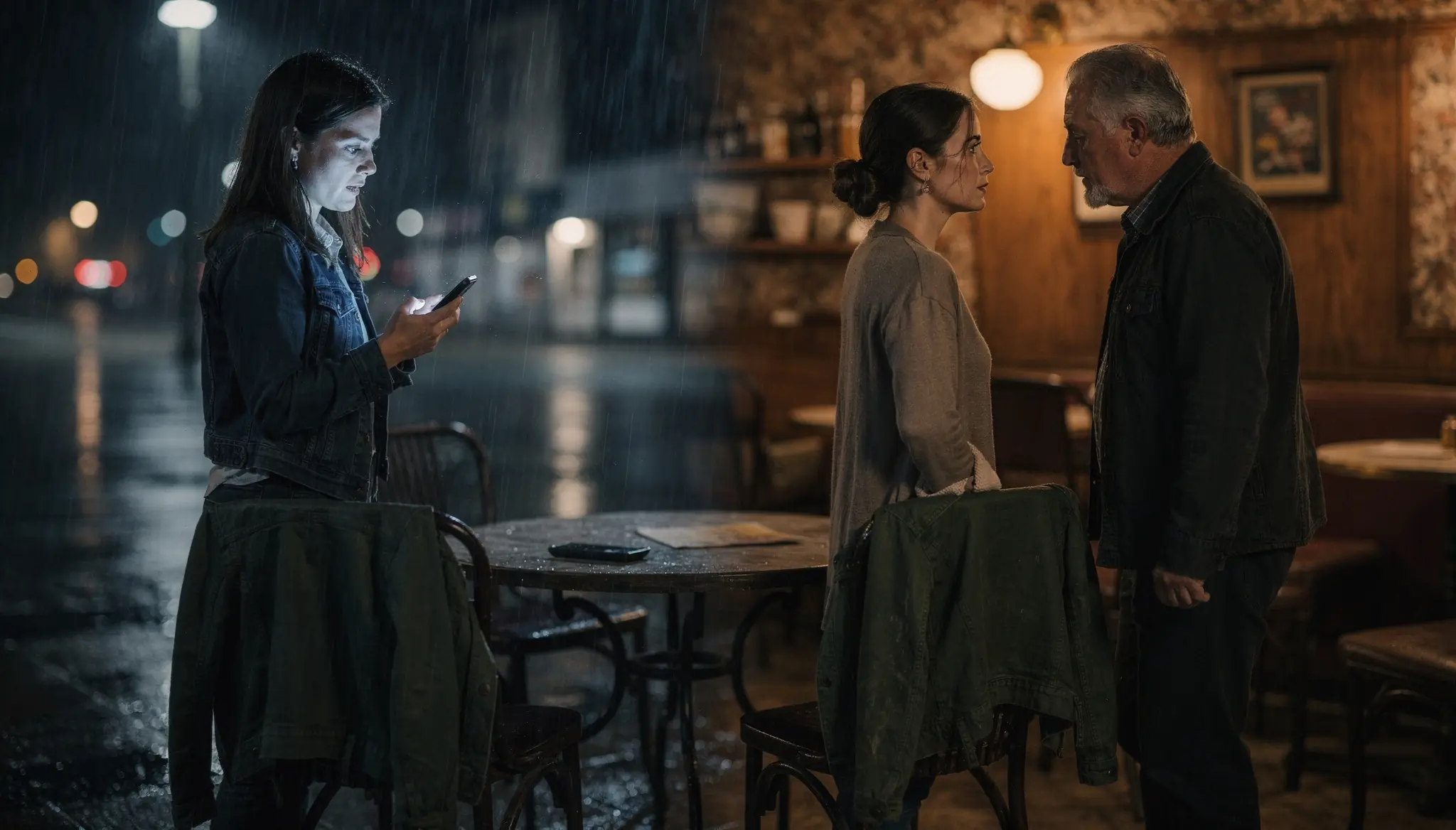
A green jacket lay folded on the island as if it had been shrugged off in a hurry and then arranged into the shape of an apology. It was not Aisha Coleman's jacket. Hers hung in the front closet in charcoal and cream. This one was his — Darius's — the olive softshell he wore when the office air conditioning made him feel like a man who worked too hard for rooms that never warmed. One sleeve hung over the edge. From the pocket, a black smartphone vibrated with the short, urgent rhythm of someone who refused to be ignored.
Aisha stood in the doorway in a silky gold sleep robe that caught the under-cabinet light and turned it into something almost ceremonial. She was thirty-nine, Black, hair wrapped for the night in a silk scarf the color of deep wine. She had come downstairs because she could not sleep and because the house had that particular emptiness that meant Darius was still out "closing a thing" for the regional manager, a phrase that had become, over the last three months, as familiar and as unexamined as the sound of the ice maker.
She saw the jacket first.
Then she heard the phone.
For a moment she did nothing. Ten years of marriage taught a person certain mercies: you did not rifle wallets; you did not open drawers marked private in the mind if not on the wood; you trusted the person who made your coffee wrong on purpose because you liked it that way. Aisha had practiced those mercies. She had practiced them through promotions and through the miscarriage in year four and through her mother's long illness and through Darius's father's funeral, when he had stood at the podium and spoken without crying until the car ride home, when he had cried so hard she had to pull over on the interstate.
The phone vibrated again.
Aisha crossed the kitchen on bare feet. The quartz was cool. She slid her hand into the jacket pocket and drew out a black smartphone that was not Darius's phone — not the silver one with the cracked corner that lived on his nightstand, not the work phone with the company case. This one was matte, anonymous, the kind of device a person bought when they did not want a device to look like a life.
The lock screen lit. No name. No photo. Only a cascade of notification previews truncated into cruelty:
Layla: Dad please
Layla: I can't sleep again
Layla: Aunt Tasha is yelling
Layla: Are you there
Aisha's mouth shaped the question before her mind finished assembling it.
"Whose phone is this?"
She said it to the empty kitchen, and the empty kitchen did not answer. She said it again, louder, as if volume could summon honesty from the walls.
Footsteps hit the hallway hard. The front door had opened without her hearing it — or she had been too deep inside the lock screen to hear. Darius Coleman came through the archway at a near run, still in the dark button-down he had worn to the office, tie gone, collar open, eyes already wide with the particular panic of a man who has left something where it should not have been left.