The rain came down over Greenfield Square like it had been waiting all evening for its cue, and Marianne Coulter ran straight into it without an umbrella, clutching her shawl over her head as though wool could stop a downpour.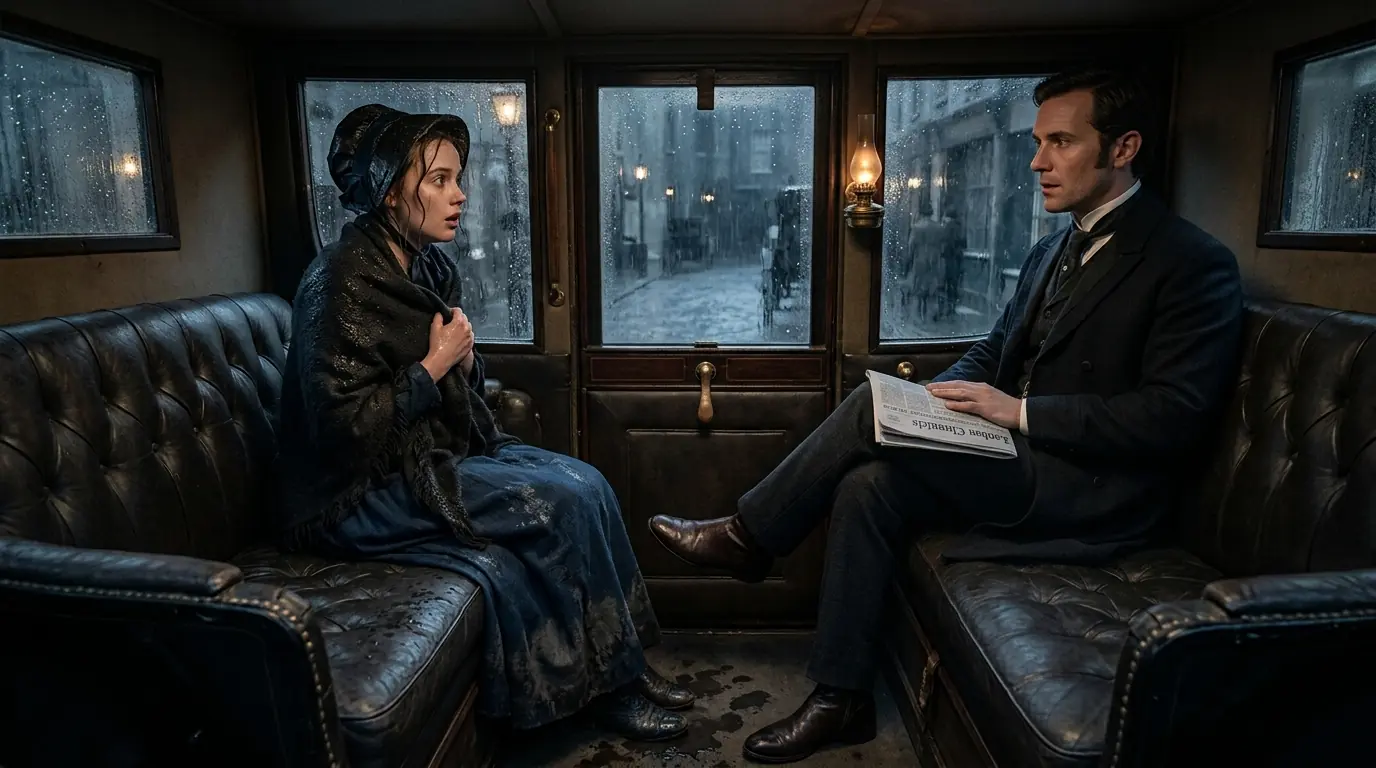
She had left her cousin's engagement dinner twenty minutes earlier than planned, slipping out through the kitchen door because she could not stand one more toast to a marriage built on land deeds and old family debts. And now she was paying for her pride with soaked stockings and a ruined bonnet.
She had spent the better part of the dinner seated near the foot of the table, close enough to hear every word of the toasts and too far to be included in the conversation that mattered, watching her cousin Louisa's face arrange itself into the practiced, pleasant shape expected of a woman on the eve of a triumphant match. Louisa's intended, a Mr. Pemberton of considerable fortune and unremarkable conversation, had spent most of the meal discussing the price of wool with Louisa's father, pausing only twice to address his bride-to-be directly—both times about matters of the wedding breakfast's arrangements rather than anything resembling affection.
Marianne had watched her cousin nod along to both inquiries with a smile so carefully maintained it looked almost painful, and had thought, not for the first time that evening, that she did not know when love had become such a poor second consideration to land and ledgers. She had tried twice to catch Louisa's eye across the table—some small signal between them, the kind they'd exchanged since girlhood when one needed rescuing from a tedious conversation. But Louisa had not looked up from her plate either time.
By the third toast—the one that finally undid Marianne's patience, praising the union for the excellent sense of both families rather than offering a single word about happiness—she had set down her napkin, murmured an excuse about the heat of the room, and slipped toward the kitchen door before anyone could stop her.
The street outside the Ashford townhouse was a chaos of carriages: drivers calling to one another, horses stamping and snorting in the wet, footmen hurrying back and forth with lanterns that did nothing against the rain. Marianne had sent word ahead for her family's carriage to be waiting at the corner by the chandler's shop. And in the dark, the noise, and the water running into her eyes, she saw a carriage exactly where it was supposed to be, its door already open as though someone had left it so for her.
She did not look at the crest on the door. She did not think to. She simply climbed in, dropped onto the bench, and said, breathless, "Home, please, as quick as you can," before the door swung shut behind her and the carriage lurched forward into the storm.
It was only once they were moving, once the townhouse lights had smeared into streaks behind the rain-streaked glass, that she realized two things in quick succession: the first was that the seat beneath her was leather, not the worn velvet of her father's old carriage; the second was that she was not alone.
A man sat across from her in the gloom, one leg crossed over the other, a folded newspaper resting untouched on his knee, and an expression on his face that suggested he was even more startled by her presence than she was by his.
She had time to notice, in the dim light of the swaying carriage lamp, that the man's coat was cut with a precision no ordinary tailor achieved, that his boots were the sort polished by someone else's hands entirely, and that the newspaper on his knee was folded to a page of shipping notices he plainly had no intention of reading. She had time, too, to register the particular stillness of him—not the fidgeting discomfort of a man caught off guard, but something more deliberate, as though he had trained himself over many years to absorb surprise without ever letting it show on his face.
"I believe," he said, in a voice that was low and dry and entirely too composed for the circumstances, "you have made a rather significant error."