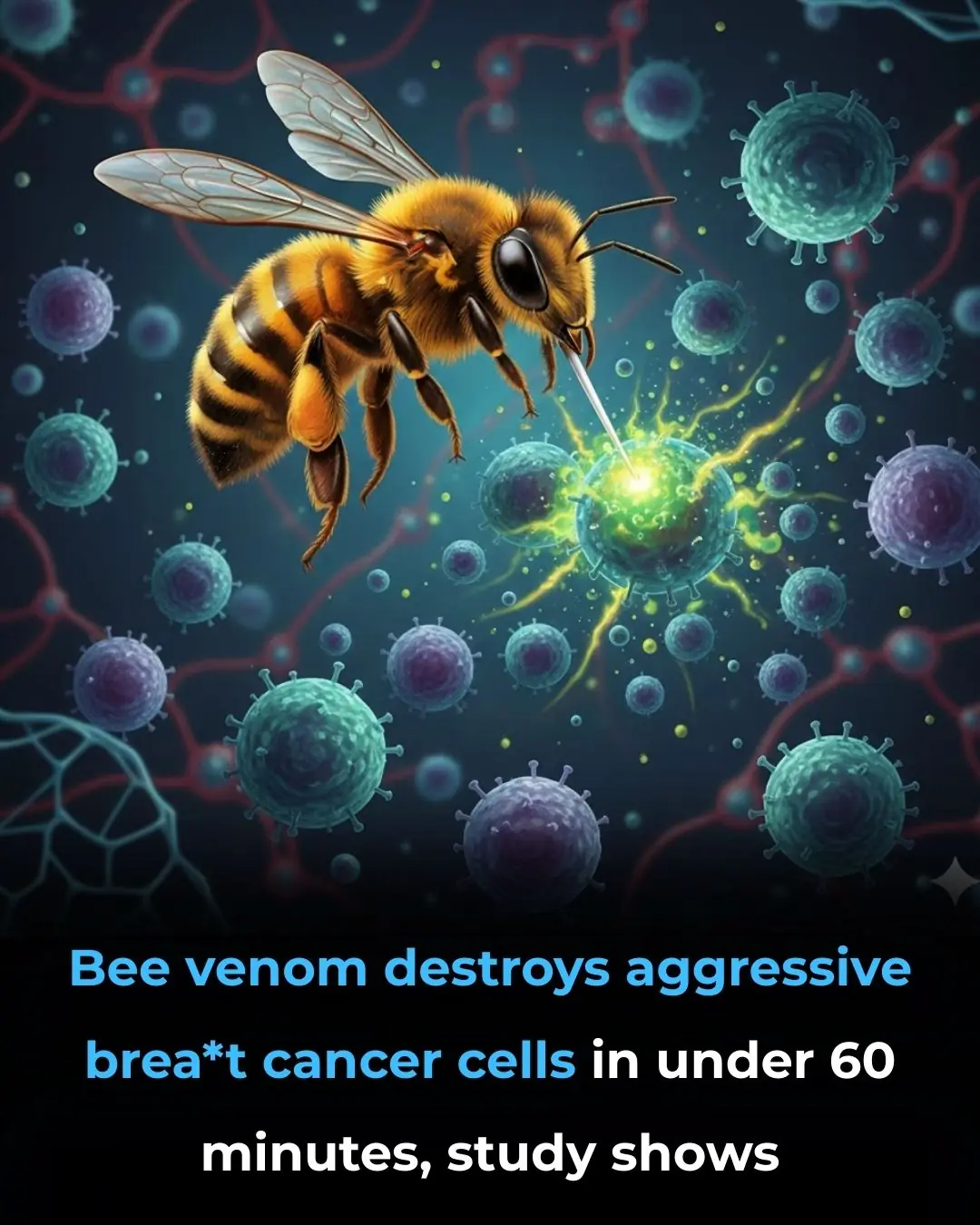
Bee Venom Shows Promise in Destroying Aggressive Breast Cancer Cells in Under 60 Minutes
Facts 14/12/2025 00:17
Snowball was no ordinary alligator. Her striking white scales, softly patterned with black spots, were the result of leucism—a rare genetic condition that causes partial loss of pigmentation. Unlike albinism, leucism does not eliminate all pigment and does not affect eye color. Snowball’s deep, dark eyes and ghostly elegance set her apart, making her one of the rarest known reptiles on Earth and a living symbol of nature’s quiet brilliance.
Leucism is exceptionally uncommon in wild reptiles. Scientists note that animals with such traits are often more vulnerable, as their unusual coloration can reduce camouflage and increase the risk of predation. For Snowball, survival itself was extraordinary, highlighting the resilience of life even under biological disadvantage. Her existence offered researchers and the public alike a rare opportunity to better understand genetic variation, adaptation, and conservation challenges.
Six years ago, Snowball was stolen and vanished without a trace. Despite international attention and concern from conservationists, she was never recovered. Her disappearance was more than the loss of a single animal—it represented a broader failure to protect rare wildlife from exploitation. When unique creatures are treated as commodities rather than living treasures, the consequences extend far beyond one individual life.
Across cultures and throughout history, rare animals have carried deep symbolic meaning. White buffaloes are considered sacred by many Native American tribes, albino deer are seen as spiritual omens in parts of Asia, and golden tigers are revered as symbols of power and divine balance. Such creatures are often viewed as messengers between worlds—bridges between the natural and the spiritual. Snowball’s loss feels especially profound in this context, reflecting how modern society often replaces reverence with possession.
From a scientific perspective, rarity is often a warning sign. According to conservation biologists, species and individuals with rare traits are frequently more vulnerable to extinction pressures, including habitat loss, illegal wildlife trade, and human interference. The removal of even one genetically unique animal can reduce biodiversity and weaken the resilience of ecosystems. Each loss creates ripples that are not always immediately visible but are deeply consequential over time.
Snowball’s story also carries a human lesson. Just as silencing a unique voice diminishes culture and creativity, losing a singular being diminishes the natural world. Her image continues to circulate globally, reminding people of what has been lost—and what still can be protected. Conservation experts emphasize that awareness, stronger legal protections, and ethical responsibility are essential to ensure that rare animals are safeguarded rather than exploited.
Though Snowball herself may never be found, her legacy endures. She has become a symbol of vulnerability, beauty, and the urgent need to protect the irreplaceable. In remembering her, humanity is challenged to rediscover respect for nature—not as something to own, but as something to preserve.