My father left our house on the night of Tuesday, November 19, 1985, at about twenty minutes to ten, carrying the brown Samsonite that had been under my parents' bed for as long as I had been alive.
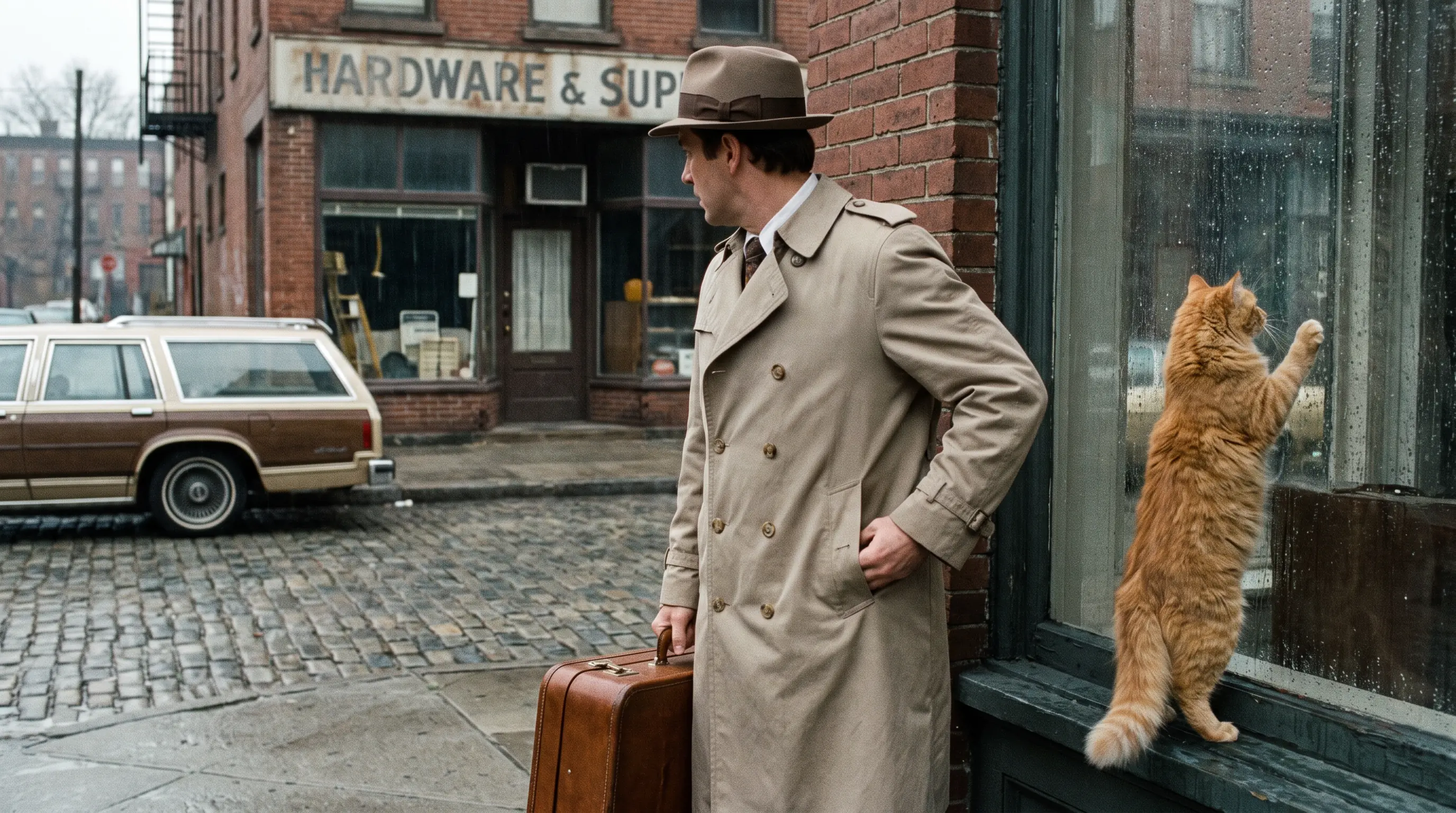
I know the date because it was two days before my twelfth birthday, and I know the time because the late movie on Channel 45 had just started and the man in the commercial was yelling about carpet.
I know the suitcase because I had spent most of my childhood sliding it out from under the bed to use as a table for my baseball cards, and I knew every scuff on it, and the place near the handle where the vinyl had bubbled from the time it sat too close to the radiator.
He went down our white marble steps, the ones my mother scrubbed with Bon Ami every Saturday morning like every other woman on South Decker Avenue, and he turned left toward Eastern Avenue, where he could catch the Number 10 bus downtown to the Greyhound station. The 10:40 to Norfolk. He had the ticket in his coat. I had watched him put it there.
And Boog lost his mind.
I have to tell you about Boog before I tell you anything else, because nothing about that night makes sense without him, and because I think, looking back, that he understood what was happening in our house a long time before any of the people living in it did.
Boog was an orange cat. Not a pale, creamsicle, greeting-card orange, but the deep scorched orange of a rusty coffee can, with darker stripes on his legs like he'd waded through something. He weighed sixteen pounds. He had a torn left ear, notched like a ticket that had been punched, and a white patch under his chin that he kept spotless while the rest of him went around looking like he'd slept in a coal bin. His tail had a kink at the end. His eyes were the green of old Coke bottles. He had come home from Sparrows Point in my father's hard hat in the spring of 1981, when I was seven, a kitten small enough to sit in a coffee cup, mewing so loud that my father said the whole bus heard him from Dundalk to Highlandtown and an old lady offered him two dollars for it just to make it stop.
My father had found him in the tin mill, behind a stack of pallets, next to his mother, who was dead. He never told me how she died and I never asked. Things died at the Point. It was a steel mill on a peninsula, four miles of fire and noise, and the cats that lived there lived the way the men did, close to the heat and careful about where they put their feet. My father carried the kitten out at the end of his shift inside the hard hat, upside down, held against his chest like a bowl of soup, and walked in our front door and set it on the kitchen table in front of me.
"He's yours," he said, "if you name him something decent."