The dog's name was Ingot, and for twelve days in February of 1983 she barked at my backpack like it owed her money.
I should explain the name first, because nobody outside Pueblo, Colorado, ever gets it. Pueblo was a steel town. Not a town with a steel mill in it, the way some places have a cannery or a college, but a steel town all the way down, the way a pickle is a pickle all the way down.
The Colorado Fuel and Iron works ran along the south side of the city for what felt like miles, blast furnaces and rolling mills and stacks and long sheds the color of dried blood, and our neighborhood, Bessemer, sat right up against the top of it like a dog sleeping against a stove. When the wind came from the south you could taste the mill. Pennies and burnt matches.
My grandfather said that taste was what money was made of, and for most of his life he was right. An ingot is the block of steel they pour before they roll it into anything useful, rail or pipe or wire. It is heavy and plain and hot for a long time after it looks cool. The firemen at Station 4 named their dog Ingot because, they said, she was the only thing in Bessemer still being turned out on schedule.
That was a joke about the layoffs, and in February of 1983 every joke in Bessemer was a joke about the layoffs. CF&I had been letting men go since the fall of '81, a few hundred at a time and then a thousand at a time, and by that winter the parking lots along the mill fence were half empty even at shift change and the bars on Northern Avenue had stopped cashing paychecks because there weren't any. My father was let go from the rod and bar mill in October of '82. He sat in the kitchen for most of November with the newspaper open to the classifieds and his coffee going cold, and in December he drove to Gillette, Wyoming, with a man named Fermin Lucero who had a cousin on a drilling crew up there. He called on Sunday nights from a payphone outside a Conoco station. You could hear the trucks going by behind him and the wind, which he said never stopped up there, not once, not for one second, and which I believed because I could hear it on the line, hissing under his voice like something frying.
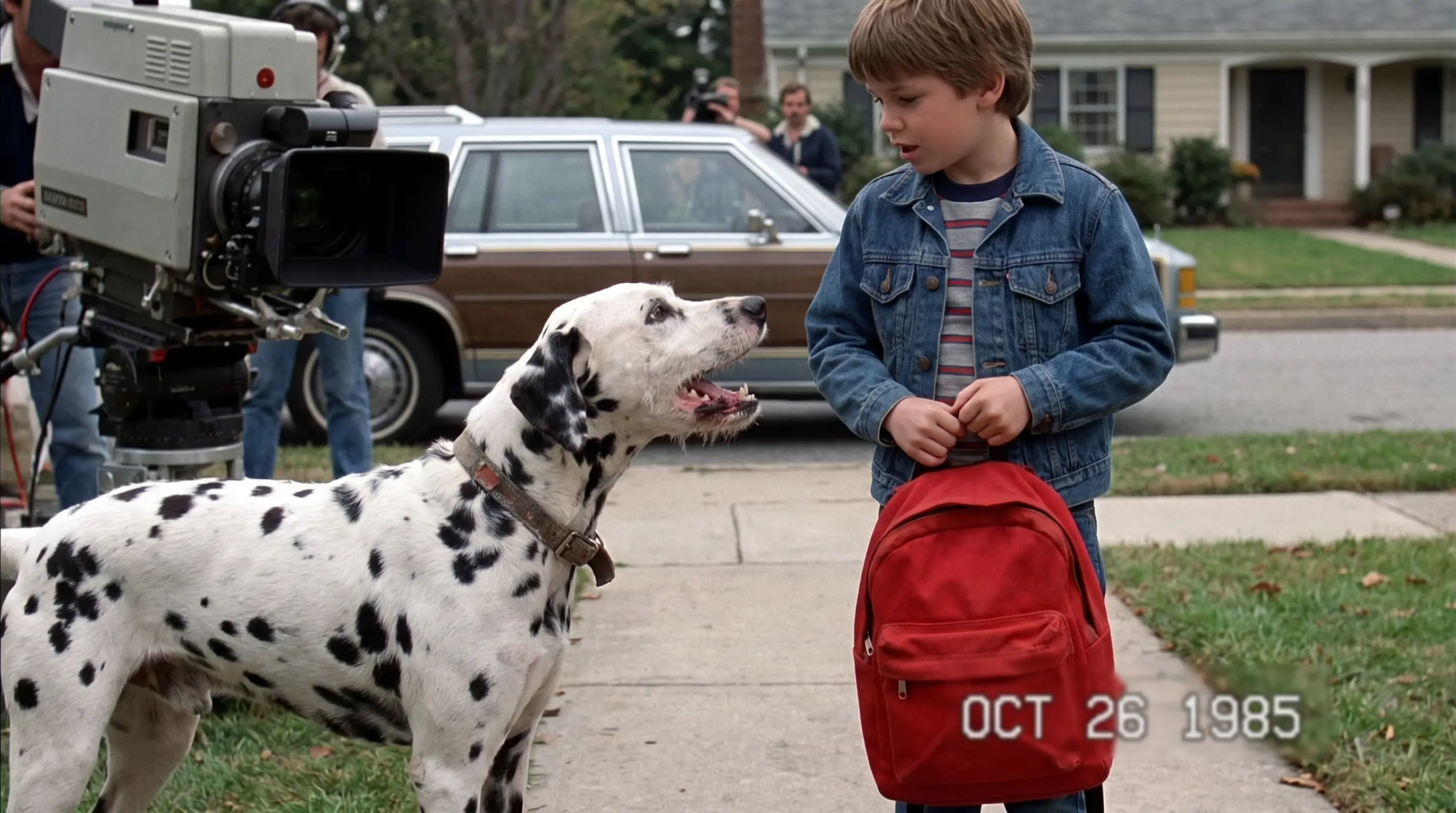
Before he left he bought me the backpack. I want to be clear about this because the backpack is the thing this story hangs on, and because it was not a normal thing for my father to do. He was not a buyer of presents. He fixed things and handed them back to you, and that was how you knew. But two days before he left for Wyoming he took me to the Kmart on Northern and walked me back to the school supplies and stood there looking at the backpacks hung on their pegs for a long time, longer than you'd think a grown man could look at backpacks. They were the first real backpacks I'd ever seen in that store, the nylon kind with the leather patch on the bottom, two straps, a front pocket with its own zipper. Before that everybody carried their books in their arms or in a bag from the grocery store. There were blue ones and brown ones and a green one. There was one red one. He took the red one down.