Rain had a way of making poor places look poorer.
It washed the color out of old brick buildings, turned paper signs soft in store windows, and filled every crack in the sidewalk with gray water. On the south side of Columbus, Ohio, the rain did not fall gently that night. It came down hard, cold, and steady, beating against car roofs, bus shelters, and the plastic bags people held over their heads while running for cover.
Ethan Cole almost drove past her.
He would remember that later, and the thought would trouble him more than he ever admitted.
He was tired. Bone tired. The kind of tired that did not come from one long day, but from too many years of carrying everything without complaint. His eight-year-old son, Noah, was asleep in the back seat, mouth open, one hand still curled around a half-finished spelling worksheet.
The little boy had fallen asleep ten minutes after baseball practice.
Ethan had worked a twelve-hour shift at the auto repair shop, rushed to pick Noah up from school, sat through practice in the rain under a broken umbrella, bought two dollar-menu burgers for dinner, then started the drive home through streets shining with water and headlights.
He was thinking about laundry.
He was thinking about rent.
He was thinking about the check engine light in his own truck, which was funny in a bitter way because he fixed other people’s cars all day and could not afford the part his own needed.
Then he saw the wheelchair.
At first, that was all he saw.
A dark shape near the bus stop outside a closed pharmacy. The shelter roof had a crack in it, and rain poured through the gap in a steady stream. Beneath it sat a young woman in a wheelchair, her shoulders hunched, her hair plastered to her face, both hands gripping the wheels as if she were trying not to shake.
The bus stop was empty.
The pharmacy was closed.
The street was nearly deserted.
Ethan slowed without meaning to.
A car behind him honked.
He kept slowing.
The young woman tried to push herself forward, but one wheel jammed against the broken curb. Her chair lurched sideways. She caught herself with one hand, but the grocery bag in her lap slipped and spilled onto the wet sidewalk.
Two apples rolled into the gutter.
A loaf of bread landed in a puddle.
She stared at it for a second.
Then her face broke.
Not loudly. Not dramatically. She did not throw her head back and sob like people do in movies. Her mouth simply tightened, her chin trembled, and she lowered her head as if that ruined bread was the last small insult she had strength to survive.
Ethan pulled over.
“Dad?” Noah murmured from the back seat, half asleep.
“It’s okay, buddy,” Ethan said. “Stay in the truck.”
He grabbed his old jacket from the passenger seat and stepped into the rain.
The cold hit him at once, sharp through his work shirt. Water ran down his neck and into his collar. He jogged across the sidewalk toward the bus stop, careful not to come too fast.
He had learned that people in pain did not always need a hero charging at them.
Sometimes they needed someone to ask first.
“Miss?” he called. “You okay?”
The young woman looked up quickly.
Fear crossed her face before embarrassment did.
That bothered him.
It meant fear had arrived in her life often enough to become the first answer.
“I’m fine,” she said.
Her voice was thin.
She was maybe twenty-three or twenty-four, though exhaustion made her look younger. She had brown skin, large dark eyes, and a face that might have been bright in another kind of life. Tonight, it was pale with cold. Her jeans were soaked from the knee down, and the blanket over her lap had absorbed so much rain it hung heavy across the chair.
Ethan looked at the bread in the puddle, then at the apples near the curb.
“You don’t look fine.”
She gave a small laugh.
It had no humor in it.
“People usually prefer that answer.”
Ethan stood still, rain dripping from his hair.
“I’m not people.”
That made her look at him more carefully.
He held up his jacket.
“Can I put this over your shoulders?”
She hesitated.
He did not move closer.
Finally, she nodded.
He stepped forward slowly and draped the jacket around her. It was too big for her, heavy and smelling faintly of motor oil, soap, and cold air. She pulled it tight with stiff fingers.
“My name’s Ethan,” he said.
She looked down at the ruined groceries.
“Clara.”
“Clara,” he repeated. “Can I help with the chair?”
Her jaw tightened.
“I can do it.”
“I believe you.”
That seemed to surprise her.
He crouched near the wheel.
“I’m not asking because I think you can’t. I’m asking because that curb is broken and the rain is trying to make everybody’s life stupid.”
For one second, she almost smiled.
Almost.
“The left wheel gets stuck,” she said. “There’s a bent rim.”
Ethan looked.
She was right. The outer rim had warped near one spoke, probably from impact. The tire was low too. The chair was old, the kind held together with stubbornness, tape, and prayers nobody had answered yet.
“I’m a mechanic,” he said.
“Cars aren’t wheelchairs.”
“No,” he said. “But wheels have opinions in every language.”
This time, the smile appeared.
Small, tired, but real.
Ethan picked up the apples first, wiped them on his shirt, and placed them gently back into the grocery bag. The bread was ruined. So was a carton of eggs cracked across the sidewalk. He gathered what could be saved, then checked the wheel.
The quick fix would not last long, but he could loosen the jam enough to get her moving.
“Where are you headed?” he asked.
“Shelter on Hanover.”
Ethan looked up.
“That’s almost two miles.”
“I know.”
“The buses stopped?”
She looked away.
“Driver said the lift wasn’t working.”
Ethan felt something hot move under his ribs.
“What?”
“He said I could wait for the next one.”
“When was that?”
She shrugged.
“Forty minutes ago.”
The heat in him became anger.
Not the loud kind.
The useful kind.
He looked toward his truck. Noah was awake now, sitting up in the back seat, watching through the rain-streaked window.
Ethan turned back to Clara.
“I can drive you.”
Her whole body stiffened.
“No.”
“Okay.”
The answer came quickly.
Too quickly for her.
She blinked.
Ethan held up both hands.
“I won’t push. I just don’t like the idea of you going two miles in this rain with a bad wheel.”
“I don’t get in cars with strangers.”
“Good,” Ethan said. “That’s smart.”
She frowned, as if she had expected argument.
“My son is in the truck,” he added. “His name is Noah. He’s eight. He’ll probably ask you too many questions about your chair because he asks too many questions about everything. You can call someone and give them my plate number. Or I can call the shelter and tell them we’re coming. Or I can follow beside you in the truck with the heater on if that feels safer.”
Clara stared at him.
Rain drummed on the cracked bus shelter roof.
“You’d do that?”
“Yes.”
“Why?”
Ethan looked at the broken bread, the bent wheel, the empty street.
Then he looked at her.
“Because somebody should.”
That was not a perfect answer.
But it was true enough to stand on.
Clara called the shelter.
Ethan gave the staff member his name, his phone number, his license plate, and the name of the repair shop where he worked. He waited while Clara repeated the information to someone she trusted. Only when she nodded did he unlock the passenger door and help fold her chair.
He did not touch her without asking.
Not once.
Noah moved his backpack off the front seat and climbed into the back.
“Hi,” he said.
Clara settled into the passenger seat carefully.
“Hi.”
Noah looked at the wheelchair folded in the truck bed, then at her, then at his father.
“Dad fixes stuff.”
“So he told me.”
“He fixed my bike when I jumped off the porch.”
Ethan started the truck.
“You were not supposed to mention the porch.”
Noah ignored him.
“He can fix almost anything except pancakes. His pancakes are weird.”
Clara looked out the windshield.
For a moment, she seemed to be trying very hard not to laugh.
The shelter on Hanover Avenue was a low brick building with fluorescent lights and a line of people near the door. Ethan carried the grocery bag inside while Clara maneuvered her chair across the entrance ramp.
Noah held the door open with both hands, face serious with duty.
A woman at the desk recognized Clara.
“You made it,” she said, relieved. Then her eyes moved to Ethan.
“He stopped,” Clara said simply.
The woman looked at him.
“Not many do.”
Ethan did not know what to say to that.
He gave Clara his jacket, but she tried to take it off.
“Keep it tonight,” he said.
“It’s yours.”
“I have another one.”
He did not, but the lie was gentle.
Clara looked at him like she knew.
“Thank you.”
Ethan nodded.
He and Noah were halfway back to the truck when Noah stopped.
“Dad?”
“Yeah?”
“Her wheel is still broken.”
“I know.”
“Are we going to fix it?”
Ethan looked at his son.
Rain softened the streetlights around them.
He could have said they did enough. He could have said people had their own lives, their own problems, their own limits. He could have said that kindness had to stop somewhere because rent did not pay itself and the world was full of broken things.
Instead, he sighed.
“Yeah,” he said. “We’re going to fix it.”
The next morning, Ethan came back to the shelter with a toolbox and coffee.
Clara was outside near the side entrance, wrapped in his jacket, watching the traffic pass.
“You came back,” she said.
“Wheel didn’t fix itself overnight, did it?”
She looked down, embarrassed.
“You don’t have to do this.”
“I know.”
He crouched by the chair and began working.
Noah sat on the low wall nearby eating a muffin and reading a comic book upside down, which Clara noticed before Ethan did.
“You know that’s upside down?” she asked.
Noah looked at the page.
“I like a challenge.”
Clara laughed.
It came out rusty, like something she had not used in a while.
While Ethan worked, he learned pieces of her story.
Not because he pried.
Because silence, when handled carefully, sometimes opens doors.
Clara had been a nursing student once.
She had wanted to work in pediatric care. She had been good at anatomy, bad at chemistry, and excellent with scared children because she knew how to make her voice soft without making it false.
Two years earlier, a delivery truck ran a red light and hit her car on the driver’s side.
Her spine was damaged.
Her mother died before the accident. Her father had never been around. Her boyfriend stayed for three months after the hospital, then left one afternoon while she was at physical therapy. He took the good blender and half the rent money.
After that came medical bills, lost work, missed classes, eviction, temporary couches, then shelters.
“People think disability is one tragedy,” Clara said, watching Ethan tighten a bolt. “It’s not. It’s a thousand small doors closing.”
Ethan stopped working for a second.
Then continued.
“Some open too,” Noah said without looking up from his comic.
Clara turned toward him.
“What?”
He shrugged.
“Doors. Some open. Like Dad stopping.”
Ethan looked at his son and felt something twist in his chest.
Clara looked away quickly, but not before he saw her eyes shine.
The repair took almost an hour.
The wheel still needed replacement, but it no longer dragged. Ethan adjusted the brake, patched the tire, tightened both footrests, and made a list of parts in his phone.
When Clara tested it, the chair rolled straighter than before.
She moved a few feet, turned, came back, and stared at the wheels like they had betrayed her in a good way.
“It’s better,” she said.
“Not fixed,” Ethan said. “Better.”
“Better matters.”
He nodded.
“Yes, it does.”
That should have been the end.
It wasn’t.
On Monday, Ethan called three medical supply stores during his lunch break. Replacement wheelchair parts cost more than he expected and less than Clara deserved. On Tuesday, he asked his boss, Ray, if he could use the shop after hours.
Ray was sixty-two, bald, grumpy, and allergic to emotional conversation.
“What are you fixing?”
“Wheelchair.”
“Since when do we fix wheelchairs?”
“Since now.”
Ray stared at him.
Then tossed him the shop keys.
“Don’t burn the place down being noble.”
Ethan brought Clara’s chair in on Wednesday evening.
Noah swept the floor like he was part of the crew. Clara sat in a borrowed chair near the office, watching Ethan remove the damaged wheel. She looked uncomfortable being helped, but she stayed.
That was its own kind of courage.
Ray pretended not to watch.
Then he watched anyway.
By nine that night, the chair had new tires, repaired rims, smoother brakes, and a small reflector Noah insisted on adding to the back.
“Safety,” Noah said.
Clara touched the reflector.
“It’s shaped like a star.”
Noah nodded.
“Extra safety.”
She smiled.
“Thank you.”
He tried to look casual and failed.
“You’re welcome.”
Ethan drove her back to the shelter that night. Before she got out, Clara sat quietly with her hands folded in her lap.
“You keep doing things,” she said.
Ethan glanced at her.
“That sounds like an accusation.”
“It is.”
He waited.
“People do one nice thing,” Clara said. “Then they want to feel good about it and leave. You keep coming back.”
Ethan looked through the windshield at the shelter lights.
“My wife died four years ago,” he said.
Clara turned toward him.
He rarely said it that directly.
Usually he said, Noah’s mom passed. Or, It’s just us now. Or he avoided the subject because grief made people either too gentle or too curious.
“Cancer,” he continued. “Fast. Mean. Expensive in all the ways people don’t mean when they say expensive.”
“I’m sorry.”
“Me too.”
Rain began again, soft this time.
“After she died,” Ethan said, “people brought casseroles. Paid a bill or two. Took Noah for afternoons. Then life moved on because that’s what life does. I don’t blame them. But I remember how it felt when everyone stopped coming.”
Clara’s face softened.
“So you come back.”
“Yeah,” he said. “When I can.”
She looked down at her hands.
“I don’t know how to accept that.”
“Me neither,” Ethan said.
That made her laugh quietly.
In the weeks that followed, Clara became part of their routine.
Not officially.
Not neatly.
Life does not usually announce when someone has entered it.
Ethan and Noah brought her coffee on Saturdays. Clara helped Noah with reading because she had a way of explaining words that made them less frightening. Noah showed her his baseball cards and asked questions no adult would ask out loud.
“Do your legs hurt if they don’t move?”
“Sometimes.”
“Do you miss running?”
“Yes.”
“Do you get mad?”
“Every day.”
“Me too,” Noah said. “But mostly about fractions.”
Clara laughed more around him.
At first, Ethan noticed because it was rare. Then he noticed because he wanted to hear it.
The shelter staff began trusting him. They asked him to fix a broken ramp rail. Then a door hinge. Then the old van that sometimes took residents to appointments.
Ray complained when Ethan brought the van to the shop.
Then spent his own Saturday replacing belts and pretending he was only doing it because Ethan would mess it up.
Word spread.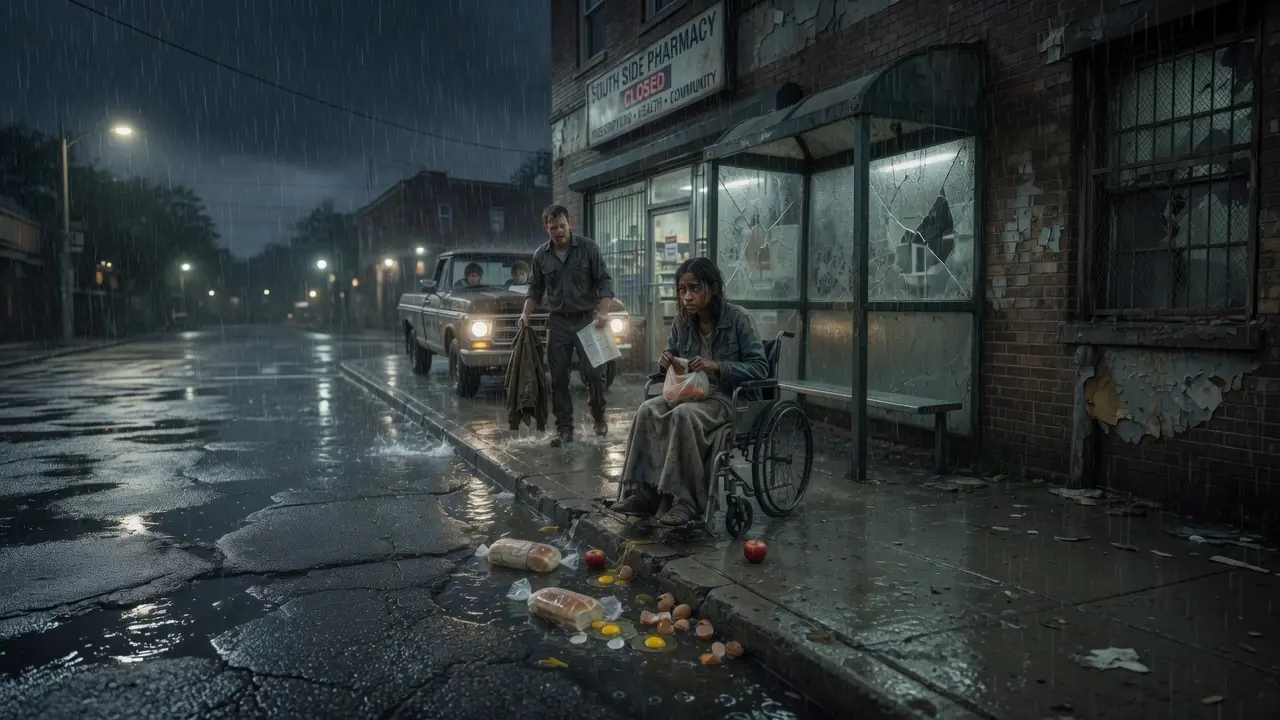
Not loudly.
Quietly, the way good things sometimes do.
A church donated two used wheelchairs. Ethan repaired both. A physical therapist from a clinic nearby offered Clara two free sessions a week after Ray fixed her Honda for half price. Noah’s school held a coat drive, and Noah insisted on adding gloves because “hands get cold first.”
Clara started looking different.
Not healed.
That would be too simple and not honest.
But less invisible.
She sat straighter. She argued more. She stopped apologizing every time she needed space to move through a doorway. She applied for a remote patient-support job through a hospital network, helping families schedule appointments and understand forms.
“I’m not a nurse,” she told Ethan after the interview.
“You still know how to help scared people.”
“That’s not a degree.”
“No,” he said. “But it’s something.”
She got the job.
The day the email came, she called Ethan first.
Then immediately apologized for calling.
He smiled into the phone.
“Clara, tell me the news.”
“I got it,” she said.
There was silence after that.
Then a small sob.
“I got the job.”
Noah made her a card that said:
YOU ARE EMPLOYD.
Clara framed it.
Ethan corrected the spelling on the back.
Spring came slowly.
Snow melted into dirty piles near parking lots. The river rose. Trees along the street began showing small green buds. Clara moved out of the shelter into a subsidized apartment on the second floor of a building with a working elevator.
Ethan and Ray built shelves.
Noah arranged her books by color.
Clara pretended to hate that.
Then kept them that way.
On move-in day, Clara sat in the middle of the small living room, surrounded by boxes, donated furniture, and sunlight falling through windows that belonged to her.
Her hands rested on her wheels.
She did not speak for a long time.
Ethan leaned against the doorway.
“You okay?”
She nodded.
Then shook her head.
Then laughed through tears.
“I have a door.”
Noah looked confused.
“Everybody has doors.”
Clara wiped her face.
“No, they don’t.”
Ethan understood.
A door meant privacy.
A door meant safety.
A door meant no one could tell her to pack by morning because a couch was no longer available. It meant she could close the world out for a while. It meant she had a place where her name belonged on mail.
That night, they ate pizza on the floor because the table had not arrived yet.
Clara gave Noah the biggest slice.
Noah said, “You’re part of us now.”
Ethan nearly choked on soda.
Clara froze.
Noah kept eating, unaware that he had just said something enormous.
After a moment, Clara looked at Ethan.
He did not rescue the silence.
Some truths deserved room.
Finally, she said, “Is that okay?”
Noah frowned.
“I already said it.”
Ethan laughed then.
Clara did too.
But her eyes were wet.
Not everything became easy after that.
Clara’s body still hurt. Some days the pain sat behind her eyes and made speech difficult. Some places still had steps instead of ramps. Some people still spoke to Ethan instead of her when they were together, as if the wheelchair had made him her translator.
Clara hated that.
Ethan learned to hate it too.
Once, at a diner, a waitress looked at him and asked, “What does she want?”
Ethan looked at Clara.
Clara looked at the waitress.
“She wants pancakes,” Clara said. “And she is sitting right here.”
Noah added, “With extra syrup.”
The waitress blushed.
Clara smiled sweetly.
“Thank you.”
Later, in the truck, she groaned.
“I hate being rude.”
Ethan started the engine.
“That wasn’t rude.”
“It felt rude.”
“It was accurate.”
Noah nodded from the back seat.
“Accuracy is important.”
Clara looked at him in the mirror.
“You are eight going on fifty.”
“Dad says that too.”
Months passed.
Ethan did not know when helping became friendship, or when friendship became something he was afraid to name.
He only knew that Clara’s apartment felt less like a place he visited and more like a place where part of his day made sense. He knew Noah talked about her at school as if she had always been there. He knew Clara kept Ethan’s old jacket on a hook by the door even after she bought one of her own.
He knew that grief did not disappear just because new tenderness entered.
Sometimes he felt guilty.
His wife, Hannah, had been the great love of his first life. She had loved him messily and fiercely, had danced barefoot in their kitchen, had called him stubborn in three different tones, and had made Noah’s baby laugh sound like the center of the world.
Loving anyone after her felt, at first, like trespassing.
One evening, Clara found him looking at Hannah’s photo in his wallet while Noah slept on her couch after a movie.
“She was beautiful,” Clara said.
Ethan looked up.
“She was.”
“You miss her.”
“Every day.”
Clara nodded.
“You should.”
He closed the wallet slowly.
“Some people think moving forward means leaving someone behind.”
“Do you?”
“I used to.”
“And now?”
He looked at Noah curled under a blanket, then at Clara in the soft light from the lamp.
“Now I think love can make more room if you let it.”
Clara’s eyes shone.
“That sounds terrifying.”
“It is.”
“Good,” she said.
He laughed softly.
“Good?”
“Means it’s real.”
The first time Ethan held her hand, it was not dramatic.
They were at a park in June watching Noah play baseball. Clara had transferred from her chair to the bleachers with practiced effort, and Ethan sat beside her holding two paper cups of lemonade.
The sun was warm. Kids shouted. A dog barked at absolutely nothing.
Noah struck out and turned immediately to see if they had seen.
Clara cupped her hands around her mouth.
“Great swing!”
“It was not,” Ethan said.
“He needs encouragement.”
“He needs to watch the ball.”
“He needs both.”
Ethan smiled.
Then their hands brushed on the bench.
Neither moved away.
After a moment, Clara placed her hand over his.
Ethan looked at her.
She kept her eyes on the field, but her cheeks had gone warm.
“Is this okay?” she asked.
He turned his hand and laced his fingers through hers.
“Yes.”
Noah hit the next pitch badly, sending the ball wobbling toward third base like it had forgotten its purpose.
He made it to first anyway.
Clara cheered so loudly people turned.
Ethan laughed until his chest hurt.
That night, after they dropped Clara home, Noah was quiet in the truck.
Ethan glanced in the mirror.
“You okay, buddy?”
Noah nodded.
Then said, “Do you love Clara?”
Ethan’s hands tightened on the wheel.
He had promised himself he would never lie to his son about important things.
“I think I’m starting to.”
Noah looked out the window.
“Does that make Mom sad?”
The question broke him open.
He pulled into a parking lot and turned off the engine.
Then he climbed into the back seat beside his son.
“I don’t think so,” he said carefully. “Your mom loved us. She wanted us to be okay. Loving Clara doesn’t erase Mom. Nobody can erase Mom.”
Noah’s eyes filled.
“I don’t want to forget her.”
Ethan pulled him close.
“Me neither.”
“Can Clara be part of us and Mom still be part of us?”
Ethan closed his eyes.
“Yes,” he whispered. “I think that’s exactly how it works.”
Noah cried then.
Not for long.
But enough.
A year after the night Ethan found Clara at the bus stop, the city held its first accessible community repair day.
It had started as Ethan’s idea, then Clara made it better, then Ray pretended it was stupid until he became the loudest person organizing it. The event took place in the parking lot behind the shelter on Hanover.
There were folding tables, donated tools, coffee urns, ramps, tire pumps, replacement wheels, walkers, crutches, and volunteers repairing mobility equipment for anyone who came.
Clara sat at the registration table with a clipboard.
Not as someone being helped.
As someone running the whole operation.
She had become very good at telling men where to stand.
Ray called her “the boss” and meant it.
Noah wore a shirt that said JUNIOR MECHANIC and took his role too seriously.
Near noon, a city councilwoman arrived with a photographer and tried to give Ethan credit for the event. He let her speak for thirty seconds before interrupting.
“This is Clara’s project,” he said.
Clara looked up sharply.
Ethan continued.
“I stopped one night. That’s all. She built the rest.”
The photographer turned toward Clara.
For a second, she looked uncomfortable.
Then she sat taller.
“My name is Clara Dawson,” she said. “And nobody should lose access to the world because a wheel breaks and they can’t afford to fix it.”
The quote appeared in the local paper the next morning.
Noah cut it out and taped it to the refrigerator.
That evening, after the event ended, Ethan, Clara, and Noah sat on the curb behind the shelter eating takeout noodles from paper containers.
The same bus stop was visible down the street.
The cracked roof had been repaired.
The curb had been fixed too, after Clara called the city every Tuesday for six weeks until someone got tired of hearing from her.
Ethan looked at it.
Clara noticed.
“You thinking about the rain?”
“Yeah.”
“You almost drove past me.”
He turned to her.
“I know.”
She nodded.
“I almost didn’t let you help.”
“I know.”
Noah slurped noodles loudly.
“Good thing you both made better choices.”
Clara laughed.
Ethan looked at his son, then at the woman beside him.
The sun was setting behind the buildings, turning the wet patches of pavement gold. People were leaving the repair day with smoother wheels, sturdier walkers, fixed brakes, and the strange quiet dignity that comes from being seen as worth the effort.
Ethan took Clara’s hand.
She squeezed once.
“I used to think help meant owing somebody,” she said.
Ethan looked at her.
“And now?”
“Now I think the right kind of help gives you back to yourself.”
He let that settle.
Then Noah leaned across Ethan and said, “Does this mean you’re coming to my school play?”
Clara blinked.
“I was invited?”
Noah looked offended.
“You’re part of us. Obviously.”
Ethan and Clara looked at each other.
There was the whole story again.
Not in grand speeches.
Not in perfect healing.
In a child saying something simple because adults make belonging too complicated.
Clara smiled.
“Then obviously I’ll be there.”
Years later, people would tell the story as if Ethan had saved Clara.
He hated that version.
It was too small.
Too easy.
He had stopped in the rain, yes. He had fixed a wheel. He had offered a ride, a jacket, a little kindness on a night when the world seemed determined to prove it had none left.
But Clara had saved things too.
She gave Noah back a softness grief had almost taken. She gave Ethan a reason to believe his life was not finished after loss. She turned one repaired wheelchair into a community program that helped hundreds of people move through the world with less pain and more dignity.
Rescue, Ethan learned, was rarely one person lifting another from the dark.
More often, it was two people meeting at the edge of their own broken places and deciding not to look away.
The old jacket stayed on Clara’s hook.
Even after they married two years later in a small ceremony at the park. Even after Noah became tall enough to look Ethan in the eye. Even after the repair day became a nonprofit called Open Wheels, with Clara as director and Ray as the grumpy volunteer everyone secretly loved.
The jacket remained.
Motor oil stain on the sleeve.
Frayed cuff.
Rain-dark memory woven into the fabric.
One night, long after everything had changed, Clara touched the jacket and said, “This was the first thing you gave me.”
Ethan stood behind her in the doorway.
“No,” he said.
She turned.
“What was?”
He smiled softly.
“A choice.”
Clara looked at him for a long moment.
Then she reached for his hand.
Outside, rain began tapping against the windows, gentle this time.
Inside, Noah laughed at something on television, the apartment smelled like popcorn, and Clara’s wheelchair stood near the couch with its star-shaped reflector still shining faintly under the lamp.
The world was still hard.
It always would be.
But that night, in that room, no one was stranded in the rain.
No one was invisible.
No one had to pretend they were fine just to make strangers comfortable.
And Ethan understood, as clearly as he had ever understood anything, that compassion did not have to be loud to change a life.
Sometimes it was a truck slowing down.
A question asked gently.
A jacket placed over cold shoulders.
A wheel fixed after hours.
A child opening the door of a family and saying, without hesitation:
You are part of us now.