The headlights cut through the snow just before midnight.
For a moment, Daniel Mercer thought his tired eyes were playing tricks on him.
The road outside Westbrook was nearly empty, bordered by old stone walls, frozen fields, and dark houses set far back behind iron gates. Snow fell in thick, quiet sheets, softening the world until even the trees looked like ghosts.
Then the woman appeared in the beam of his headlights.
She was walking alone on the shoulder of the road in a torn wedding dress.
Daniel slowed the truck.
The woman did not turn at first. She kept moving forward with her head slightly lowered, one hand gripping the skirt of her dress, the other holding a pair of silver heels by their straps. The hem of the gown dragged along the wet asphalt, catching slush and dirt with every step.
It was not the sight of the dress that made him stop.
It was the way she walked.
Not drunk. Not confused. Not dramatic.
She walked like someone leaving a burning house while trying not to look back.
Daniel pulled over and put the truck in park.
In the back seat, his eight-year-old daughter, Grace, sat bundled in her purple coat, holding a school folder against her chest. They were coming home from a late parent-teacher conference, one Daniel had dreaded all week because Grace’s teacher had gently said the words he already knew.
She seems lonely.
She misses her mother more than she says.
Daniel had nodded through the meeting, thanked the teacher, and driven into the storm feeling like every failure in his life had climbed into the truck beside him.
Now there was a woman in a wedding dress walking through the snow.
“Dad?” Grace whispered.
“Stay inside, sweetheart.”
Daniel rolled down the window.
Cold air rushed into the truck.
“Miss?” he called. “Do you need help?”
The woman stopped.
For several seconds, she did not turn around.
Then she looked back at him, and Daniel saw a face that belonged in a ballroom, not on the side of a freezing road. She was beautiful in a polished, old-money way, with dark hair loosened from an elegant style, pearl earrings still in place, and makeup smudged beneath eyes that were trying very hard not to break.
“I’m fine,” she said.
The words were crisp.
Refined.
False.
Daniel looked at the snow gathering on her bare shoulders where the dress had torn near one sleeve.
“You’re walking in a storm in a wedding dress.”
A tired smile touched her mouth and vanished.
“Yes. I noticed.”
He shifted the truck into park fully and turned on the hazard lights.
“I’m not here to ask questions,” he said. “I’m not here to judge. But if you keep walking like this, you’re going to freeze before you reach town.”
She glanced behind her.
The road curved into darkness.
Daniel noticed the movement.
Someone was back there.
Or she was afraid someone might be.
“Do you have somewhere to go?” he asked.
Her grip tightened around the shoes.
For the first time, her composure cracked.
“No.”
Grace leaned forward from the back seat, her face pale with worry.
“Daddy, she can have my blanket.”
The woman heard that.
Her eyes moved from Daniel to the child behind him.
That changed something.
Not enough to make her trust him.
Enough to make her listen.
Daniel reached back and took Grace’s fleece blanket from the seat. It was faded yellow, covered in tiny stars, and had survived years of car rides, fevers, sleepovers, and one unfortunate spaghetti incident.
He held it out through the open window.
“My daughter’s blanket,” he said. “Warmest thing in the truck, according to her.”
Grace nodded solemnly.
“It is.”
The woman looked at the blanket as if it were a contract she did not know how to read.
“You don’t know me,” she said.
“No,” Daniel replied. “And you don’t know me. That’s why I won’t touch you, won’t ask you to get in unless you want to, and I’ll call anyone you want before we move.”
She studied him.
Snow gathered on her hair.
“What’s your name?”
“Daniel Mercer.”
“And hers?”
“Grace.”
Grace lifted one hand in a small wave.
The woman looked at the little girl for a long moment, then said, “I’m Claire.”
It sounded like half a truth.
Daniel accepted it.
“Claire, do you want to sit in the truck for a few minutes and warm up? You can keep the door open if that makes you feel safer.”
Her lips trembled.
Only once.
Then she nodded.
Daniel got out, opened the passenger door, and stepped back to give her room.
She climbed in carefully, gathering the massive skirt around herself with embarrassed grace. The wedding dress filled the seat, the torn lace spilling over the console and onto the floor mat. Her bare feet were red from the cold.
Grace immediately pushed the blanket forward.
Claire took it with both hands.
“Thank you.”
“You’re welcome,” Grace said. “Are you a princess?”
Daniel closed his eyes for half a second.
“Grace.”
Claire looked down at the ruined dress.
“No,” she said softly. “Not tonight.”
Daniel drove slowly.
For several minutes, no one spoke.
The heater hummed. Snow whispered against the windshield. The truck tires made soft wet sounds against the road. Claire sat very still, wrapped in Grace’s blanket, holding her shoes in her lap like evidence from another life.
Daniel kept his eyes mostly on the road.
Mostly.
He saw the expensive beadwork on the gown. The bruised redness around her wrist where someone had gripped too hard. The way her breathing changed whenever headlights appeared behind them.
“Is anyone following you?” he asked.
Claire looked at the side mirror.
“I don’t know.”
That was not a no.
Daniel took the next turn toward town instead of the straight road.
Grace knew the difference.
“This isn’t the way home.”
“Scenic route.”
Grace looked out the window at the dark trees.
“At midnight?”
“Yes.”
She considered that, then nodded as if adults had many strange customs.
Claire watched father and daughter from the corner of her eye.
There was something gentle in the way they spoke to each other. Not perfect. Not polished. But practiced. A rhythm built from years of cereal mornings, school pickups, tired evenings, and grief that had become part of the furniture.
“You’re a single father?” Claire asked.
Daniel’s jaw shifted.
“Widower.”
“I’m sorry.”
“Thank you.”
That was usually where people became either too curious or too careful.
Claire did neither.
She simply sat quietly with the weight of the answer.
Daniel appreciated that.
After a while, he asked, “Do you want me to take you to a hotel?”
Claire looked down at the blanket.
“I don’t have my wallet.”
“Police station?”
Her whole body tightened.
“No.”
“Hospital?”
“No.”
“Friend?”
A pause.
Then, quieter, “I don’t think I have the kind of friends who answer after a wedding fails.”
Grace frowned.
“Weddings can fail?”
Daniel looked in the rearview mirror.
“Sometimes plans fail, sweetheart. People don’t.”
Claire turned toward the window quickly.
Daniel saw her wipe one tear with the back of her hand.
His house stood near the edge of town, a white clapboard colonial with black shutters, a crooked porch swing, and a row of bare rose bushes along the fence. It was too large for two people and too full of memory for Daniel to sell.
His wife, Rachel, had loved that house.
She had chosen the blue front door, planted the roses, painted the kitchen chairs yellow, and insisted the hallway needed family photos even when Daniel complained that hanging frames straight was a form of psychological warfare.
Two years after her death, the house still carried her.
Not like a ghost.
Like warmth that had not completely left.
Daniel pulled into the driveway and turned off the engine.
Claire looked at the porch light glowing through the snow.
“I shouldn’t come in.”
“You don’t have to,” he said.
Grace leaned between the seats.
“But you can.”
Claire looked at her.
The child’s face was open in a way adults rarely managed.
“You have a guest room?” Claire asked Daniel.
“Yes.”
“Does the door lock?”
Daniel nodded.
“It does.”
She swallowed.
“Then just tonight.”
“Just tonight,” he said.
Inside, the house smelled like cinnamon, old books, and the chicken stew Daniel had left in the slow cooker before the conference.
Grace kicked off her boots and immediately began giving a tour.
“This is the living room. That’s Dad’s chair, but he only pretends it’s his. I sit there when he’s not looking. That’s my school stuff. That’s our plant, Mr. Fernley. He’s dramatic and almost died last month.”
Claire stood in the entryway with the wedding dress dripping onto the mat.
Daniel brought towels.
“I’m sorry,” she said, looking down at the puddle forming beneath the hem.
“For what?”
“The floor.”
He glanced at the water.
“It’s a floor.”
Something about that answer seemed to confuse her.
Grace ran upstairs and returned with sweatpants, a large sweater, and fuzzy socks covered in cartoon penguins.
“These are clean,” she announced. “The sweater was Mom’s, but I think she’d let you borrow it.”
Daniel froze.
Grace did not seem to notice.
Claire did.
Her eyes moved to him gently, asking without words.
He gave one small nod.
Claire took the clothes as if they were sacred.
“Thank you, Grace.”
The guest room was small but warm, with a quilt on the bed and a lamp shaped like a lighthouse. Daniel placed a towel on the chair and showed Claire the bathroom across the hall.
“Take your time,” he said. “There’s a lock. Towels are under the sink. I’ll leave food in the kitchen.”
Claire stood in the doorway, Grace’s blanket still around her shoulders.
“Why are you doing this?”
Daniel thought about the conference.
Grace’s lonely drawings.
The way Rachel had once brought home a stray dog during a thunderstorm and told him love was mostly inconvenience with a heartbeat.
He looked at Claire.
“Because someone should.”
She turned away before he could see her cry.
When Claire came downstairs twenty minutes later, the transformation hurt to look at.
Not because she looked worse.
Because she looked real.
The wedding dress was gone, folded carefully in the bathroom despite its ruin. She wore Rachel’s oversized gray sweater, Grace’s penguin socks, and her hair loose and damp around her face. Without diamonds and lace, without the performance of being admired, she looked younger.
Tired.
Human.
Daniel set a bowl of stew on the table.
Grace sat beside Claire, watching to see if she liked it.
“It has carrots,” Grace said. “I picked them out once, and Dad said that was betrayal.”
“It was.”
Claire took a spoonful.
Her eyes closed.
For a moment, nobody spoke.
Then she whispered, “I haven’t eaten since breakfast.”
Grace’s mouth fell open.
“That’s illegal.”
Daniel almost smiled.
“In this house, yes.”
Claire laughed quietly.
It broke halfway through, becoming a sob she tried to swallow.
Grace reached across the table and patted her hand.
“When I cry,” she said, “Dad says it’s okay as long as I breathe too.”
Claire looked at Daniel.
He busied himself with the bread.
Grace leaned closer.
“So breathe.”
Claire breathed.
Then cried.
Daniel did not rush her. He did not ask what happened. He did not tell her everything would be fine, because he did not know that and because false comfort often made pain lonelier.
He only placed a glass of water near her hand.
After dinner, Grace fell asleep curled in the armchair, still wearing her coat because she had “only sat down for a second.”
Daniel carried her upstairs.
When he returned, Claire was standing in the living room, studying the photos along the mantel.
Rachel smiling in a summer dress.
Daniel holding newborn Grace.
A family at the beach, wind in their hair.
A hospital bracelet framed in a shadow box because Rachel had said first days deserved proof.
“She was beautiful,” Claire said.
“She was.”
“How long?”
“Two years.”
Claire turned.
“Cancer?”
“A stroke during surgery.” He paused. “A routine procedure. That’s the phrase people kept using. Routine. Like that made it more polite.”
“I’m sorry.”
“Me too.”
He sat in the chair near the fireplace.
Claire stayed by the mantel.
“My wedding was supposed to be today,” she said.
Daniel waited.
“I know that part was obvious.”
“A little.”
Her mouth twitched.
Then her face tightened again.
“My name isn’t Claire.”
He nodded once.
“What is it?”
“Vivian Lockwood.”
The name meant something, even to him.
Lockwood Hotels.
Lockwood Foundation.
Lockwood money in old buildings and museum wings and hospital names.
Daniel kept his face still.
“Okay.”
She looked surprised.
“That’s all?”
“You’re still the woman who needed socks.”
For the first time, she smiled without pain.
Then it faded.
“My father arranged the marriage. Not in the old-fashioned forced way, at least that’s what he would say. But in my world, nobody has to lock a door when they can build your whole life around one exit.”
Daniel understood that kind of trap.
Different shape.
Same suffocation.
“The groom?”
“Preston Waverly. His family owns a private equity firm. Our marriage was supposed to merge social circles, boards, donations, investments. A beautiful little alliance in white lace.”
She wrapped her arms around herself.
“I thought I could do it. I told myself love wasn’t necessary. Respect might be enough. Stability might be enough. My father said marriage was not a feeling, it was a structure.”
Daniel said nothing.
Vivian stared into the fireplace.
“Then tonight, before the ceremony, I heard Preston talking to his brother.”
Her voice flattened.
“He said he was marrying me because my last name opened doors. He said I was too serious, too cold, probably terrible in bed, but rich enough to compensate.”
Daniel’s hands tightened on the armrests.
“He said that?”
She nodded.
“I walked into the room. I asked if he meant it.”
“And?”
“He laughed.” Her voice cracked. “He said I was being dramatic. Then he said women in my family were bred to endure worse than honesty.”
The room went still.
Daniel felt something dark move through him.
Not desire to fight.
Something older.
Protective anger.
“I left before the ceremony,” Vivian said. “My father followed me into the side hall. I thought he would ask if I was all right.”
“He didn’t.”
“No.” She looked down. “He said if I humiliated him in front of four hundred guests, I should not come home.”
Daniel looked at the ruined wedding dress folded in his mind, the snow on her shoulders, the bare pain in her eyes.
“So you walked.”
“I walked.”
“Good.”
She looked up.
He meant it.
For a moment, she could not speak.
Then she whispered, “I don’t know what happens next.”
Daniel glanced toward the stairs, where Grace slept.
“Neither do I most days.”
Vivian looked at him.
“How do you live like that?”
“One morning at a time,” he said. “Sometimes one breakfast at a time.”
The next morning, Grace found Vivian in the kitchen wearing Rachel’s sweater and making coffee very badly.
The machine sputtered like it had been insulted.
Grace stood in the doorway and watched.
“You’re doing it wrong.”
Vivian turned, startled.
“I am?”
“Yes. But it’s okay. Dad did it wrong for a long time after Mom died.”
Daniel entered behind Grace.
“I was grieving. The coffee machine was unsympathetic.”
Grace climbed onto a chair.
“Are you staying today?”
Vivian looked at Daniel.
“I don’t want to impose.”
Grace frowned.
“What does impose mean?”
“It means staying where you might be too much.”
Grace considered that.
“You’re not too much. You’re just new.”
Vivian looked down quickly.
Daniel started making breakfast to give her time.
Pancakes.
Slightly burned on one side because Grace insisted the first batch always belonged to the kitchen spirits.
Vivian ate two.
Then three.
When she apologized, Grace shook her head.
“Breakfast is for eating.”
After Grace went to school, Daniel gave Vivian a cup of coffee and a choice.
“I can drive you wherever you need. Hotel. Friend. Lawyer. Your family’s office. Or you can stay a few days and figure it out.”
Vivian stood by the window, watching Grace climb onto the school bus.
“She likes you,” Daniel said.
“She doesn’t know me.”
“She knows enough for today.”
Vivian touched the sleeve of Rachel’s sweater.
“I gave up my apartment when I moved into Preston’s townhouse.”
Daniel nodded.
“My father controls my bank cards. My phone is probably full of messages I’m not ready to read. My friends are mostly people who were at the wedding.”
“Then stay,” he said.
She turned.
“It’s that simple?”
“No. But it’s that available.”
She looked at him for a long time.
“Why do you talk like every sentence has survived something?”
He gave a small smile.
“Because most of them have.”
The first few days were awkward in the way new kindness often is.
Vivian did not know how to receive without calculating what would be owed later. She folded blankets too neatly, washed dishes before Daniel finished eating, and apologized for using hot water, for leaving a light on, for needing a ride to buy basic clothes.
Grace started keeping count.
“That’s seven apologies today,” she announced on Thursday.
Vivian froze.
Daniel looked up from fixing the loose cabinet hinge.
Grace held up a notebook.
“I’m helping her notice.”
Vivian stared at the child.
Then burst out laughing.
It was sudden and bright and startled all three of them.
Daniel hit his head on the cabinet.
Grace declared the apology notebook a success.
On Friday, Vivian went with Daniel to the grocery store.
It should have been ordinary.
It was not.
She stood in front of the cereal aisle for five full minutes, overwhelmed by the simple fact that no one was choosing for her. No household manager. No nutritionist. No fiancé making comments about sugar. No father reminding her that appearances mattered.
“What do you want?” Daniel asked.
She looked at the shelves.
“I don’t know.”
Grace, who was pushing the cart badly, said, “That’s okay. Wanting takes practice.”
Vivian looked at Daniel.
He shrugged.
“She’s right.”
Vivian chose cinnamon cereal because it had a cartoon fox on the box and because Grace said the fox looked trustworthy.
It became her favorite.
Little by little, the house began to change.
Vivian did not replace Rachel.
No one wanted that.
Rachel remained in the photos, in Grace’s stories, in the rose bushes sleeping beneath snow, in the yellow kitchen chairs, in Daniel’s pause before certain memories.
But Vivian entered around the edges.
A scarf on the hook by the door.
A notebook beside the phone.
Her laugh from the kitchen.
Her careful listening when Grace talked about missing her mother.
One afternoon, Grace brought Vivian a box from the hall closet.
Inside were seed packets, garden gloves, and a sketch Rachel had made years earlier of the backyard she wanted to plant.
“Mom wanted a garden,” Grace said. “But then she got sick.”
Vivian touched the sketch gently.
“She drew beautifully.”
“She said flowers are proof that dirt can keep secrets until spring.”
Daniel, standing in the doorway, closed his eyes.
That sounded exactly like Rachel.
Vivian looked up.
“Can I help plant it?”
Grace gasped.
“You know how?”
“My grandmother had gardens,” Vivian said. “Real ones. Not decorative hedges for parties. Roses, lavender, tomatoes, wildflowers that refused to behave. She taught me when I was little.”
Grace grabbed the sketch and ran to Daniel.
“Dad. Emergency. We need spring.”
“It is March.”
“Spring is allowed to prepare.”
So they prepared.
They visited a garden center the next weekend.
Vivian moved through the greenhouse like someone remembering a language. She knew which seeds needed patience, which flowers liked morning sun, which herbs could survive neglect, and which plants Grace should not name before they sprouted because “emotional attachment too early is risky.”
Grace named them anyway.
Daniel watched Vivian kneel in the greenhouse aisle, wedding-ring tan line still faint on her finger, explaining soil depth to his daughter with complete seriousness.
Something in him shifted.
Not all at once.
Not like lightning.
More like snow melting where sunlight had been quietly working for hours.
He felt guilt first.
Then fear.
Then a tenderness so unexpected he looked away.
That night, after Grace went to bed, Vivian found him on the porch.
The air was cold but not cruel.
“You got quiet today,” she said.
“I get quiet.”
“I noticed.”
He leaned against the railing.
“I haven’t brought anyone into this house since Rachel died.”
Vivian stood beside him, leaving space.
“I know.”
“Grace likes you.”
“I like her.”
“That scares me.”
Vivian nodded.
“It scares me too.”
He looked at her.
“Why?”
“Because I came here broken open. And your house did what warm places do. It made me want to stay.”
Daniel looked out at the sleeping yard.
“That doesn’t sound like a bad thing.”
“It does when staying has always cost me something.”
He understood.
For a while, they stood in silence.
Then he said, “Rachel used to say love was not a cage if the door stayed open.”
Vivian’s eyes filled.
“That sounds like someone I wish I had known.”
“She would have liked you.”
“You don’t know that.”
Daniel smiled faintly.
“She collected complicated women.”
Vivian laughed softly.
The sound floated into the cold night and did not break.
The Lockwoods found her in April.
Not her father first.
Her mother.
Eleanor Lockwood arrived in a black car on a rainy Tuesday afternoon, wearing a cream coat, dark glasses, and the exhausted elegance of a woman who had spent too many years being decorative beside powerful men.
Daniel opened the door.
Eleanor looked at him as if she had memorized his face from private investigators’ photographs.
“Mr. Mercer?”
“Yes.”
“I’m Vivian’s mother.”
Vivian stood in the hallway behind him.
For a moment, neither woman moved.
Then Eleanor’s face crumpled.
“Viv.”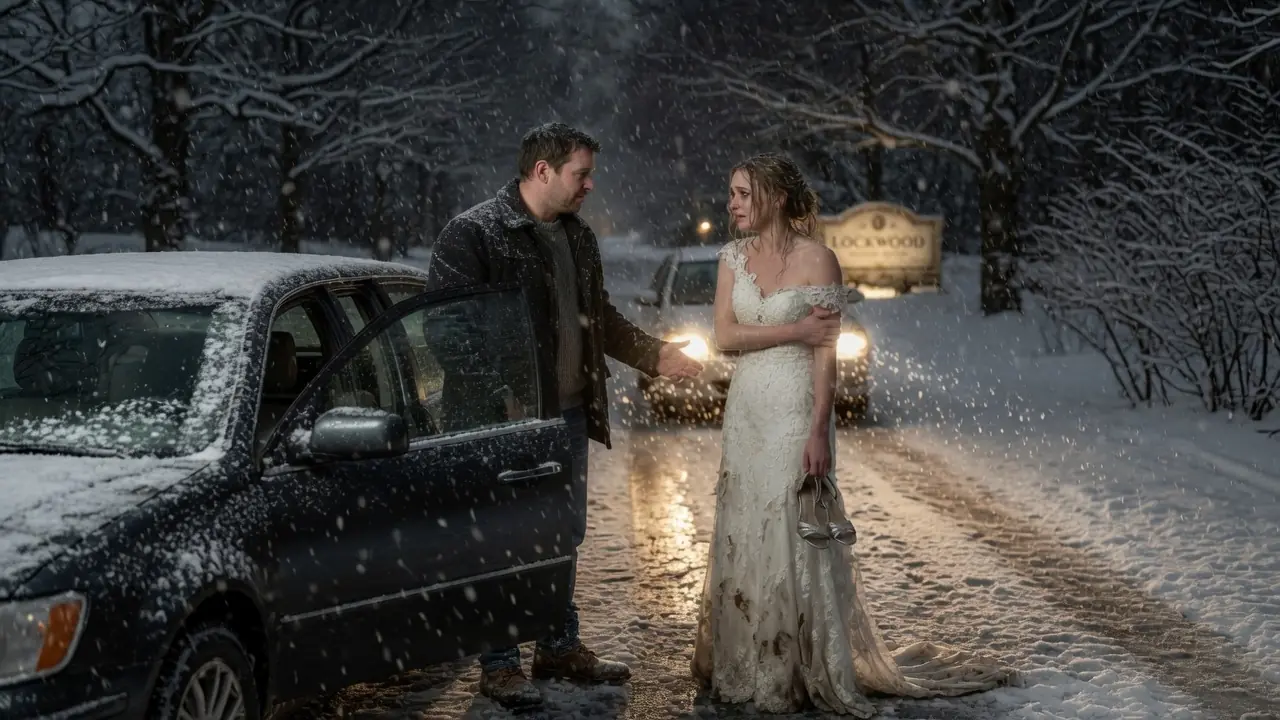
Vivian’s hand tightened around the stair railing.
Daniel stepped aside but did not leave.
Eleanor looked thinner than Vivian remembered.
Older.
Not from time.
From obedience.
“I didn’t come to take you back,” Eleanor said quickly. “I came to see if you were safe.”
Vivian’s eyes filled.
“Now you ask?”
The words struck hard.
Eleanor nodded, accepting them.
“Yes. Too late.”
That honesty was the only reason Vivian let her in.
They sat in the living room while Daniel made tea badly enough that Grace, when she got home, would later apologize on behalf of the household.
Eleanor told Vivian what happened after she left.
Preston’s family tried to keep the scandal quiet. Vivian’s father, Richard Lockwood, had raged for two days, calling her selfish, unstable, ungrateful. He had threatened lawsuits, cut off accounts, ordered staff not to speak her name.
“And then,” Eleanor said, “the video came out.”
Vivian froze.
“What video?”
Eleanor removed her phone.
Someone from the wedding party had recorded Preston in the side room, laughing with his brother, saying every cruel thing Vivian had heard. The clip had been posted anonymously and spread through their circles like fire through dry grass.
By morning, the story had escaped society pages and reached national gossip sites.
Runaway Bride Walks Out After Groom Calls Her A Business Asset.
Preston Waverly became a public disgrace.
The Waverly family denied, blamed alcohol, blamed stress, blamed “edited context.”
Nobody believed them.
“And Father?”
Eleanor’s mouth tightened.
“Your father is angrier about the embarrassment than the insult.”
Vivian looked down.
Of course.
Eleanor reached across the coffee table.
“But I am not.”
Vivian looked up.
Her mother’s hand trembled.
“I should have left with you,” Eleanor whispered. “At the church. At the house. Years ago, maybe. I taught you how to endure because I thought endurance was survival. I never taught you how to walk away.”
Vivian’s tears fell before she could stop them.
“You let him decide everything.”
“I did.”
“Even me.”
Eleanor closed her eyes.
“Yes.”
That apology did not fix it.
But it opened a door.
Grace came home halfway through the conversation and found two elegant women crying in her living room.
She stood still, then whispered to Daniel, “Is this a fancy sadness?”
Daniel nearly dropped the tea.
Vivian laughed through her tears.
Eleanor laughed too.
It was the first real sound of freedom Vivian had ever heard from her mother.
Her father came one week later.
Richard Lockwood did not arrive in anger.
He arrived in control.
That was worse.
He stood on Daniel’s porch in a charcoal overcoat, his silver hair perfect, his expression carved from old money and colder expectations. Behind him, a driver waited beside a black sedan.
Daniel opened the door.
Richard looked him over once.
“Mr. Mercer. I’ve come for my daughter.”
Daniel’s voice stayed even.
“Vivian decides where Vivian goes.”
Richard smiled thinly.
“Sentimental language. Predictable.”
Vivian wheeled Grace’s old art cart from the kitchen into the hall just to give her hands something to do. She was not in a wheelchair. She had no visible injury except the kind people like Richard dismissed.
But Daniel saw her shake.
Grace came to stand beside her, holding a green crayon like a weapon.
Richard’s eyes moved to the child, then dismissed her too.
“Vivian,” he said, “this has gone far enough. You made your point. Preston is finished socially. The Waverly deal is dead. Your mother is hysterical. Return home and we will manage the aftermath.”
Vivian took a breath.
“We?”
“Family.”
She almost smiled.
“You mean reputation.”
His jaw tightened.
“You have embarrassed everyone who ever invested in you.”
Daniel stepped forward.
“Careful.”
Richard’s eyes cut to him.
“This is not your concern.”
“It is if you speak to her like that in my house.”
Richard looked around the small entryway.
The children’s drawings.
The boots by the door.
The coat rack with Vivian’s scarf.
The ordinary life he could neither buy nor understand.
“You think this is love?” Richard asked Vivian. “A widower with a modest house and a child who needs a mother? You think you are free because no one here has enough power to guide you?”
Vivian went pale.
Grace spoke first.
“My dad doesn’t need a mother for me. I already had one.”
The room went still.
Daniel turned slightly.
Grace’s chin trembled, but she continued.
“And Vivian doesn’t have to be anything. She just has to be Vivian.”
Richard stared at her.
Children had a way of saying things that stripped adults naked.
Vivian reached for Grace’s shoulder.
“She’s right.”
Richard’s face hardened.
“Pack your things.”
“No.”
“One scandal does not make you independent.”
“No,” Vivian said. “Choosing myself does.”
He took one step forward.
Daniel matched it.
Nothing dramatic.
No raised fist.
Just a father putting himself between harm and the people under his roof.
Richard noticed.
For the first time, his certainty flickered.
“You have no idea who I am,” he said.
Daniel looked at him.
“I know exactly who you are. You’re a man standing in a stranger’s house asking for ownership papers on his own daughter.”
Richard’s eyes flashed.
Vivian’s voice came softly from behind Daniel.
“I’m not going with you.”
Silence filled the hall.
Then Richard turned and left.
But at the porch, he stopped.
For one second, Vivian saw something in his posture.
Not regret.
Not yet.
Maybe the first cold recognition that power could lose.
The garden began that weekend.
It started with clearing old leaves from the beds Rachel had marked years before. Then Daniel borrowed a tiller from a neighbor. Grace wore rain boots and declared herself Worm Relocation Supervisor.
Vivian tied her hair back, rolled up her sleeves, and knelt in the dirt.
She had not felt that kind of happiness in years.
Not the sparkling happiness of parties.
Not the photographed happiness of engagement announcements.
This was quieter.
Dirt under her nails.
Cold air in her lungs.
A child asking whether worms had families.
Daniel digging beside her.
The ghost of Rachel’s plan becoming something new without being erased.
They planted lavender first.
Then foxgloves near the fence.
Then tomatoes, because Grace insisted gardens should also make snacks.
Vivian marked each row with wooden sticks and careful handwriting. Grace added drawings because “plants need encouragement.”
Daniel watched them from the porch at sunset.
Vivian caught him looking.
“What?”
“Nothing.”
“That is never true.”
He walked down the steps.
“I was thinking Rachel would have loved this.”
Vivian stood very still.
That sentence could have hurt.
Instead, it felt like being trusted.
“I hope so.”
“She would have corrected my spacing.”
“Your spacing is terrible.”
He laughed.
Vivian smiled.
Then Daniel said quietly, “I think I’m falling in love with you.”
The words did not arrive like fireworks.
They arrived like truth after a long walk.
Vivian looked down at the soil beneath her hands.
“I’m scared,” she said.
“Me too.”
“I don’t want to become someone’s solution.”
“You’re not.”
“I don’t want Grace to think I’m replacing her mother.”
“She doesn’t.”
“I don’t want to belong to another man’s life just because mine broke.”
Daniel moved closer, but not too close.
“Then don’t belong to mine,” he said. “Build one beside it.”
She looked up.
He meant it.
That was the difference.
Vivian began to cry, and this time she did not apologize.
“I think I love you too,” she whispered.
From the upstairs window, Grace shouted, “I knew it!”
Daniel looked up.
“Grace!”
“You were taking too long!”
Vivian laughed so hard she had to sit back on her heels.
By summer, the garden had become the center of the house.
Lavender bloomed along the fence. Tomatoes climbed their cages. Grace’s wildflowers came up in chaotic patches of red, yellow, purple, and orange. The rose bushes Rachel had planted years before returned in pale pink blossoms that made Daniel stand quietly each morning longer than he admitted.
Vivian found work at a local literacy nonprofit, using the communications skills her father had once wanted reserved for gala invitations and foundation speeches.
She wrote grant proposals.
Organized fundraisers.
Designed campaigns that helped children get books, meals, tutoring, and winter coats.
For the first time in her life, her name opened doors for something that felt clean.
She gave up the Lockwood apartment permanently.
Opened her own bank account.
Bought her own secondhand car, a small blue hatchback Grace named Biscuit.
When the divorce-like separation from her family’s financial control became messy, Eleanor quietly helped.
Not with money.
With documents.
With passwords.
With the names of lawyers who were not afraid of Richard Lockwood.
The mother who had once taught endurance now began teaching escape.
Richard did not apologize.
Not then.
But he stopped sending threats.
That was a beginning in his language.
One evening in July, Grace brought home a drawing from summer camp.
It showed three people in front of a blue-doored house.
Daniel had been drawn too tall. Vivian’s hair was twice as long as reality. Grace had given herself a crown. Behind them, the garden exploded into flowers bigger than the roof.
At the bottom, in careful letters, she had written:
Our family grew here.
Vivian stared at the paper for a long time.
Daniel stood behind her.
“Are you okay?”
She nodded.
Then shook her head.
Then smiled.
“I was supposed to get married in a cathedral.”
Grace wrinkled her nose.
“Sounds echoey.”
“It was.”
“And cold?”
“Very.”
Grace pointed at the drawing.
“This is better.”
Vivian looked at Daniel.
Then at the kitchen around her.
The yellow chairs.
The grocery list.
The school calendar.
Rachel’s photo on the wall.
Her own scarf on the hook.
The garden outside the window, alive because three people had tended it together.
“Yes,” Vivian said softly. “This is better.”
That night, after Grace went to bed, Vivian and Daniel sat on the back porch with tea cooling between them.
Fireflies blinked over the garden.
The air smelled like lavender and tomato leaves.
Daniel held a small wooden box in his hands.
Vivian saw it and froze.
He noticed immediately.
“It’s not what you think.”
She let out a shaky breath.
“Good.”
“I mean, not exactly.”
“Daniel.”
He smiled nervously.
“I’m not asking you to marry me tonight.”
She studied him.
“But?”
“But I am asking if I may ask someday.”
The question was so gentle it hurt.
No performance.
No audience.
No four hundred guests.
No business arrangement hiding inside vows.
Just a man asking for permission to hope.
Vivian reached for the box.
Inside was not a ring.
It was a seed packet.
Peonies.
Her grandmother’s favorite flower.
Daniel said, “Grace and I found them. We thought we could plant them where the soil gets morning light.”
Vivian covered her mouth.
He continued softly.
“I love you. I love the way you came into this house in a torn wedding dress and somehow made it less haunted. I love how you listen to Grace. I love how you never ask Rachel to disappear before you step into a room. I love the life we’re making, slowly.”
Tears slipped down her face.
“I don’t need an answer tonight,” he said. “I just wanted you to know the door is open. It stays open either way.”
Vivian held the seed packet to her chest.
“Yes.”
His eyes widened.
“Yes to someday?”
“Yes to someday,” she whispered. “And yes to peonies.”
He laughed, and she kissed him.
Not like escape.
Not like desperation.
Like choosing.
The following spring, they held a small ceremony in the garden.
Not because Vivian needed a wedding to prove she had healed.
Because she wanted one that belonged to her.
There were twenty people.
Grace wore a yellow dress and carried flowers in a basket while taking her role as “Best Daughter” very seriously. Eleanor sat in the front row, crying openly. Richard came alone and stood near the back, older now, quieter, still proud but less certain of what pride was worth.
He had called Vivian two weeks earlier.
Not to demand.
Not to arrange.
To ask if he could attend.
She had said yes.
Not because everything was forgiven.
Because some doors could remain guarded without being locked forever.
Before the ceremony, Richard approached Daniel near the garden gate.
For a moment, both men stood in uncomfortable silence.
Then Richard said, “You gave her something I never understood how to give.”
Daniel looked at Vivian across the yard, laughing as Grace adjusted her veil.
“What?”
“A choice.”
Daniel nodded.
“She gave herself that.”
Richard absorbed the correction.
Then, slowly, he nodded too.
During the vows, Vivian did not promise to obey, to merge, to complete anyone’s image.
She promised to build.
To tend.
To tell the truth before resentment grew roots.
Daniel promised to love without replacing, to remember without living in the past, and to keep choosing the family they had grown together.
Grace held both rings and whispered loudly, “Don’t drop them,” when Daniel reached for his.
Everyone laughed.
Even Richard.
When Daniel kissed Vivian, the garden erupted in applause.
The roses bloomed behind them.
The peonies had not opened yet.
Vivian liked that best.
Some beauty still waiting.
Some proof that not everything had to happen at once.
Years later, people in Westbrook still told the story of the runaway bride in the snow.
They liked the dramatic parts.
The torn gown.
The roadside rescue.
The wealthy father.
The ruined cathedral wedding.
The widowed single dad who opened his home.
Vivian always corrected them gently.
“He didn’t rescue me,” she would say. “He stopped. There’s a difference.”
Daniel agreed.
Stopping was the first act.
Staying was the harder one.
They had all stayed in their own ways.
Grace stayed open after loss could have made her afraid.
Daniel stayed soft after grief could have made him hard.
Vivian stayed long enough to learn that love did not have to arrive as a cage, a contract, or a polished performance in front of people waiting to judge.
It could arrive as headlights in snow.
A child’s blanket.
Burned toast.
A garden sketch left behind by a woman who had loved first.
A question asked gently on a porch:
May I ask someday?
The old wedding dress stayed folded in a box in the attic.
Not as a shrine.
Not as a wound.
As evidence.
One winter night, years later, Grace found it while looking for Christmas decorations. She was taller then, nearly a teenager, with her mother’s old eyes and Daniel’s stubborn chin.
She carried the box downstairs.
Vivian opened it carefully.
The dress was still torn at the hem.
Still faintly stained from the road.
Grace touched the lace.
“Does it make you sad?”
Vivian thought about the woman she had been that night, walking barefoot through snow, carrying shoes from a life that had never fit.
“Yes,” she said. “But not only sad.”
“What else?”
“Grateful.”
Grace looked confused.
Vivian smiled and folded the dress again.
“Because it reminds me that leaving the wrong life can look like disaster before it becomes freedom.”
Daniel stood in the doorway, listening.
Grace looked from one adult to the other.
“So the worst night can become the beginning?”
Daniel smiled.
“Sometimes.”
Vivian slipped an arm around Grace.
“Especially when someone stops.”
Outside, snow began falling over Westbrook again.
Soft.
White.
Quiet.
The same kind of snow that had covered the road years before, when Vivian had no destination and Daniel had almost driven past.
Inside, the house glowed with warmth.
The garden slept beneath frost, holding spring somewhere underground.
And three people who had once carried different kinds of loneliness stood together in the kitchen, surrounded by drawings, photographs, grocery lists, and the ordinary proof of a life chosen freely.
No cathedral could have blessed them better.
No inheritance could have bought what they had grown.
No torn dress could shame the woman who had walked out of it and into herself.
The world outside was cold.
But Vivian was home.