“Get out now.”
The words cracked through the breakfast rush at Mason’s Corner Diner like a plate shattering on tile.
Forks paused halfway to mouths. Coffee cups stopped in midair. The bell above the entrance door still trembled from the man who had just stepped inside, but every eye in the room had already turned toward him.
He stood just past the threshold, dripping rainwater onto the black-and-white checkered floor.
His coat was old gray wool, soaked dark at the shoulders. His shoes were muddy and splitting at the seams. A faded cap shadowed most of his face. He carried no bag, no umbrella, no sign of belonging anywhere people with money preferred to look.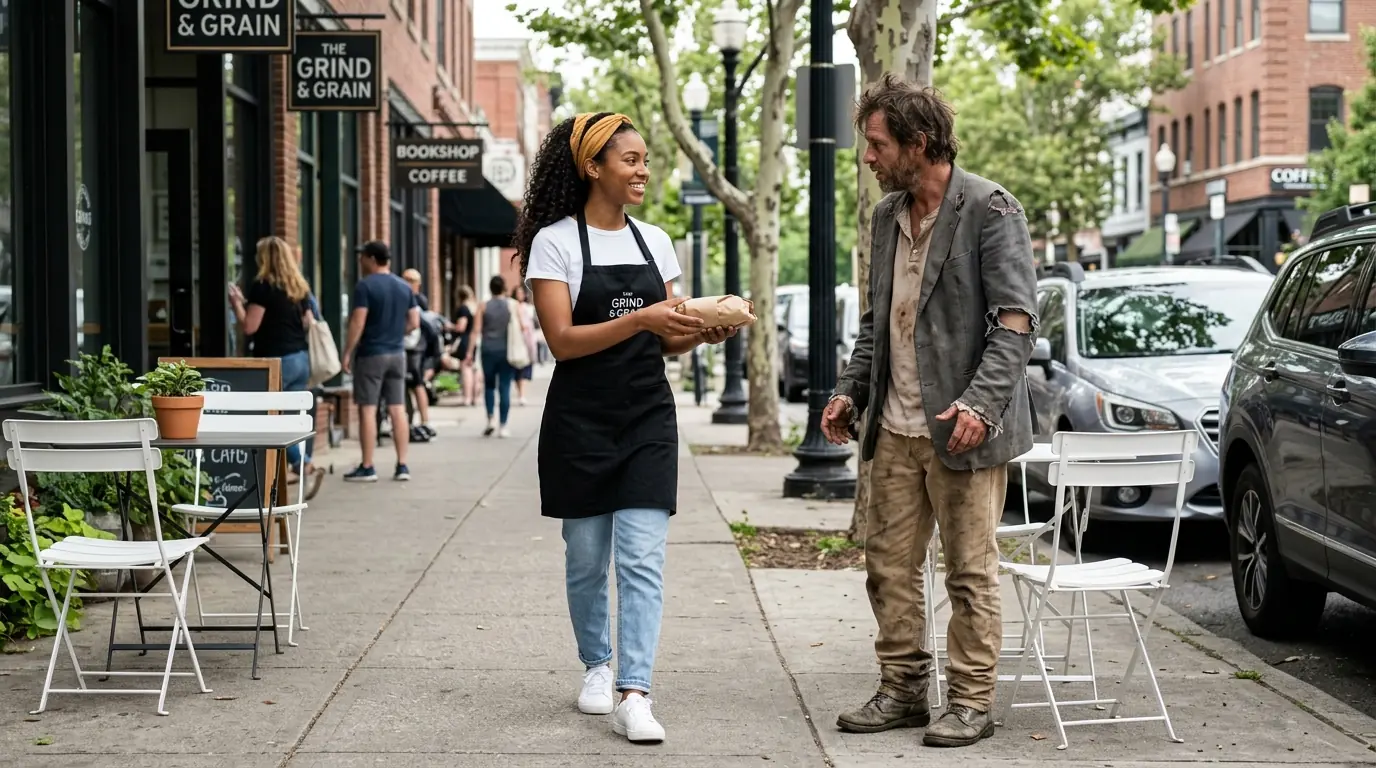
He looked like someone who had slept outside.
He looked like someone who had missed too many meals.
He looked like the kind of man busy towns learn to ignore.
Behind the counter, Olivia Reed froze with a coffee pot in one hand.
She was twenty-six, a Black waitress with warm brown skin, tired eyes, and a neat ponytail tucked through the back of her visor. Her name tag had been scratched so often only the letters OLI still shined through. She had worked at Mason’s Corner almost four years, long enough to memorize the habits of regular customers, the squeak in the third booth seat, and the moods of her manager, Carl Mason.
Carl was now standing in front of the stranger with his hands on his hips and disgust across his face like it belonged there.
“I said get out,” Carl barked. “This is a diner, not a shelter.”
The man lowered his eyes.
“I can pay for coffee,” he said quietly.
Carl laughed.
“With what? Buttons?”
A few customers chuckled automatically, the way people laugh when they sense it is safer to join cruelty than challenge it.
Olivia hated that sound.
Outside, rain slid down the diner windows in crooked silver lines. Parked near the curb beneath the pharmacy awning next door sat a long black luxury sedan with tinted windows and its engine quietly running. It did not belong in that part of town, and no one paid it any attention.
No one except maybe fate.
Olivia noticed something else.
The stranger’s hands were trembling.
Not from shame.
From cold.
She set down the coffee pot.
“Sir,” she said softly, “you can sit in my section.”
Carl turned toward her so slowly the room seemed to tighten.
“What did you just say?”
Olivia swallowed.
Her rent was due Friday. Her younger brother Marcus needed tuition money for community college books. Her mother’s blood pressure medication had increased again. She had thirty-two dollars in checking and twelve in cash.
She could not afford bravery.
Yet she could not stand there and watch a hungry man shoved back into the rain.
“I said he can sit in my section.”
The diner fell silent.
Carl stepped closer until she could smell cigarette smoke and stale peppermint on his breath.
“You’re fired if you do that.”
Her heart pounded hard enough to hurt.
“Then I guess I’ll serve him before I go.”
Someone near the window whispered, “She lost her mind.”
The stranger looked at Olivia with concern.
“You don’t need to risk your job for me.”
She picked up a menu and nodded toward the back booth by the heater vent.
“Please sit down.”
He obeyed slowly.
Olivia poured him coffee first, black and steaming. Then she brought a clean towel from the supply closet. Then she placed an order for the cheapest breakfast plate: two eggs, toast, potatoes.
Carl stormed to the register.
“You paying for that?”
Olivia reached into her apron and removed five dollars in wrinkled singles, nearly all the tips she had earned since six a.m.
“I am.”
He sneered.
“Kindness here is treated as a serious mistake.”
She met his eyes.
“Then maybe this place needs different rules.”
The stranger stared at the plate when she set it down.
His eyes softened.
“Why are you doing this?”
Olivia shrugged gently.
“Because everyone deserves breakfast.”
For the first time he looked directly at her.
There was something strange in his gaze. It did not match the coat, the mud, or the posture of defeat. His eyes were clear, steady, observant.
A man pretending to be smaller than he was.
Before she could think more about it, Carl came over again.
“That’s enough. You want to turn my diner into a charity case? Fine.”
He jabbed a finger toward the door.
“You’re done. Effective immediately.”
The words landed harder than she expected.
Even when threatened, some part of her had believed he would calm down.
Instead, she felt her chest hollow out.
The stranger lowered his fork.
“Sir,” he said quietly, “there’s no need for that.”
Carl wheeled on him.
“No one asked you.”
Then back to Olivia.
“Take off the apron. Leave now.”
Her hands shook as she untied it.
This job had paid bills, bought groceries, kept lights on, and held together a life built mostly from effort and duct tape.
She folded the apron carefully and set it on the counter.
“What rule says we stop being human?” she asked.
Carl smirked.
“The rule that keeps this place profitable.”
The stranger stood.
“Mr. Mason.”
Carl rolled his eyes.
“What?”
“You should let her finish her shift.”
Carl laughed again.
“And who exactly are you?”
The man said nothing for a moment.
Then he reached into the inner pocket of his old coat and removed a sleek phone worth more than the clothes he wore. He pressed one button.
Outside, the black sedan doors opened.
Two men in tailored dark suits stepped out. Behind them came a silver-haired woman carrying a leather folder.
The diner fell so quiet the rain outside became loud.
They entered together and approached the stranger.
The woman offered him a fresh handkerchief.
“Mr. Whitaker,” she said. “Your board call is waiting.”
A mug slipped from someone’s fingers and shattered.
Carl stared.
“Oh my God… who are you?”
The man removed his cap.
“My name is Henry Whitaker.”
Shock rolled through the room like weather.
Everyone in town knew the name.
Henry Whitaker owned Whitaker Holdings, the company behind hotels, apartment towers, grocery chains, restaurants, warehouses, and half the commercial strip downtown.
Including Mason’s Corner Diner.
Carl took a stumbling step backward.
“That’s impossible.”
Henry’s expression remained calm.
“For the past six weeks, I’ve been visiting businesses I own dressed as someone most people would dismiss. I wanted to know how my companies treat people when no one believes power is present.”
He looked around the diner.
“Today I learned enough.”
Carl’s face drained white.
“Mr. Whitaker, if I had known—”
“That is exactly the problem,” Henry said. “You think dignity depends on recognition.”
No one moved.
The silver-haired woman opened the folder.
Henry continued.
“This location has twenty-seven documented employee complaints in the last twelve months. Tip theft. Schedule manipulation. Verbal abuse. Refusal of service based on appearance. Wage discrepancies.”
Carl pointed wildly.
“Those are lies.”
The woman slid copies of payroll reports, witness statements, and camera stills onto the counter.
Henry’s voice sharpened.
“I also reviewed the footage of you taking cash tips from shared jars after closing.”
Now customers were staring at Carl the way they had stared at the stranger.
Authority changes direction quickly.
Carl tried one last tactic.
“She disobeyed me.”
Henry turned toward Olivia.
“She showed judgment. You showed weakness.”
Then he looked to the suited men.
“Terminate him.”
The woman spoke crisply.
“Carl Mason, your employment is terminated effective immediately. Security will escort you out.”
“You can’t do this in front of everyone!”
Henry’s eyes were cold now.
“You fired her in front of everyone.”
Carl’s mouth opened and closed uselessly. The two men moved beside him. His shoulders collapsed as they guided him toward the door.
No one laughed this time.
When the bell above the entrance rang behind him, it sounded final.
Olivia still stood near the counter, stunned.
Henry turned to her.
“Miss Reed, would you sit with me?”
She hesitated.
“I’m not employed anymore.”
“You are no longer a waitress here,” he said.
Her stomach dropped.
Then he added:
“Unless you wish to remain one.”
The room held its breath.
“I would rather offer you something else.”
He gestured toward the booth.
They sat.
“I need a new general manager for this diner. Someone who understands service as more than transaction.”
Olivia blinked repeatedly.
“I’ve never managed anything.”
“You managed compassion under pressure, fairness under threat, and dignity in a room full of cowards. That’s rarer than inventory experience.”
The silver-haired woman placed a contract before her.
General Manager. Salary triple her current income. Benefits. Paid training. Tuition assistance for family members. Hiring authority.
Olivia read the number three times.
“This can’t be real.”
Henry smiled faintly.
“Twenty-three years ago, I was homeless for six months after my first business collapsed. One winter morning a waitress gave me oatmeal and coffee when I had no money. Her manager fired her for it.”
His voice lowered.
“I never forgot her. I never found her either.”
Olivia’s eyes filled.
“So this was all a test?”
Henry shook his head.
“No. Hunger was real then. Today’s disguise was real enough too. But what I was searching for was not performance.”
He glanced at the door.
“I was searching for character.”
She whispered, “Why me?”
“Because when it cost you something, you still chose kindness.”
The diner reopened three days later after emergency cleaning, staff meetings, and a long-overdue payroll audit.
A new sign on the front window read:
NEW MANAGEMENT. SAME COFFEE. BETTER HEART.
Olivia rehired two workers Carl had bullied into silence. She dismissed one cashier who helped skim tips. She brought in her brother Marcus part-time for bookkeeping while attending classes. She created fair schedules two weeks in advance so single parents could arrange childcare.
She also started something called the Warm Board.
Customers could prepay meals anonymously. Anyone hungry could claim one with no questions asked.
At first only a few people used it.
Then church groups added funds.
Then truckers left twenties.
Then lawyers from downtown started buying ten meals at a time.
Within months, no one in that neighborhood went hungry without options nearby.
The food improved too.
Carl had bought the cheapest ingredients while pocketing margins. Olivia switched suppliers, cleaned equipment properly, and listened when cooks had ideas.
Business rose steadily.
But the real change was in the room itself.
Truck drivers sat beside accountants.
College students tipped dishwashers directly.
Retirees brought winter coats for donation drives.
People talked to strangers more often.
Henry visited every Friday morning, always in a suit now, always paying, always leaving absurd tips Olivia secretly redirected to staff.
One rainy afternoon he arrived to see a teenage new hire at the host stand looking nervous.
A man in a torn jacket had entered, wet from the storm.
The girl glanced uncertainly toward Olivia.
Olivia only nodded once.
The girl smiled and picked up a menu.
“Good afternoon, sir. Booth by the heater okay?”
Henry lowered his eyes, hiding emotion.
The lesson had traveled.
Olivia’s mother received proper medical care within months. Marcus finished community college debt-free and later became the diner’s operations manager. The Warm Board expanded into three other Whitaker-owned restaurants.
Local papers ran a story titled WAITRESS FIRED FOR KINDNESS NOW RUNS TOWN’S BUSIEST DINER.
Olivia hated the headline.
She said it wasn’t kindness that made the diner successful.
It was consistency.
Treat people well often enough and they come back.
Treat workers fairly long enough and they care.
Make dignity normal and profit usually follows.
Years later, when Henry Whitaker passed away at eighty-one, the town expected a grand corporate memorial.
There was one.
Speeches about investments.
Awards.
Economic growth.
But the most meaningful tribute happened the next morning.
At Mason’s Corner Diner, every table held a small card.
NO ONE IS INVISIBLE HERE.
Breakfast was free for anyone who needed it.
The line wrapped around the block.
Olivia stood near the register remembering a soaked stranger, trembling hands, and five dollars she could not afford to spend.
People often told the story wrong afterward.
They said the richest man in town got humiliated in his own diner.
They said a luxury car waited unnoticed while fools laughed.
They said one cruel manager lost everything in ten minutes.
All of that was true.
But it was not the heart of the story.
The heart was simpler.
A person walked in wearing poverty.
Another person answered with dignity.
And because of that, hundreds of lives bent in a better direction.
Never judge a person by the clothes they wear.
Sometimes the man everyone mocks is holding their future in his hands.
And sometimes the woman willing to lose everything for kindness is the exact person meant to lead.