"I'll defend him."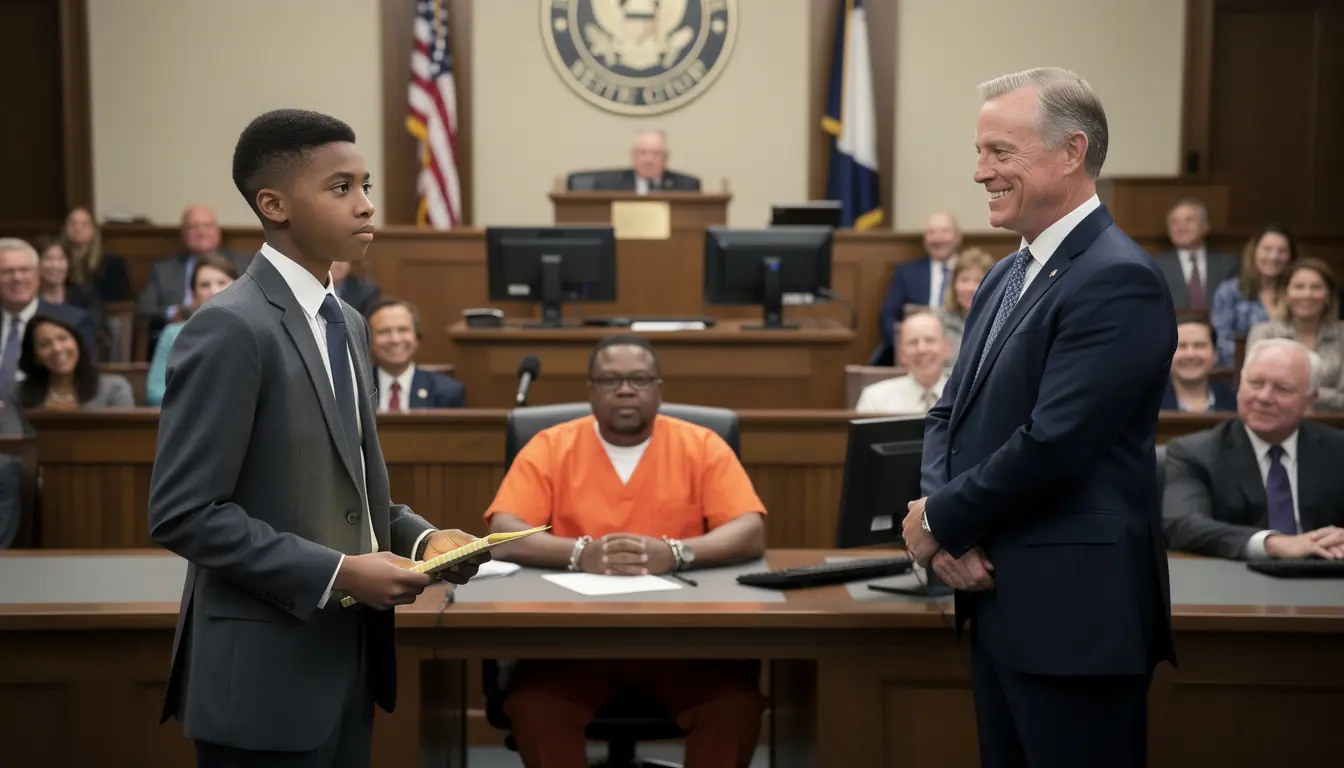
The courtroom exploded. Isaac Ingram, 18, Black, faced a room that wanted him gone. His father sat behind him in an orange jumpsuit, handcuffed.
"A janitor's kid playing lawyer? What's next? A monkey in a suit defending a case? Your Honor, give the boy ten minutes. Let him bark. Dogs get tired eventually."
Isaac's jaw tightened. "Ten minutes is more than I need, sir."
His voice came out cold, steady. Sullivan smirked, thinking ten minutes would bury this boy. He had no idea that those ten minutes would destroy his thirty-year career, end with handcuffs on his own witness, and leave him standing in silence while an 18-year-old received a standing ovation from the same room that had just laughed.
Six months earlier, the alarm hit at 5:15 a.m. Not a phone alarm—Isaac Ingram didn't own a phone. It was an old wind-up clock, the kind that rattled on the nightstand like it was angry at the world.
Isaac was already awake. He swung his legs off the mattress—a twin bed he'd outgrown two years ago—and stood in the dark. The apartment was small: two bedrooms, one bathroom, and a kitchen that doubled as a living room. South side of Greenfield, the part of town where the streetlights flickered and the landlords didn't return calls. The wallpaper peeled near the ceiling. The radiator clanked every ten minutes like a broken heartbeat.
He ironed his school shirt on the kitchen counter. No ironing board; a folded towel worked fine. He made oatmeal for his sister Amara, 12, quiet, too smart for her age. She'd been that way since their mother died four years ago. Cancer. No insurance. Gone in three months. Isaac never talked about it. Neither did Elijah.
What Isaac did talk about—to himself, late at night in the glow of a single desk lamp—was the law. On his nightstand, next to the rattling clock, sat a worn copy of Constitutional Law: Principles and Policies. Dog-eared, highlighted, sticky notes poking out from every chapter like tiny yellow flags. He'd found it in the courthouse library three years ago, tucked behind a row of outdated tax manuals nobody touched.
He read it the way other kids read comics. Then he read another, and another. Case studies, precedents, procedural codes. Three years of teaching himself what law students paid thousands to learn. Nobody knew. Not his teachers, not his friends, not even Elijah.
Elijah Ingram woke at 4:30 every morning. First shift: janitor at Greenfield County Courthouse. Second shift: warehouse loader at a distribution center across town. Home by midnight, up again at 4:30. Seven days a week. No vacations, no sick days. A body running on coffee and stubbornness.
Eleven years at that courthouse. He knew every hallway, every stairwell, every crack in the marble that the county never bothered to fix. He carried a master key on his belt—access to every room in the building: the records archive, the maintenance closets, the security office. Nobody thought twice about it. A janitor with keys was just part of the furniture.
And that's exactly how they treated him. The lawyers walked past him like he was a mop holder. The clerks talked over him like he wasn't there. He cleaned the bathrooms they used, emptied the trash they filled, and fixed the chairs they broke. Not once in eleven years did anyone say thank you.
But one person made it worse than silence: Bradley Carson, court clerk, mid-40s, with a thin smile that never reached his eyes. Carson treated Elijah like a personal servant. "Carry my briefcase. Get my coffee. Wipe down my desk before I sit down." And always with that voice—slow, loud, like he was talking to a child who couldn't understand English.
"Elijah, you missed a spot. Again."
"Elijah, I shouldn't have to tell you twice."