Prevent Stroke and Brain Infarction: Remember 3 Key Health Figures, 1 Serious Condition, and Don’t Ignore These 6 Risk Factors
News 04/12/2025 14:17
Vinegar has earned a long-standing reputation as one of the most versatile, affordable, and eco-friendly cleaning agents available. Thanks to its natural acidity, it can dissolve grime, cut through grease, and leave surfaces looking bright and refreshed. Yet many people who try cleaning with vinegar end up frustrated with cloudy windows, streaks, or dull finishes. The problem is not the vinegar—it’s the way it’s being used.
In this expanded guide, we break down the science behind vinegar’s effectiveness, the most common usage mistakes, and the proper techniques for achieving truly streak-free windows and gleaming surfaces throughout your home. With the right methods and tools, vinegar can easily outperform many commercial cleaners—without harsh chemicals or added expense.
Vinegar’s cleaning ability comes from acetic acid, which typically makes up 5–8% of white distilled vinegar. This acidity dissolves mineral deposits, soap scum, hard-water stains, and greasy residues by breaking the chemical bonds between dirt and the surface below.
According to the National Institutes of Health (NIH), acetic acid is particularly effective at dissolving mineral buildup such as calcium and magnesium, common on glass and bathroom fixtures.
In addition, vinegar has mild antimicrobial properties. While it is not as strong as commercial disinfectants, a Centers for Disease Control and Prevention (CDC) review confirms that vinegar can reduce certain bacteria and viruses on surfaces, helping maintain a cleaner environment when used regularly.
Many cleaning frustrations come from these frequent errors:
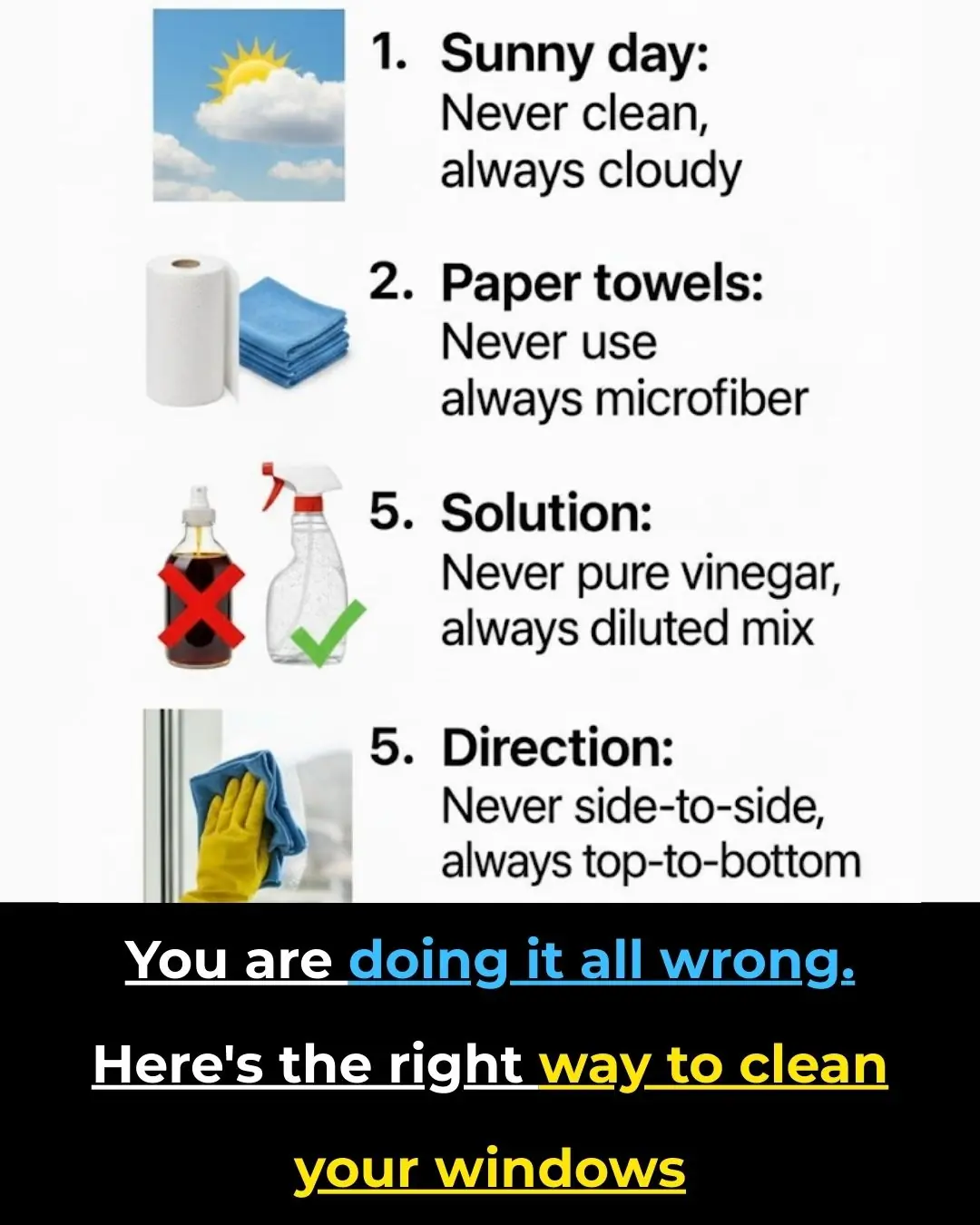
Full-strength vinegar is often too harsh and may damage delicate finishes. It can also leave a strong odor that lingers unnecessarily. A 50/50 dilution with water is usually sufficient.
Vinegar should never be used on:
Natural stone (granite, marble, limestone)
→ The acidity can etch and permanently dull the stone.
Waxed surfaces
→ It dissolves the wax coating.
Electronics and screens
→ It can strip protective coatings.
The U.S. Environmental Protection Agency (EPA) recommends avoiding acidic cleaners like vinegar on surfaces sensitive to etching or corrosion.
For streak-free windows, distilled white vinegar is the ideal choice. It is:
Clear and colorless (won’t stain)
Highly acidic compared to other vinegars
Free of sugars or organic residues that may leave streaks
Experts from Harvard University’s Office for Sustainability note that white distilled vinegar is one of the simplest and most environmentally safe cleaners available, especially for glass and metal.
Choose a product with at least 5% acetic acid, which is strong enough for household cleaning without being overly harsh.
For everyday window cleaning:
Mix 1 cup vinegar + 1 cup water in a spray bottle (1:1 ratio)
For stubborn mineral deposits or heavy grime:
Use a 2:1 ratio (two parts vinegar to one part water)
Always test on an inconspicuous area, especially if cleaning near painted or coated surfaces.
These are the gold standard for streak-free cleaning:
Lint-free
Highly absorbent
Gentle on surfaces
Paper towels, by comparison, tend to shed fibers and leave streaks.
A high-quality squeegee dramatically improves results on large windows. Wipe the blade after each pass to avoid dragging dirt.
Dust the window with a dry microfiber cloth.
Spray the vinegar solution evenly across the glass.
Use a microfiber cloth to loosen dirt in circular motions.
Use a squeegee from top to bottom, wiping the blade between passes.
Dry window edges with a clean cloth to prevent water lines.
Following this method consistently produces a professional, streak-free finish.
Vinegar can safely and effectively brighten:
Stainless steel appliances
→ Spray and wipe following the grain.
Glass tables
→ Leaves a crystal-clear finish.
Chrome bathroom fixtures
→ Excellent at dissolving mineral spots.
For faucets, showerheads, and soap-scum buildup, allow the solution to sit for several minutes before wiping.
Some popular hacks are effective:
✓ Microwave cleaning
Heating vinegar and water creates steam that loosens dried food.
But some hacks are unsafe or damaging:
✗ Cleaning hardwood floors
The acidity can strip protective coatings and dull the finish.
The National Wood Flooring Association (NWFA) specifically warns against vinegar on wood floors.
Always research hacks before trying them widely.
Never mix vinegar with bleach — the reaction produces toxic chlorine gas (CDC warning).
Do not mix with hydrogen peroxide in the same container.
Use in well-ventilated areas.
Wear gloves if you have sensitive skin or cuts.
Keep out of reach of children and pets.
Vinegar is:
Biodegradable
Non-toxic
Free of harsh chemicals
Low-waste, since one bottle handles many tasks
The EPA lists vinegar as a safer alternative to chemical cleaning agents, particularly for households aiming to reduce indoor chemical exposure.
Q: Can vinegar remove mold and mildew?
Yes. Spray undiluted vinegar, let sit for about an hour, then scrub.
Q: Is vinegar safe for all surfaces?
No—avoid natural stone, waxed finishes, and electronic screens.
Q: How often should I clean windows with vinegar?
Every few months, or more often if exposed to dust, pollution, or kitchen grease.