Don’t Soak Frozen Meat in Cold Water: A Chef’s 5-Minute Thawing Trick That Keeps Meat Tasty and Nutritious
Health 24/12/2025 02:18
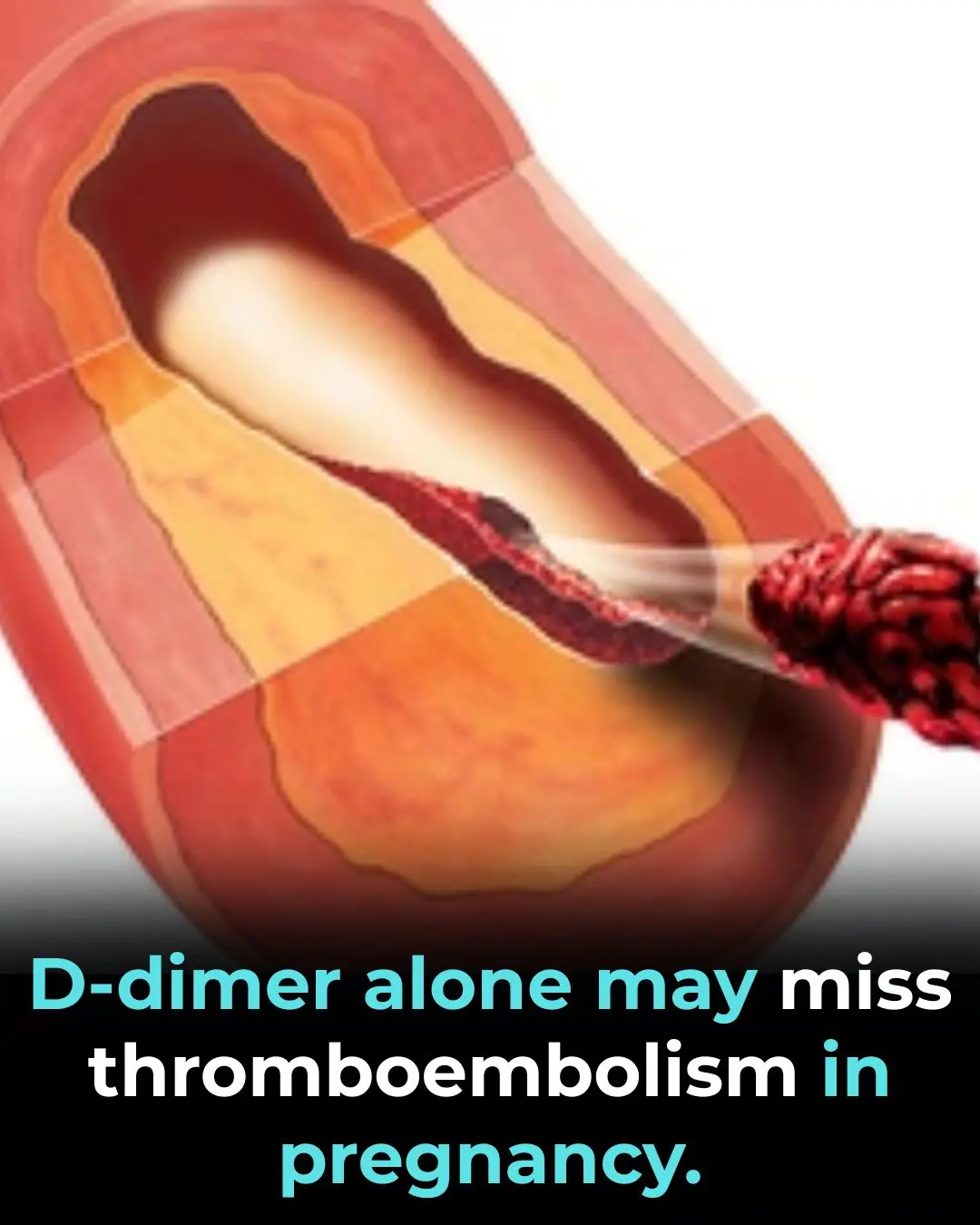
Pulmonary embolism (PE) is one of the leading causes of maternal morbidity and mortality worldwide, yet it remains a diagnostic challenge during pregnancy. Symptoms such as leg swelling, chest pain, or sudden shortness of breath are often attributed to normal physiological changes of pregnancy, potentially delaying life-saving evaluation and treatment. Emerging evidence suggests that relying solely on D-dimer testing may fail to detect the full spectrum of thromboembolic risk in pregnant and postpartum women.
Pregnancy is a naturally hypercoagulable state. According to the American College of Obstetricians and Gynecologists (ACOG), pregnant women and those in the postpartum period carry a four- to fivefold higher risk of thromboembolism compared with nonpregnant women. Approximately 80% of these events are venous, including deep vein thrombosis (DVT) and pulmonary embolism.
This increased risk is driven by several physiological changes:
Elevated clotting factors to prevent excessive bleeding during childbirth
Reduced fibrinolytic activity
Venous stasis caused by uterine compression of pelvic veins
Endothelial injury during delivery
While these changes are protective during labor, they significantly increase the likelihood of venous thromboembolism (VTE).
Diagnosing PE during pregnancy is particularly difficult because symptoms overlap with normal pregnancy-related discomforts. Dyspnea, tachycardia, mild leg swelling, and fatigue are common during pregnancy, often leading clinicians to underestimate the severity of symptoms.
Traditional diagnostic tools used in nonpregnant patients may not perform the same way during pregnancy. Among these tools, D-dimer testing—widely used to rule out PE in low-risk individuals—has significant limitations in pregnant populations.
D-dimer is a fibrin degradation product that rises when blood clots are formed and broken down. In nonpregnant patients, a normal D-dimer level can reliably exclude PE in low-risk cases. However, during pregnancy, D-dimer levels naturally increase with gestational age, even in healthy women without thrombosis.
This physiological elevation reduces the specificity of the test and increases the likelihood of false-positive results. Conversely, normal or borderline D-dimer values may provide false reassurance, potentially delaying further diagnostic evaluation in women who actually have PE.
Recent studies and expert guidance highlight that D-dimer testing alone may miss clinically significant thromboembolism, particularly in women with atypical presentations or underlying risk factors.
Current best practices emphasize that D-dimer testing should not be used in isolation. Instead, clinicians are encouraged to adopt a multimodal diagnostic strategy, which may include:
Careful clinical risk assessment
Consideration of pregnancy-adapted clinical prediction rules
Compression ultrasound for suspected DVT
Imaging studies such as ventilation-perfusion (V/Q) scanning or computed tomography pulmonary angiography (CTPA) when indicated
While concerns about radiation exposure exist, modern imaging techniques deliver relatively low fetal radiation doses, and the risk of missing a potentially fatal PE far outweighs the theoretical radiation risk.
The risk of thromboembolism does not end with delivery. The postpartum period, especially the first six weeks after childbirth, carries the highest risk for PE. Surgical delivery, prolonged immobility, infection, and hemorrhage further increase thrombotic risk.
Clinicians must maintain a high index of suspicion during this period, particularly when women present with sudden respiratory symptoms or unilateral leg swelling.
Pulmonary embolism in pregnancy is both preventable and treatable when identified early. Greater awareness among clinicians, combined with updated diagnostic pathways, can significantly reduce maternal morbidity and mortality.
Key takeaways include:
Pregnancy significantly increases the risk of venous thromboembolism
Symptoms of PE may mimic normal pregnancy changes
D-dimer testing alone is insufficient and may be misleading
A structured diagnostic approach improves safety and accuracy
Pulmonary embolism remains a silent and dangerous threat during pregnancy and the postpartum period. While D-dimer testing plays a role in VTE evaluation, it should never be the sole determinant in pregnant patients. Prompt recognition, comprehensive assessment, and appropriate imaging when necessary are critical to saving lives.
As evidence continues to evolve, clinicians must adapt diagnostic strategies to the unique physiological realities of pregnancy—ensuring that life-threatening thromboembolic events are neither overlooked nor underestimated.