They Successfully Cured HIV in a 60-Year-Old German Man Using a Stem Cell Transplant; He Has Been Disease-Free for 6 Years
Facts 21/01/2026 17:49
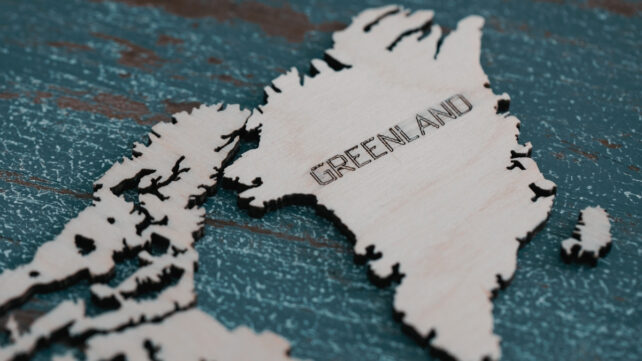
Greenland, the largest island on Earth, is home to some of the world’s most abundant and strategically important natural resources. Beneath its vast ice sheets and rugged terrain lie extensive reserves of critical raw materials, valuable metals, and hydrocarbons that could play a major role in shaping the future of global energy and technology.
Among Greenland’s most significant assets are critical raw materials such as lithium and rare earth elements (REEs). These resources are essential for renewable energy technologies, electric vehicles, and advanced electronics, yet their extraction and supply chains are highly sensitive from both environmental and geopolitical perspectives. In addition, Greenland is believed to contain substantial quantities of oil and natural gas, making it one of the most resource-rich but underexplored regions on the planet.
Notably, three REE-bearing deposits buried deep beneath Greenland’s ice may rank among the largest in the world by volume. These deposits hold immense potential for the production of batteries, permanent magnets, and electronic components that are vital to the global energy transition. As demand for clean energy technologies accelerates, such resources are becoming increasingly valuable.
The sheer scale of Greenland’s mineral and hydrocarbon wealth has prompted extensive research efforts by Denmark and the United States, particularly to assess the commercial feasibility and environmental consequences of future mining and extraction activities. According to estimates by the US Geological Survey, onshore northeast Greenland—including ice-covered areas—contains approximately 31 billion barrels of oil-equivalent hydrocarbons. This figure is comparable to the total proven crude oil reserves of the United States.
Despite this potential, less than one-fifth of Greenland’s surface area is ice-free. This ice-free region, nearly twice the size of the United Kingdom, represents only a small fraction of the island, suggesting that vast and largely unexplored resource deposits may exist beneath kilometers of ice. Advances in geophysical surveying continue to reveal just how much remains hidden below the frozen surface.
Greenland’s exceptional resource concentration is closely linked to its complex geological evolution over the past four billion years. The island hosts some of the oldest rocks on Earth, as well as rare geological features such as massive deposits of native iron not derived from meteorites. Diamond-bearing kimberlite pipes were discovered in the 1970s, though their exploitation has been limited by extreme logistical and environmental challenges.
From a geological standpoint, Greenland is highly unusual because it has experienced all three major processes responsible for forming natural resources: mountain building, crustal rifting, and volcanic activity. Repeated episodes of tectonic compression fractured the crust, allowing valuable materials such as gold, rubies, and graphite to accumulate within faults and fractures.
Graphite, a key component in lithium-ion batteries, remains significantly underexplored in Greenland compared with major producers like China and South Korea. Yet it represents another critical resource that could support future clean-energy supply chains.
The most substantial share of Greenland’s natural resources, however, originates from periods of rifting, most notably during the formation of the Atlantic Ocean more than 200 million years ago. Onshore sedimentary basins, including the Jameson Land Basin, show strong similarities to Norway’s hydrocarbon-rich continental shelf and are thought to offer the greatest oil and gas potential. Offshore, emerging research suggests that extensive petroleum systems may surround much of Greenland’s coastline.
In addition to hydrocarbons, metals such as lead, copper, iron, and zinc are present in Greenland’s largely ice-free sedimentary basins. These resources have been mined on a limited local scale since the late 18th century, though large-scale development has been constrained by cost and remoteness.
Many of Greenland’s rare earth elements are also linked to its volcanic history. Elements such as niobium, tantalum, ytterbium, dysprosium, and neodymium have been identified within igneous rock formations formed by ancient volcanic processes. Greenland is predicted to hold enough subglacial reserves of dysprosium and neodymium alone to meet more than 25% of future global demand—nearly 40 million tonnes in total. These elements are indispensable for wind turbines, electric motors, and high-temperature magnets used in nuclear and industrial applications.
The development of known deposits, such as Kvanefjeld in southern Greenland, as well as undiscovered resources in the island’s central regions, could significantly influence global REE markets due to the scarcity of these materials worldwide.
This immense resource potential presents a difficult dilemma. Climate change, driven largely by fossil fuel consumption, is accelerating ice loss across Greenland, exposing previously inaccessible mineral wealth. Since 1995, an area roughly the size of Albania has lost its ice cover, and this trend is expected to continue unless global carbon emissions decline rapidly.
Modern technologies such as ground-penetrating radar now allow scientists to map bedrock beneath up to two kilometers of ice, improving estimates of subsurface resources. However, prospecting and extraction under such extreme conditions remain slow, costly, and environmentally risky.
Greenland therefore stands at a crossroads. Exploiting its resources could help support the global transition to cleaner energy, yet doing so may further damage fragile ecosystems, disrupt pristine landscapes, and contribute to rising sea levels that threaten coastal communities.
At present, all mining and extraction activities in Greenland are tightly regulated under legal frameworks established in the 1970s. Nonetheless, geopolitical interest—particularly from the United States—may intensify pressure to relax these controls and expand exploration. How Greenland balances economic opportunity, environmental protection, and global responsibility will shape not only its own future, but also the trajectory of the global energy transition.