No matter what kind of fish you're frying, just remember these two things and it will always be crispy, golden brown, and perfectly intact from start to finish.
Tips 21/01/2026 18:12

To prepare a truly delicious plate of boiled pork intestines, the most important first step is choosing high-quality intestines. Avoid pieces with very thin walls and yellowish liquid inside, as these are usually tough and have a bitter taste. The best choice is the section near the beginning of the intestines, which is thicker and crunchier than the end part. Good-quality intestines should look plump and round, with a milky white liquid inside, indicating freshness.
When boiling intestines, you should never place them in cold water and then bring it to a boil. This common mistake often makes the intestines tough and chewy. The correct method is to bring a pot of water to a vigorous boil first, then add the intestines.
Another crucial rule is not to overcook them. Overboiling will cause the intestines to become rubbery and develop an unpleasant bitter flavor. Once the intestines are added to the boiling water over high heat, remove them promptly as soon as they are just cooked through. This ensures a crisp texture. Letting them cool naturally is not recommended, as this can make them dark, dry, and unappealing.
Immediately after removing the intestines from the pot, soak them in a bowl of cold water with ice cubes. Adding a few drops of lemon juice helps keep them white and enhances their crunch. This rapid cooling process is essential for achieving the best texture and appearance.
For regular pork intestines, it is not necessary to scrub them aggressively with salt, ginger, alcohol, or other strong ingredients. Simply turn the intestines inside out, remove excess fat, and rub them thoroughly with flour mixed with a small amount of salt. Then rinse well under running water. After that, rub fresh lemon directly onto the intestines to remove any remaining residue and odors, and rinse again thoroughly. This method cleans the intestines effectively while preserving their natural freshness.
For small intestines, gently rinse them under running water to remove the liquid inside, or lightly squeeze them before rinsing again. Then use lemon juice or vinegar to deodorize and clean them. This gentle approach prevents damage while ensuring cleanliness.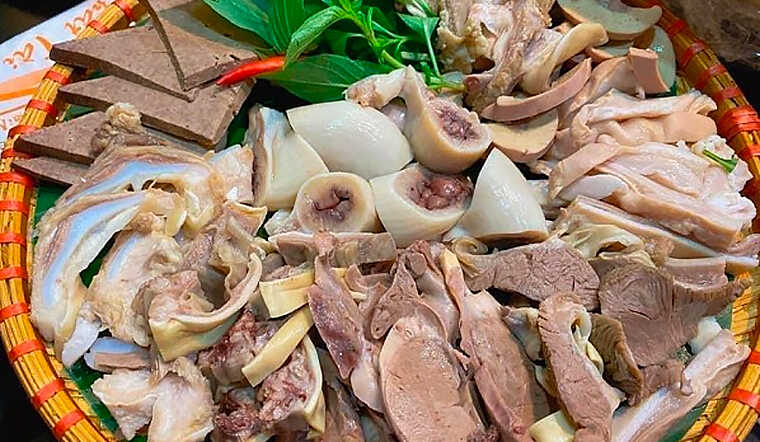
Always add the intestines to already boiling water—this is the most decisive step for achieving a crispy result. Boil for about 2–3 minutes until the intestines turn slightly pink, then immediately remove them and soak them in the prepared cold water with lemon juice. This helps the intestines become crisp, bright white, and free from dark discoloration.
Typically, the total boiling time from the moment the intestines enter the boiling water until removal is around 7–10 minutes. For small intestines, only a few minutes after the water returns to a boil is sufficient. Once removed, place them in a bowl of cooled boiled water mixed with a small amount of alum and ice cubes. Allow them to cool completely, then slice into bite-sized pieces for serving.
Do not boil pork intestines for too long or overcook them, as this will make them tough and significantly reduce their flavor and overall quality. Proper timing and rapid cooling are the keys to achieving tender, crispy, and delicious boiled pork intestines that the whole family can enjoy.