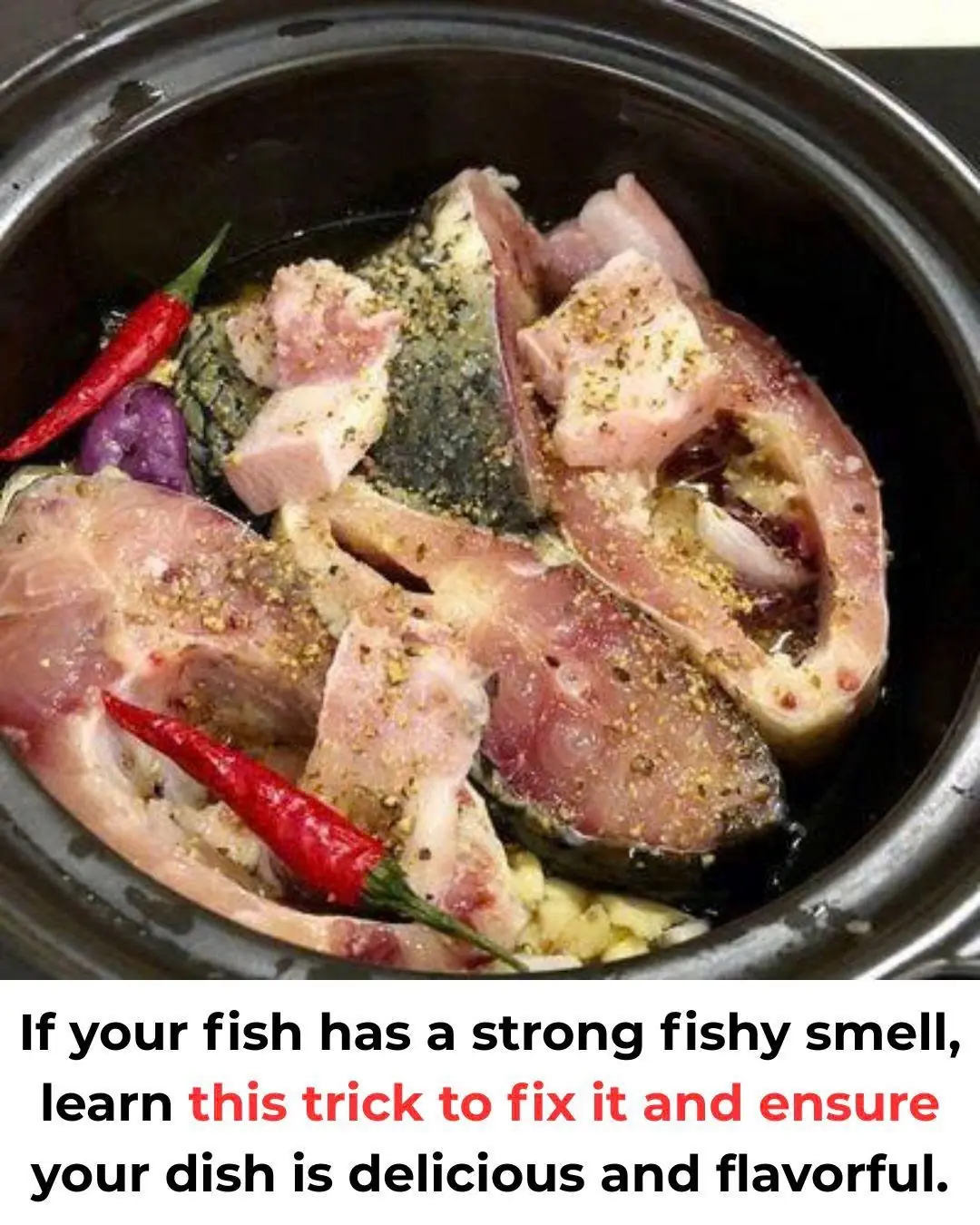
If your fish has a strong fishy smell, learn this trick to fix it and ensure your dish is delicious and flavorful.
Tips 18/12/2025 13:41
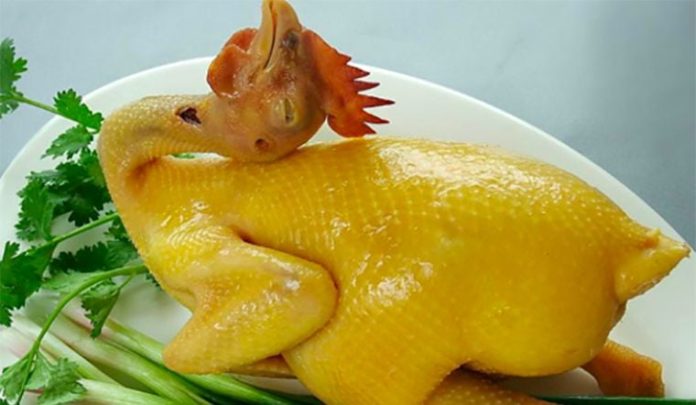
Boiling chicken may seem like a simple cooking technique, but achieving a perfectly cooked bird—with smooth, golden skin, evenly cooked meat, no red spots near the bones, and absolutely no cracked skin—is not as easy as it looks. Many people struggle with chicken skin tearing, meat shrinking, or the inside remaining undercooked. Below is a professional chef–approved method that guarantees beautifully boiled chicken every time, using simple but precise techniques.
The success of a perfectly boiled chicken starts with selecting high-quality poultry. This step is crucial, as it largely determines the final texture, flavor, and appearance of the dish.
For best results, choose a young chicken, as it delivers tender meat and an attractive golden color after boiling. The ideal weight ranges from 1.5 to 1.8 kilograms, which ensures the meat remains juicy and firm without becoming tough or shrinking excessively during cooking.
If you are buying live chicken, look for one with:
Bright red comb
Smooth, glossy feathers lying flat against the body
Warm body temperature
Long, slim legs
Avoid chickens that show signs of illness such as slimy discharge around the mouth or dull, lethargic eyes.
When purchasing a pre-processed chicken, choose one with:
Naturally yellow, evenly colored skin
Firm, elastic flesh
Small tail (fat gland)
Avoid chickens with purplish skin, excessive fat around the neck or thighs, or an unpleasant odor, as these are indicators of poor quality.
Another key factor in preventing cracked skin is selecting the correct pot. Use a deep-bottomed pot that comfortably fits the chicken without squeezing it.
For a chicken weighing between 1.5 and 1.8 kilograms, a pot with a 28 cm diameter is ideal. A pot that is too small will cause uneven cooking, while one that is too large may result in excessive heat exposure, causing the meat to shrink and lose moisture.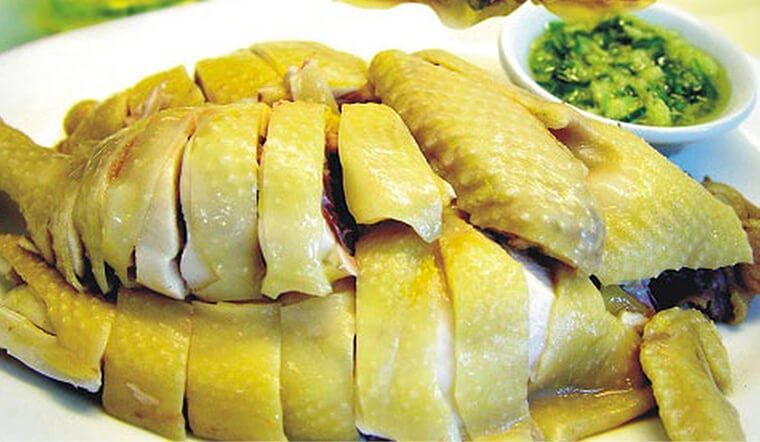
After plucking and cleaning the chicken, keep it whole. Rub coarse salt all over the chicken, including the cavity, then rinse thoroughly inside and out. Allow it to drain completely.
Wash three stalks of scallions (you may keep the roots on for extra aroma) and tie them into a bundle.
Place the chicken into the pot, then pour in enough cold water to just cover it. Add the scallions, crushed ginger, and ½ teaspoon of salt to eliminate any unpleasant odor and enhance flavor.
Start boiling the chicken in cold water. This step is extremely important. Allowing the chicken to heat up gradually ensures even cooking from the skin to the bones. If the chicken is added only after the water boils, the skin is more likely to crack and the meat may remain undercooked near the bones.
Once the water comes to a boil, immediately reduce to low heat. Boiling on high heat will cause the thigh meat to contract and pull away from the bones, making the chicken look misshapen.
After boiling gently for 5 minutes, turn the heat down to the lowest setting and continue cooking for another 5 minutes, without covering the pot.
Turn off the heat, cover the pot, and let the chicken sit in the hot water for about 20 minutes. This resting period allows the residual heat to finish cooking the chicken evenly without drying it out.
Cooking time should be adjusted based on the size of the chicken. Larger chickens may require an additional 5–20 minutes, while smaller ones can be cooked with 5 minutes less resting time.