Over 60? 10 Early Dementia Warning Signs You Must NEVER Ignore (Catch Them Before It’s Too Late)
Health 03/01/2026 00:34
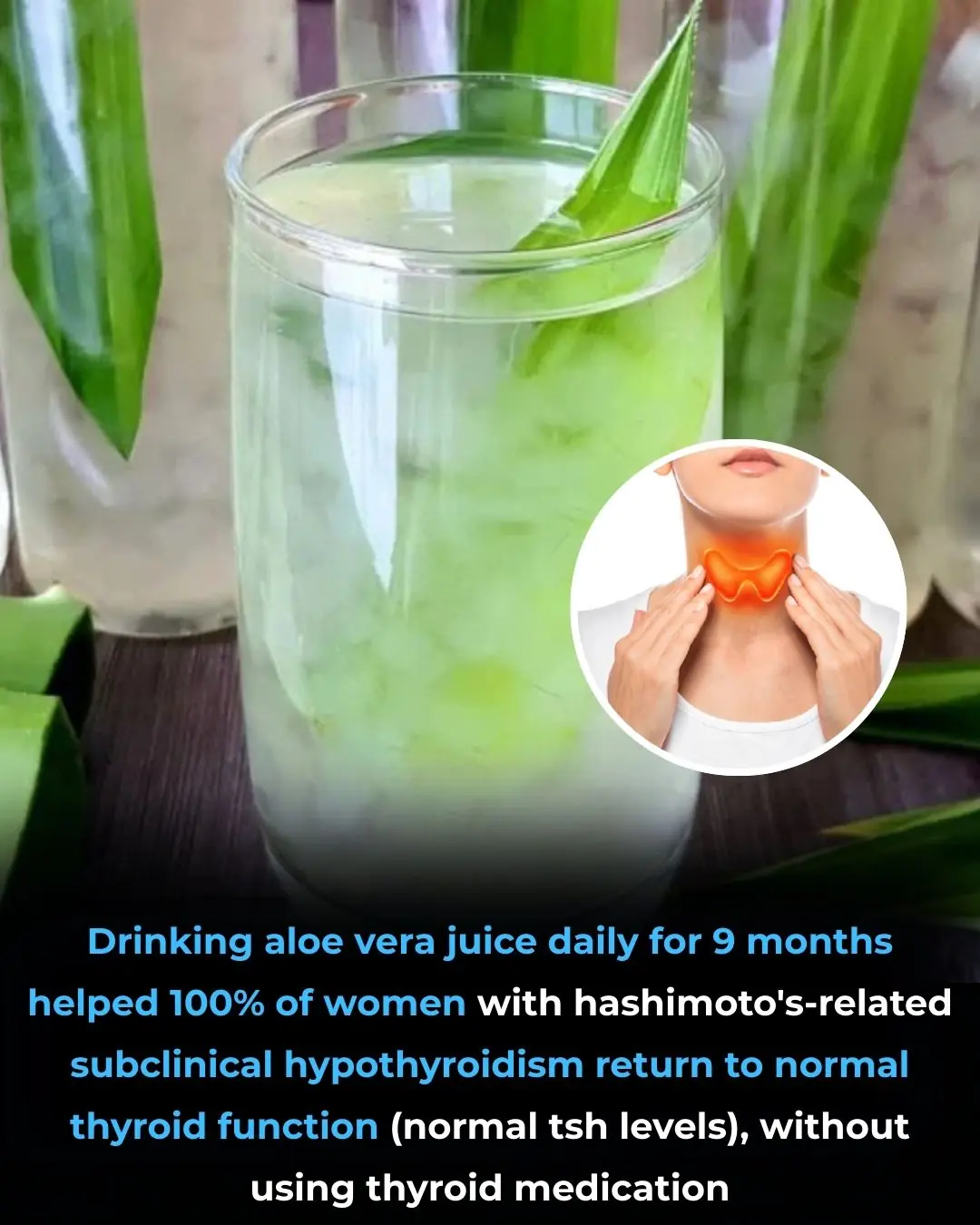
A clinical study published in the Journal of Clinical & Translational Endocrinology in 2018 reported that daily consumption of Aloe vera juice over a nine-month period was associated with a complete normalization of thyroid function in women with Hashimoto’s-related subclinical hypothyroidism. According to the findings, 100% of the women who consumed Aloe vera juice experienced a return to normal thyroid-stimulating hormone (TSH) levels without the use of conventional thyroid hormone replacement therapy.
The study, conducted by Metro et al., involved 30 women diagnosed with untreated subclinical hypothyroidism associated with Hashimoto’s thyroiditis. Participants in the intervention group consumed 50 milliliters per day of Aloe barbadensis Miller juice and were monitored over a nine-month period. A separate untreated control group with comparable baseline characteristics was followed concurrently. The researchers aimed to evaluate whether Aloe vera juice could influence thyroid function markers and autoimmune activity in this specific population.
Throughout the study period, the Aloe-treated group demonstrated significant biochemical improvements. TSH levels declined progressively and returned to the normal reference range in all participants by the end of the ninth month. In parallel, levels of thyroid peroxidase antibodies (TPOAb)—a key marker of autoimmune activity in Hashimoto’s thyroiditis—were significantly reduced. Improvements were also observed in free thyroxine (FT4) concentrations, suggesting enhanced thyroid hormone production or utilization. In contrast, the control group showed no meaningful changes in TSH, TPOAb, or FT4 levels during the same timeframe.
By the conclusion of the study, none of the women in the Aloe vera group met the diagnostic criteria for subclinical hypothyroidism, while all control participants remained biochemically unchanged. These results indicate a strong association between regular Aloe vera juice intake and improved thyroid function in women with early-stage, autoimmune-related thyroid dysfunction.
The authors proposed several potential mechanisms to explain these effects. Aloe vera is known to contain bioactive compounds with antioxidant, anti-inflammatory, and immunomodulatory properties. Chronic inflammation and oxidative stress play central roles in the pathogenesis of Hashimoto’s thyroiditis, and reducing these processes may help preserve thyroid tissue and normalize hormone regulation. Additionally, Aloe vera has been shown in other studies to influence glucose metabolism, lipid profiles, and immune signaling pathways, all of which may indirectly affect thyroid health.
Despite the promising outcomes, the researchers emphasized important limitations. The study was not randomized or placebo-controlled, and the sample size was relatively small. As a result, while the findings are compelling, they cannot establish causation. The authors therefore called for larger, randomized, placebo-controlled clinical trials to confirm the therapeutic potential of Aloe vera juice and to determine its safety, optimal dosage, and long-term effects.
In conclusion, this study provides preliminary clinical evidence suggesting that daily Aloe vera juice consumption may support normalization of thyroid function in women with Hashimoto’s-related subclinical hypothyroidism. While these findings should not replace established medical treatments, they contribute to a growing body of research exploring complementary and dietary approaches to managing autoimmune thyroid disorders.
Metro, D. et al. (2018). Effect of Aloe vera juice on thyroid function in subclinical hypothyroidism. Journal of Clinical & Translational Endocrinology, 12, 1–6. PMCID: PMC5842288.
Antonelli, A., Ferrari, S. M., Corrado, A., Di Domenicantonio, A., & Fallahi, P. (2015). Autoimmune thyroid disorders. Autoimmunity Reviews, 14(2), 174–180.
Ruggeri, R. M., et al. (2017). Oxidative stress and inflammation in thyroid diseases. Molecular and Cellular Endocrinology, 459, 1–7.
Langmead, L., & Rampton, D. S. (2004). Review article: complementary and alternative therapies for inflammatory bowel disease. Alimentary Pharmacology & Therapeutics, 19(4), 369–382.