Top 10 Superfoods That Fight Proteinuria and Give Your Kidneys New Life – Starting in as Little as 7 Days
Health 03/01/2026 00:46
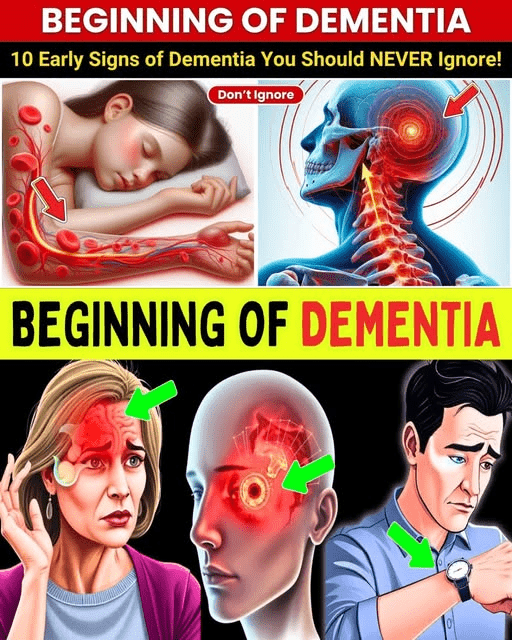
Dementia is not a single disease but a collective term for conditions characterized by a progressive decline in memory, thinking, behavior, and the ability to perform everyday activities. While mild forgetfulness can be a normal part of aging, certain cognitive and behavioral changes are not. For adults over the age of 60, recognizing early warning signs of dementia is critical, as early diagnosis allows for better planning, treatment, and quality of life.
One of the most significant early indicators of dementia is memory loss that interferes with daily functioning. Unlike normal age-related forgetfulness—such as temporarily forgetting a name and recalling it later—early dementia often involves forgetting newly learned information entirely and repeatedly asking the same questions. Clinical guidelines emphasize that persistent short-term memory impairment is one of the strongest predictors of neurodegenerative disease (bold: Alzheimer’s Association, 2023, Alzheimer’s & Dementia).
Another early sign is difficulty performing familiar tasks. Activities that were once automatic, such as cooking a well-known recipe, managing household finances, or operating common appliances, may suddenly become confusing. This reflects impairment in procedural memory and executive function, which are often affected early in Alzheimer’s disease and related dementias (bold: McKhann et al., 2011, Neurology).
Language and communication problems also commonly appear in the early stages. Individuals may struggle to find common words, stop mid-sentence, repeat themselves frequently, or have difficulty following conversations. Research shows that subtle language changes can precede formal diagnosis by several years (bold: Taler & Phillips, 2008, Journal of Neurolinguistics).
Disorientation to time and place is another concerning symptom. While occasionally forgetting the day of the week can be normal, becoming confused about the year, season, or location—especially in familiar environments—suggests deeper cognitive impairment. Studies link early spatial and temporal disorientation to degeneration in brain regions responsible for navigation and memory integration (bold: Coughlan et al., 2018, Journal of Alzheimer’s Disease).
Changes in judgment and decision-making may also occur early. Older adults with emerging dementia may fall victim to obvious scams, make unsafe choices, or show poor financial reasoning. Research indicates that financial exploitation risk rises sharply in the earliest stages of cognitive decline, often before a formal diagnosis is made (bold: Lachs & Han, 2015, Journal of the American Geriatrics Society).
Mood and personality changes are frequently overlooked but highly significant. Increased irritability, anxiety, apathy, paranoia, or loss of empathy can reflect early involvement of brain regions that regulate emotion. Depression in later life is now recognized as both a risk factor and an early symptom of dementia, rather than simply a psychological reaction to aging (bold: Ownby et al., 2006, Archives of General Psychiatry).
Withdrawal from social activities and hobbies is another early red flag. Individuals may avoid social interaction out of fear of embarrassment or confusion. Social isolation has been shown to accelerate cognitive decline and worsen outcomes in people with early dementia (bold: Livingston et al., 2020, The Lancet Commission on Dementia Prevention).
Visual–spatial difficulties, such as misjudging distances, bumping into objects, or struggling with stairs, can appear even when eyesight is normal. These symptoms reflect changes in how the brain processes visual information and are associated with higher risk of progression to dementia (bold: Armstrong et al., 2016, Neurology).
Sleep disturbances may also precede memory loss. Disrupted sleep–wake cycles, nighttime wandering, or acting out dreams are linked to early neurodegenerative changes. Poor sleep has been shown to accelerate the buildup of amyloid plaques in the brain, a hallmark of Alzheimer’s disease (bold: Ju et al., 2014, Brain).
In conclusion, early dementia rarely begins with dramatic memory loss. Instead, it often presents as a cluster of subtle but persistent changes in memory, judgment, mood, behavior, and daily functioning. Recognizing these warning signs and seeking medical evaluation promptly can lead to earlier diagnosis, access to treatment, and better long-term outcomes. Dementia is not “just aging,” and early action can preserve independence, dignity, and quality of life for years to come.