A baby monkey named Punch, a child, and an adult—though different in form—all share the same fundamental need: to be seen, to be touched, and to be acknowledged.
Punch means “strong.” It is the name of a baby monkey living in a zoo in Japan. But Punch’s story is more than just a heartwarming animal anecdote.
Punch was born during Japan’s peak heatwave in July 2025 and was abandoned by his mother shortly afterward. In the world of primates—where embraces, calls, and grooming are the language of love—Punch began his life with an absence.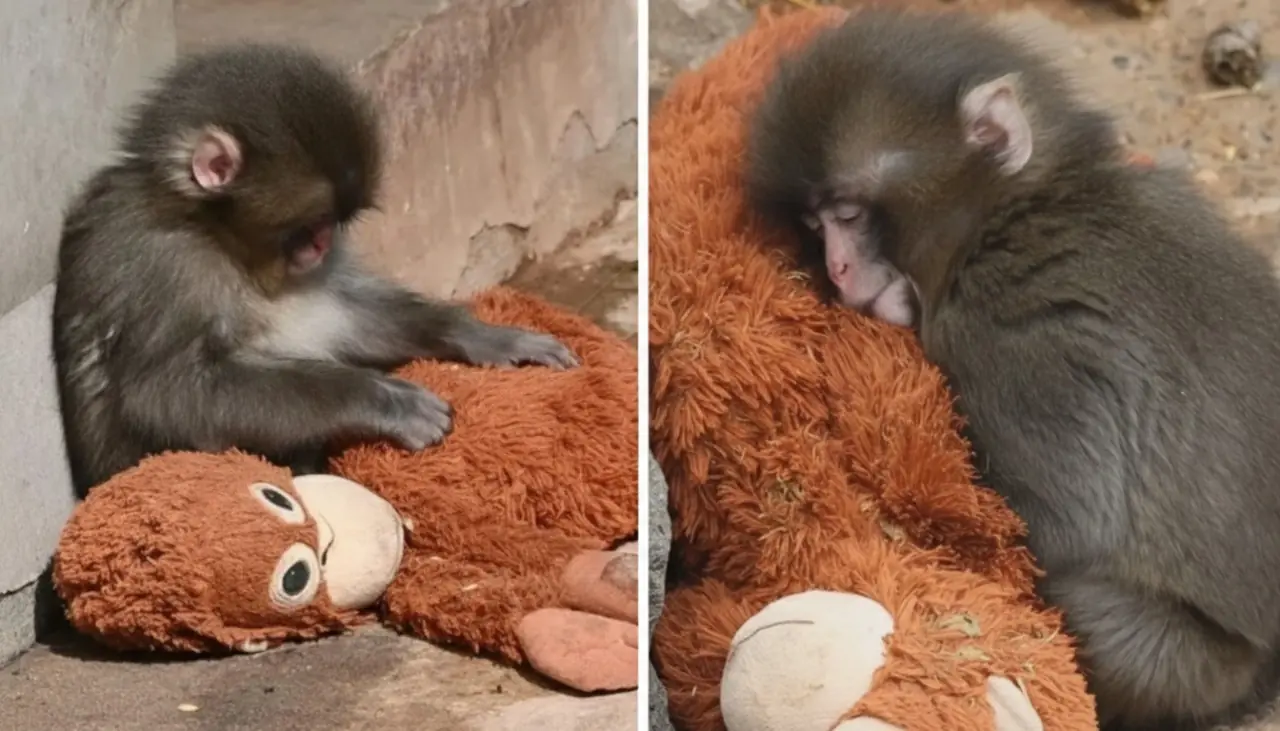
Punch the monkey and his “best friend,” a stuffed toy (Photo: Internet)
Punch wandered quietly through the zoo like an orphaned child, awkward and uncertain in social relationships. He did not know how to “make friends”—an instinct normally learned from a mother.
He first appeared to the world clutching a brown stuffed toy given to him by zoo staff, resting his head against it as if searching for a warm chest, a familiar heartbeat, a protection he had never known.
In nature, life is not sustained by food and water alone. It is nourished by a sense of belonging. A baby monkey, a child, and an adult—all different in form—share the same essential need: to be seen, to be touched, and to be recognized.
Punch was not hungry. His physical needs were met. But he lacked something more vital: connection.
The brown stuffed toy has no heartbeat. It cannot respond. Yet for Punch, it became a symbol of safety. And sometimes, having something—anything—to hold can partially fill an empty space within the soul.
Humans are no different.
We may have material comfort. We may be busy and successful. Yet we still carry within us an indistinct emptiness—the emptiness of disconnection.
In a society full of pressure and competition, many people live like “adult Punches”—functioning, smiling, and talking, while inwardly searching for something to hold onto.
We can send messages, make video calls, and share our lives on social media. Yet we lack hugs. We lack true presence. How many people turn to work, social media, or fleeting pleasures to fill emotional voids?
A person can only open their heart when they feel safe. They can only love when they are not afraid.
Love does not begin with grand words. It begins with a gentle touch and a steady presence.
Punch now has companions of his own kind. But he still lacks an older companion’s reassuring arm or the quiet intimacy of being groomed.
Perhaps, in our own lives, we too are holding “invisible stuffed animals.”
A small monkey in a zoo has reminded us of something profound: connection is not a luxury. It is a survival need.
The zoo staff did nothing extraordinary. They simply gave Punch a stuffed toy.
Sometimes, love does not begin with grand gestures. It begins with recognizing that someone feels unsafe—and offering them a little warmth.
In families, workplaces, and social relationships, we may unknowingly neglect each other’s need for connection.
A simple question.
A moment of genuine listening.
Understanding without judgment.
These may become someone’s “stuffed animal.”
Punch found the strength to continue his life, finding comfort in a brown stuffed toy.
And what about us?
In modern life, do we have the courage to become that source of comfort for one another?
Perhaps that is the most important question of all.